San Zeno: A Former Roman Catholic Church in Pisa
Site at a Glance
- Popularity
- Medium
- Country
- Italy
- Primary era
- Medieval
- Eras represented
- Medieval, Modern
- Civilizations
- Holy Roman Empire, Italian, Republic of Pisa
- Site type
- Religious
- Remains
- Church
On this page6 sections
History
San Zeno is a former Roman Catholic church in Pisa, Italy, whose construction dates broadly from the 10th to the 12th century. First mentioned in 1029, it predates Piazza dei Miracoli.
Origins and medieval use
The church initially belonged to a Benedictine abbey, a monastic community guided by the Rule of Saint Benedict. Construction of the abbey began before the 10th century, while the church itself was built over earlier structures.
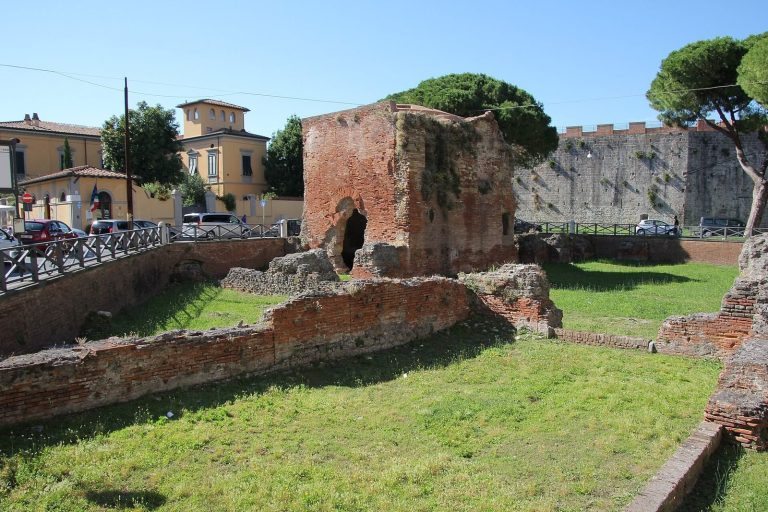
The surrounding medieval area was called “by the caves,” a name linked to the reuse of older structures as building material. These remains may have included an ancient Roman amphitheatre. By the 12th century, Camaldolese monks, members of a congregation within the Benedictine tradition, used the church. A hospital associated with it remained until the 15th century. In the 13th century, a gate behind the church was known as Porta Monetaria because it stood near the medieval mint.
Rebuilding and later use
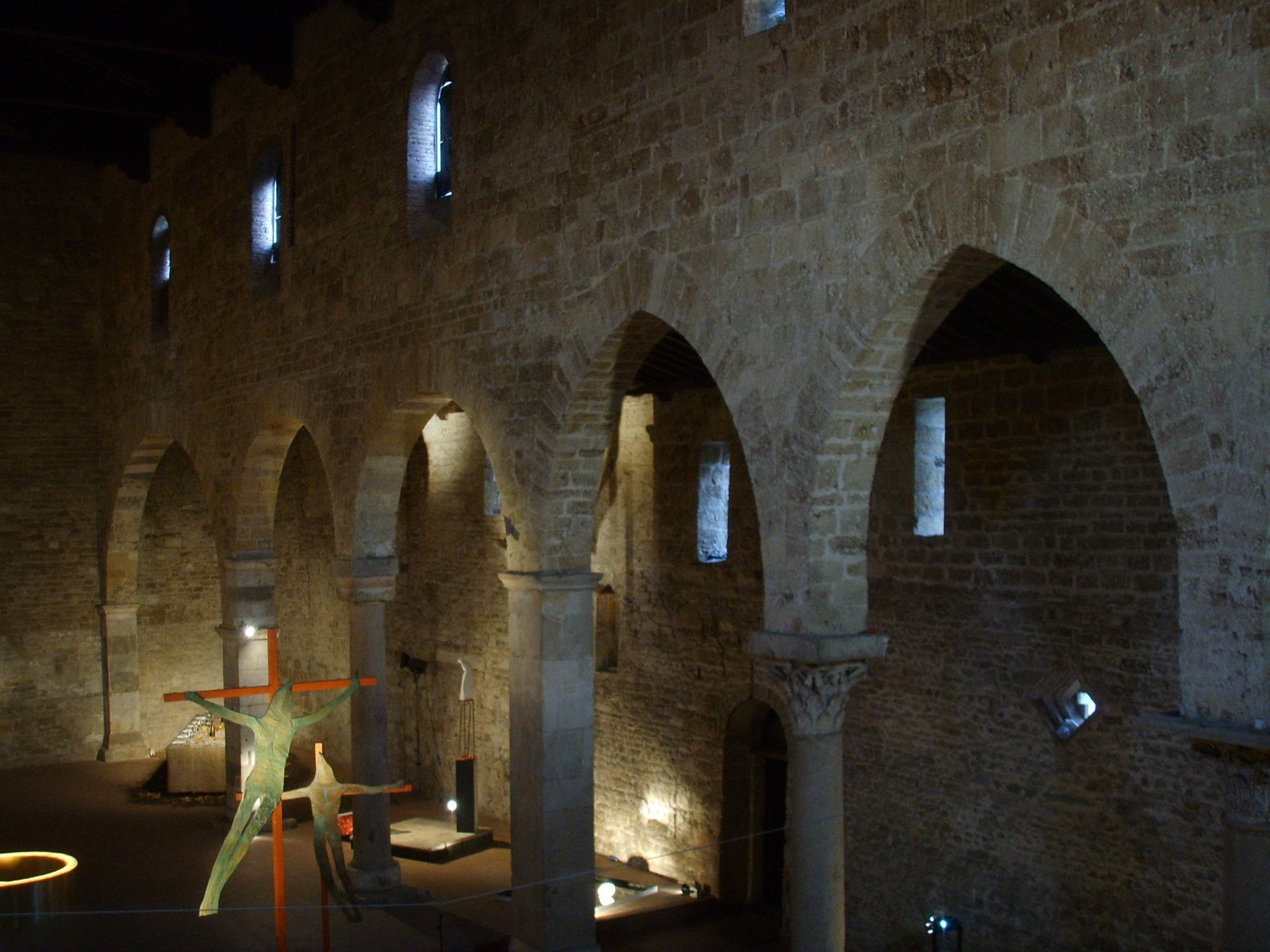
The church was completely rebuilt in the early 15th century and deconsecrated in 1809. Following lengthy conservation work, it reopened in October 2000. It is now used for contemporary art exhibitions and musical concerts.
Remains
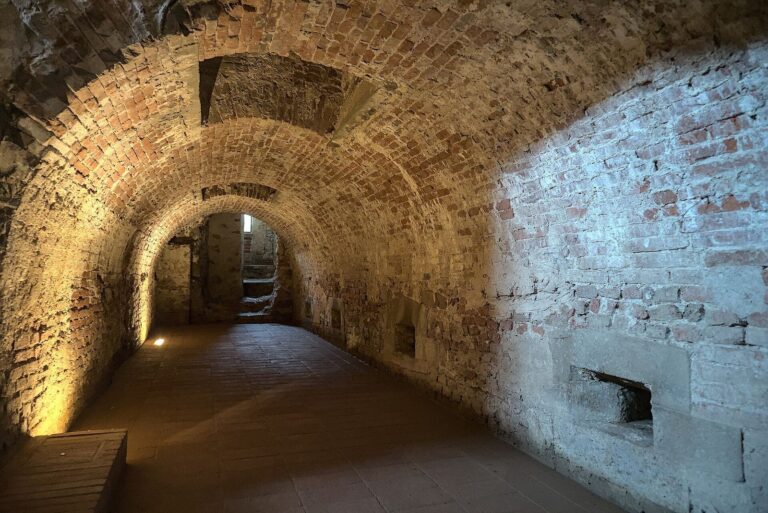
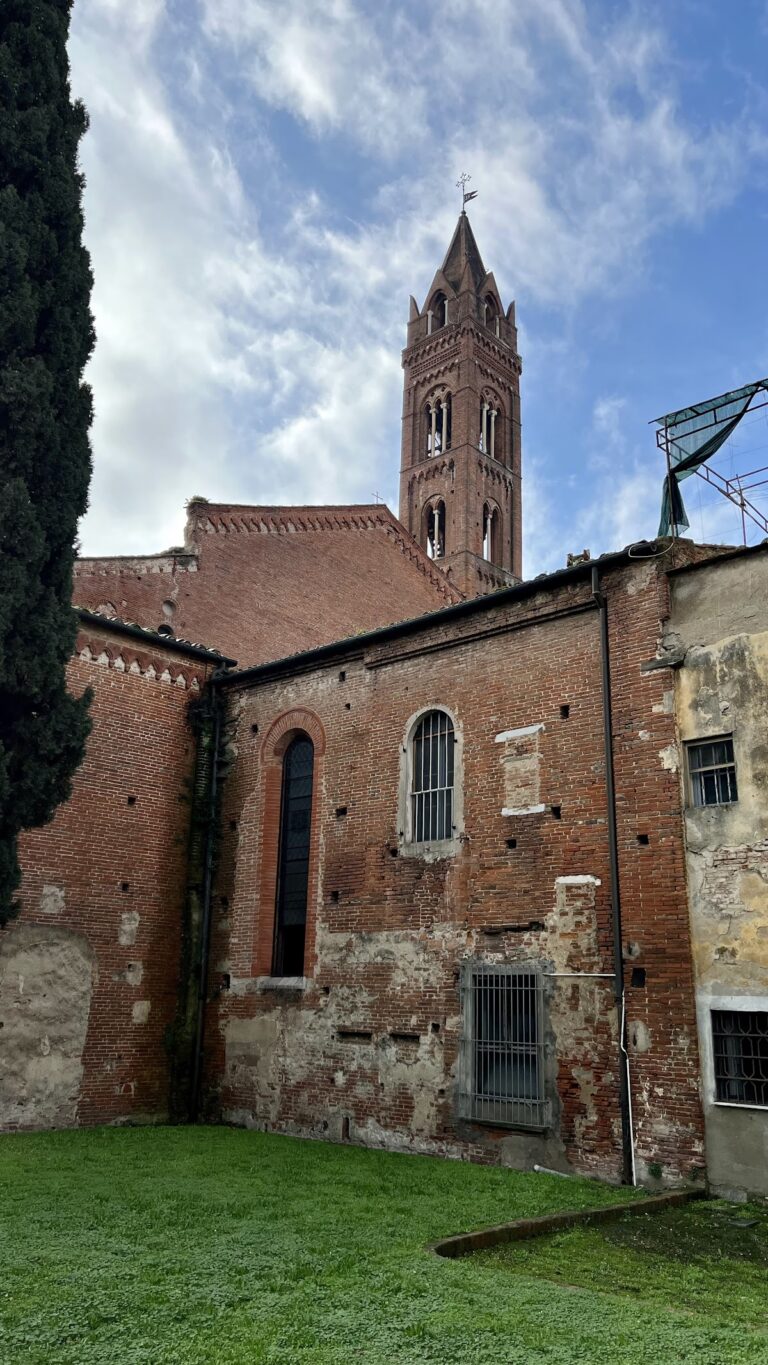
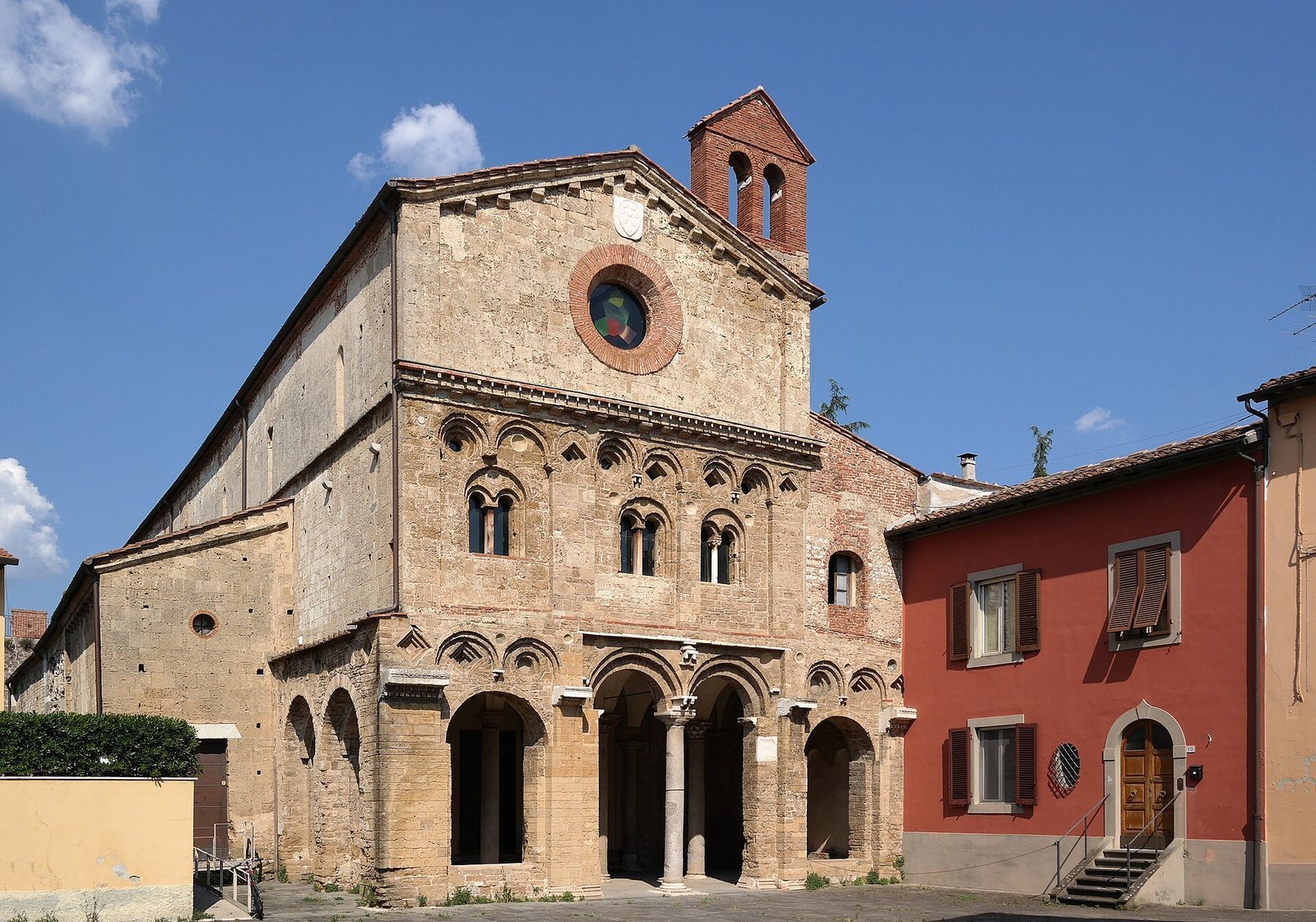
San Zeno stands on Piazza San Zeno, near Piazza Santa Caterina and just inside Porta San Zeno. Built of stone and marble, the church has an asymmetrical interior and a three-aisled layout. Excavations in the 1960s revealed a quadrilateral plan, with each aisle ending in an apse, a rounded or polygonal space at the end of a church. The upper portions date to the 12th century.
Façade
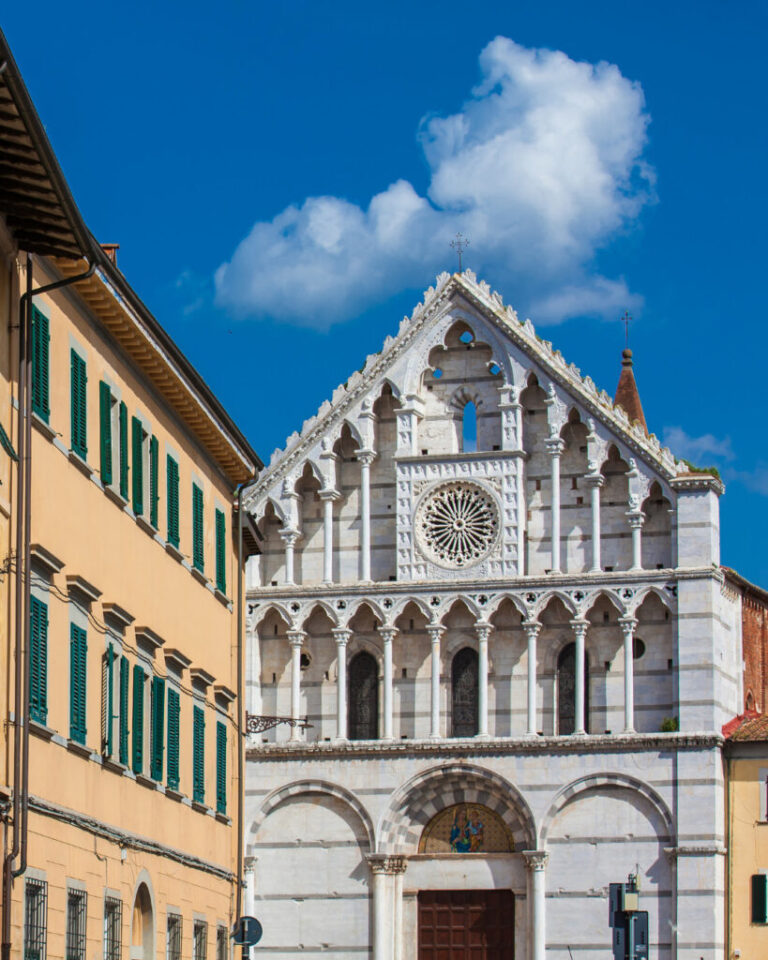
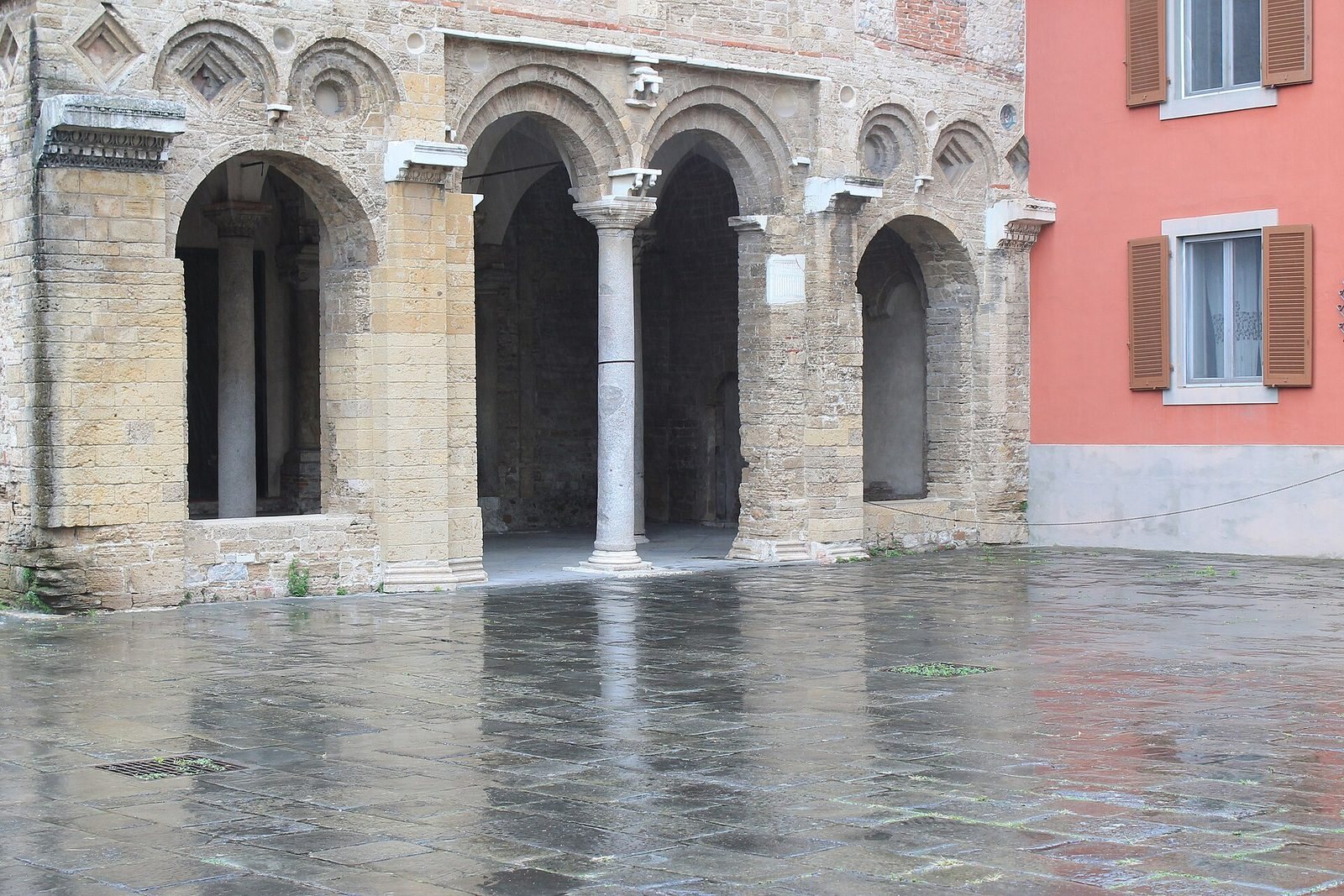
A covered portico supported by shallow wall supports and a central column stands before the façade. Its lower level features geometric patterns in the Romanesque style, a medieval style marked by rounded arches and heavy masonry. Above are windows divided by vertical supports, set within arches formed against the wall. Higher up, a large circular opening sits below the coat of arms of the Archbishop of Pisa. The façade also carries lozenge patterns, smaller circular openings, and seven ceramic basins made by Islamic craftsmen in the 11th century. The basins now displayed there are copies; the originals are held at the National Museum of San Matteo. A 20th-century restoration substantially altered the façade.
Interior
Rows of columns separate the aisles. Their capitals incorporate ancient Roman elements, while sparse traces of medieval wall paintings survive inside the church. The arches vary in size and include both rounded and pointed forms.