Sankt Jakob am Thurn Castle: A Medieval Tower and Noble Residence
Site at a Glance
- Rating
- 5
- Popularity
- Very Low
- Country
- Austria
- Primary era
- Medieval
- Eras represented
- Medieval, Early Modern
- Civilizations
- Holy Roman Empire, Prince-Archbishopric of Salzburg
- Site type
- Military
- Remains
- Castle
On this page8 sections
History
Sankt Jakob am Thurn Castle is a fortified tower and former noble residence in St. Jakob am Thurn, Austria. Its central tower probably dates to the 12th or 13th century and served as the seat of the Thurn family, Salzburg ministerials: dependent nobles who served a ruler and could hold offices and estates. The family held Salzburg’s burgrave office, an official position responsible for a castle or its administration, and the right to collect bridge tolls there. Some family members may have been based on Imberg. The Thurns controlled the castle until their family became extinct, and several were buried in the nearby parish church.
The Thurn family and the medieval tower
A record from 1274 names the castle. In 1538, Jörg Khnoll was its administrator. The Thurn family rose to the rank of barons in 1570, and the complex was converted into a residence during the 16th century. In 1572, Andree Pleialter was described as “of Thurn in the manorial district,” territory associated with a lord’s estate and sometimes subject to local authority.
From Salzburg fief to private estate
After Baron Alexander Hieronymus von Thurn zu Neubeuern died in 1647, the Salzburg fief, including the castle and its associated manorial district, passed to the nobleman Johann von Plaz. A fief was property held under feudal obligations. The Plaz family became counts in 1696. An inn opened in the castle in 1754, and in 1869 the former fief became freehold property, no longer subject to those obligations.
Twentieth-century ownership and restoration
The estate was sold in 1924 to Charlotte von Bornemann, who had married into the Wurmbrand-Stuppach family. In 1939, an order from the Gestapo, Nazi Germany’s secret state police, incorporated the building into the Reichsgau Salzburg, a regional administrative unit of Nazi Germany. Ownership returned to its former owner in 1947. By 1953 the castle was in serious disrepair, and its owner, Wilhelm Flatz, began restoration work. It received Austrian monument protection in 1993 and remains privately owned and inhabited.
Remains
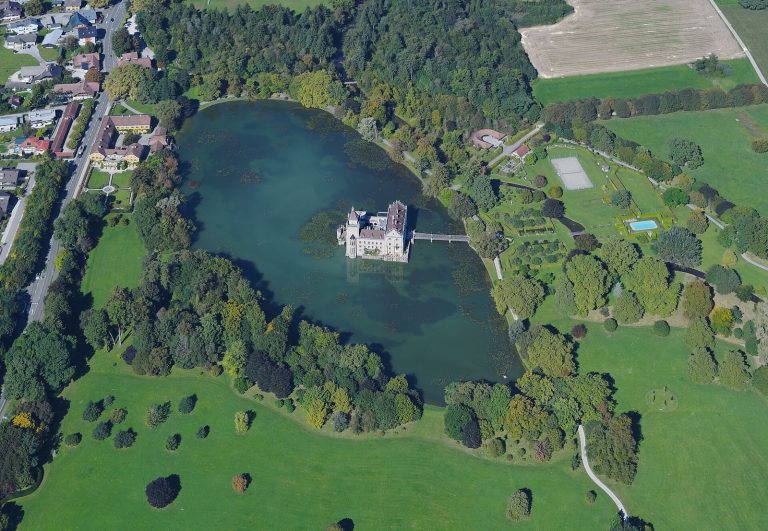
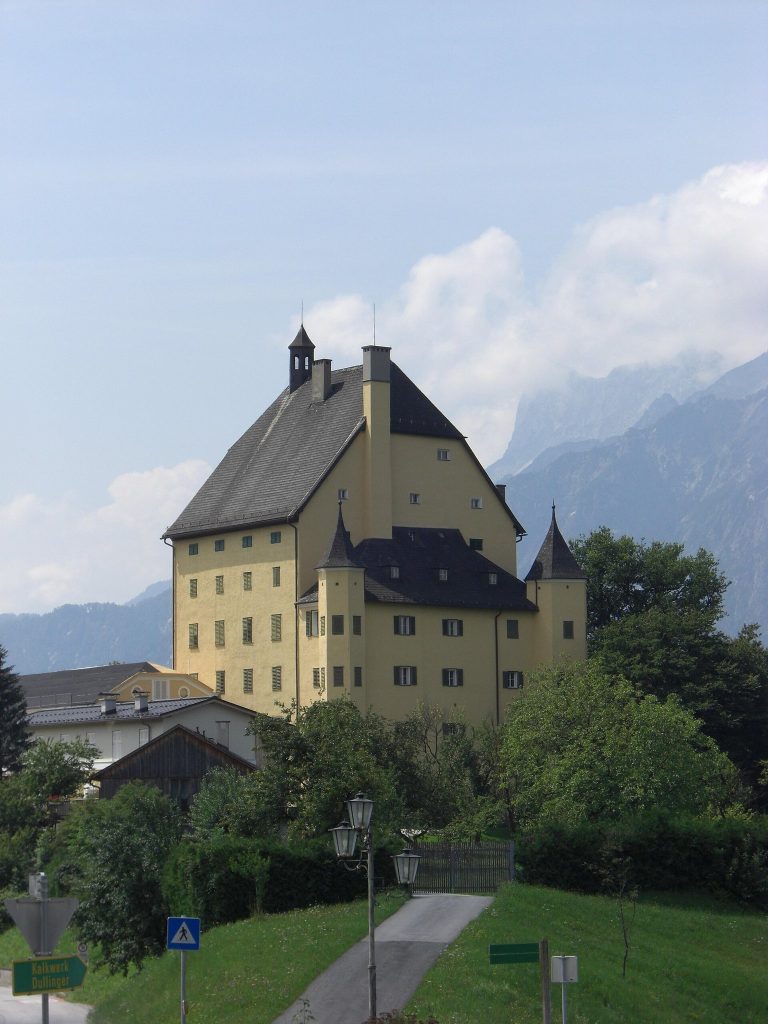
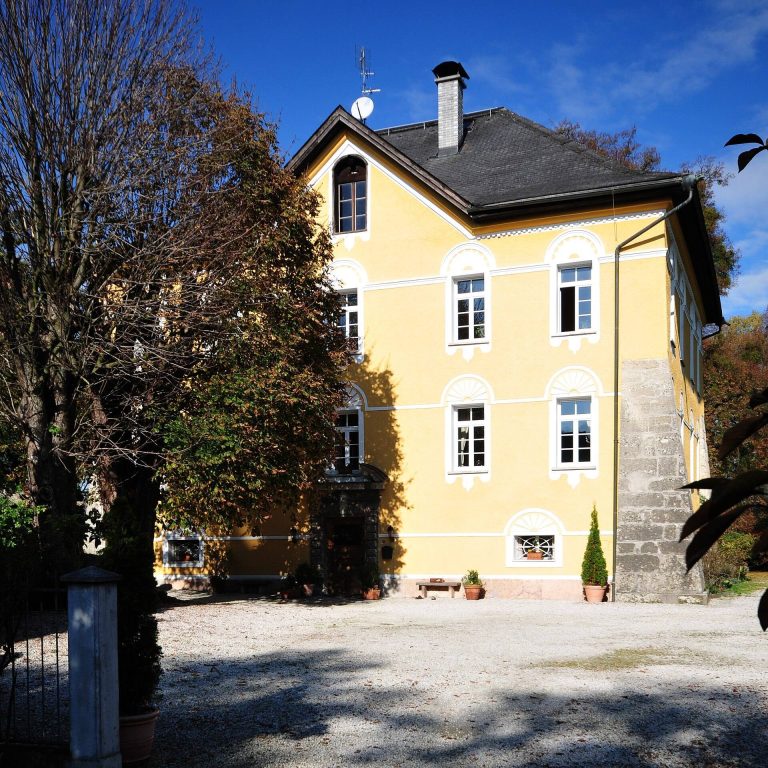
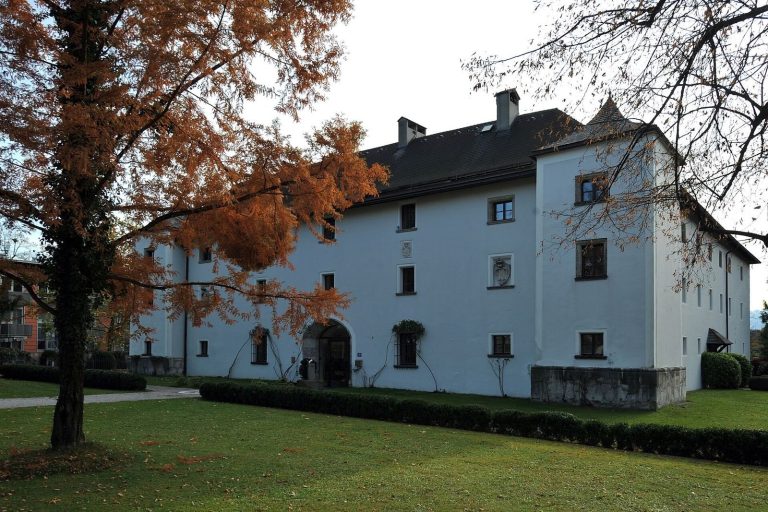
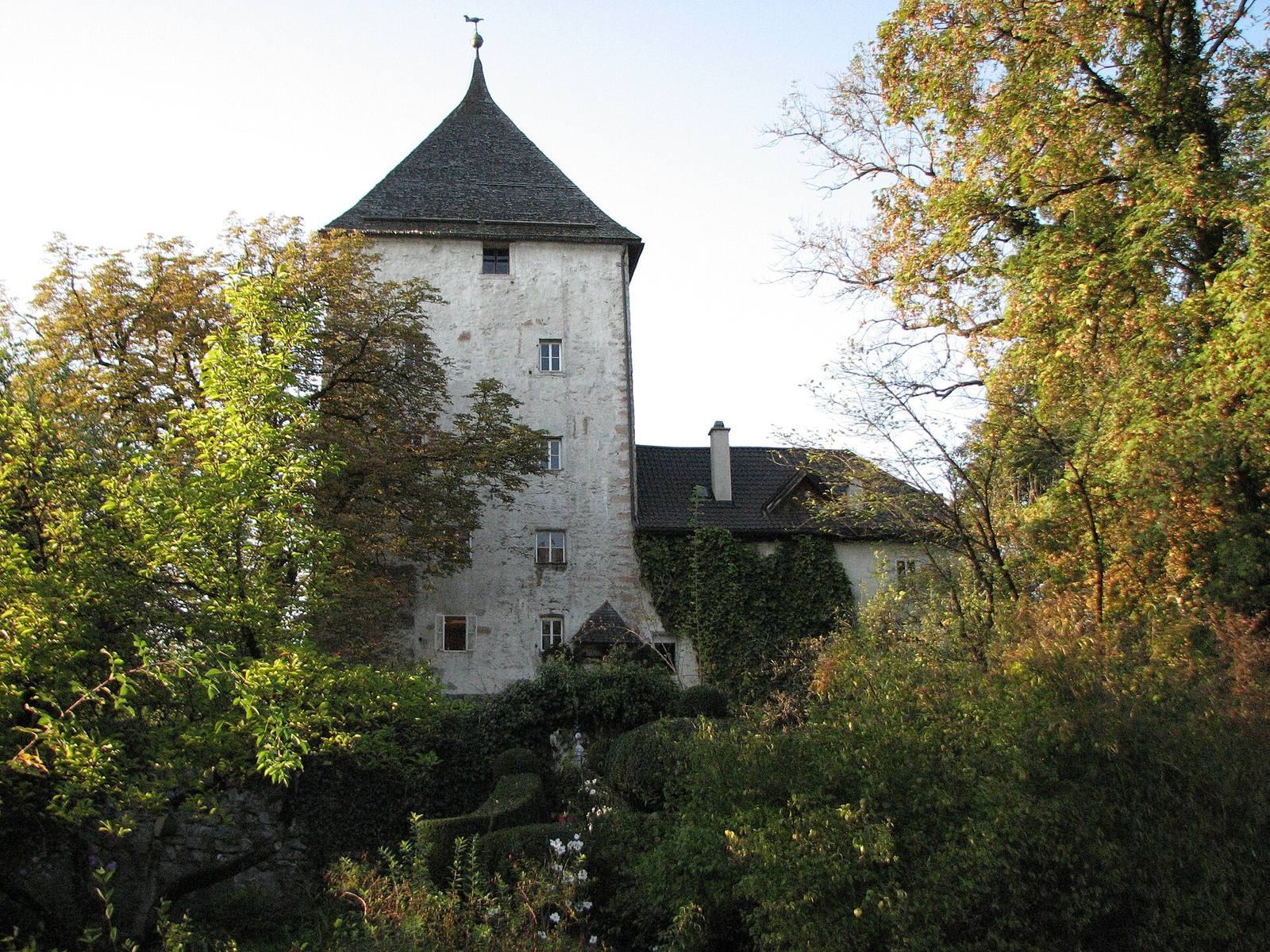
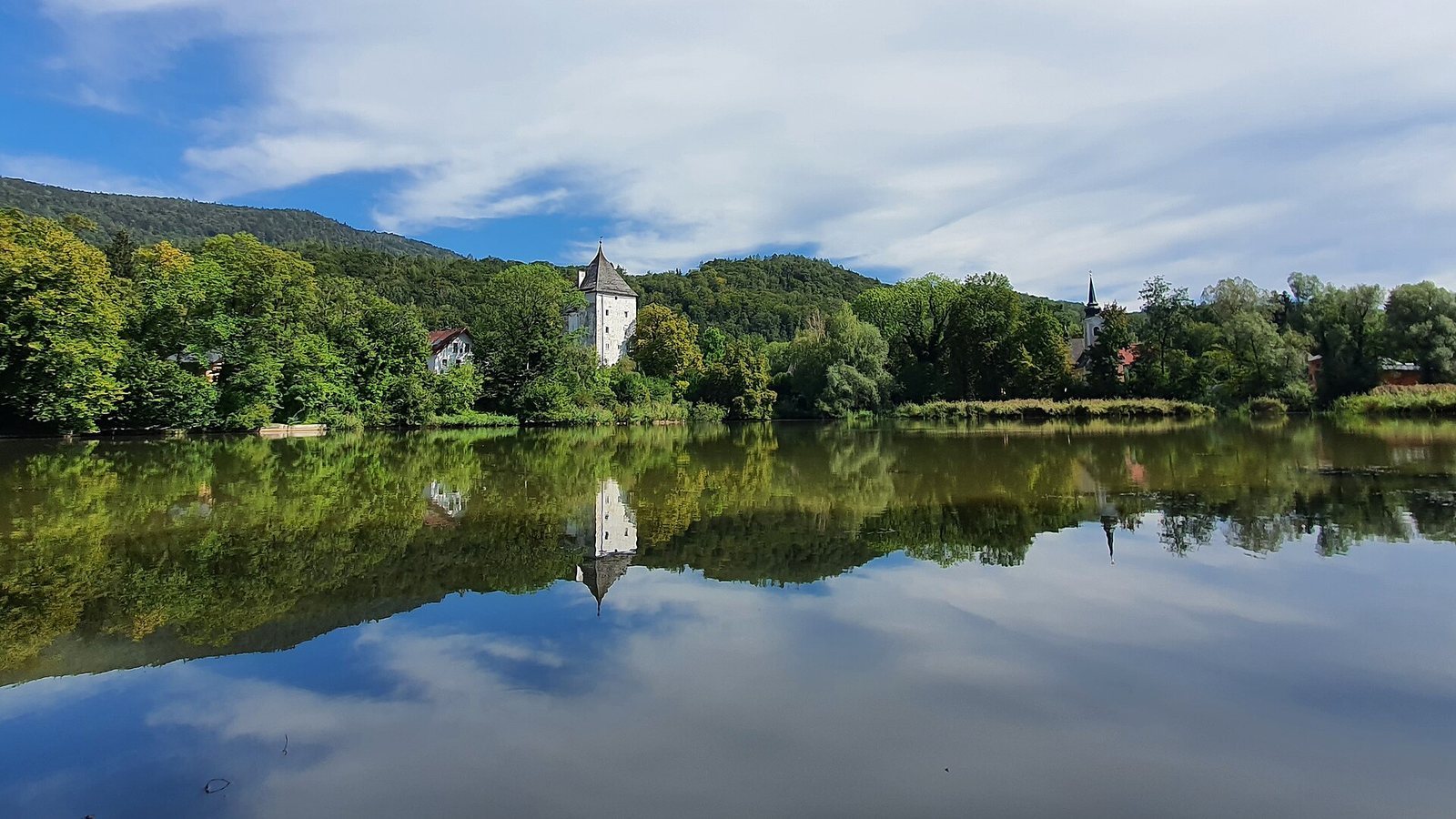
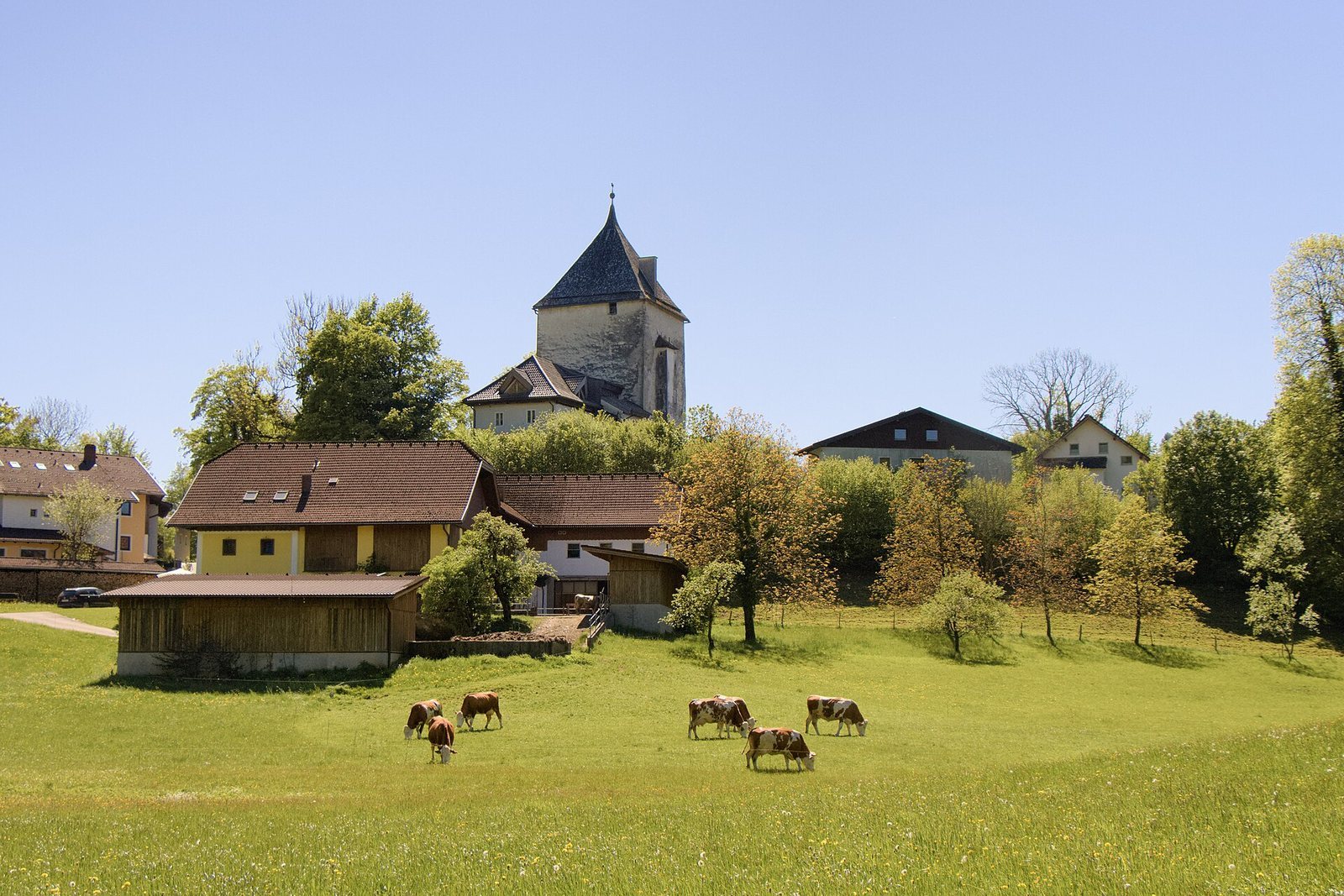
The complex is centered on a square residential tower, with a gabled building attached on its northeast side. It stands on the northern shore of a small pond designated as a nature reserve. Dressed stone and rubble masonry form the tower’s walls, which are plastered and painted white.
The residential tower
The tower has several storeys, with two rooms on each floor. Its ground-floor walls are about 1.9 metres thick. A steep pyramidal roof, now covered with slate, replaced an earlier covering of wooden shingles. A tin bird holding a spear serves as the weather vane at its peak.
Entrances and interior
The main entrance is a round-arched portal on the southeast facade, with Baroque forms, a style associated especially with 17th- and 18th-century European art and architecture. A fresco of the Virgin of Good Counsel, a Catholic title for Mary, was formerly painted above it. Another entrance is set at first-floor level at the rear of the tower and is reached by a removable wooden staircase. The rectangular windows are unornamented, while late Gothic surrounds, from the later phase of Gothic architecture, appear on the tower and adjoining building. The ground-floor rooms and stairways are vaulted; other tower rooms have flat ceilings with simple Baroque stucco decoration.
Adjoining building and wooden cross
The adjoining building has a gabled roof, but its date and number of storeys are uncertain. Its rooms have barrel vaults, continuous tunnel-shaped ceilings, intersected by lunettes, smaller curved vault sections. Beside the main portal, a wooden wall cross hangs beneath a protective shingle roof. Its date is uncertain, with the 16th or 18th century considered possible.