Schloss Kottingbrunn: A Historic Water Castle in Austria
Visitor Information
Google Rating: 4.7
Popularity: Low
Official Website: www.kottingbrunn.gv.at
Country: Austria
Civilization: Early Modern, Medieval European
Site type: Military
Remains: Castle
History
Schloss Kottingbrunn is located in the town of Kottingbrunn, Austria. Its origins trace back to medieval times and it was built by various noble families that shaped its development over centuries.
The earliest version of the site began as a wooden castle in the mid-11th century, constructed under Margrave Adalbert of the Babenberg family. This initial stronghold was destroyed in 1146 during a Hungarian attack. Soon after, around 1150, Heinrich II replaced the wooden structure with a stone castle, reinforcing the settlement’s importance in the region. The castle changed hands several times and was involved in military conflicts; for example, it suffered destruction again in 1291 during clashes between Duke Albrecht and King Andrew III of Hungary. During the 14th century, the noble Stüchse family, also known as Stuchs von Trautmannsdorf, undertook expansions that enhanced the castle’s fortifications.
The power struggles of the late medieval period brought further damage when Emperor Frederick III fought Matthias Corvinus. Reconstruction efforts culminated around 1508, evidenced by a sundial from that year showing a burning castle, likely symbolizing earlier destruction. In the 15th or early 16th century, a nearby fortress known as the Wasserburg was built in a distinct Italian style with bastions, strengthening defense against Hungarian and Turkish threats. This fortress withstood the first Turkish siege of Vienna in 1529 but was destroyed during the second major siege in 1683. At that time, Count Franz Sigmund von Lamberg evacuated the castle and fortress. Reconstruction started immediately after the Turks withdrew and continued under Franz Sigmund and his brother Leopold Josef von Lamberg.
Throughout the 17th and 18th centuries, Schloss Kottingbrunn passed through the hands of various noble families. It was owned by the Counts of Brandis from 1637, then the Counts Lamberg-Sprinzenstein from 1687, and later the Counts Dietrichstein from 1732, among others. The castle was rebuilt in the Baroque style following the damage incurred during the 1683 siege. During this period, the adjacent fortress was transformed from a military stronghold into an economic courtyard supporting the castle’s operations, including stables and servants’ quarters. In modern times, restoration work between 1982 and 2000 returned the castle to use as a municipal building and cultural center, marking a new chapter in its long history.
Remains
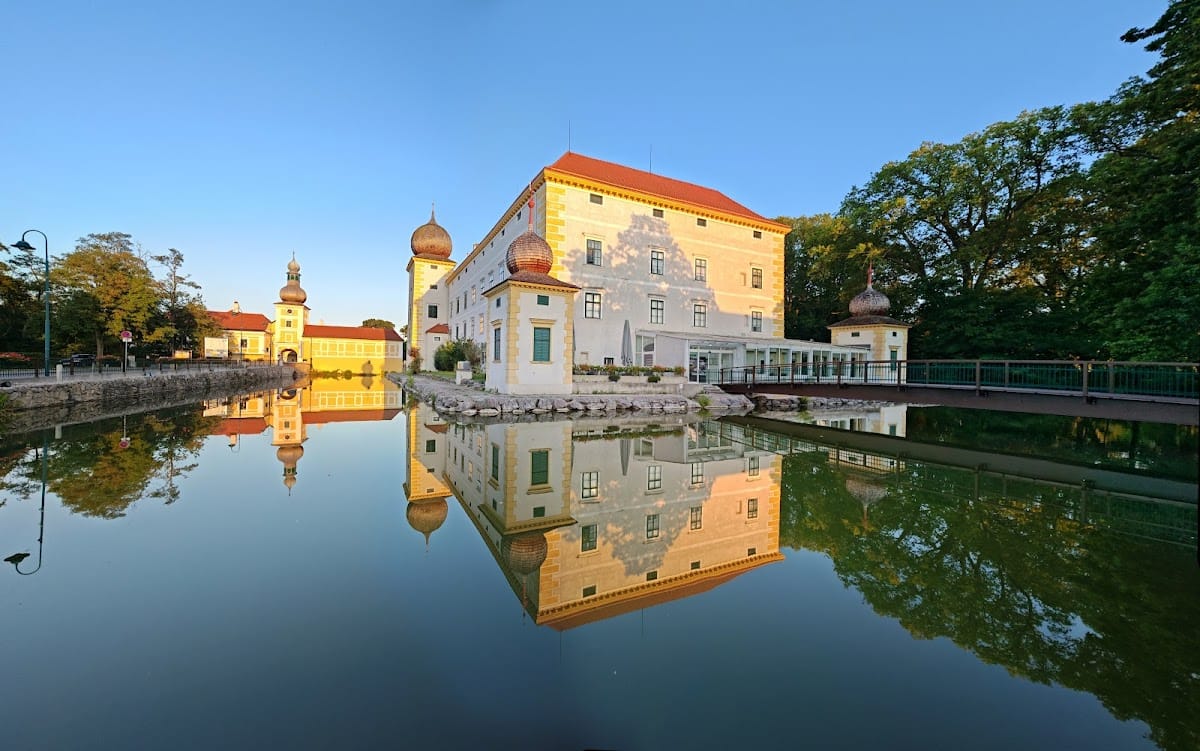
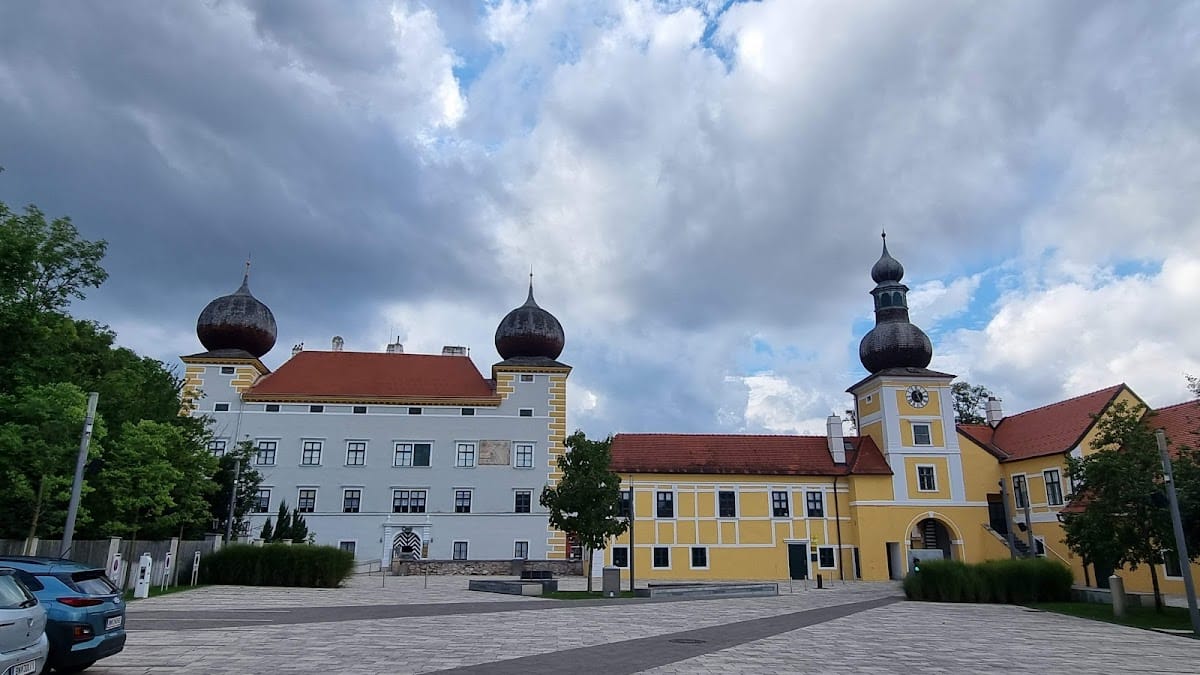
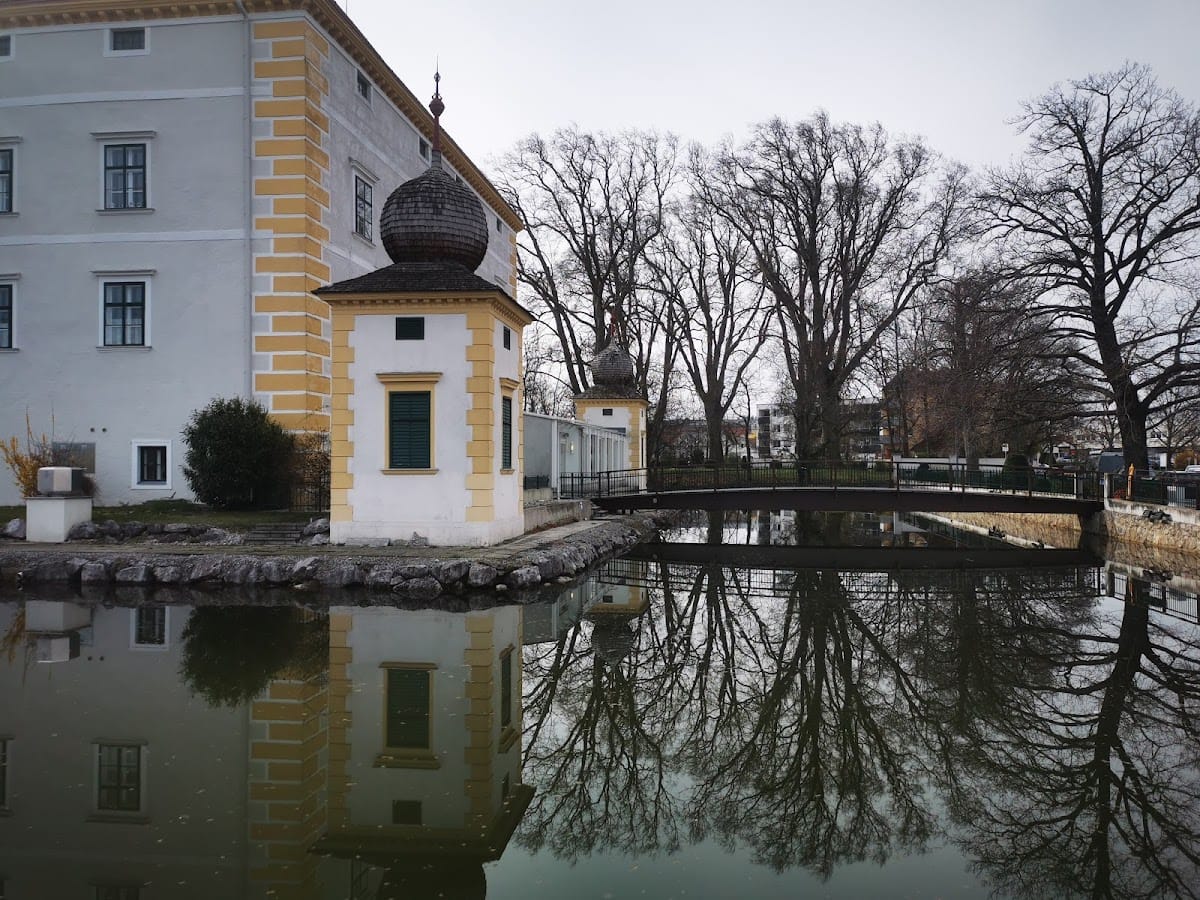
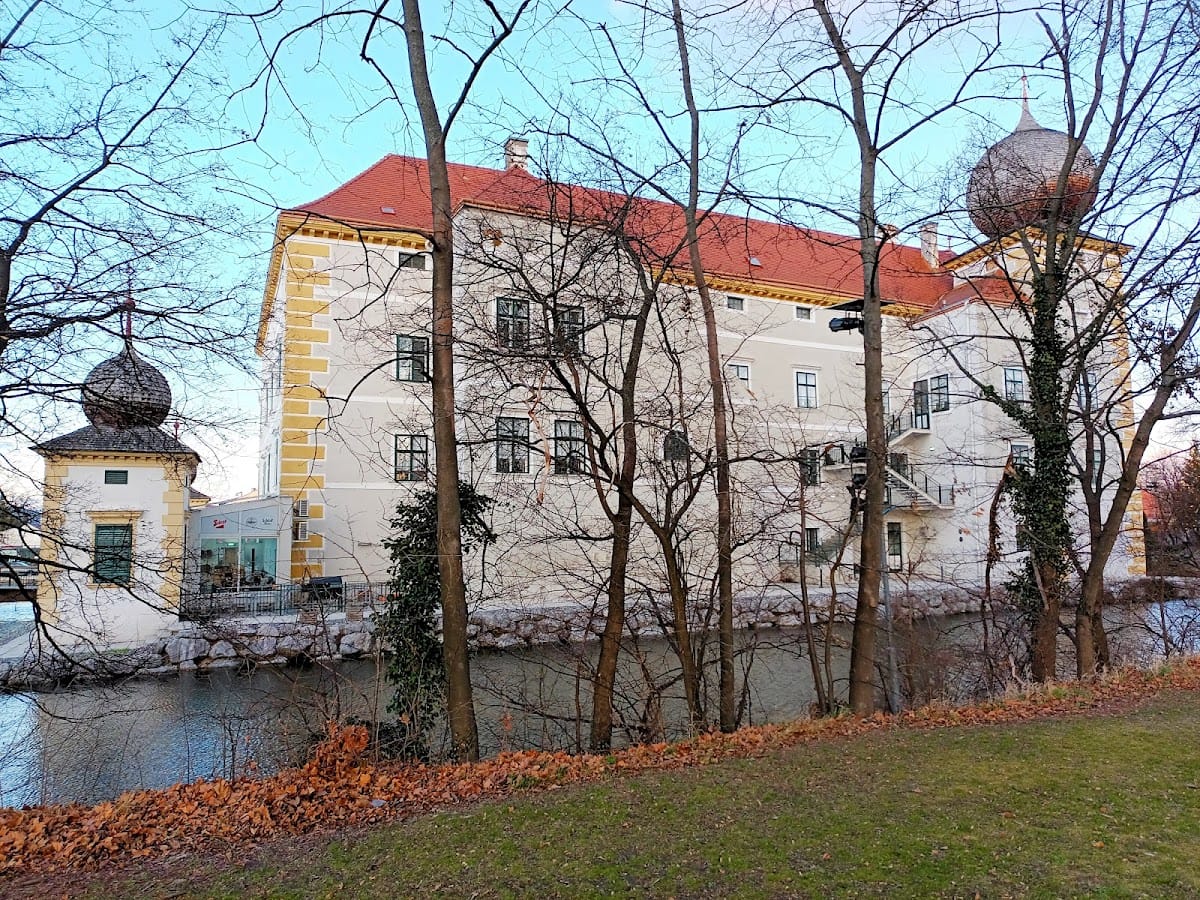
Schloss Kottingbrunn is a water castle characterized by a cubic four-winged structure with towers framing its main facade. It is surrounded by wide water-filled moats, emphasizing its defensive design. The castle complex occupies the southeastern part of Kottingbrunn’s town center and stands on foundations that include earlier medieval elements.
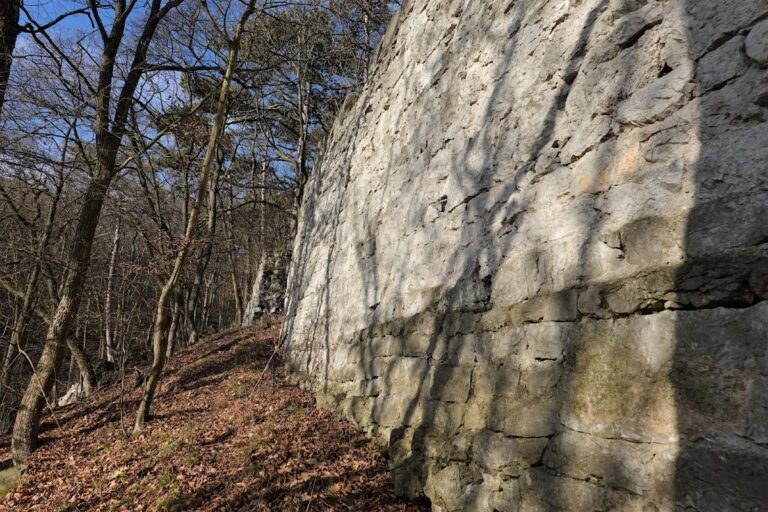
An adjacent fortress known as the Wasserburg forms a square layout with four bastions projecting slightly at each corner. This fortress, built during the 15th or early 16th century, reflects an Italian-influenced design, intended as a modern fortification against external threats. The fortress is encircled by a moat which also surrounds the main castle. Its walls rest on foundations of driven wooden piles, a technique used to stabilize constructions on soft ground. The bastions feature a continuous stone band that curves outward semicircularly. Several small gun slits designed for firearm defense survive on the bastions’ outer walls and appear in a 1672 copper engraving by Georg Matthäus Vischer, providing visual documentation of the fortress’s original military architecture.
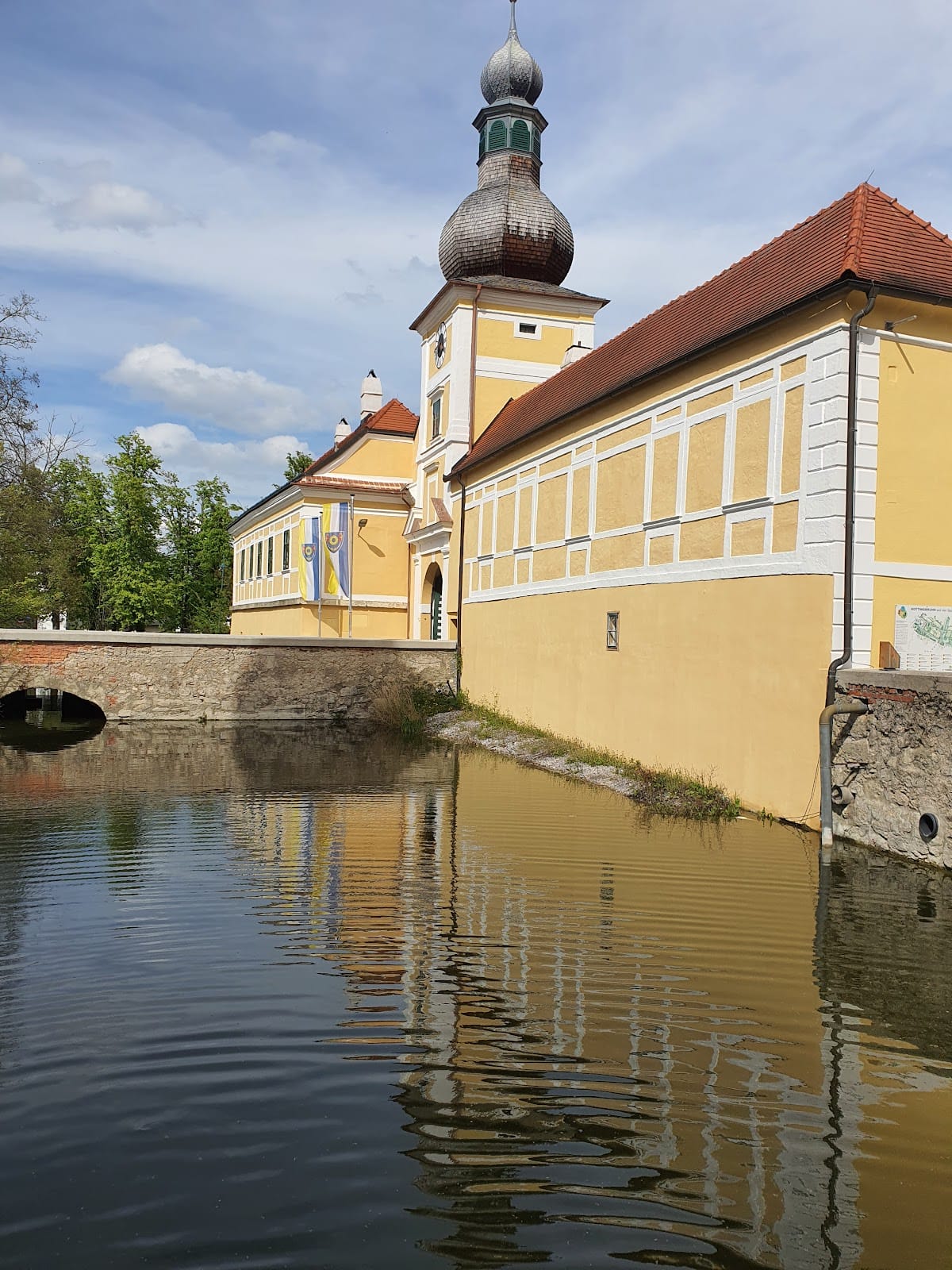
During the Baroque period, two bastions were partly built over by additional structures, indicating a shift from purely military to more domestic or economic functions. The fortress’s interior once housed a long building in the courtyard, identified on the 1672 engraving but no longer extant today. Originally, the castle was accessed by two stone arch bridges crossing the moat—one linking the castle to the fortress and another passing through a gate tower that formed the sole entrance to the fortified complex. While no longer standing, these bridges replaced earlier drawbridges common in medieval castles.
A prominent Baroque gate tower equipped with a clock guarded the entrance to the fortress during later phases of its use. The northeast wing of the fortress complex, referred to as the Zöchlingtrakt, formed part of the economic courtyard supporting the castle’s household activities. From the earliest period of the original water castle, a Romanesque stone portal decorated with a floral rosette survives and is preserved within the castle museum, offering a tangible link to the medieval origins of the site.
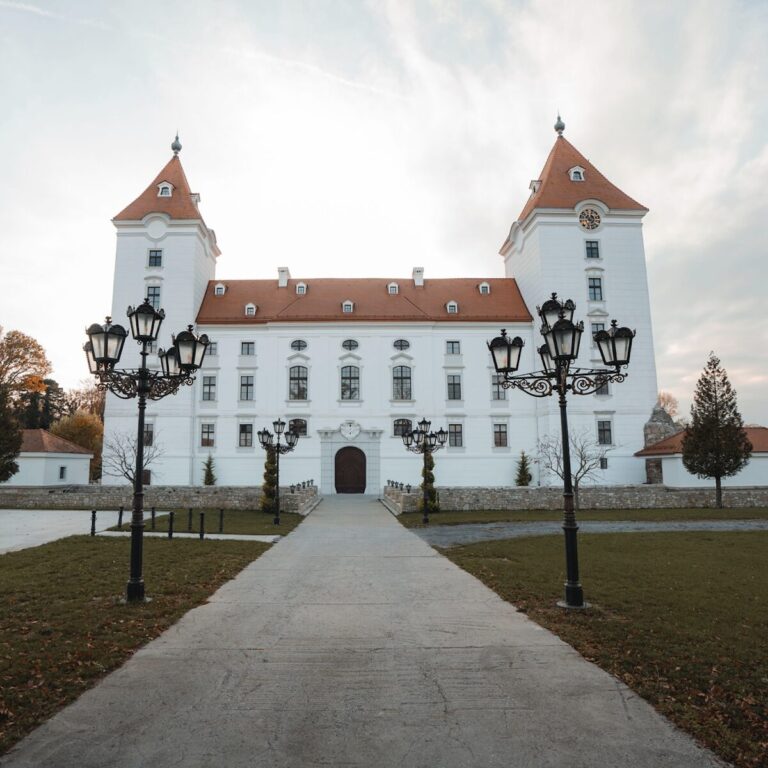
The overall appearance of Schloss Kottingbrunn today reflects its Baroque reconstruction after the 1683 siege, combining architectural styles from various periods of its long history. The surrounding park, integrated with the castle grounds, has become a notable space for cultural activities and public gatherings, preserving the castle’s status as a landmark within the town.
Nearby sites