Schloss Gobelsburg: A Baroque Castle and Winery in Austria
Site at a Glance
- Rating
- 4.8
- Popularity
- Low
- Country
- Austria
- Primary era
- Early Modern
- External website
- Open
- Eras represented
- Medieval, Early Modern
- Civilizations
- Habsburg, Holy Roman Empire
- Site type
- Domestic
- Remains
- Castle
On this page7 sections
History
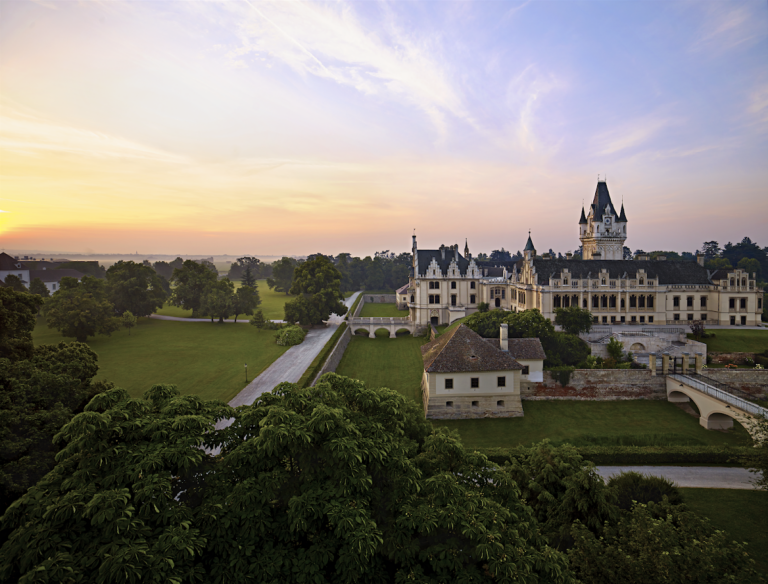
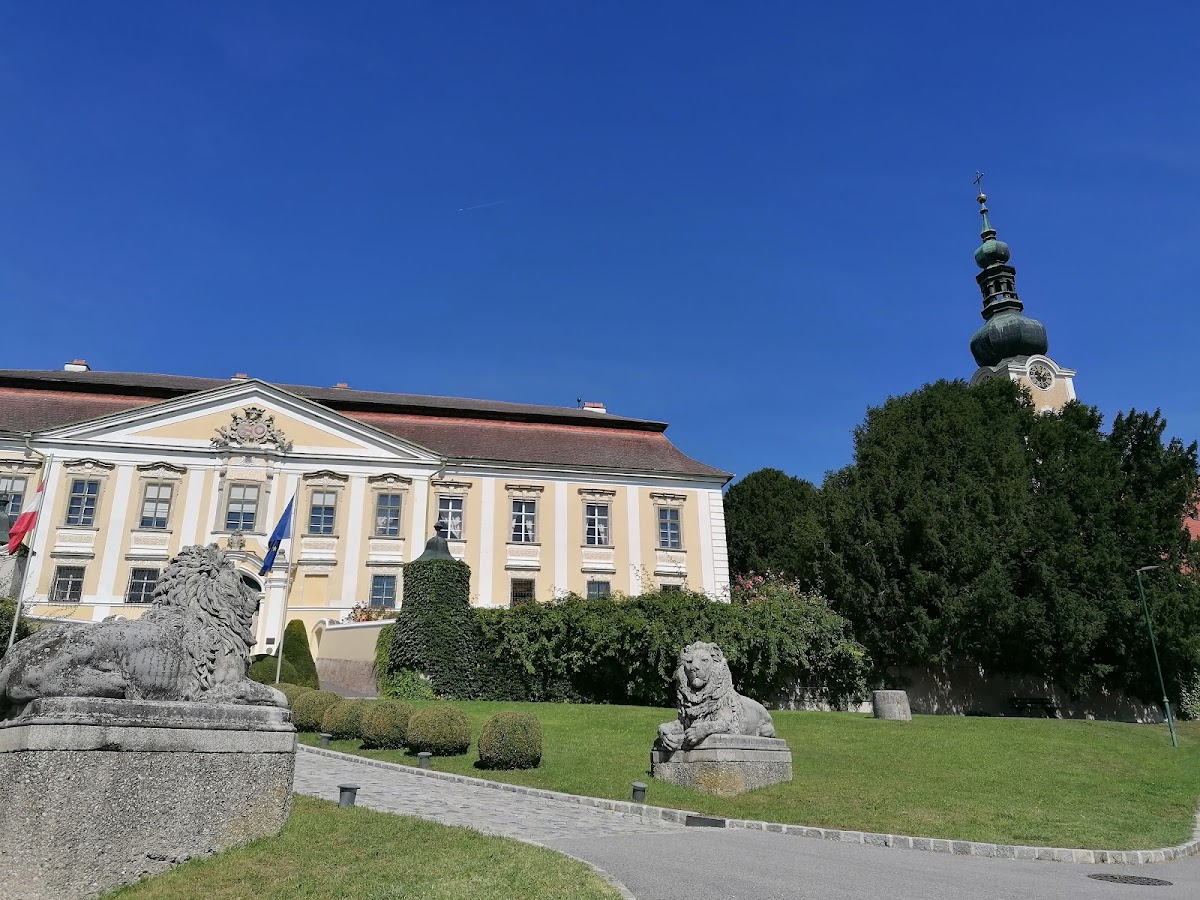
Schloss Gobelsburg is a historic castle and winery in Austria, in the Gobelsburg cadastral community of Langenlois. The medieval Kuenringer family built the fortified stronghold in 1074, and its later Renaissance and Baroque transformations shaped the complex seen today.
Kuenringer Origins and Zwettl Abbey
Azzo von Gobatsburg, regarded as the progenitor of the Kuenringer family, established the site as a fortified residence. Its first recorded mention appears in a Kuenringer document. The family’s regional influence became closely linked with Zwettl Abbey, a Cistercian monastery founded by Azzo’s grandson, Hadmar I von Kuenring, in 1138. Through the All Saints Foundation, Hadmar endowed the abbey in 1171 with vineyards around Gobelsburg.
The estate remained with the Kuenringers until 1314, when it passed into the hands of several landed noble families. During the sixteenth century, the original fortress was converted into a four-wing Renaissance complex, creating the basic form of the present castle.
Hohenfeld Transformation
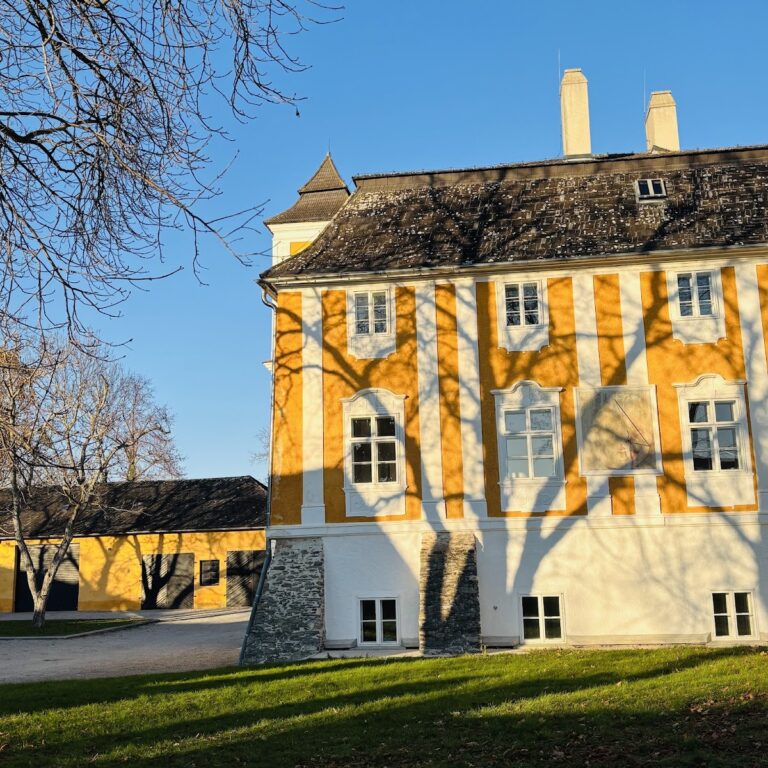
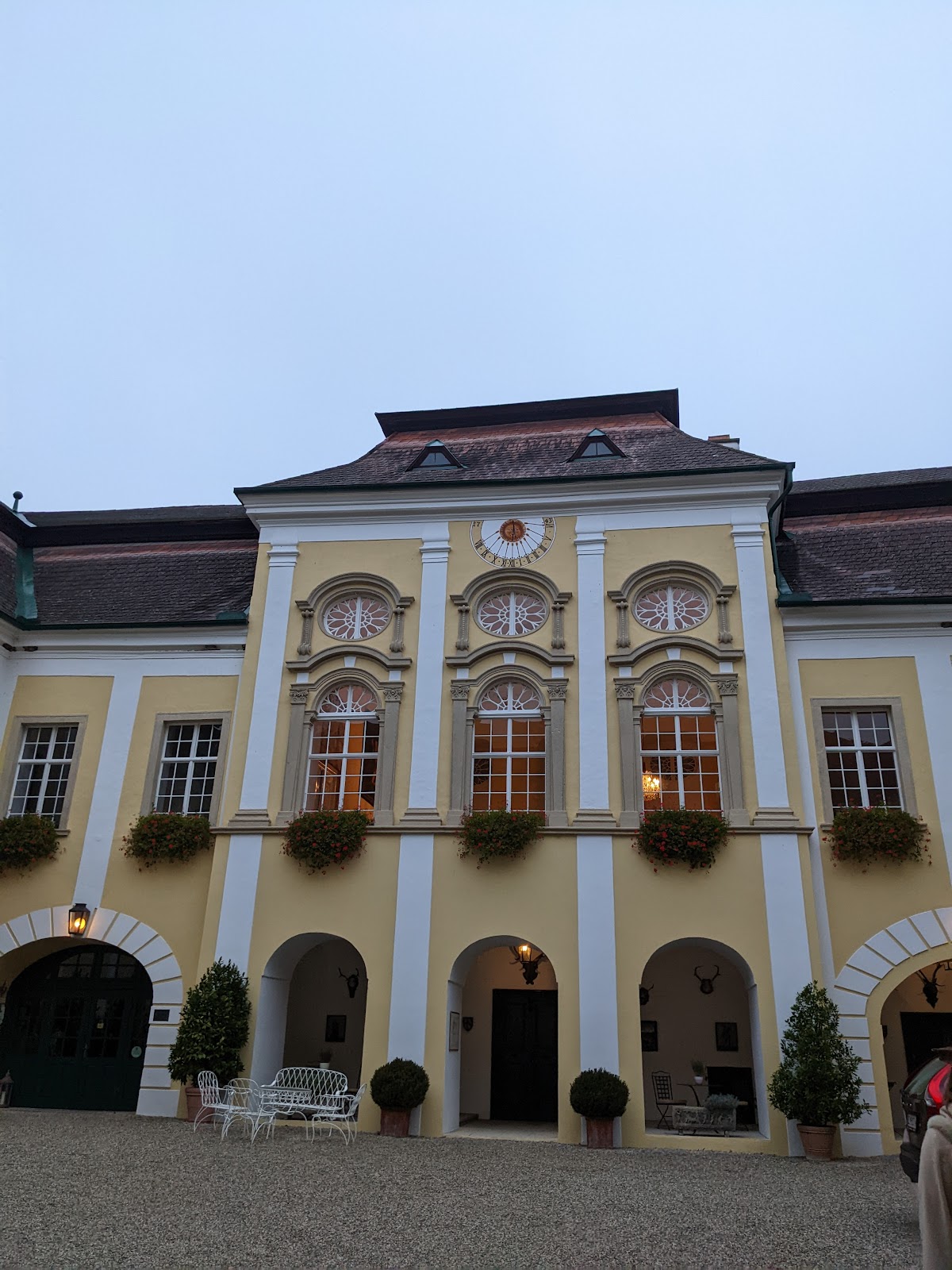
Baron Otto Ferdinand von Hohenfeld inherited the estate in 1693. In 1725, Count Otto Achaz Ehrenreich Hohenfeld commissioned Joseph Munggenast, an Austrian Baroque architect and builder, to remodel the building. The work gave the Renaissance core a Baroque character, and the castle was also known as Ehrenreichsburg. Its decoration, filled with hunting imagery, indicates that the remodeled residence was probably intended for use as a hunting retreat.
Heinrich Hohenfeld later entered Zwettl Abbey. In 1740 he sold the heavily indebted lordship to the abbey, and in 1746 Schloss Gobelsburg became its administrative seat. The connection with wine production continued after 1785, when the castle and its vineyards began to be used as a winery.
Decline, Repair, and Museum Use
After the First World War, the building housed an apprentice home and entered a period of increasing deterioration. During the Second World War, French prisoners of war were accommodated there. The castle then suffered severe damage and disrepair, including the burning of floors for fuel and the destruction of its interiors.
Renovation began after 1958 under Father Bertrand Baumann, who managed the estate. When the work ended in 1966, the building became a branch of the Austrian Museum of Folk Life. It housed a ceramics museum for the institution’s collection of majolica, a type of tin-glazed earthenware decorated with painted designs, until 1999. Since 1996, Zwettl Abbey has leased the estate to the Moosbrugger family. Schloss Gobelsburg is protected as a monument and forms part of Austria’s listed heritage.
Remains
Schloss Gobelsburg combines a Renaissance four-wing plan with Baroque alterations and interiors. The complex includes representative rooms, a chapel, gardens, and vineyards, linking the surviving architecture with the estate’s long administrative and agricultural functions.
Renaissance Castle and Baroque Decoration
The building’s Renaissance core belongs to the sixteenth-century conversion of the earlier fortress into a four-wing complex. Joseph Munggenast’s 1725 remodeling added Baroque features to this earlier structure. Hunting scenes and motifs appear across the stucco decoration, ceiling paintings, and tiled stoves, while the chapel contains a work by Kremser Schmidt, the commonly used name of the eighteenth-century Austrian painter Martin Johann Schmidt.
Gardens and Vineyards
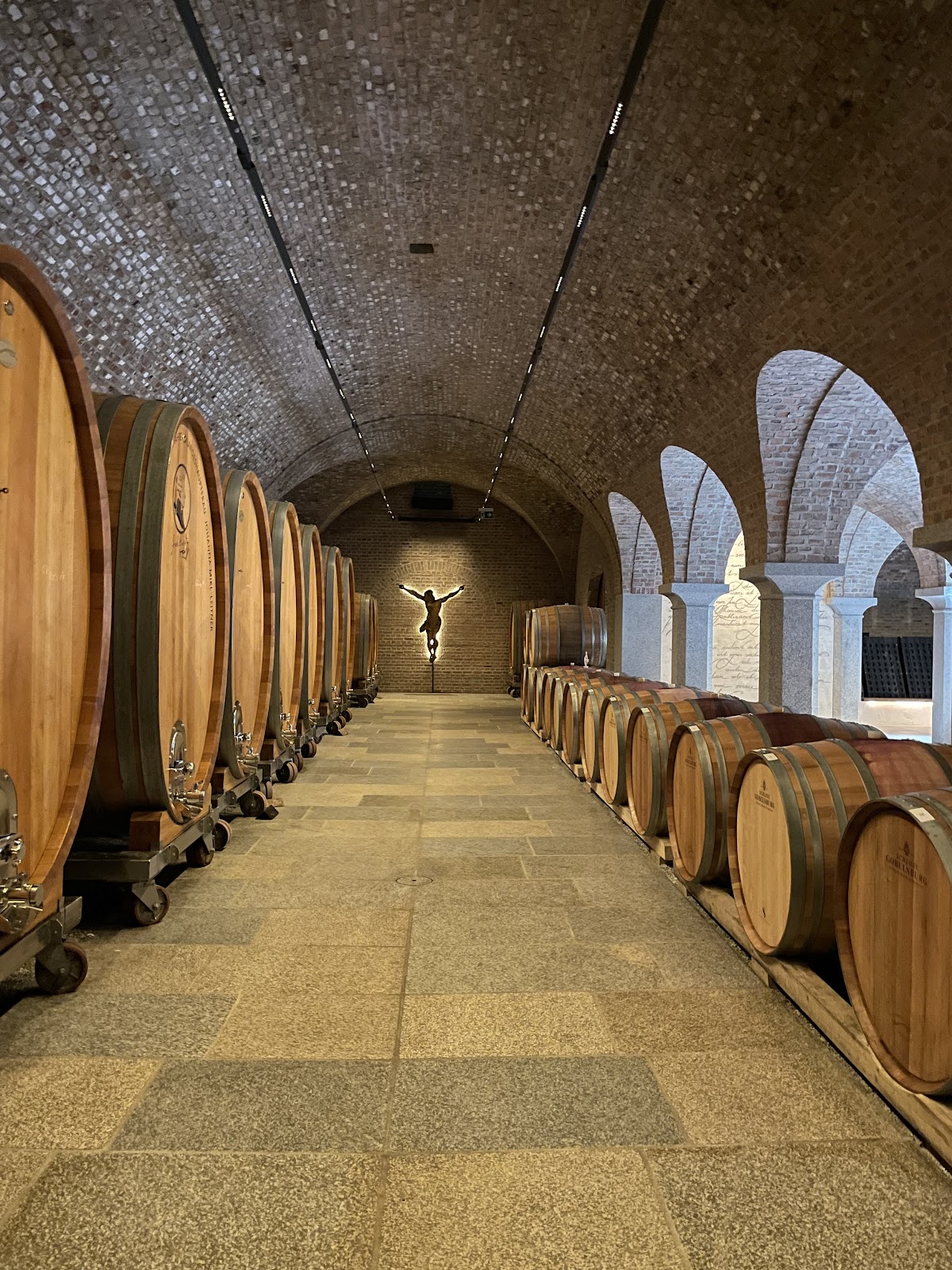
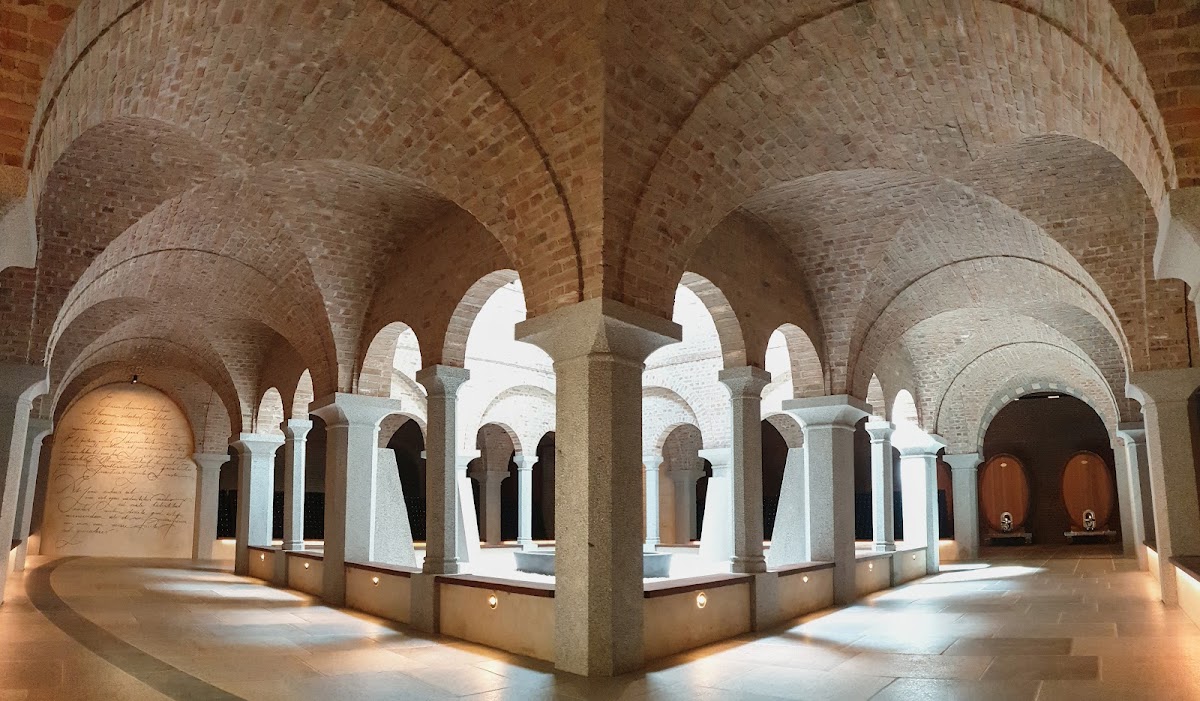
Gardens and associated vineyards form part of the castle complex. The vineyards connect the physical estate with the endowment made to Zwettl Abbey in the twelfth century and with the winery use that began at Schloss Gobelsburg in 1785.