Gozzoburg: A Medieval Urban Castle in Krems, Austria
Site at a Glance
- Popularity
- Medium
- Country
- Austria
- Primary era
- Medieval
- Eras represented
- Medieval
- Civilizations
- Unclassified
- Site type
- Military
- Remains
- Castle
On this page7 sections
History
Gozzoburg is a medieval urban castle in Krems an der Donau, Austria, with a late-Romanesque core built after 1235. Late Romanesque design belongs to the transition toward Gothic architecture. The expanded complex is regarded as one of Lower Austria’s most important early Gothic buildings.
Foundation and expansion
In the late 1240s, Gozzo von Krems, the city judge, acquired the original building and enlarged it into a substantial palace through three phases of construction. The name Gozzoburg first appears in a record in 1258. St Catherine’s Chapel was consecrated in 1267.
Habsburg possession and remodelling
The castle became part of the Habsburgs’ possessions in 1320. The Habsburgs were a major European ruling dynasty, and the castle was repeatedly pledged during the 15th century. Troops of Matthias Corvinus, king of Hungary, damaged it during the 1477 siege of Krems. The castle was remodelled between 1484 and 1487.
Later changes and restoration
The castle’s tower was demolished in the 19th century. Extensive renovation followed from 1958 to 1964, and a later major renovation and revitalisation was largely completed in summer 2007. Research and repair work on the chapel rooms continued from 2007, including restoration of St Catherine’s Chapel in 2012. In 2009, the restored castle received a Europa Nostra award for heritage preservation and restoration. The building houses the Lower Austrian State Conservatorate of the Federal Monuments Office and also serves as a museum.
Remains
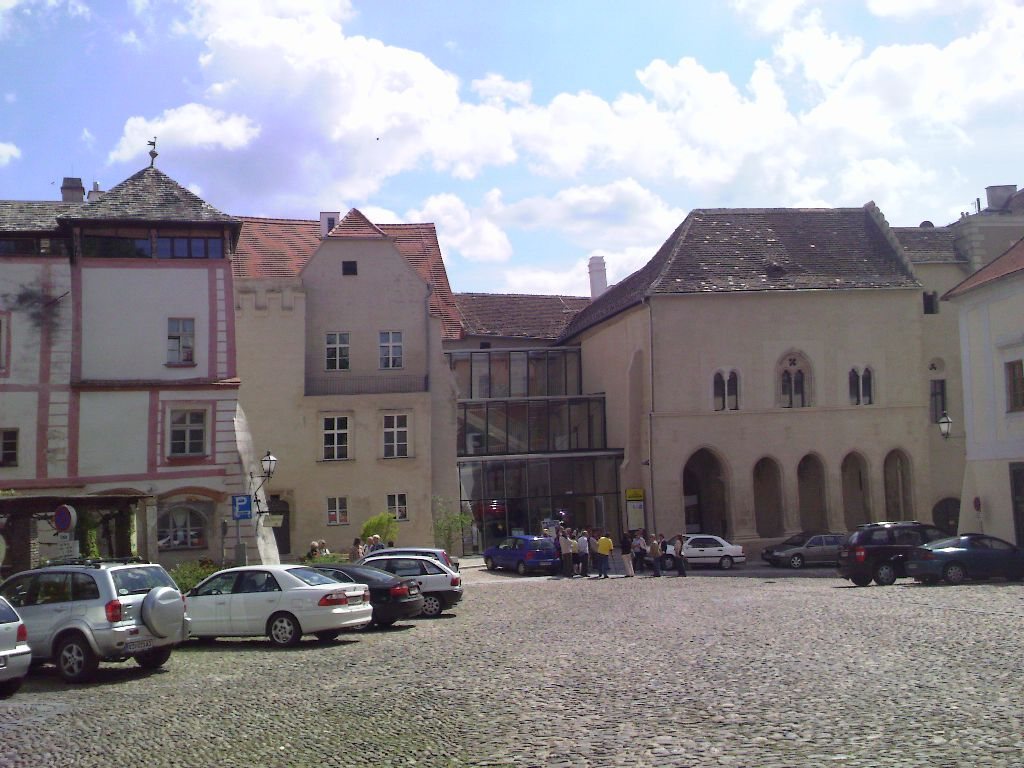
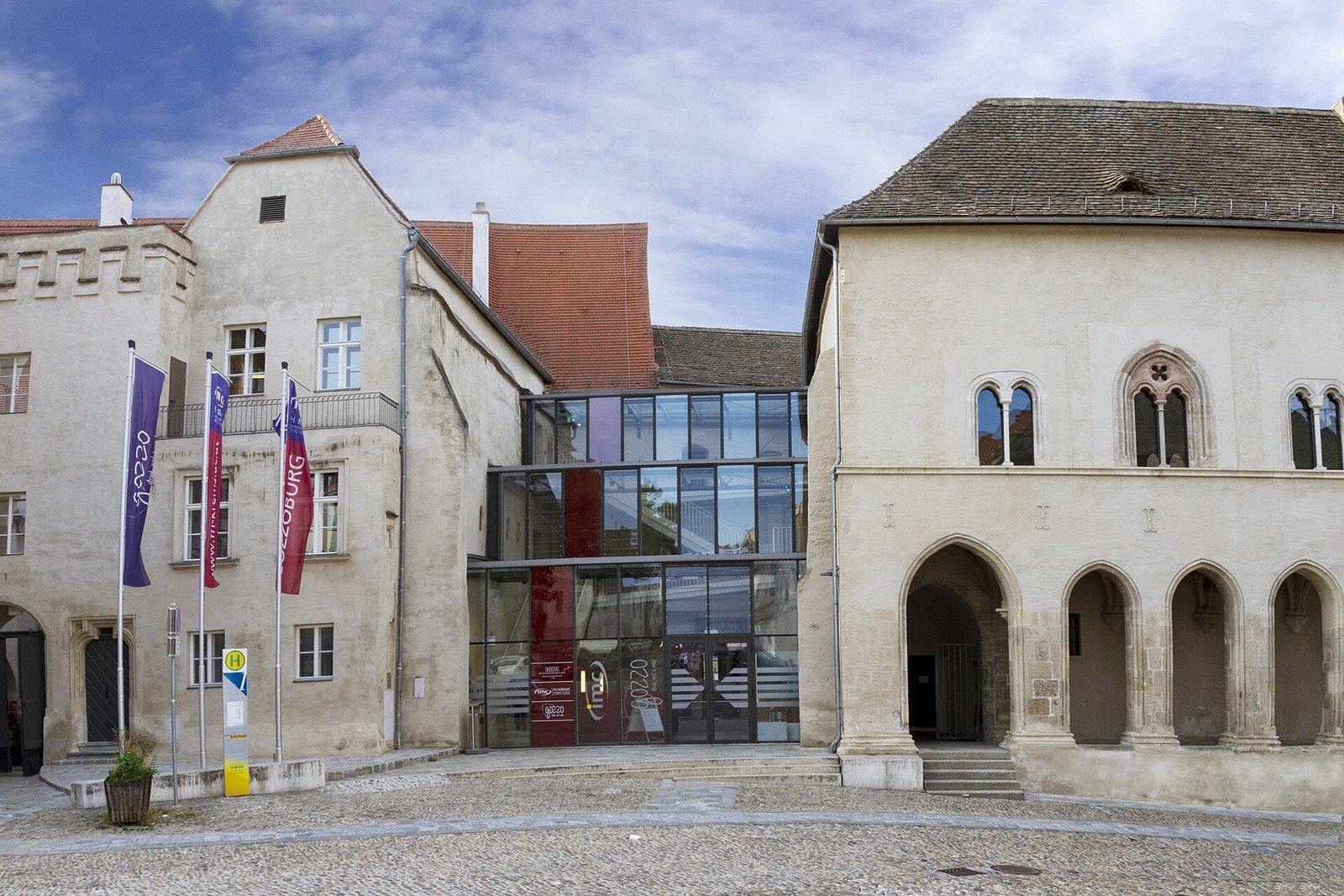
Gozzoburg is a lowland urban castle built of sandstone. Its eastern and western wings are joined by original building fabric, linking the castle’s principal parts.
Castle fabric and hall
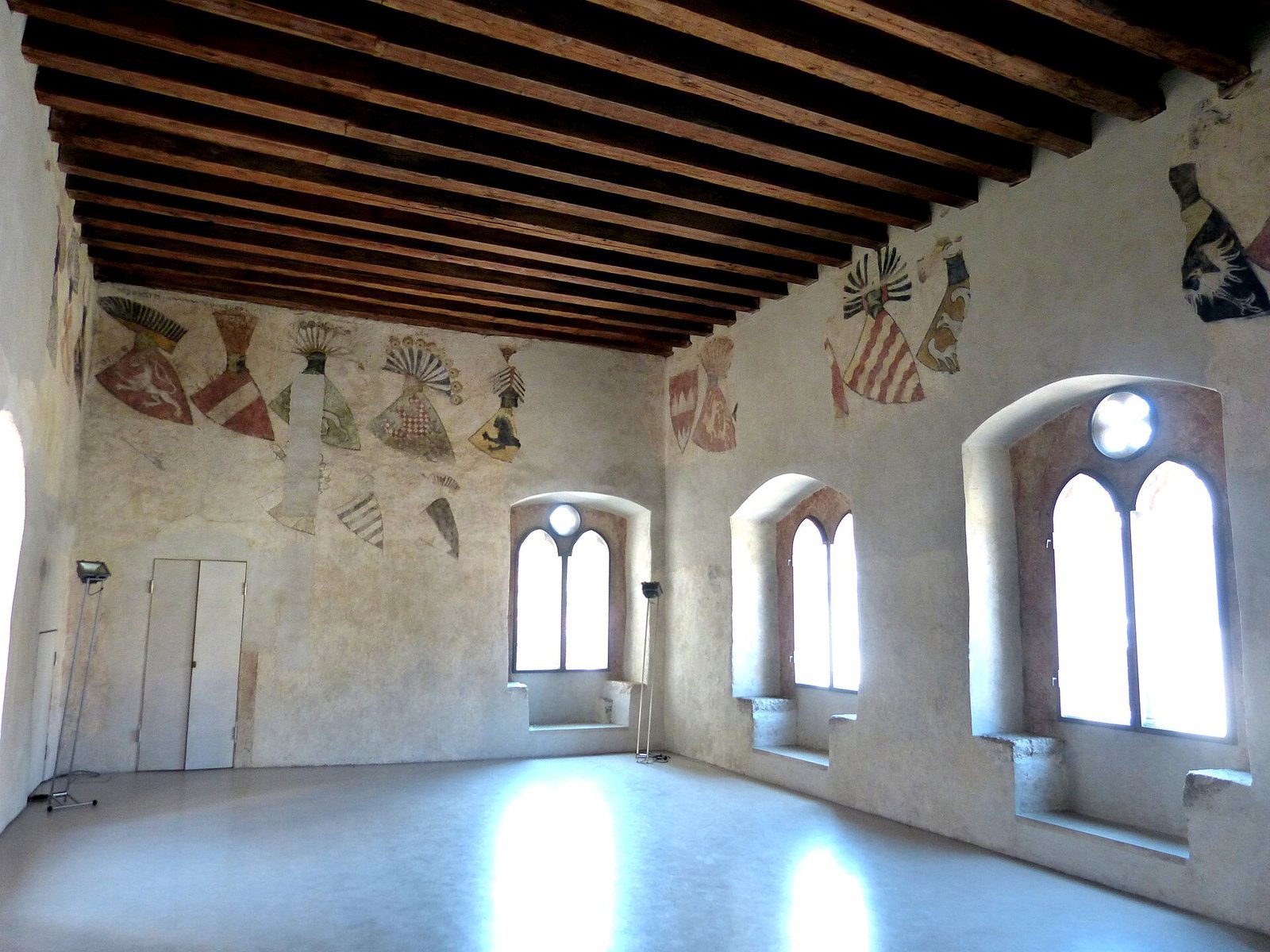
The castle’s L-shaped core has an elevated entrance and three surviving round-arched windows. The complex also includes a hall building with a window divided into two openings. A central stone marks the point where two vaulted sections intersect.
Chapels and wall paintings
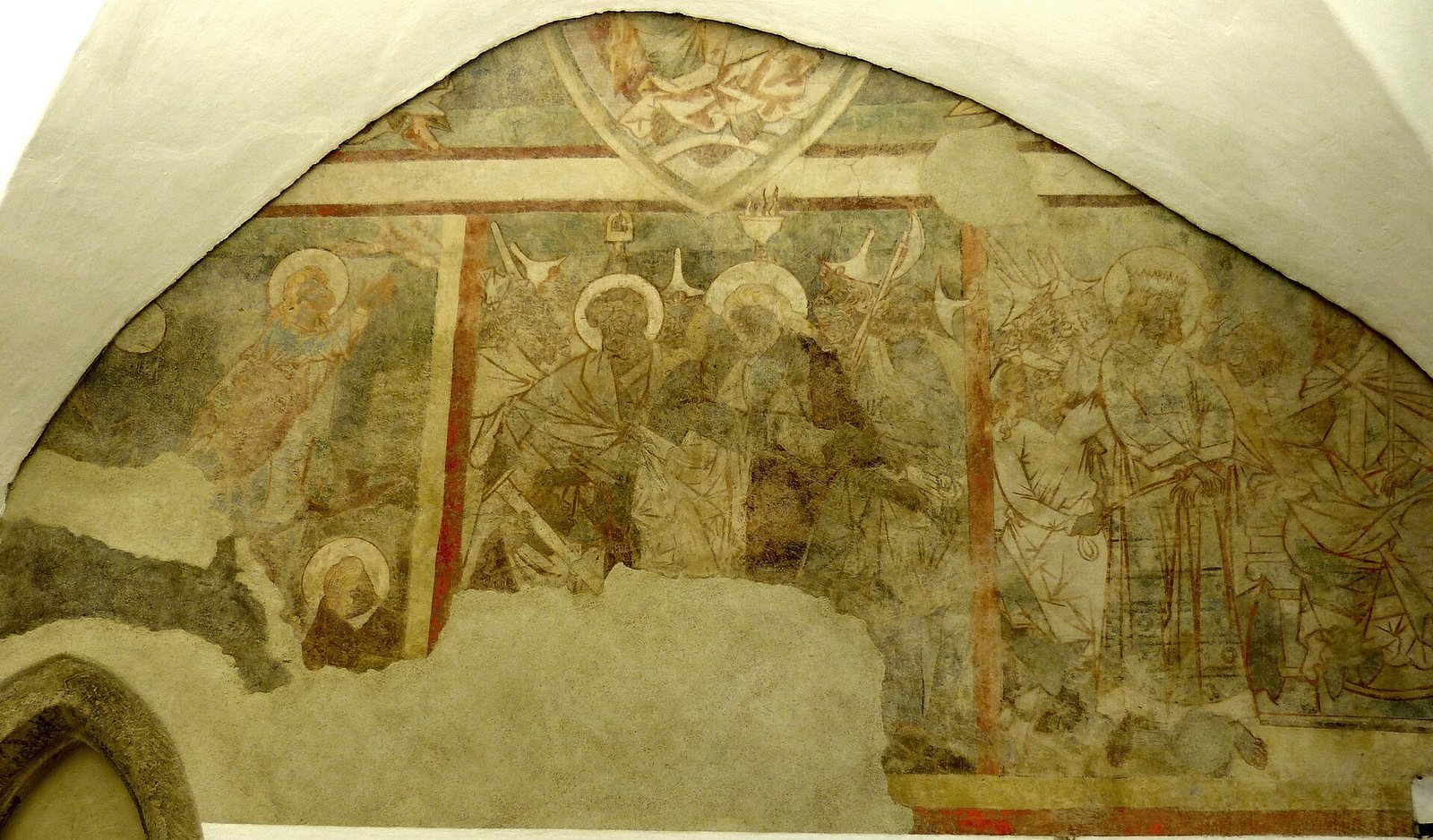
The site includes St Catherine’s Chapel and a smaller chapel. Exceptionally well-preserved secular frescoes, wall paintings made on wet plaster for nonreligious settings, are among the oldest in Central Europe. They depict the legend of Barlaam and Josaphat, a medieval Christian story about a prince’s conversion to Christianity.