Burg Falkenfels: A Medieval Hilltop Castle in Bavaria


Site at a Glance
- Rating
- 4.6
- Popularity
- Low
- Country
- Germany
- Primary era
- Medieval
- Eras represented
- Medieval, Early Modern
- Civilizations
- Duchy of Bavaria, Holy Roman Empire
- Site type
- Military
- Remains
- Castle
On this page9 sections
History
Burg Falkenfels is a medieval hilltop castle in Falkenfels, Germany, built by the Counts of Bogen around 1100 on the Burgberg. Its elevated position, 507.2 metres above sea level, provided natural protection because the rocky hill drops steeply on three sides. The castle later became a contested noble residence and an administrative centre within the Hofmark of Falkenfels, a landed jurisdiction whose lord held authority over an estate and its dependent community.
Medieval foundations and noble owners
The Knights of Hohenfels controlled the castle from 1232. Around 1400, authority passed to the Falkensteiner family of Falkenfels. A fifteenth-century copy preserves a reference to “Valkenfelss” as a landed estate in 1331, showing that the settlement and its associated holdings were already established in the late medieval period.
The Frauenberger family acquired Burg Falkenfels in 1425 and retained it until the family line ended in 1480. That year brought major disruption. Hussite forces, members of a powerful religious and military movement from Bohemia associated with the reformer Jan Hus, plundered the castle. In 1468, during the Böckler War, a late-medieval conflict between regional nobles and territorial rulers in Bavaria, troops serving Duke Albrecht IV captured it.
The Paulsdorf family followed the Frauenbergers. During the Löwler War, another Bavarian conflict involving noble groups and territorial authorities, the castle endured a week-long siege in 1492. It capitulated on 8 June and was then burned. Hans von Paulsdorf rebuilt the damaged stronghold, restoring its use as a noble residence.
Early modern destruction and rebuilding
Marriage transferred ownership to the Seyboltstorffer family in 1525. From 1607 until 1796, Burg Falkenfels belonged to the Barons von Weichs. Swedish forces set the castle on fire in 1641 during the Thirty Years’ War, the major European conflict of 1618 to 1648, which combined religious and dynastic struggles. The complex was rebuilt after the attack.
On 15 April 1796, Josef Maria von Weichs sold Falkenfels and its associated Hofmark estates to Baron Gabriel von Buchstetten for 320,000 gulden. Another fire followed in 1807, leading to a further rebuilding campaign. When the Hofmark ended, the castle’s economic complex was dismantled in 1820, changing the relationship between the residence and the estate it had formerly administered.
Industrial reuse and modern transformation
The Lang family purchased the castle in 1821 and established a brewery there. Production continued until 1934, giving the medieval complex a new economic function. The Schimmelmann family owned it from 1919 to 1950. In 1925, fire destroyed large portions of the buildings, and only part of the complex was reconstructed.
On 8 May 1951, the Straubing furniture manufacturer Franz Xaver Baier bought Burg Falkenfels and converted it into a hotel with a restaurant. The complex was later used increasingly for conferences and congresses. Since 2001, ownership has belonged to the publisher Udo Sieber. Burg Falkenfels is listed as an architectural monument under Bavarian monument file number D-2-78-120-2. Its underground medieval and early-modern remains and finds are also protected as an archaeological monument under number D-2-6941-0004.
Remains
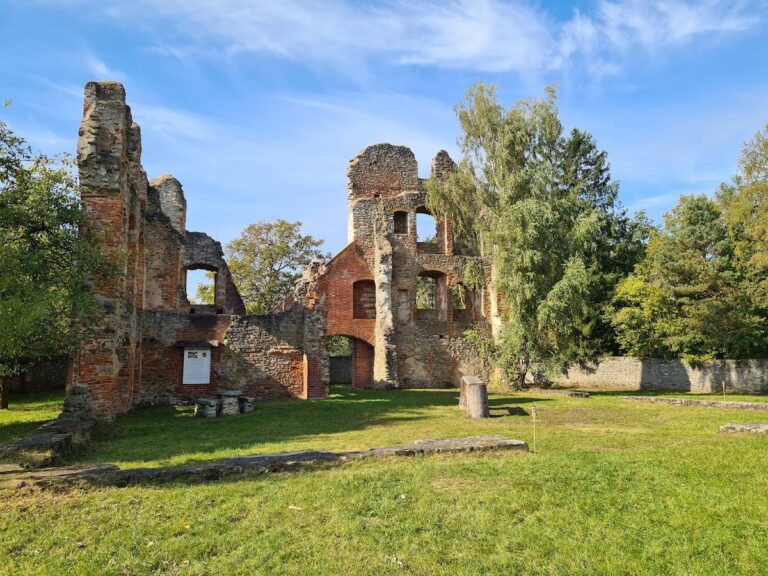
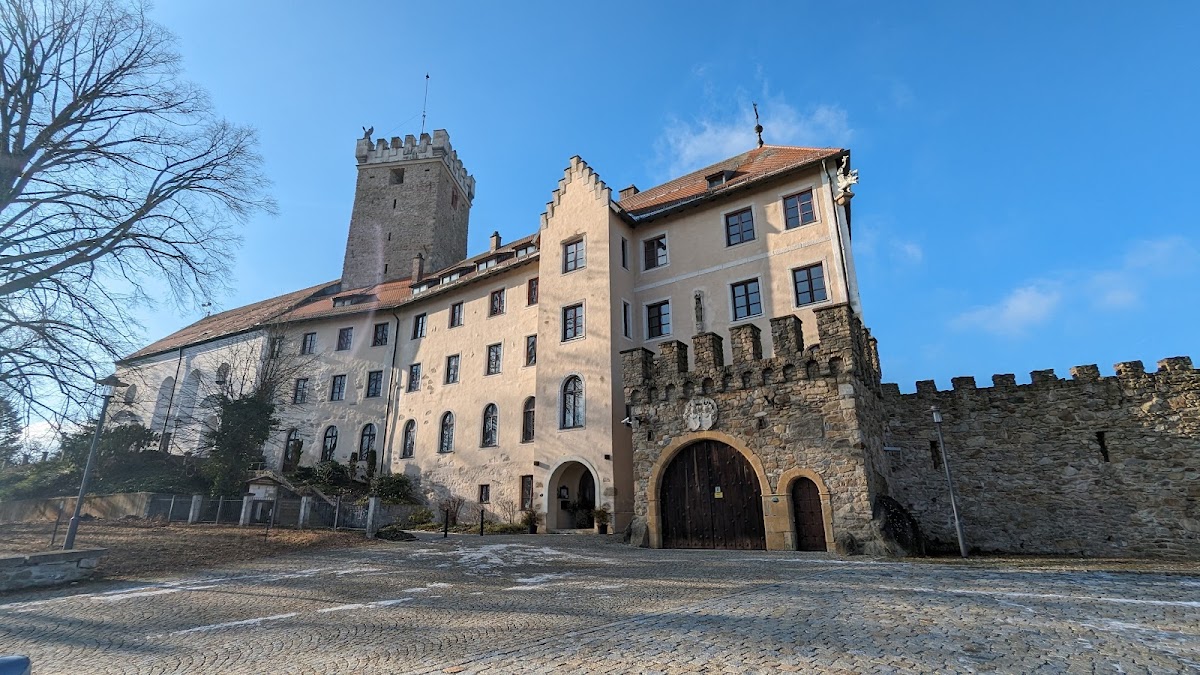
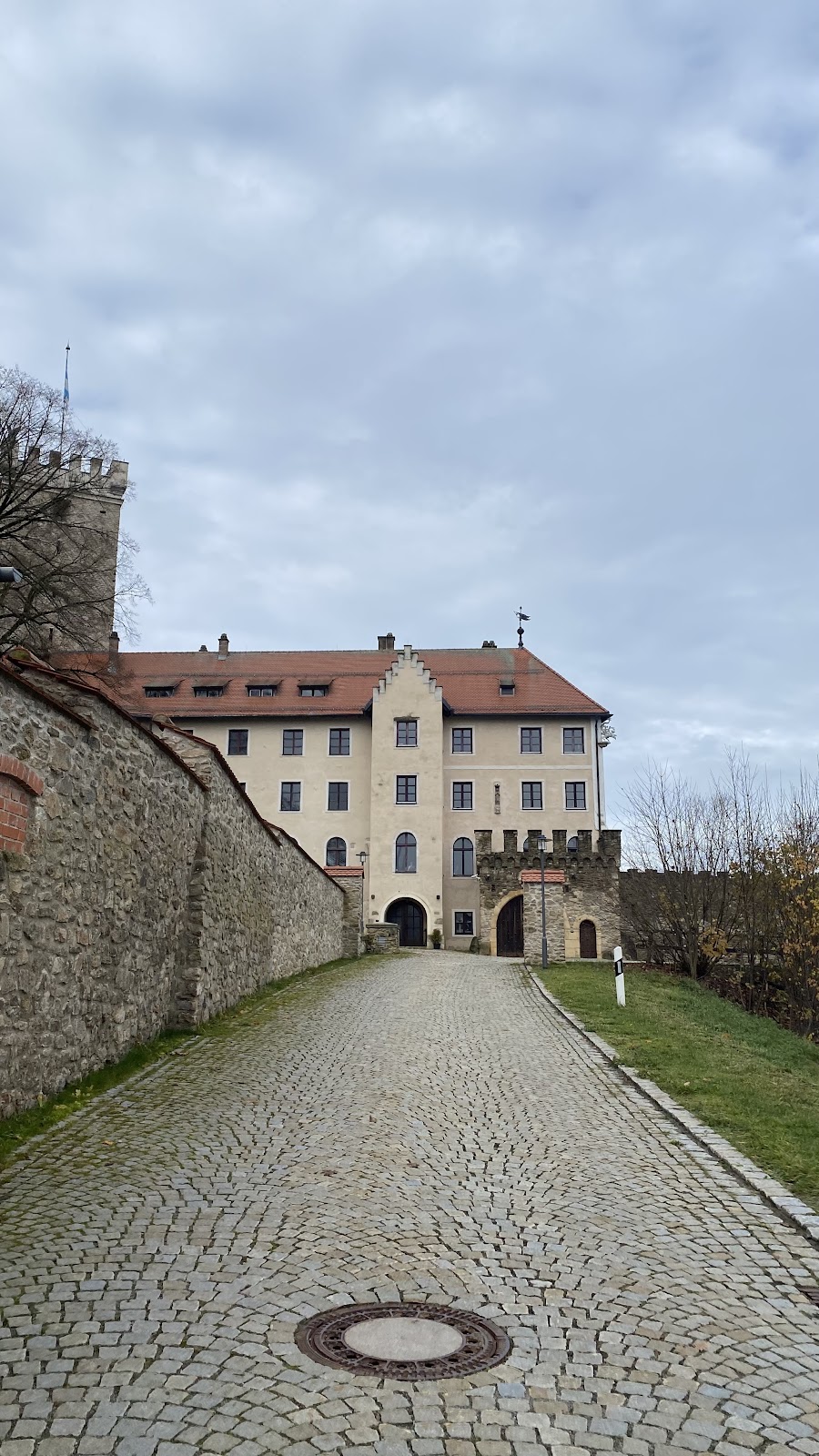
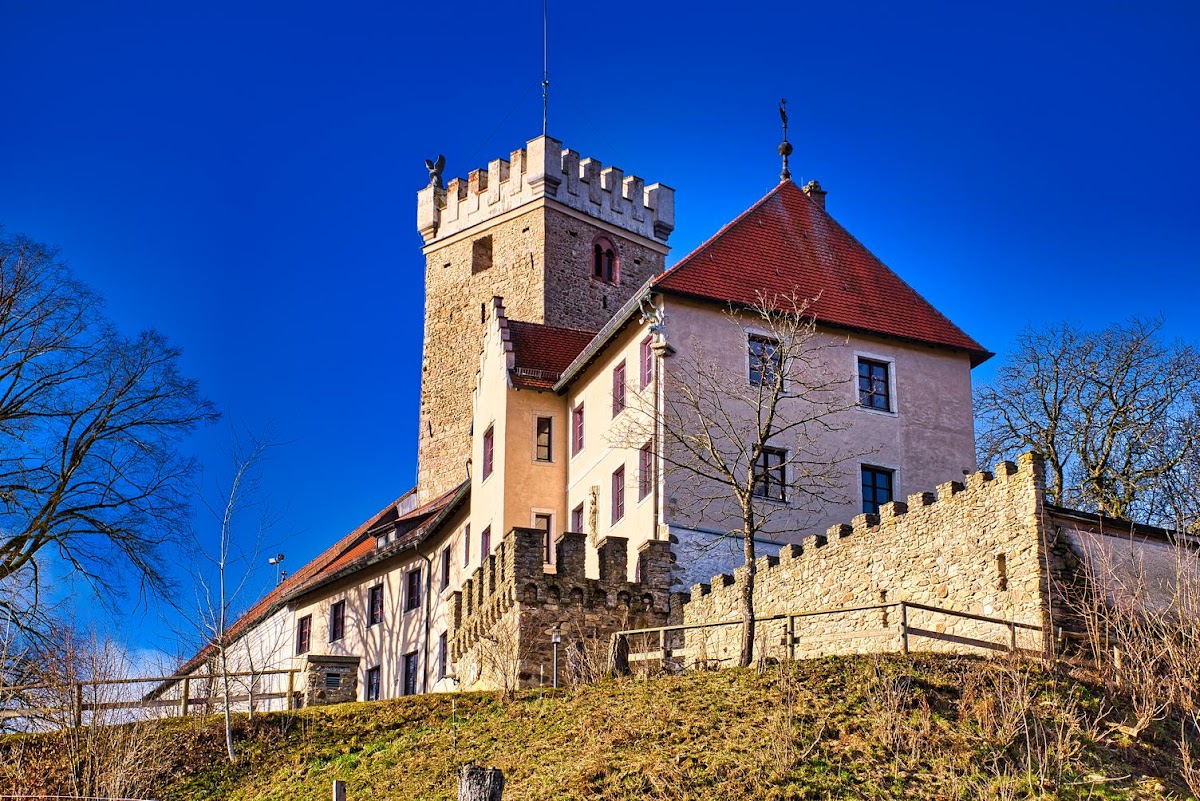
Burg Falkenfels occupies the summit of the Burgberg, where steep natural slopes reinforce the castle’s defensive position. The original stronghold was arranged with two ring walls, defensive enclosures that surrounded the settlement and buildings, set on terraces above one another. Surviving structures represent several periods of construction, including the medieval fortifications, a later tower crown, and a seventeenth-century chapel built on earlier foundations.
Defensive structures
Terraced ring walls
The castle’s early defenses consisted of two ring walls positioned at different terrace levels. The northern fortification is the surviving portion of this system. Its remains preserve part of the arrangement that used the hill’s natural slopes and stepped terrain to enclose the medieval castle.
Thirteenth-century keep
A keep, the principal fortified tower of a castle, stands approximately midway along the eastern side of the complex. The tower dates from the thirteenth century. Its crenellated crown, the parapet with alternating raised sections and openings, belongs to a later period, so the visible structure combines its medieval core with a subsequent alteration.
Chapel and commemorative remains
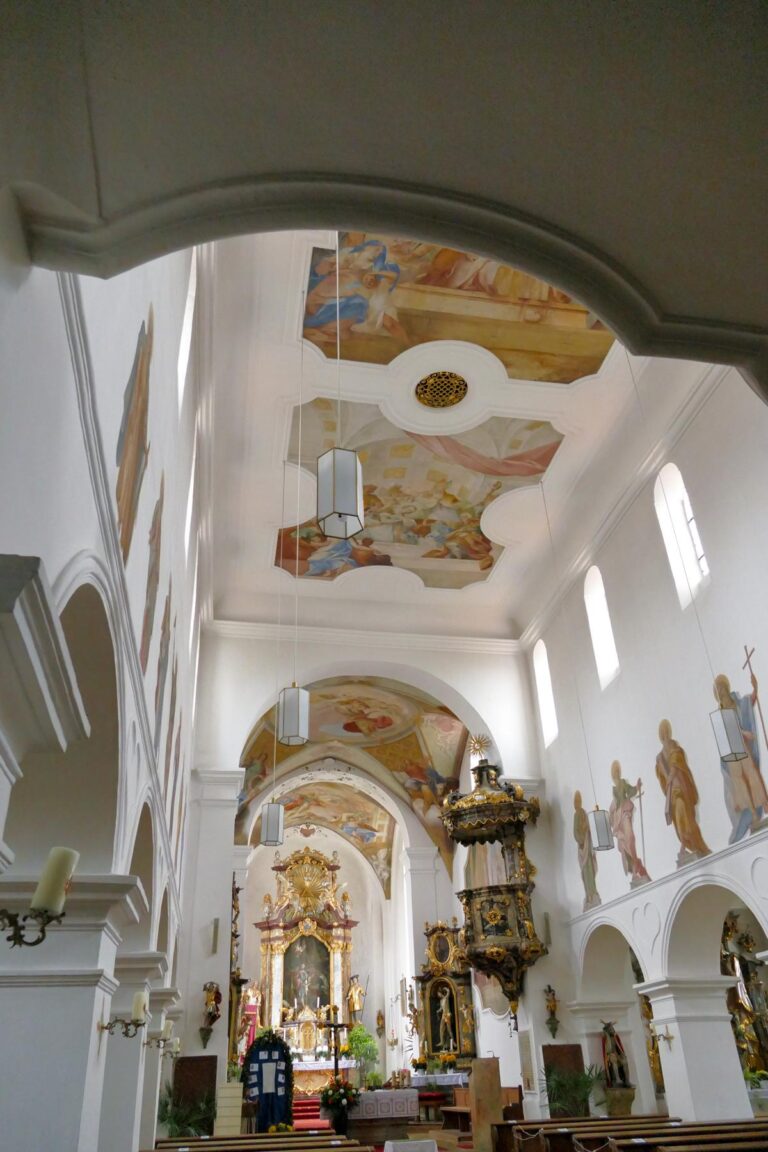
The castle chapel of St. Joseph was built in the seventeenth century in the Baroque style, an ornate architectural and artistic tradition that spread through Europe from the late sixteenth to the eighteenth century. It stands on medieval foundations, linking the later religious building to the earlier castle. Tombstones belonging to lords of Falkenfels remain inside the chapel, preserving a direct memorial connection with the families who held the stronghold.