Schloss Haindorf: A Baroque Castle and Educational Centre in Austria
Site at a Glance
- Rating
- 4.1
- Popularity
- Low
- Country
- Austria
- Primary era
- Early Modern
- External website
- Open
- Eras represented
- Early Modern, Modern
- Civilizations
- Habsburg
- Site type
- Domestic
- Remains
- Castle
On this page7 sections
History
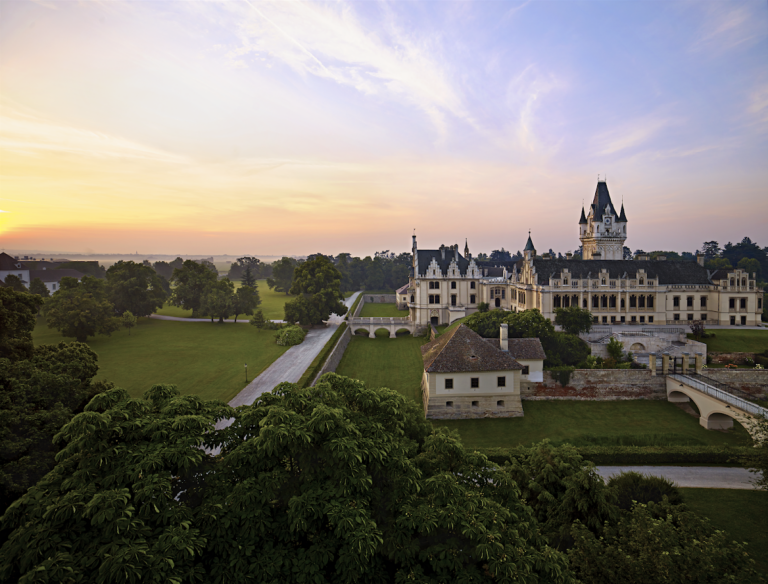
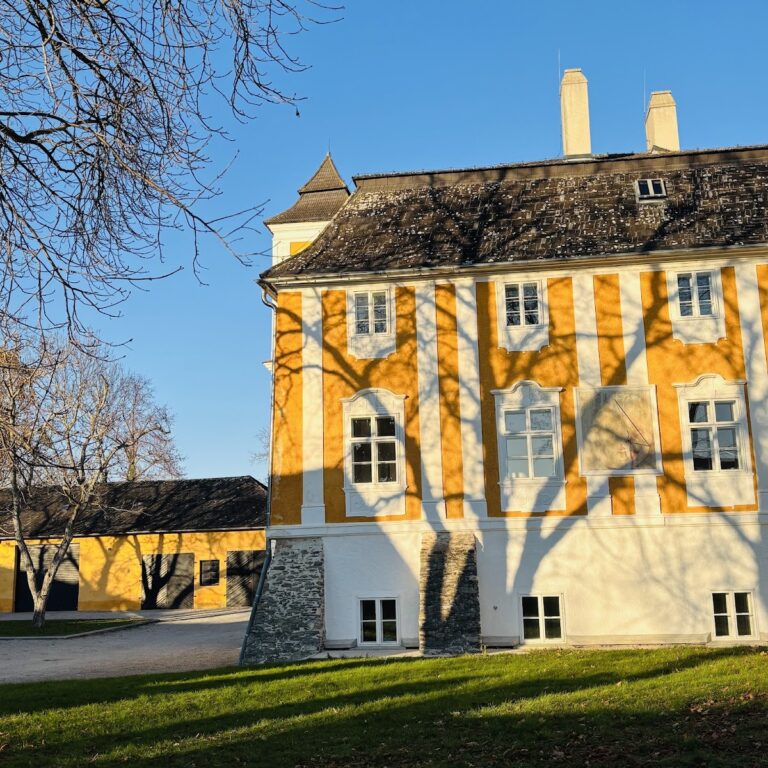
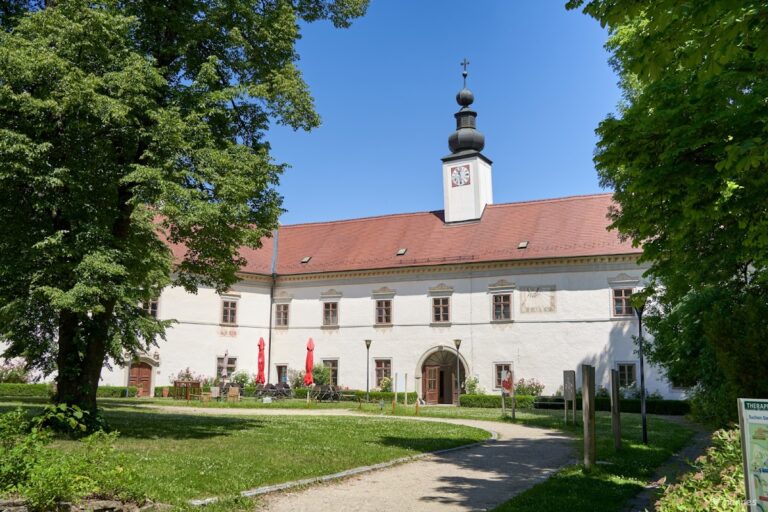
Schloss Haindorf is a Baroque castle in Austria, located in the city of Langenlois in Lower Austria. It stands in the cadastral municipality of Haindorf, a legally defined land-registration district, and is also called the Lower Castle because another castle stands in Haindorf. The complex developed from the Feldmühle, first recorded in 1624, and may have earlier roots in the Loisbachmühle, mentioned in 1407.
Early ownership and development
The earlier Loisbachmühle belonged to the lordship of Peter Haun zu Haindorf. By 1582, Haindorf was owned by Reichard Streun von Schwarzenau, president of the Hofkammer, a territorial financial authority responsible for the ruler’s revenues, property, and fiscal administration. Ownership changed repeatedly during the following decades. The Counts of Grundemann held the property from 1680 until 1876, when Baron Leopold Popper von Podhragy acquired it.
Decline, restoration, and wartime damage
The castle later fell into severe disrepair under Baron Sales. It was subsequently restored under the heraldist Friedrich Count Lanjus von Wellenburg. Soviet occupation troops devastated the building during the post-war occupation, and Count Lanjus’s widow, the local writer Theres Lanjus, was forced to leave it in 1945.
Educational and cultural use
The company Sachseneder later converted the castle into workers’ apartments. In 1973, the provincial guild of the building trade purchased the property and undertook a fundamental renovation, completed in 1978. The castle then became a seminar hotel and later operated under the BAUAkademie name, an Austrian construction-sector network for vocational and continuing education.
A new seminar building was constructed in 2003. Extensive renovation and expansion of the seminar hotel took place from 2020 to 2023, alongside the construction of an inter-company apprentice training yard. Since 1996, the Schlossfestspiele Langenlois have presented summer operettas in front of the castle. During the festival, a wine-tasting area is set up in the castle park, and the outdoor arena accommodates approximately 1,500 spectators.
Remains
Castle and park
The surviving complex is a Baroque castle that developed from the earlier Feldmühle and possibly from the still earlier Loisbachmühle. A large castle park extends behind the building as far as the Kamp River. The park also contains the outdoor arena used for the Schlossfestspiele Langenlois, which is among the largest summer theatre venues in Lower Austria and holds about 1,500 people.
Educational complex
The present complex combines the historic castle with facilities for its seminar-hotel and educational functions. The seminar building added in 2003 forms part of this arrangement, while the 2020–2023 building campaign expanded the seminar hotel and added an inter-company apprentice training yard. These additions place the restored historic building within a continuing vocational-training centre.