Gainfarn Castle: Historic Estate and Music School in Austria
Site at a Glance
- Popularity
- Medium
- Country
- Austria
- Primary era
- Modern
- Eras represented
- Modern
- Civilizations
- Austrian Empire, Habsburg
- Site type
- Domestic
- Remains
- Castle
On this page9 sections
History
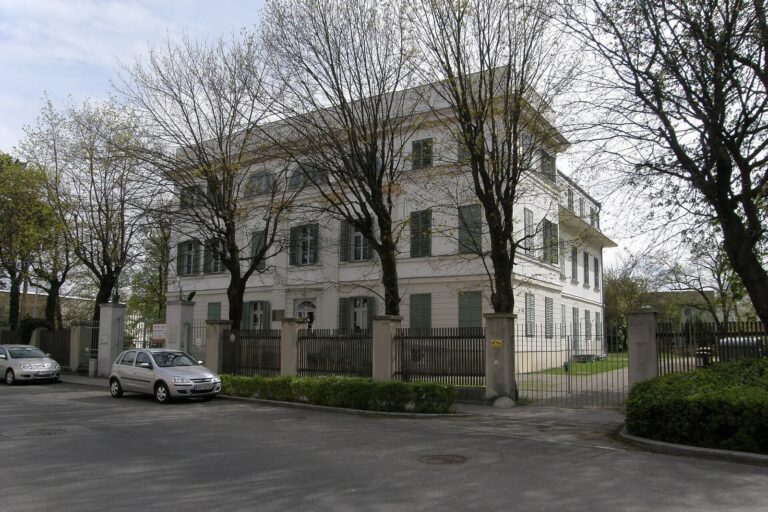
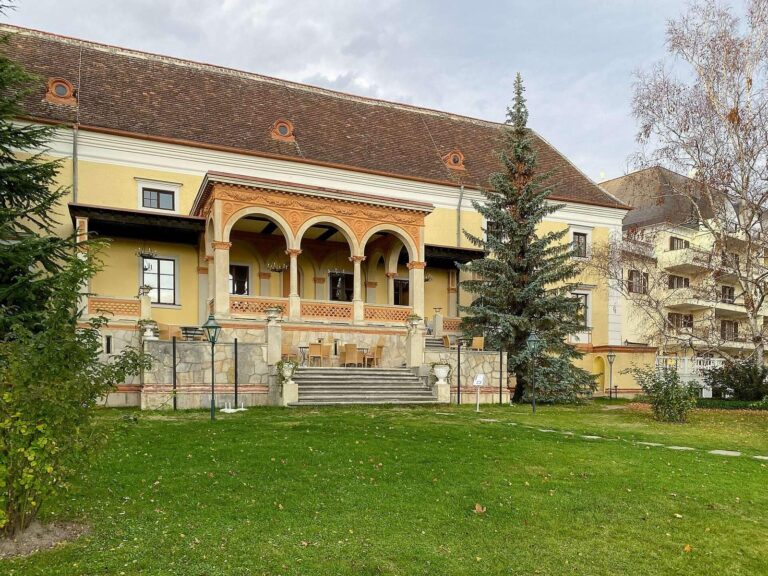
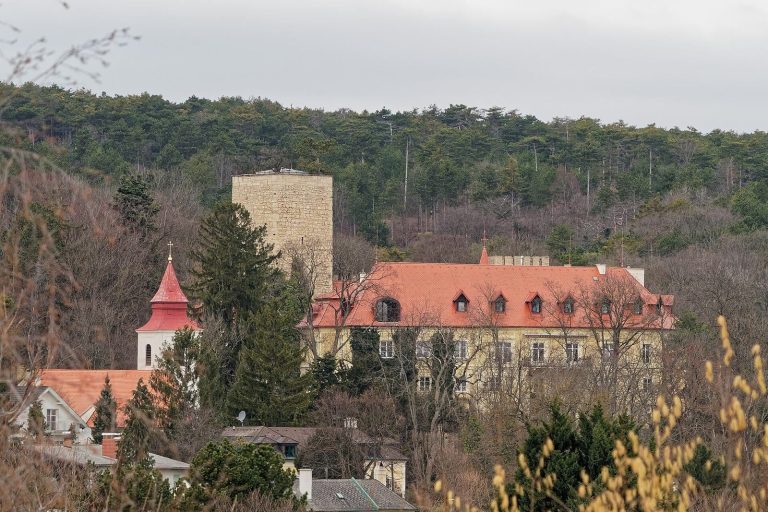
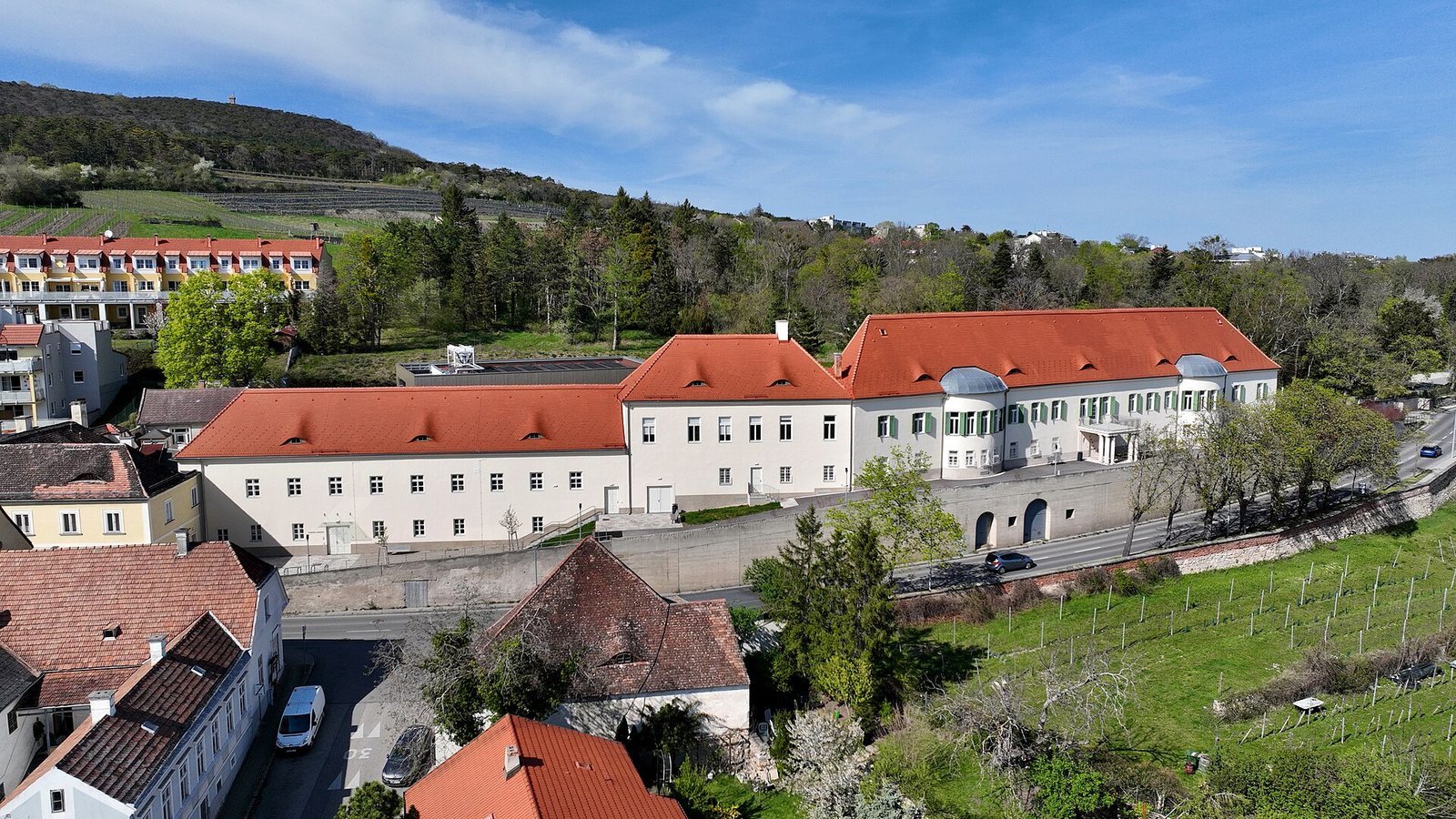
Gainfarn Castle is a historic castle in Gainfarn, within Bad Vöslau, Austria; its main block was remodeled in Neoclassical style in 1816. Its ownership and development were closely linked to Gainfarn and neighboring Großau, and the castle later served as a military hospital, a forestry school, and a music school.
Estate History and Merkenstein
Gainfarn and Großau were held together for a long period, so Gainfarn’s development and ownership were closely connected with Merkenstein Castle in neighboring Großau. A 1206 estate register of Klosterneuburg Abbey, an Augustinian monastery in Lower Austria, names Rudwinus of Gainfarn and describes his residence as a fortified house. Its location is uncertain, and the present castle is substantially later.
The Hohenbergers, owners of the Gainfarn estate, moved their seat to Merkenstein in 1448. The seat returned to Gainfarn after Merkenstein was destroyed during the Second Ottoman Siege of Vienna, the Ottoman attempt to take the city in 1683. The Austrian noble family the Dietrichsteins owned Gainfarn and its castle from 1675 to 1829, including during the siege.
Nineteenth-Century Ownership
Before the 1829 change of ownership, Joseph Carl von Dietrichstein oversaw alterations that gave the castle its present appearance. He had become the first governor of the Privileged Austrian National Bank, an early Austrian central-banking institution. In 1829, Joachim Eduard Count Münch-Bellinghausen acquired the Gainfarn and Großau estates, including Merkenstein. After his death, Gainfarn Castle passed in 1866 to Adolph Baron von Brenner-Felsach, and later to Adolph’s son Joachim.
Austrian writer and dramatist Hugo von Hofmannsthal was a frequent guest at the castle from 1897 to 1901. In 1911, Joachim von Brenner-Felsach sold the castle and its holdings to sawmill owner Leopold Kern, who retained them until 1917.
Wartime and Postwar Changes
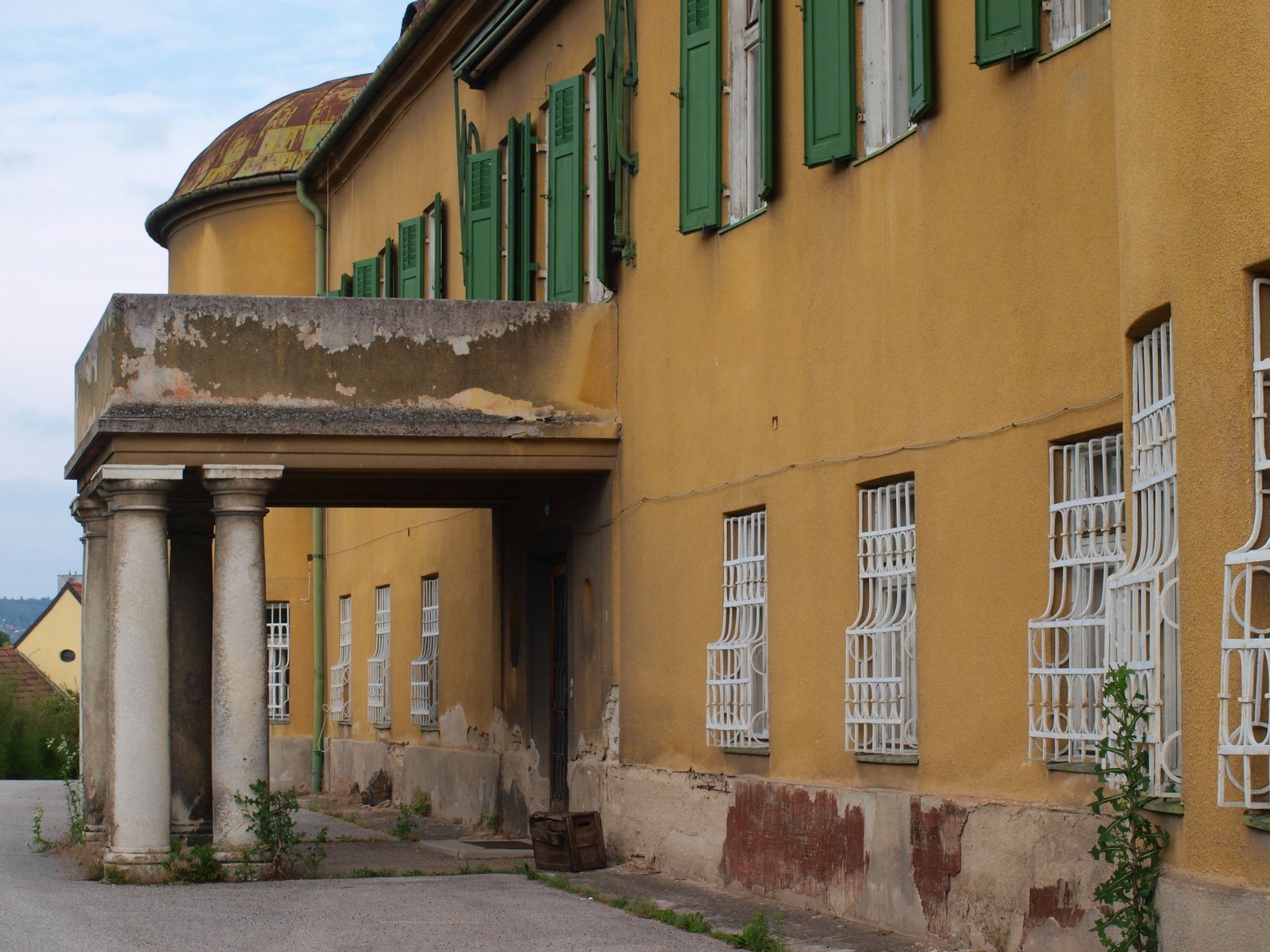
In 1917, industrialist Arthur Krupp acquired Gainfarn Castle together with the Merkenstein estate. During the final year of the First World War, he made the castle available as a military hospital. After the Second World War, Soviet occupation authorities confiscated the Krupp family’s property as German property and placed the castle and estate under USIA, the Soviet-administered organization managing confiscated property in Austria’s Soviet occupation zone. The castle deteriorated during this period.
The Austrian State Treaty of 1955 restored Austria’s sovereignty and ended the postwar occupation. The property then passed to the Republic of Austria and the Austrian Federal Forests, the state-owned organization responsible for managing federal forests.
Forestry Education and Municipal Use
The Federal Forests established a forestry school at Gainfarn, alongside earlier schools in Bruck an der Mur and Gmunden. A forestry school at Waidhofen an der Ybbs had been established in 1948. In 1972, as Austrian education was reorganized, an upper-level forestry program leading to the Matura, an Austrian school-leaving qualification, began at Gainfarn. An institute for apiculture, or beekeeping, was also housed there for a time. Most of the estate’s 5,000 hectares of forest had been sold before the forestry school closed around the turn of the millennium.
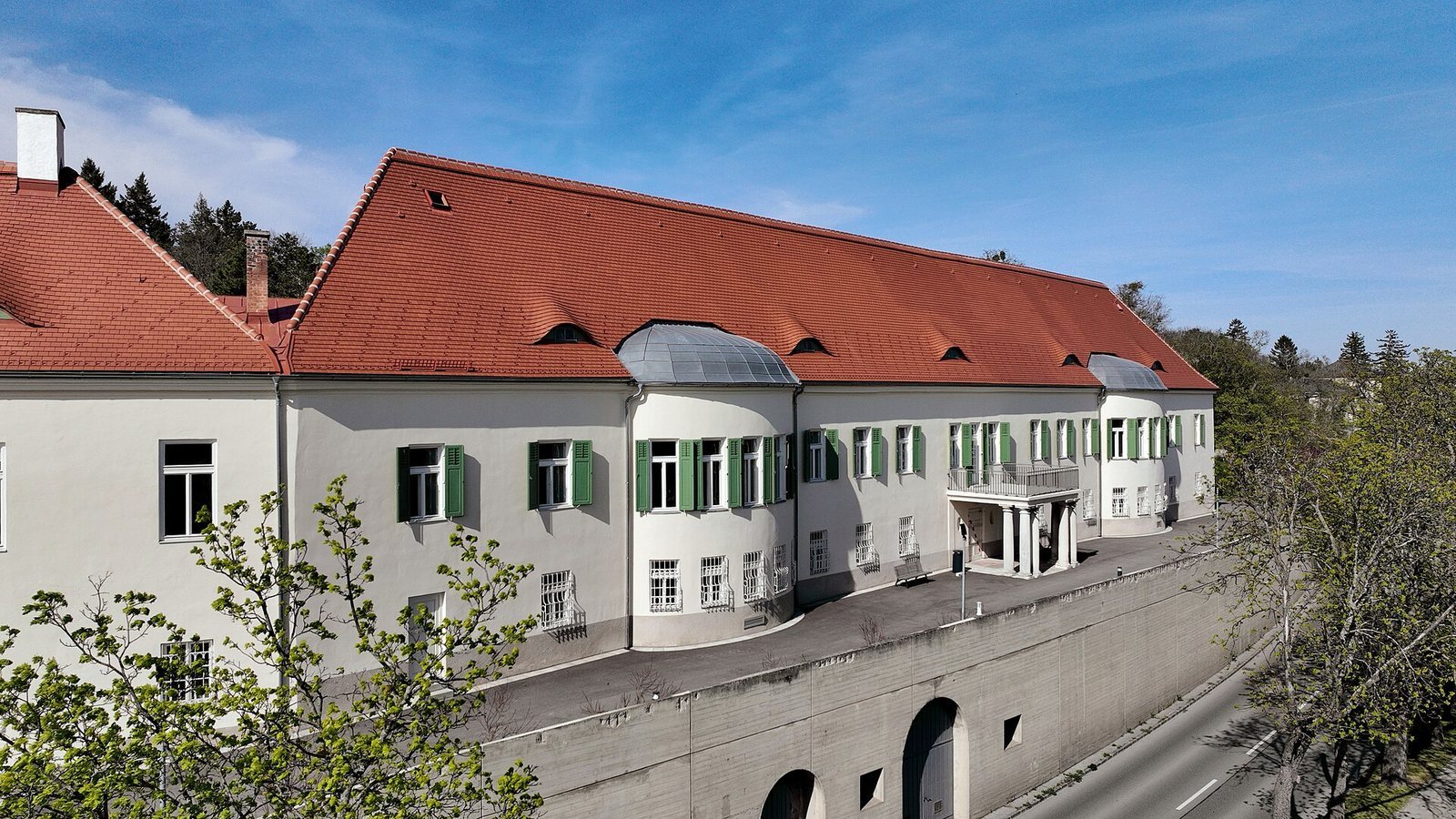
The municipality of Bad Vöslau acquired the castle in 2001 and adapted it for use as the town’s music school. A comprehensive renovation, conversion, and expansion began in 2022 and culminated in a formal opening on 24 November 2023.
Remains
The castle’s described built form includes a main block with a Neoclassical character and a concert hall added during its adaptation for music education. These elements reflect the building’s earlier estate use and its later conversion into a cultural and educational facility.
Main Block and Concert Hall
Neoclassical Main Block
The main block gives the castle its Neoclassical form, following the remodeling overseen by Joseph Carl von Dietrichstein. It remains the older architectural element described for the building.
Concert Hall
The modern expansion added a concert hall as part of the castle’s conversion for use as a music school. The hall provides a performance space within the adapted building.