Château de Dormans: A French Castle Recast as a Classical Residence
Site at a Glance
- Popularity
- Medium
- Country
- France
- Primary era
- Early Modern
- Eras represented
- Medieval, Early Modern, Modern
- Civilizations
- French
- Site type
- Domestic
- Remains
- Castle
On this page8 sections
History
The Dormans family
The Château de Dormans is a castle in France with construction phases spanning the 14th through 19th centuries. It was associated with the lordship of Dormans, which passed among noble families over several centuries. Jean de Dormans is identified as its initial owner. He appears in records as a lord at the end of the 13th century and died in 1335.
Jean II de Dormans, a lawyer and churchman who became bishop of Beauvais and a cardinal, a senior rank in the Catholic Church, died in 1373. His brother Guillaume succeeded him that year as lord of Dormans and chancellor of France. The Dormans family line ended in the 16th century with Renault de Dormans. Renault’s daughter married Jacques de Laon, and their daughter later married Claude d’Ancienville, through whom the estate passed.
Seventeenth-century owners
In the 17th century, the castle belonged to Michel Larchet d’Olisy, president of the Chamber of Accounts, the royal institution responsible for overseeing finances. Charles de Bullion became lord of Dormans in 1642 and died soon afterward. His widow sold the estate to Henri de Bourbon, Prince of Condé. In 1646, Henri’s son Louis, Duke of Enghien, inherited Dormans along with the family’s other property. The estate later passed to Louis’s younger brother, Armand de Bourbon-Conti.
In 1660, an exchange arranged at Cardinal Mazarin’s initiative led the king to grant the lordship to Mazarin’s follower Charles de Broglie and raise it to a county. Mazarin was a French churchman and statesman who served as chief minister in the early reign of Louis XIV. The castle was reshaped under the Broglie and Ligne families. It later passed to Marshal Victor-Maurice de Broglie, then to his son-in-law Hyacinthe de Ligne de Mouy, who held the title of count of Dormans and died in 1724.
Later ownership
During the 18th century, the county and castle passed from the House of Ligne to the Boucot family, for whom the title became a marquisate, and then to the Rouault de Gamaches d’Egreville and Villebéon families. They held the estate until 1791. The castle also served as a residence of the House of La Rochefoucauld.
Seized as property belonging to an émigré, a person who had left France, the castle was sold in 1791 jointly to Paul Louis and Jean Isaac de Thélusson. The Thélusson family retained it through Pierre-Germain de Thélusson de Vintimille (1767–1831), mayor of Dormans. Afterward it passed through several families before becoming the property of a foundation. From 1949 to 1985, the foundation entrusted its management to the Salesian Fathers, members of a Catholic religious congregation. The commune has owned the castle since 1999.
Remains
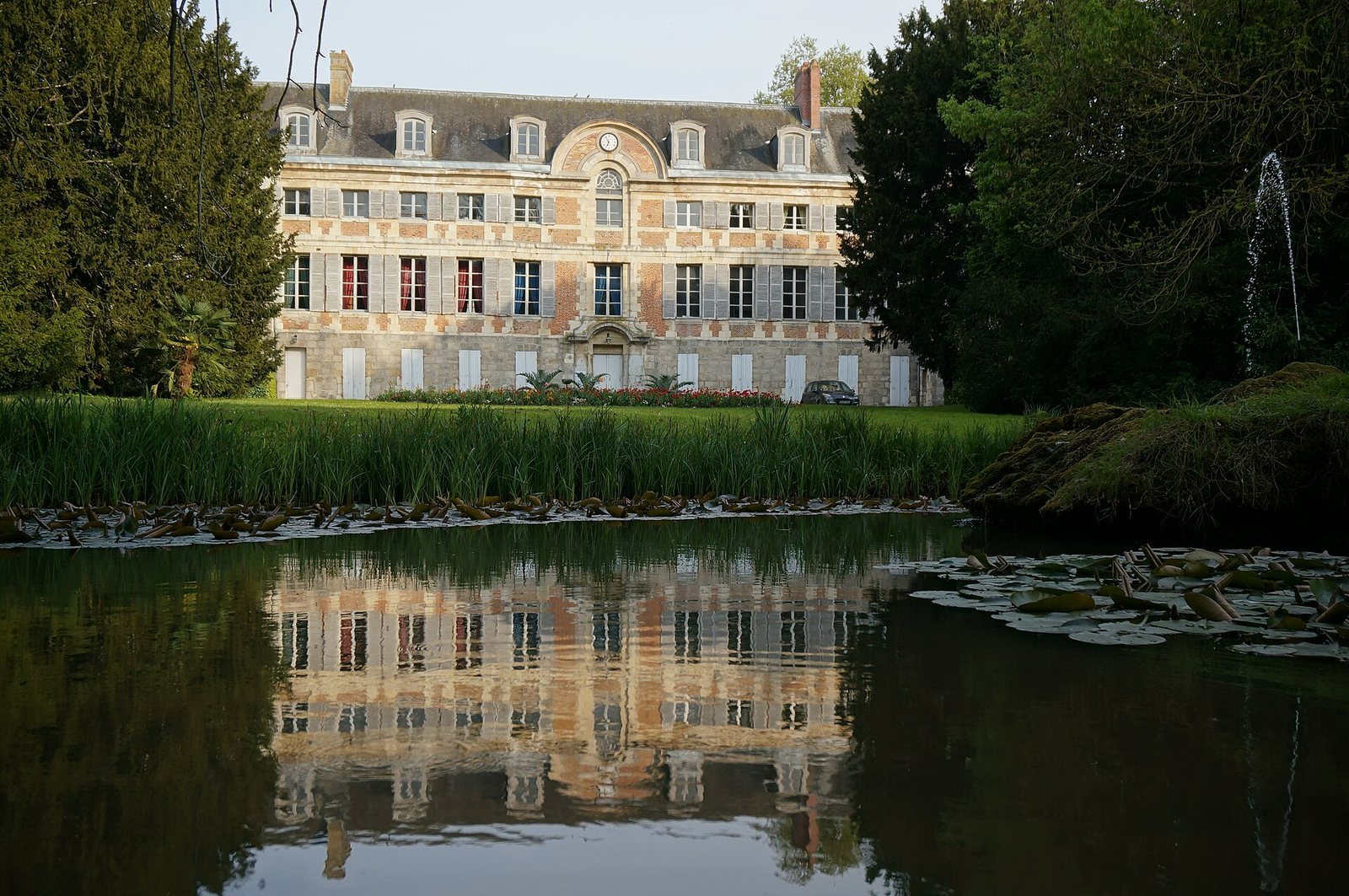
The surviving complex includes the castle and its park, with a memorial chapel on a mound at the far end of the grounds. The park also contains water features and planted areas.
The castle
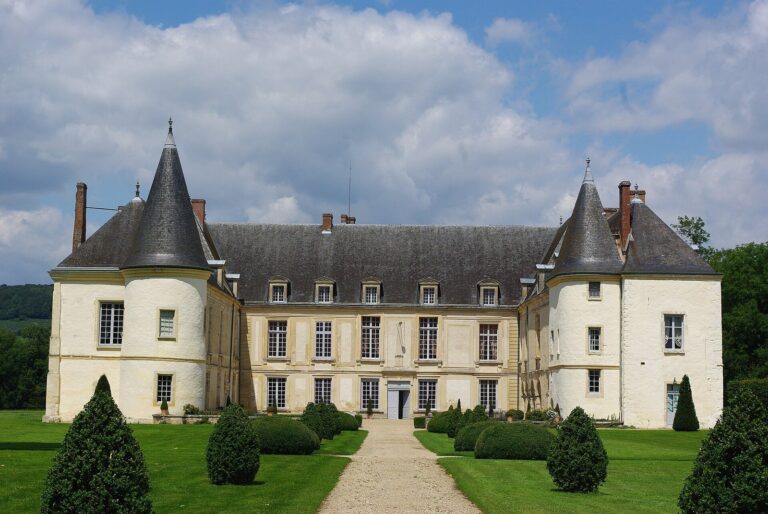
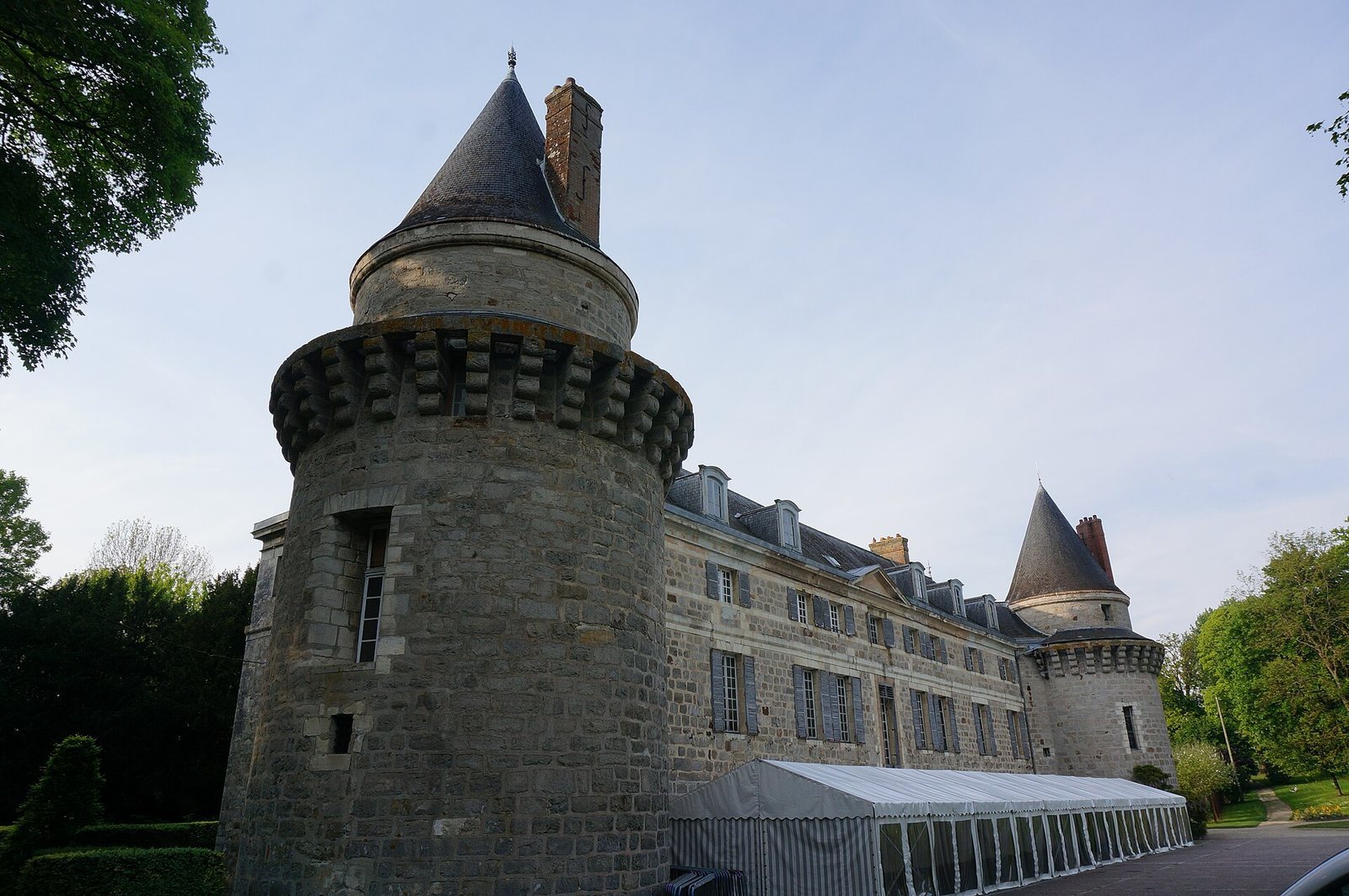
The earlier fortress had four corner towers, two of which were retained when the building was remodelled. Its central block has a classical design associated with the formal style of Louis XIV’s reign. The castle also has a façade facing the courtyard and a room on the first floor.
The park
A stream and a pond cross the park. Its other features include an orchard, a rococo waterfall, and a conservation arboretum.
Memorial of the Battles of the Marne
The Memorial of the Battles of the Marne is a chapel erected in the park to commemorate the First World War. It stands on a mound at the far end of the grounds and includes a panoramic tower.