Schönau Castle: A Historic Estate in Lower Austria
Site at a Glance
- Popularity
- High
- Country
- Austria
- Primary era
- Modern
- Eras represented
- Medieval, Early Modern, Modern
- Civilizations
- Austria-Hungary, Habsburg, Holy Roman Empire
- Site type
- Domestic
- Remains
- Castle
On this page13 sections
History
Origins and medieval lordship
Schönau Castle is a historic estate in Schönau an der Triesting, Lower Austria, Austria. It began as an eleventh-century fortress built to protect Bavarian settlers who had recently moved into the area.
Written records first mention the fortress toward the end of the twelfth century. The lords of Schönau appear in records until the late thirteenth century. They probably died out around that time, and the government confiscated the castle. In 1388, Duke Albert III of Austria granted the manor to Henry VI of Wallsee under the feudal system. Henry entrusted its administration to agents. Members of the Wierand family served as judicial officials at Schönau during the fifteenth century.
Sieges and changing ownership
The castle suffered severe damage during the first and second Turkish invasions of Austria and in wars with the Hungarians. In 1683, during the second Turkish siege, the moated castle was designated as a refuge for local people.
Ownership changed repeatedly between the sixteenth and eighteenth centuries. Recorded owners included Nikolaus von Draskovich, Johann Baptist von Gariboldi, Karl Joseph von Lamberg, Anton Dominik von Jörger, and Maria Anna Grassalkovich.
Braun’s rebuilding and the later estate
Baron Peter von Braun, an Austrian nobleman and businessman regarded in his time as one of the country’s wealthiest men, acquired the estate in 1796 and commissioned a major enlargement. The present castle took shape on the grounds in the years that followed. Financial difficulties forced Braun to leave part of his plans unfinished, and he transferred the manor to Jerome Bonaparte, Napoleon’s younger brother. Jerome later passed it to Johann I, Prince of Liechtenstein. The castle was fitted with Austria’s first gas lighting.
Braun also created a fairy-tale park whose design retained Rococo, an artistic style, while incorporating Romanticism, a cultural movement. The underground grotto system expressed his membership in a Viennese Freemasons’ lodge, part of a fraternal organization whose members form lodges. The Temple of Night, a garden structure, was closely associated with Wolfgang Amadeus Mozart’s opera The Magic Flute.
Later owners included Emperor Franz Joseph I and Archduke Otto of Austria. Otto took over the estate in 1896, the year the nearby Kottingbrunn racecourse opened, and moved his racing stable from Oberweiden to Schönau. Toward the end of the nineteenth century, he modernized and partly rebuilt the castle in Neo-Gothic forms, a revival of medieval Gothic architecture, reducing its defensive character. Elisabeth Marie of Austria, later owner of the estate, made further alterations.
Twentieth-century use and preservation
The estate was sold to Countess Olga Zedtwitz-Liebenstein in 1930. During the Second World War, German military offices occupied the castle. After the war, the Soviet Property Administration in occupied Austria took control, and Red Army soldiers remained there until 1953. Alexandrine Baroness von Happack, born Countess Demblin, became owner in 1951.
Happack leased the estate in 1961 to W. C. Holwerff of the Netherlands. From 1965 to 1973, federal authorities used it as a transit camp for Soviet Jews emigrating to Israel. Under the Jewish Agency, an organization involved in Jewish immigration to Israel, about 70,000 emigrants passed through. The camp closed after the Marchegg hostage crisis, in which Soviet Jewish emigrants in transit through Austria were taken hostage.
From 1978 to 1992, the Gendarmerie Einsatzkommando, now known as Einsatzkommando Cobra, was based on the estate. About 150 members of the special unit were stationed there. The name Skorpion, used by people outside the unit, came from its former radio call sign. The estate also served as a counterterrorism training center in the late twentieth century.
The park is protected as an Austrian garden monument and was designated a natural monument in 1987. Its old trees are protected, and the landscape garden is maintained in a naturalistic manner. The estate belongs to the Sequoia Private Foundation.
Remains
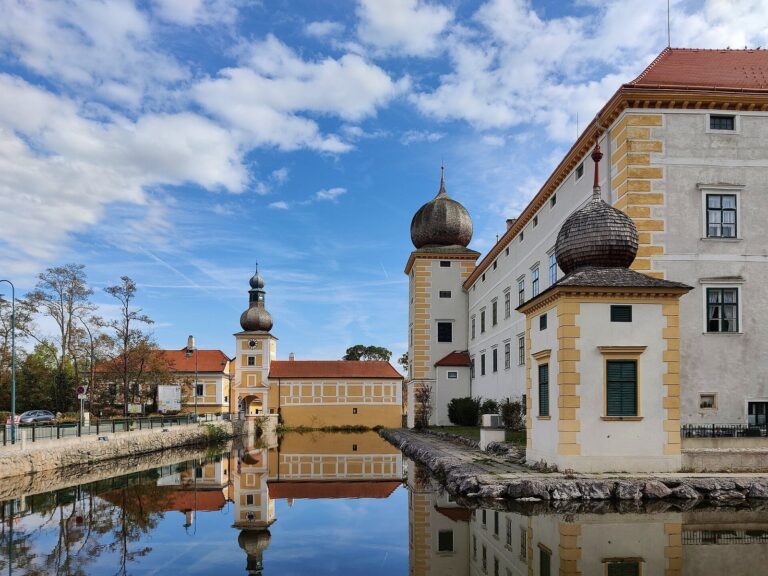
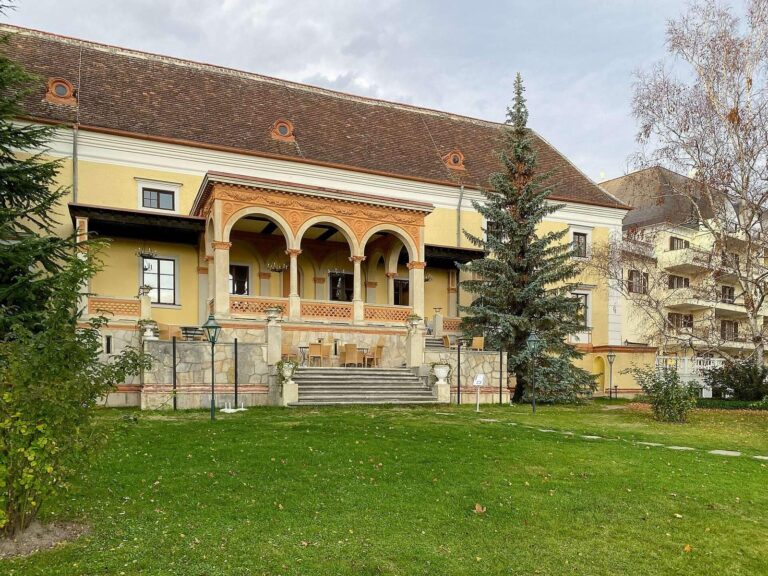
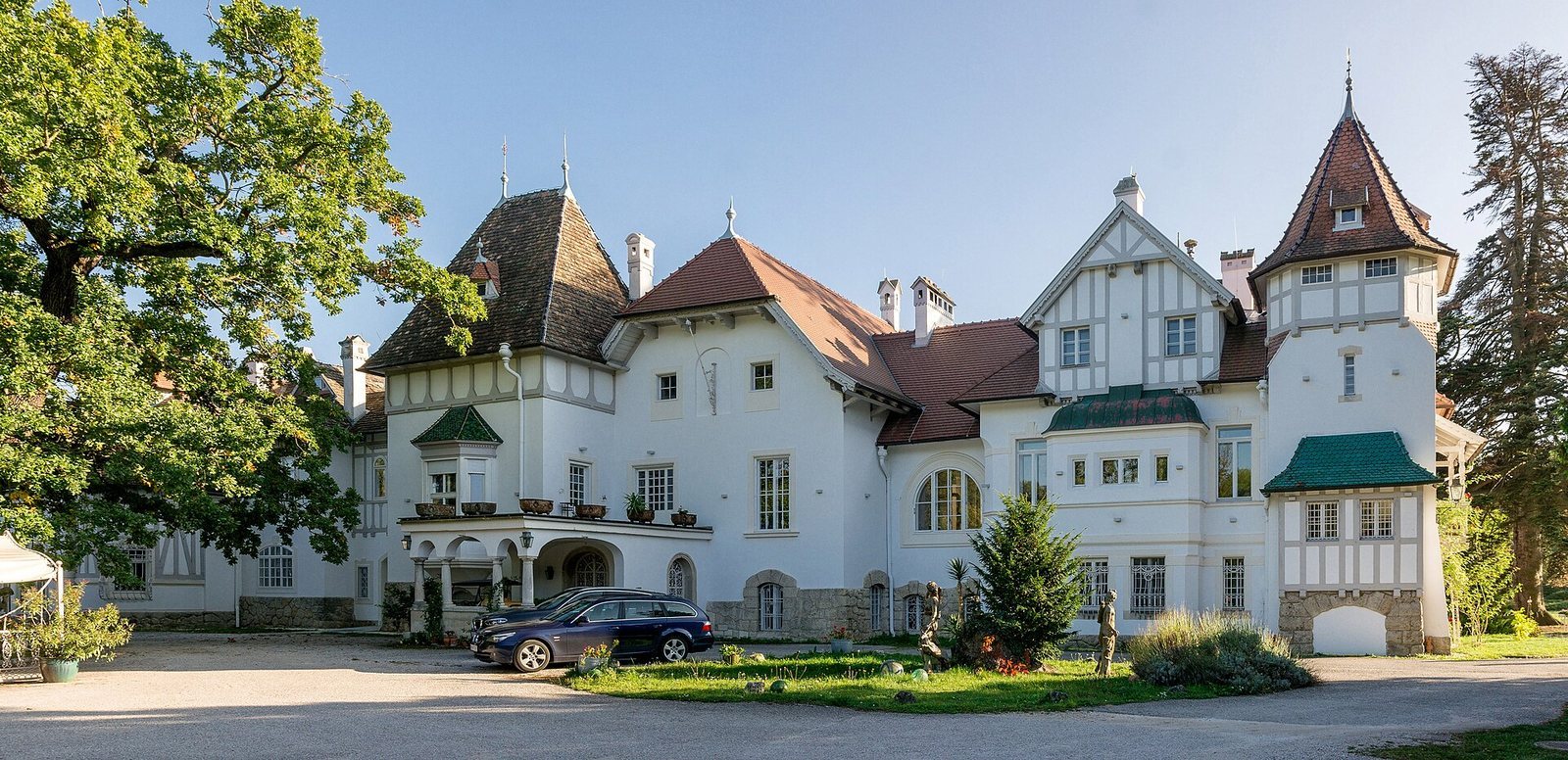
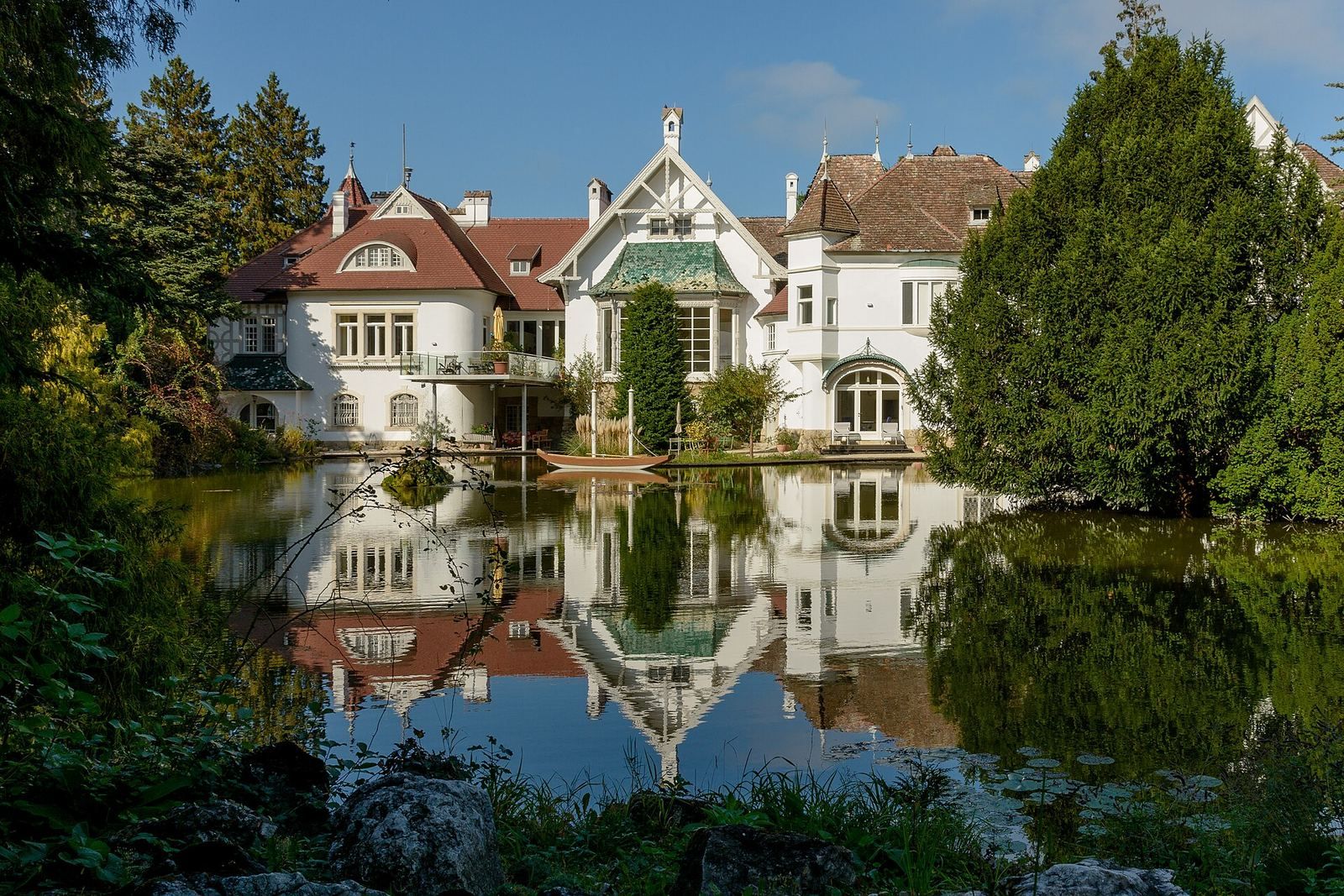
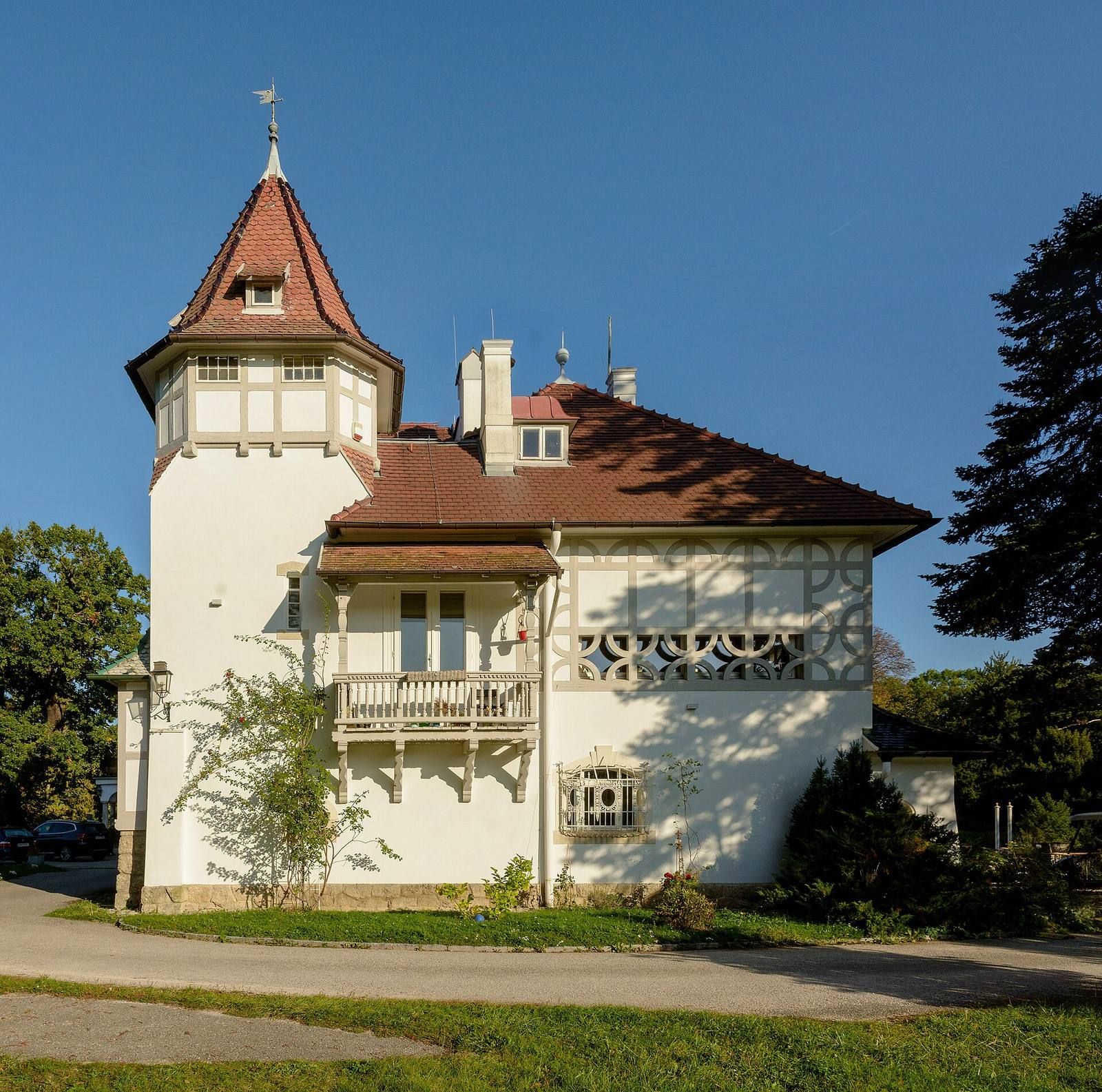
The surviving estate comprises the later castle and a large surrounding park. The castle’s main building is one or two storeys high, with a three-storey tower beneath a steeply pointed roof. Within the grounds, surviving features include the Temple of Night, the eastern entrance, a rock bridge, a pond, and estate outbuildings.
Castle and former moat site
The present castle
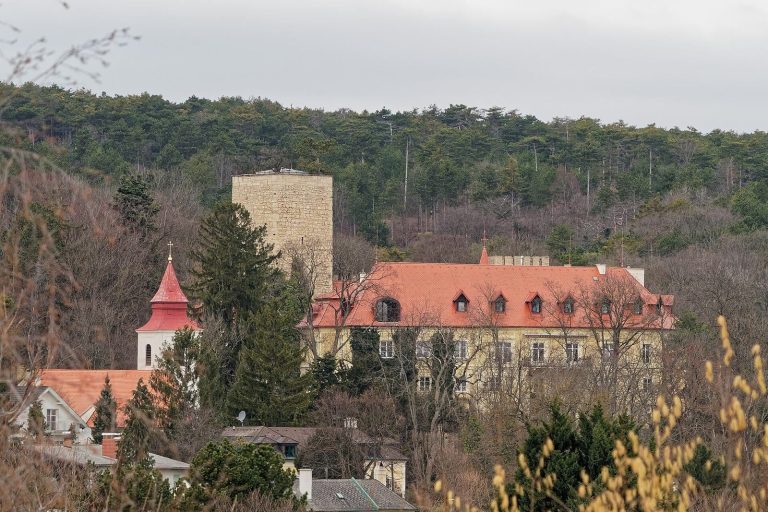
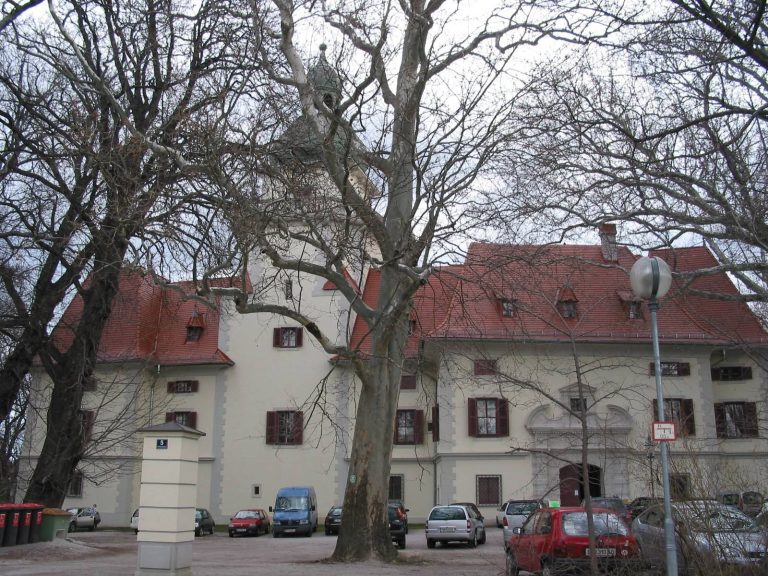
The present building differs substantially from the castle shown in an engraving of 1672. Its main structure rises one or two storeys, while the tower reaches three storeys and has a sharply pointed roof.
Fortress site and estate court
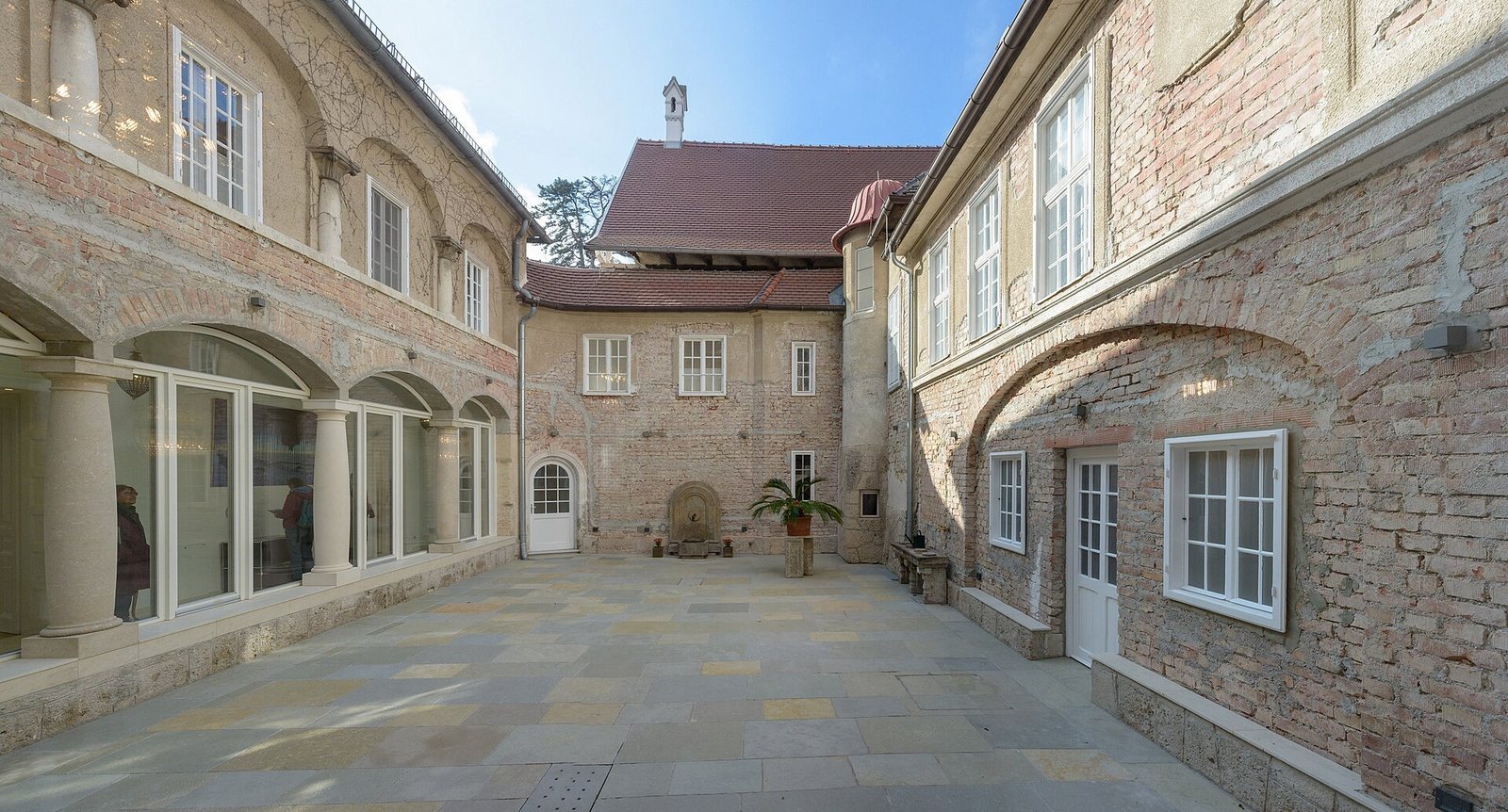
Masonry outside the orchard may date to the eleventh-century fortress. A small pond recalls the moat around the earlier castle. The Kastell stands at the site associated with that moated castle and houses a Waldorf kindergarten, which follows an educational approach developed from Rudolf Steiner’s ideas. The Rudolf Steiner school’s residence occupies the parade court, an open courtyard on the estate.
Park features and outbuildings
Temple of Night and grottoes
Remains of the Temple of Night survive in the park. Between 1851 and 1860, Count Koloman Nako, then owner of the estate, had its roof removed and its usable materials taken from the rooms. The structure was subsequently left to decay. A network of underground grottoes, or cave-like chambers, was laid out around the temple.
Lion Gate and rock bridge
The park’s monumental eastern entrance, on the Günselsdorf side, is the Lion Gate, built in a Neoclassical style inspired by ancient Greek and Roman architecture. A rock bridge stands beside the Temple of Night.
Estate buildings
A riding hall and stables survive among the park’s outbuildings. The historic hunting lodge has also been restored.