Lenensburg: A Hallstatt Fortification and Medieval Hilltop Castle
Site at a Glance
- Popularity
- Medium
- Country
- Germany
- Primary era
- Medieval
- Eras represented
- Iron Age, Medieval
- Civilizations
- Carolingian, Hallstatt culture, Merovingian
- Site type
- Military
- Remains
- Castle
On this page9 sections
History
Hallstatt-period origins
Lenensburg is a vanished hilltop castle site in Kressbronn am Bodensee, Germany. Its earliest phase was a fortified place of the Hallstatt period, an early Iron Age era in central Europe associated with early Celtic material culture.
Medieval development and written names
The site was built over during the early to high Middle Ages. In 769, Scalcomann donated it to the Abbey of St. Gall, a major Benedictine monastery in what is now Switzerland. The record names the place Entinesburugo. An estate register later gives the form Lennispurg in 1468, while Lehnensburg appears in 1746 and is also used as an alternative name.
Archaeological investigation
German archaeologist Gerhard Bersu excavated Lenensburg in 1913. Research excavations resumed in 2025, adding evidence for the site’s early phases.
Remains
Layout and archaeological features
Hilltop layout
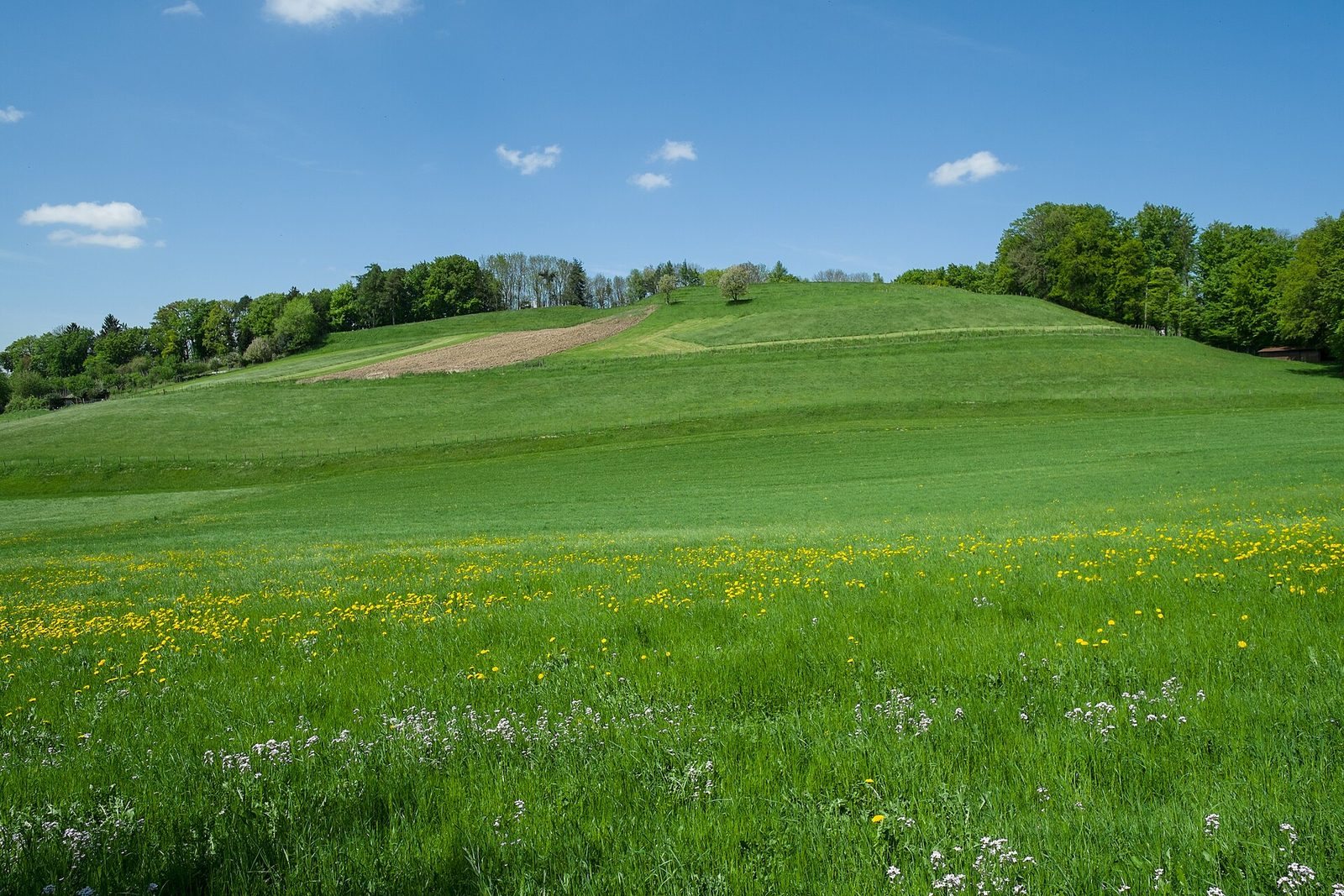
The site occupies a drumlin, a streamlined hill formed by glacial processes, at 488 m above sea level beside the Argen and northeast of Betznau. Steep slopes surround the hill. The castle layout includes an outer bailey, the castle’s outer enclosed area, and a main castle, separated by a ditch that remains preserved.
Early medieval building
Excavations identified a sunken-featured building, a structure set partly below ground, with a hearth. The building and the visible form of the castle date to the late Merovingian-Carolingian period, named for successive Frankish ruling dynasties that cover much of the early Middle Ages.
Early fortification and finds
Hallstatt-period pottery fragments and bones point to activity at the site during its earliest phase. Excavations in 2025 confirmed a timber-and-earth wall on the western side, dated to the early Celtic period.