Schloss Weikersdorf: A Renaissance Castle in Baden, Austria
Site at a Glance
- Popularity
- Medium
- Country
- Austria
- Primary era
- Early Modern
- Eras represented
- Medieval, Early Modern, Modern
- Civilizations
- Austrian Empire, Duchy of Austria, Habsburg, Holy Roman Empire
- Site type
- Domestic
- Remains
- Castle
On this page15 sections
History
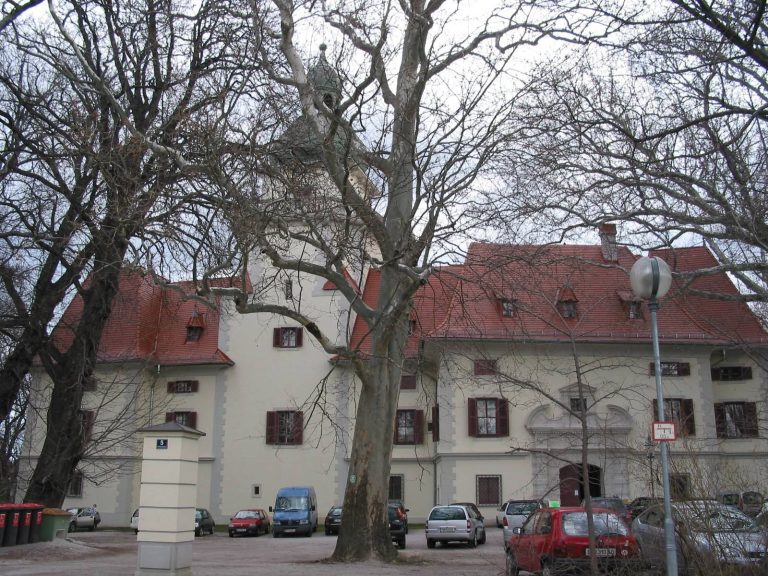
Schloss Weikersdorf is a Renaissance castle in Baden, Austria, with an arcade courtyard rebuilt around 1579; the date of its original moated fortress is unknown. The estate became the seat of successive local lords, though the location of the early castle remains uncertain.
Early Lords and Medieval Fortunes
The site’s early history has been linked to Hugo von Liechtenstein, a 12th-century nobleman regarded as the founder of the House of Liechtenstein. He may have received Weikersdorf among estates granted by the Babenberg dukes, the medieval ruling dynasty of Austria. The landholder Weikhard, from whom the place takes its name, has not been identified.
Lords of Weikersdorf appear in records between 1268 and 1344. In 1268, Heinrich and Albero von Weikersdorf held the lordship, although it is unclear whether they were members of the Liechtenstein service nobility or of a related family branch. Hans Hager was lord in 1450, and Bohemian forces attacked the fortress in 1463.
Matthias Corvinus, king of Hungary, also held the castle. After Corvinus died in 1490, it passed to Holy Roman Emperor Frederick III, who assigned it to his forester, Kallenberg.
Ownership and Ottoman Attacks
Ottoman campaigns brought their forces into Central Europe, and attacks in 1529 and 1683 affected the castle. After the 1529 attack, Joachim Marschall von Reichenau was lord in 1531. Following his death, the property passed first to Jakob Rainer and then to Georg Kottler.
The castle was sold to Georg Stadler von Ernstbrunn in 1586. His son Gandolf transferred it to Barbara Langeisen in 1606, and Hans Paul Bayer was lord by 1612. The 1683 siege caused severe damage and fires, destroying the estate records. Franz Anton Edler von Quarient and Raal acquired the property in 1692 and began major rebuilding. In 1705, Franz Quarient commissioned new land registers, which became an important record of the estate’s history.
Doblhoff Ownership and Wartime Damage
The Doblhoff family owned Schloss Weikersdorf from 1741 to 1966. Its last lord was Heinrich (III) von Doblhoff-Dier. Until the Second World War, the castle housed a picture gallery containing works from the 16th to the 19th century.
In 1945, the Soviet Army occupied the castle, which suffered substantial damage and faced the risk of ruin. Mine-detection equipment was used to find a church treasure walled into the building; it had probably been concealed during the 1683 siege.
Municipal Purchase and Hotel Use
The municipality of Baden bought the castle and park on 30 June 1966 and secured the buildings between 1968 and 1971. The property was sold to industrialist Wilhelm Papst on 9 March 1973. At his initiative, and with support from his wife Lotte, the castle was renovated and adapted for use as a hotel.
Austria-Hotel-AG took over the hotel on 1 January 1992. A 2018 extension brought its capacity to 200 guest rooms. Bankruptcy proceedings began in November 2022, and a court order closed the hotel on 14 February 2023. The castle is protected as a listed monument in Austria.
Remains
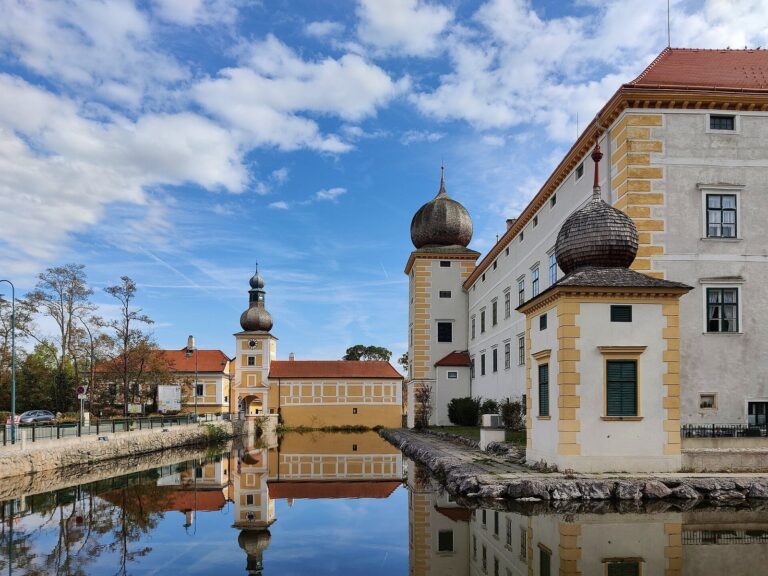
The complex is a Renaissance castle within grounds of about 30,000 square metres, including the surrounding park. Its historic fabric combines an arcaded courtyard with medieval perimeter walls and later Baroque and 19th-century alterations. A moat once surrounded the castle.
Courtyard and Medieval Fabric
Arcaded Courtyard
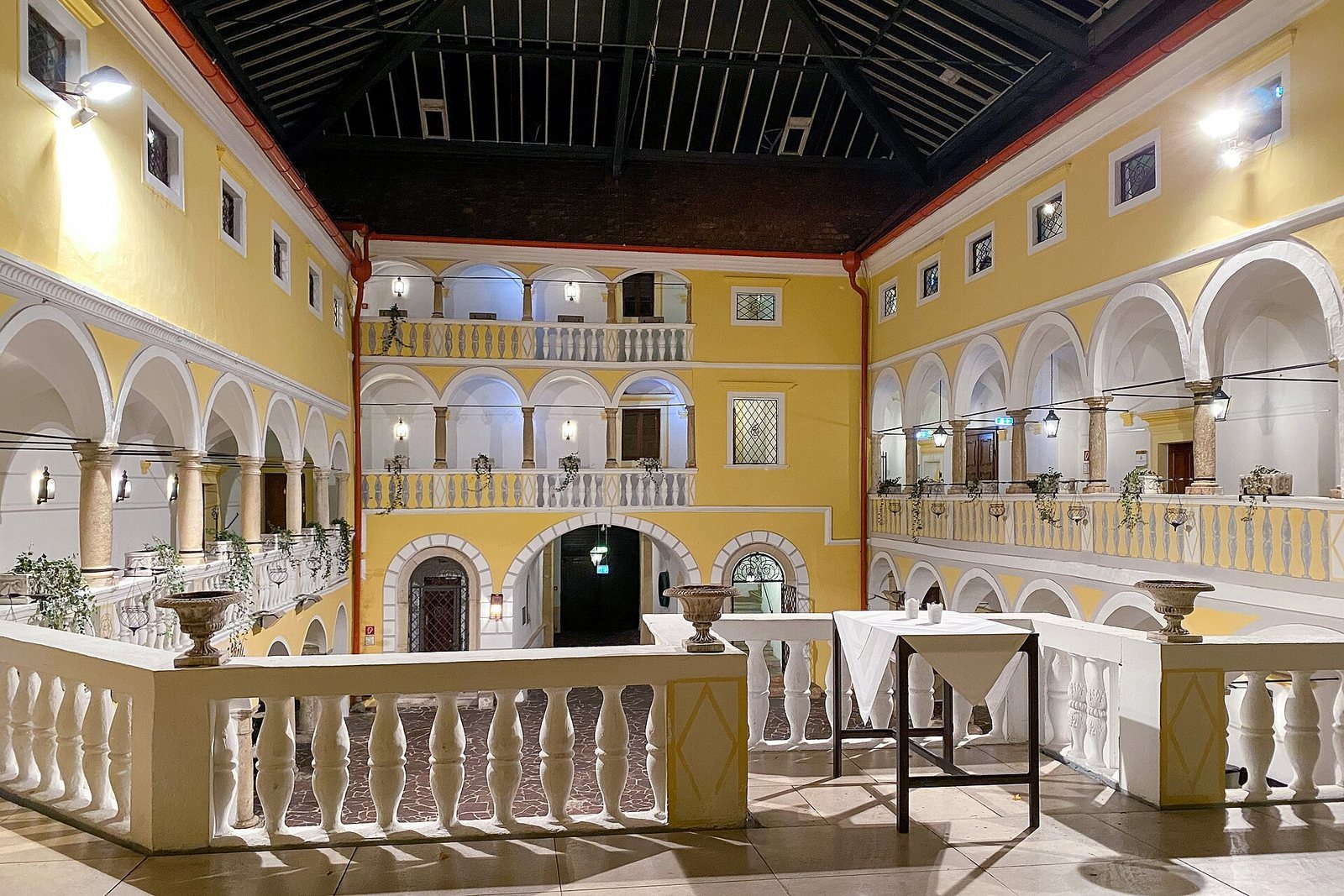
The courtyard was rebuilt in Renaissance style around 1579. Its arcades consist of a series of arches, and a glass roof was added in 1983.
Walls and Former Keep
Sections of the perimeter walls in the north and west wings date to the 13th century. The keep, the castle’s principal fortified tower, stood at the north corner of the courtyard. Baroque alterations reduced it to eaves height.
Baroque and Nineteenth-Century Alterations
Baroque Work
Rebuilding from 1692 included stucco ceilings, made from decorative plasterwork, on the first upper floor. A new façade was also applied to the gate tower. The moat was drained during the 18th century.
Interiors and Additions of 1859–60
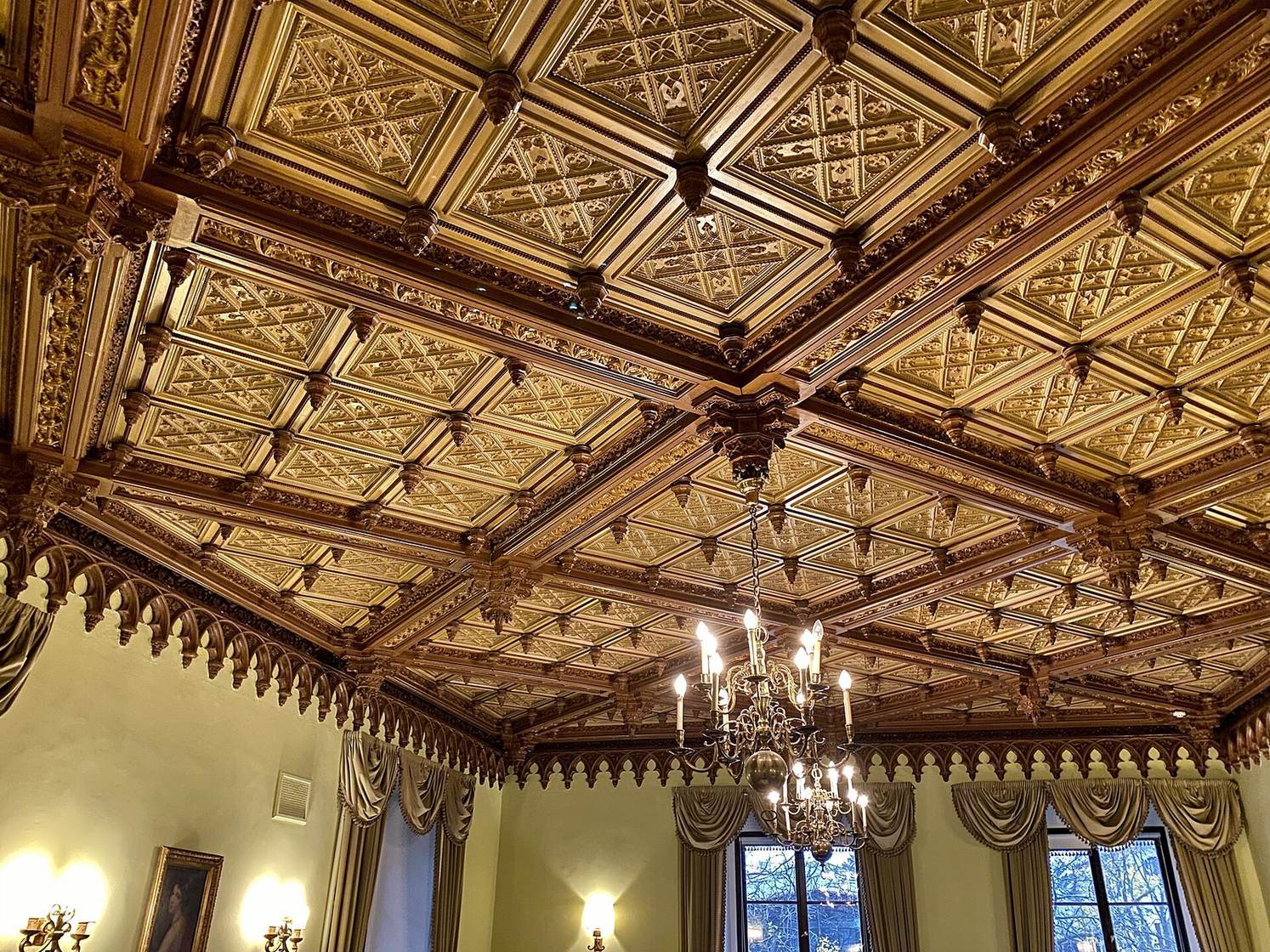
Extensive work in 1859–60 altered the interiors and filled in the moat. The ground floor of the southeast wing contains an old stone spiral staircase. A wooden ceiling in the former dining room imitates a ceramic finish, while late-17th-century stucco ceilings remain in the reception rooms, particularly the former music room.
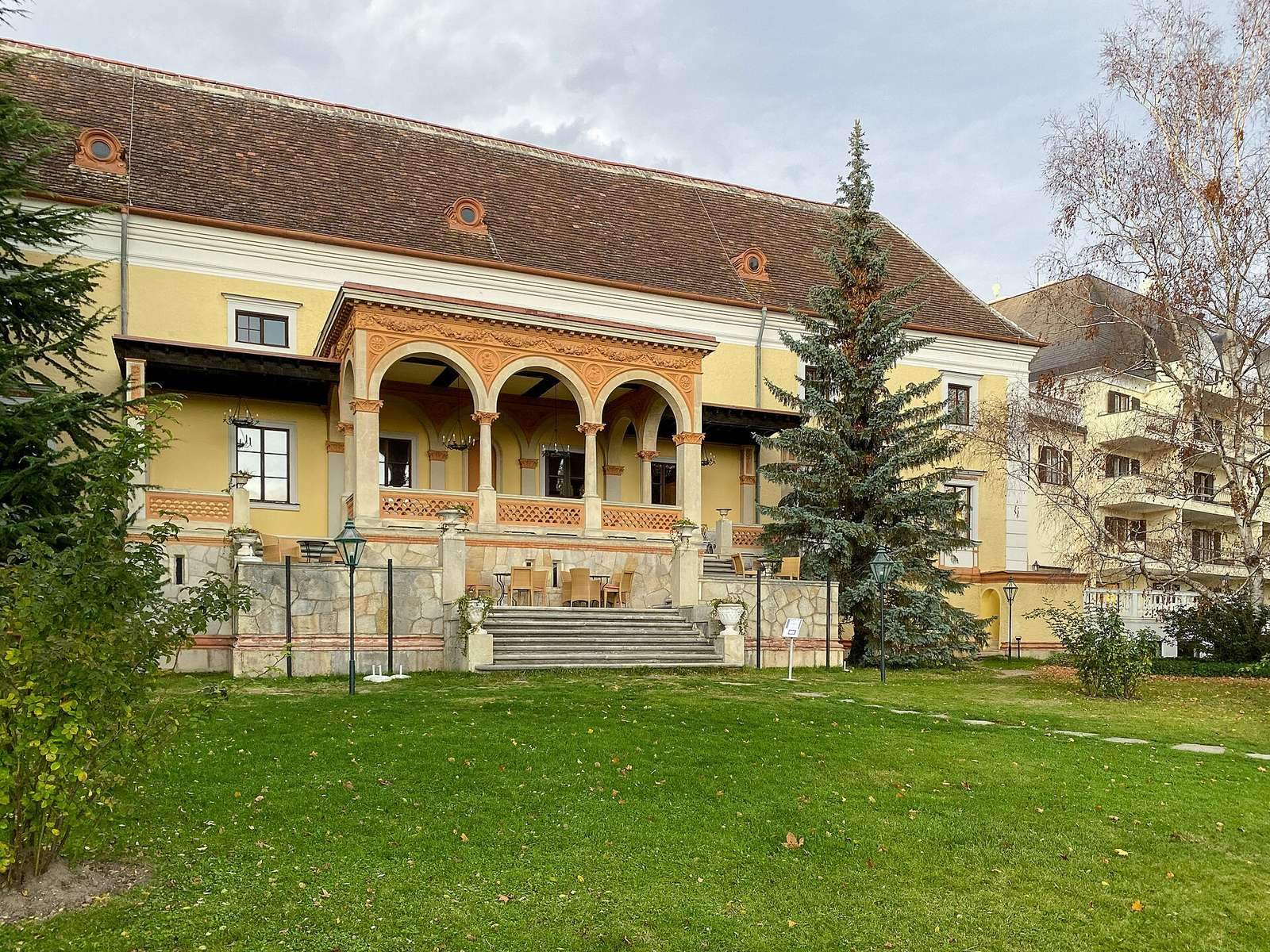
The 1859–60 works also added terracotta fittings supplied by the firm of Victor Brausewetter, an architect and pottery manufacturer based in Kottingbrunn-Wagram. A loggia, a roofed gallery open to the outside, was added on the south side, and the gate tower’s entrance area was altered.
Hotel Buildings and Park
Hotel Additions
Conversion for hotel use added a sports wing, a tennis hall, and a guest-room wing on the east side. The work also involved relocating the bed of the Mühlbach stream.
Doblhoffpark
The surrounding grounds are known as Doblhoffpark. The park includes Austria’s largest rose garden, with more than 30,000 rose plants representing over 800 varieties.