Ebenthal Castle in Carinthia: A Sixteenth-Century Noble Residence
Site at a Glance
- Rating
- 4.8
- Popularity
- Low
- Country
- Austria
- Primary era
- Early Modern
- Eras represented
- Early Modern
- Civilizations
- Habsburg, Habsburg Austria, Holy Roman Empire
- Site type
- Domestic
- Remains
- Castle
On this page6 sections
History
Construction and Expansion
Ebenthal Castle in Carinthia is a noble residence southeast of Klagenfurt, Austria, built in 1566 by Christoph von Neuhaus. It stands below Greifenfels Castle, which the Lords of Neuhaus had held since the early fifteenth century. In a charter dated 14 September 1567, Archduke Charles II, a Habsburg ruler of Inner Austria, confirmed possession of the new castle, which took the name Ebenthal.
The building was enlarged in the seventeenth century. The Counts of Goëss acquired the castle and its estate in 1704, then remodeled the residence during the eighteenth century.
Fire and Restoration
Fires in 1919 and 1948 damaged the castle, which was fully restored after the damage. The Goëss family remains its owner.
Remains
Exterior and Grounds
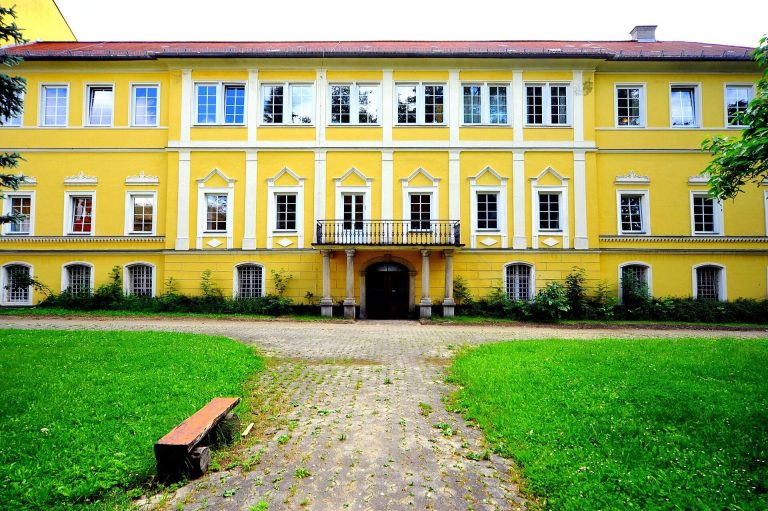
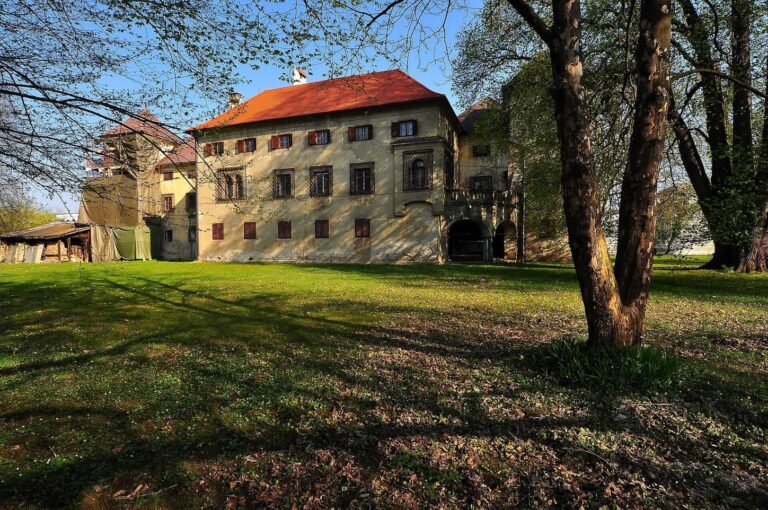
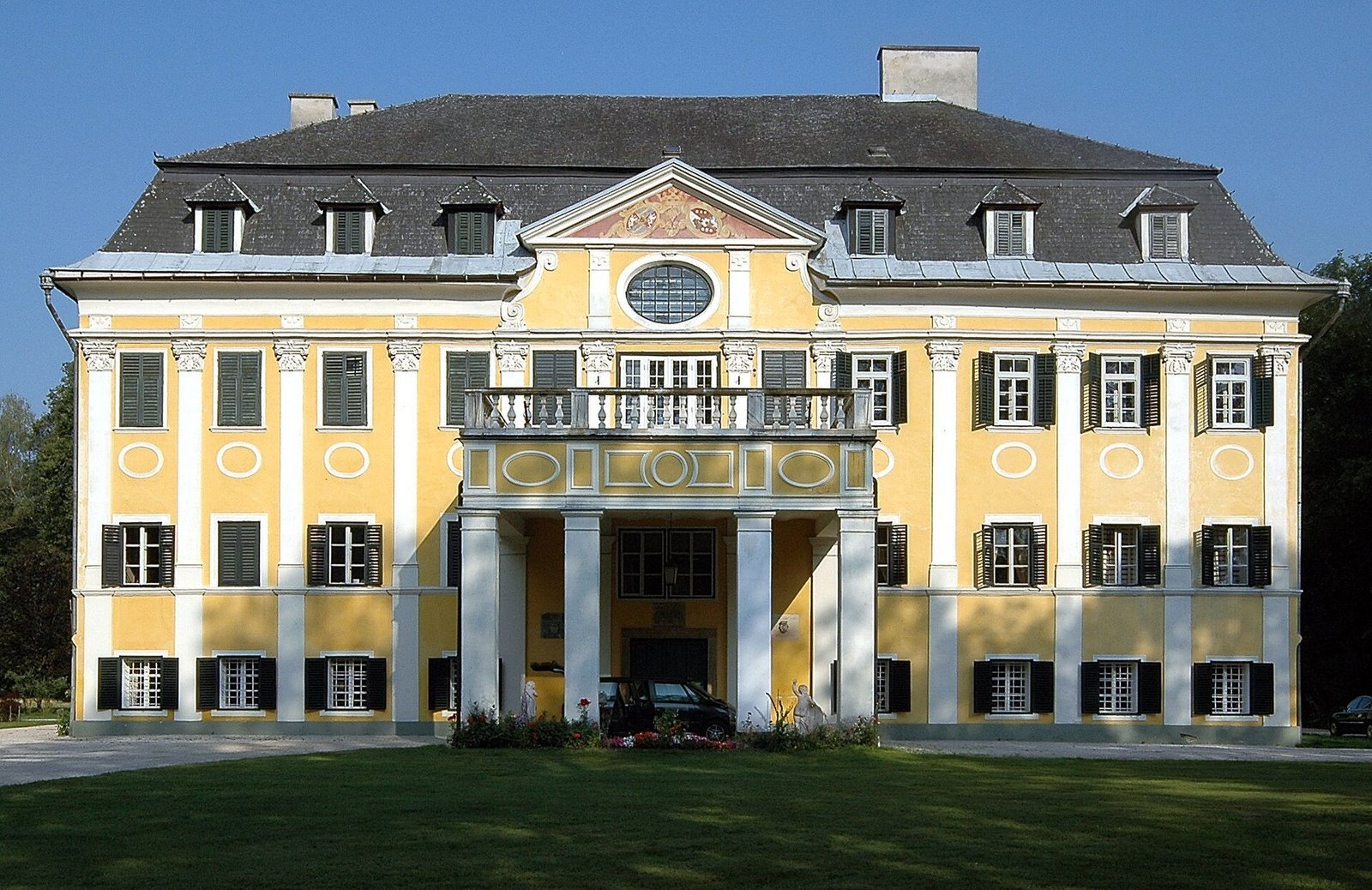
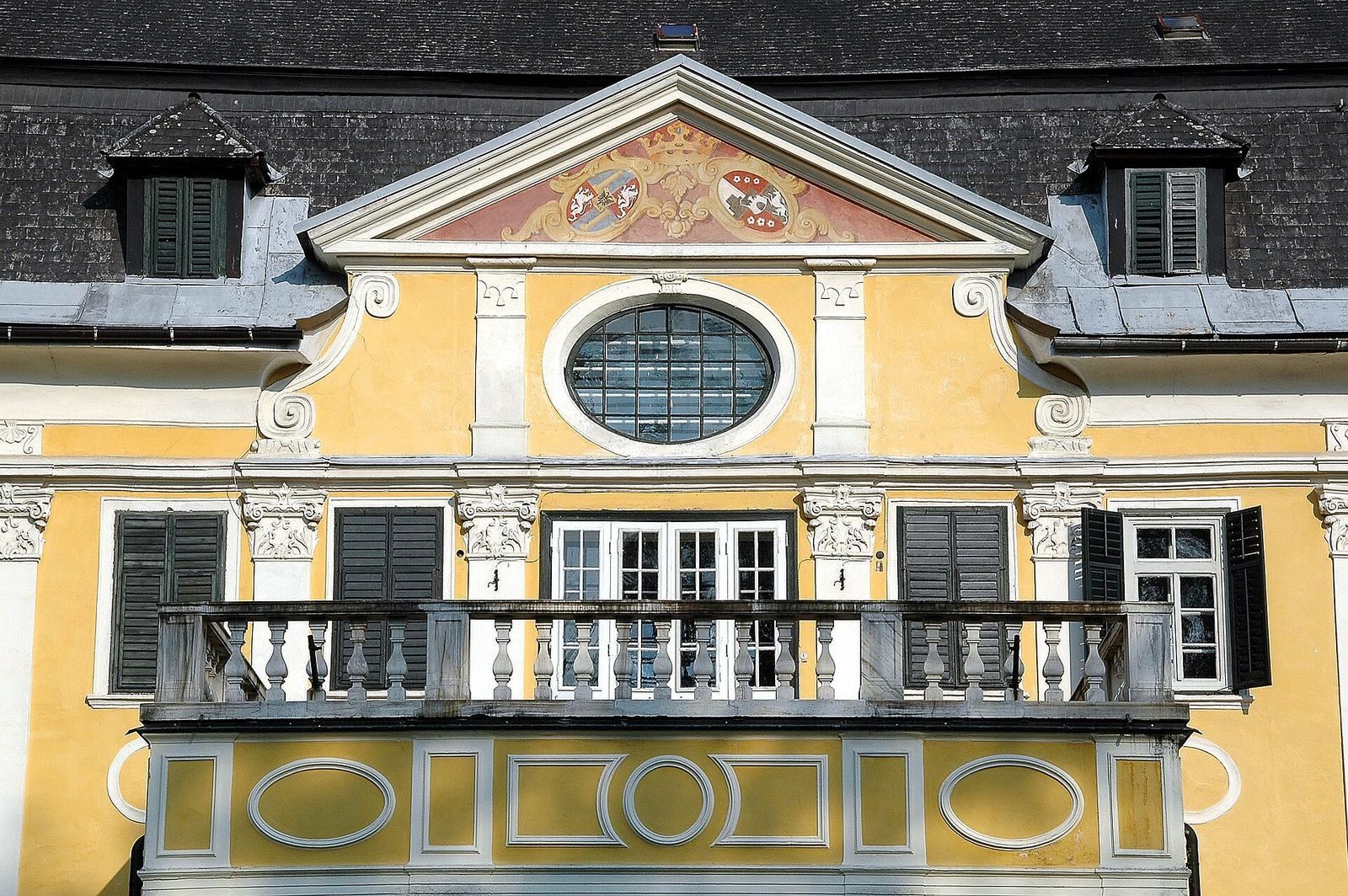
The castle is an almost rectangular building of three storeys, with eleven vertical rows of windows on one façade and six on another. Two projecting upper-storey windows, capped by bulbous domes that taper at the top, are part of the seventeenth-century enlargement. Shallow, flat projections on the walls extend across more than one storey. The west façade has projecting sections at its corners and a central gable bearing a coat of arms. On the east, a roofed entrance supported by pillars is topped by a balustrade. Another coat of arms carries an inscription. An extensive park, laid out in the eighteenth century, surrounds the building.
Interior
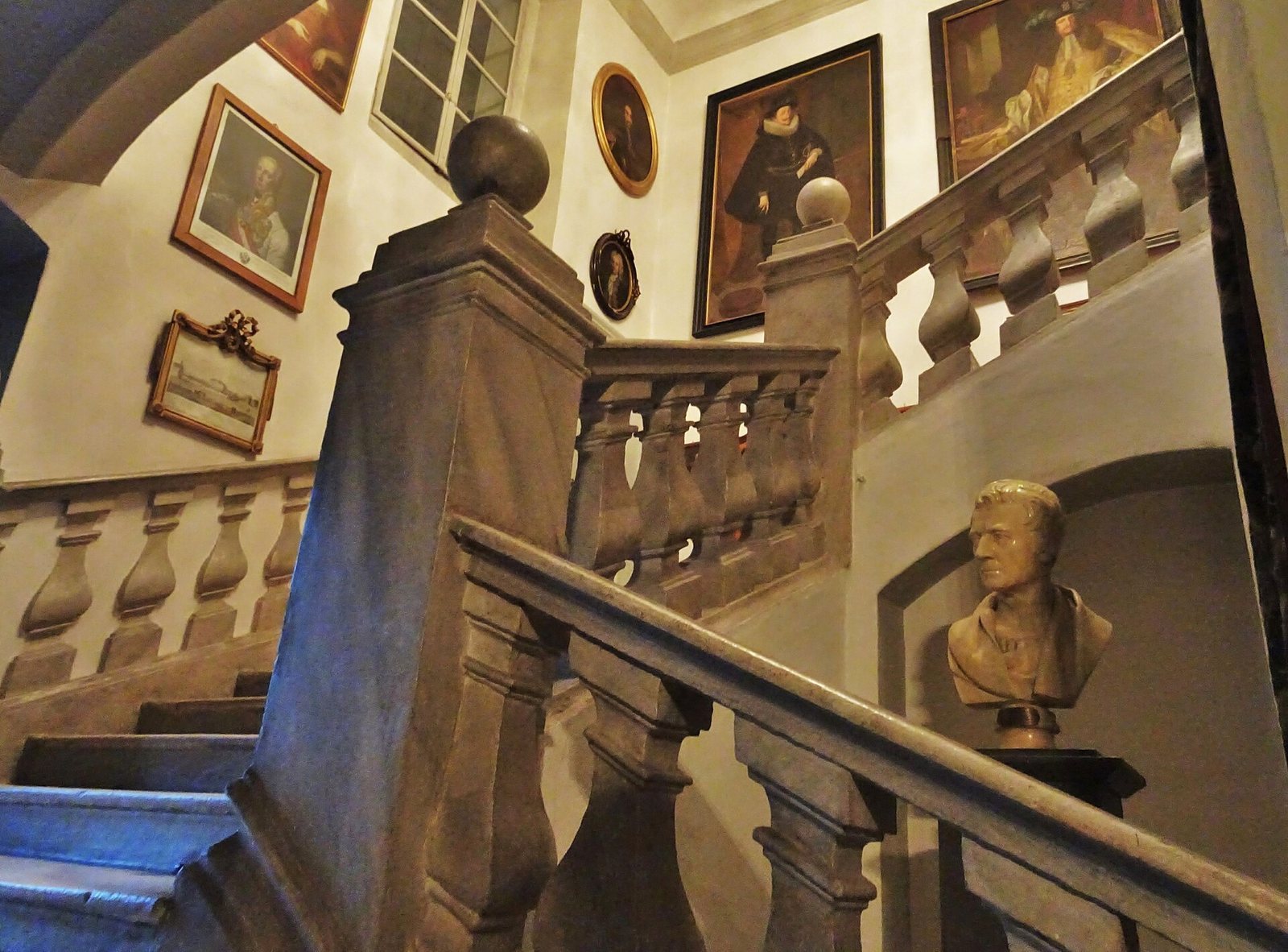
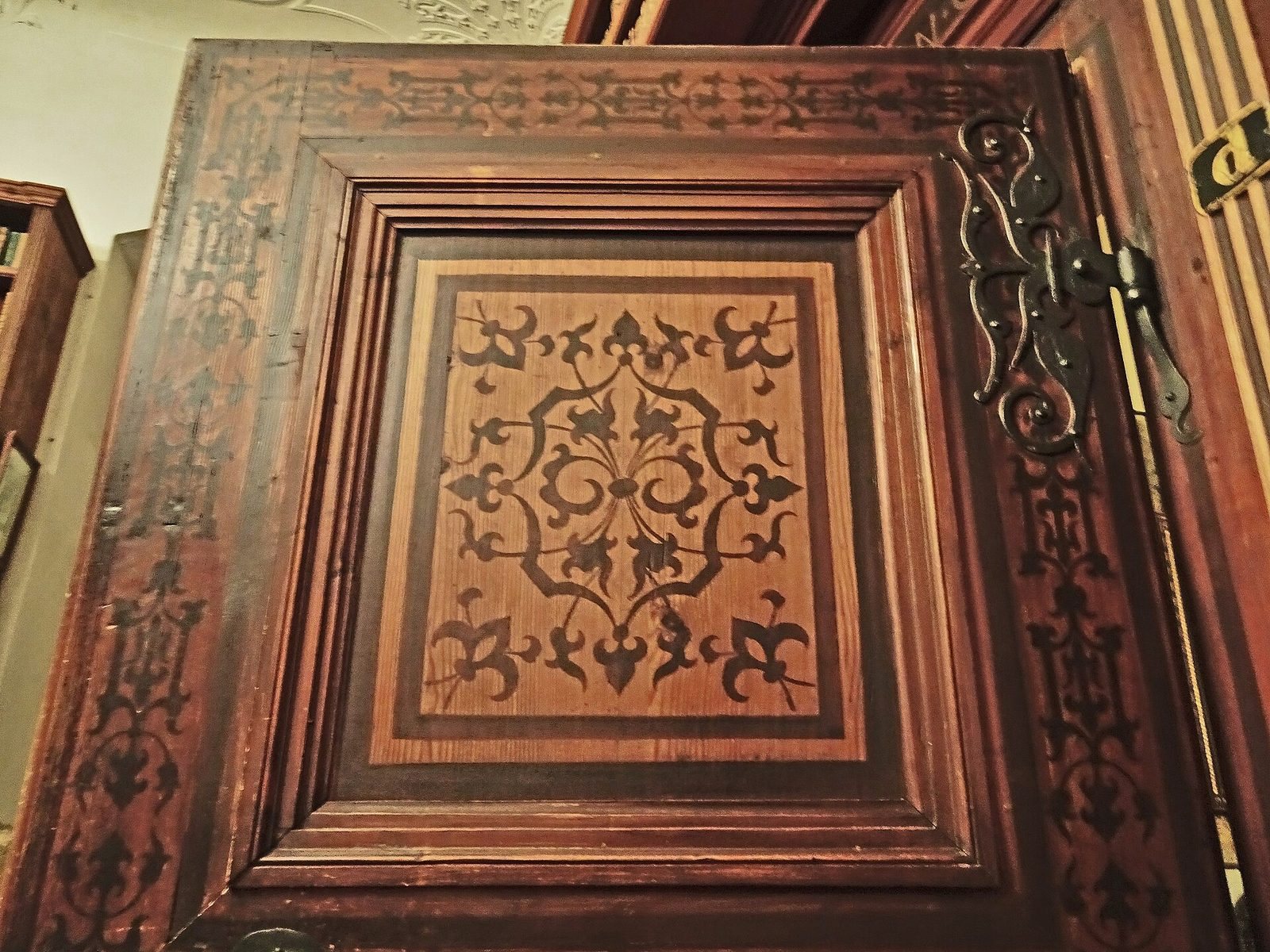
The ceremonial hall on the second floor has a continuous arched ceiling painted by Carinthian Baroque artist Josef Ferdinand Fromiller in 1748. Its restrained colors frame illusionistic architectural forms and allegorical figures, including representations of prosperity and wealth. A Renaissance door decorated with wood inlay opens into the extensive family library. A staircase leads to the first floor.