Alterlaa Castle: A Historic Castle and Park in Vienna
Site at a Glance
- Rating
- 4
- Popularity
- Very Low
- Country
- Austria
- Primary era
- Early Modern
- Eras represented
- Early Modern, Modern
- Civilizations
- Habsburg, Holy Roman Empire
- Site type
- Domestic
- Remains
- Castle
On this page12 sections
History
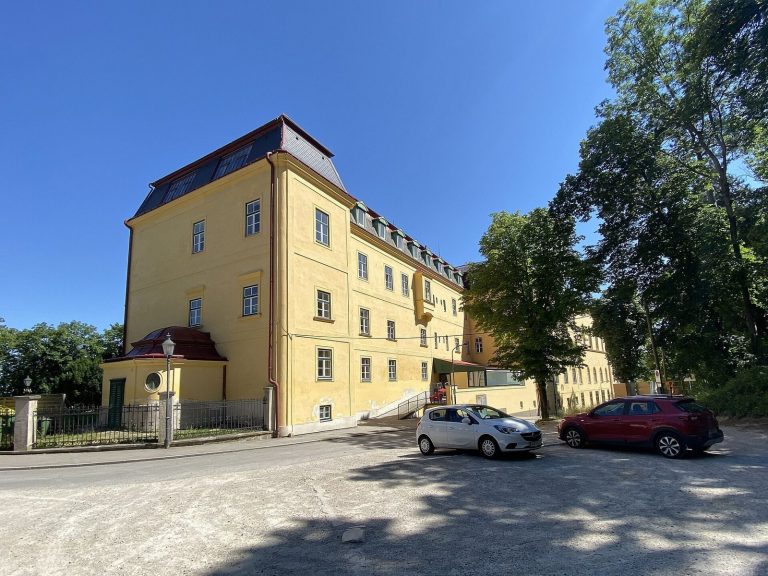
Alterlaa Castle, also known as Erlaa Castle, stands in Vienna, Austria, and was first recorded in 1244 as the seat of the Erlaa lordship. A major remodelling from 1766 to 1770 gave it a late Baroque-Classical character, blending late Baroque ornament with classical design.
Early castle and eighteenth-century remodelling
An engraving by Georg Matthäus Vischer, dated 1672, depicts the estate as a four-wing castle. In 1726, the castle chapel was consecrated by Sigismund von Kollonitz, Archbishop of Vienna. The Counts of Seillern owned the estate at that time.
Georg Adam von Starhemberg acquired the castle in 1765. Its remodelling over the next several years probably followed plans by Nikolaus Pacassi, a Habsburg court architect. Starhemberg also began laying out the park around 1770.
Napoleonic era and nineteenth-century use
French troops under Napoleon Bonaparte were quartered at the castle in both 1805 and 1809. After the coalition victory over Napoleon at Leipzig in 1813, Jérôme Bonaparte, Napoleon’s youngest brother and former king of the French-aligned Kingdom of Westphalia in central Germany, lost his kingdom and received asylum in Austria. He acquired Erlaa from Prince Starhemberg through his chamberlain, Baron Linden, and moved in with a large retinue in 1817.
A few years later, Austrian diplomat Metternich pressed Jérôme to leave because Erlaa was too close to Schönbrunn. Jérôme moved to Schönau, which he had acquired from Baron Peter von Braun in exchange for Erlaa. After the transfer to Braun, the Baroque grounds were converted into an English landscape garden, a naturalistic style of garden design. The park became a local attraction near Vienna.
In 1848, troops commanded by Croatian military leader Joseph Jelačić von Bužim were quartered at the castle. After 1880, part of the building housed a private hospital for poor patients. During the last quarter of the nineteenth century, the estate belonged to Duke Elimar of Oldenburg (1844–1895), son of August I, Grand Duke of Oldenburg. Elimar died at the castle, and ownership passed to his widow, Baroness Nathalie Vogel von Friesenhof and Brogyan. She made rooms available to composer and pianist Anton Rückauf, who had moved from Prague to Vienna in 1878. Rückauf died at the estate on 19 September 1903.
Ownership and changes after 1918
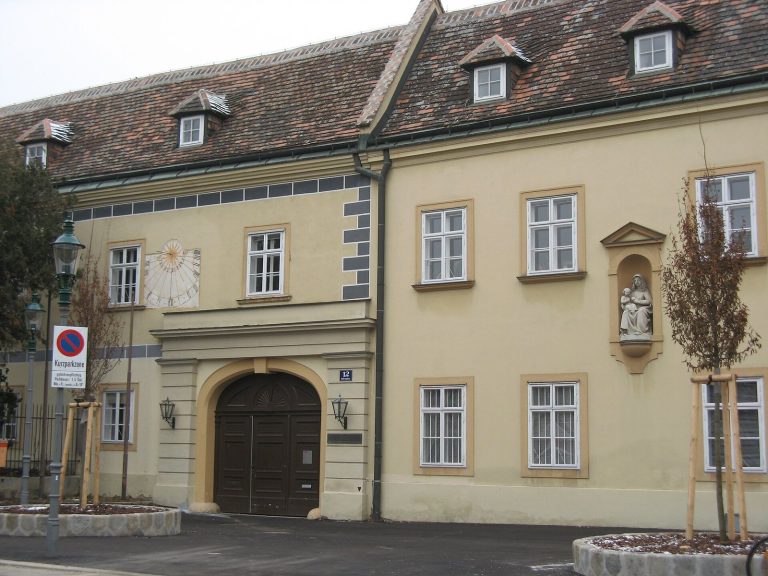
The estate passed in 1918 to landowner Johannes Brenner Freiherr von Felsach, whose descendants remain its owners. Remodelling in 1919 and 1920 removed the front tract and chapel and created the front wall and courtyard of honor. The chestnut avenue is protected for nature conservation, while the castle and its extensive garden serve as a public recreation area.
Remains
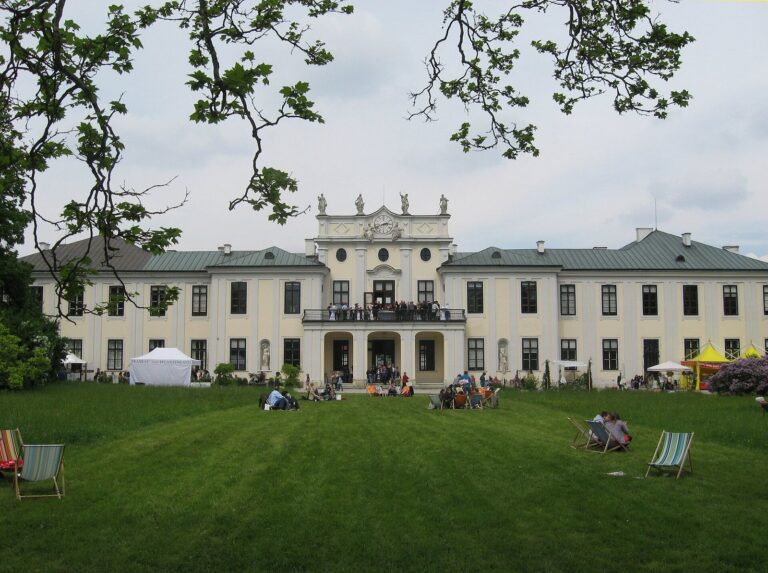
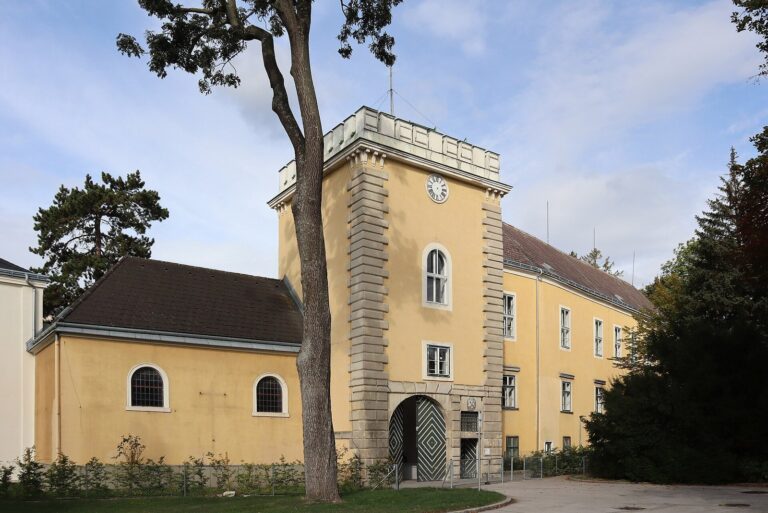
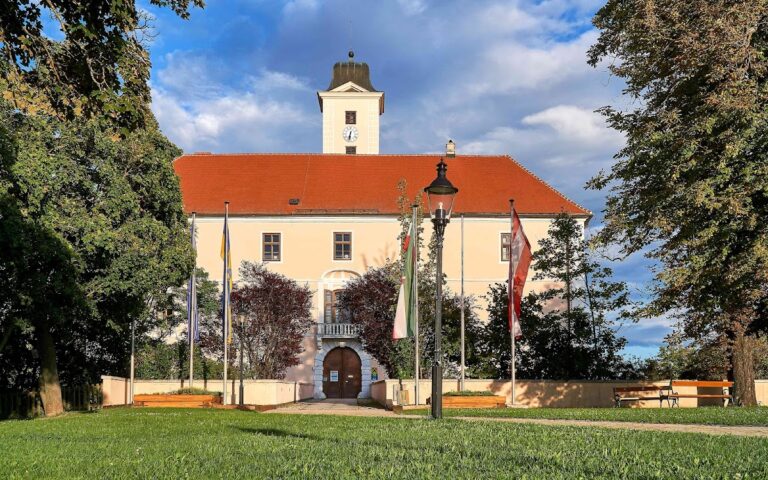
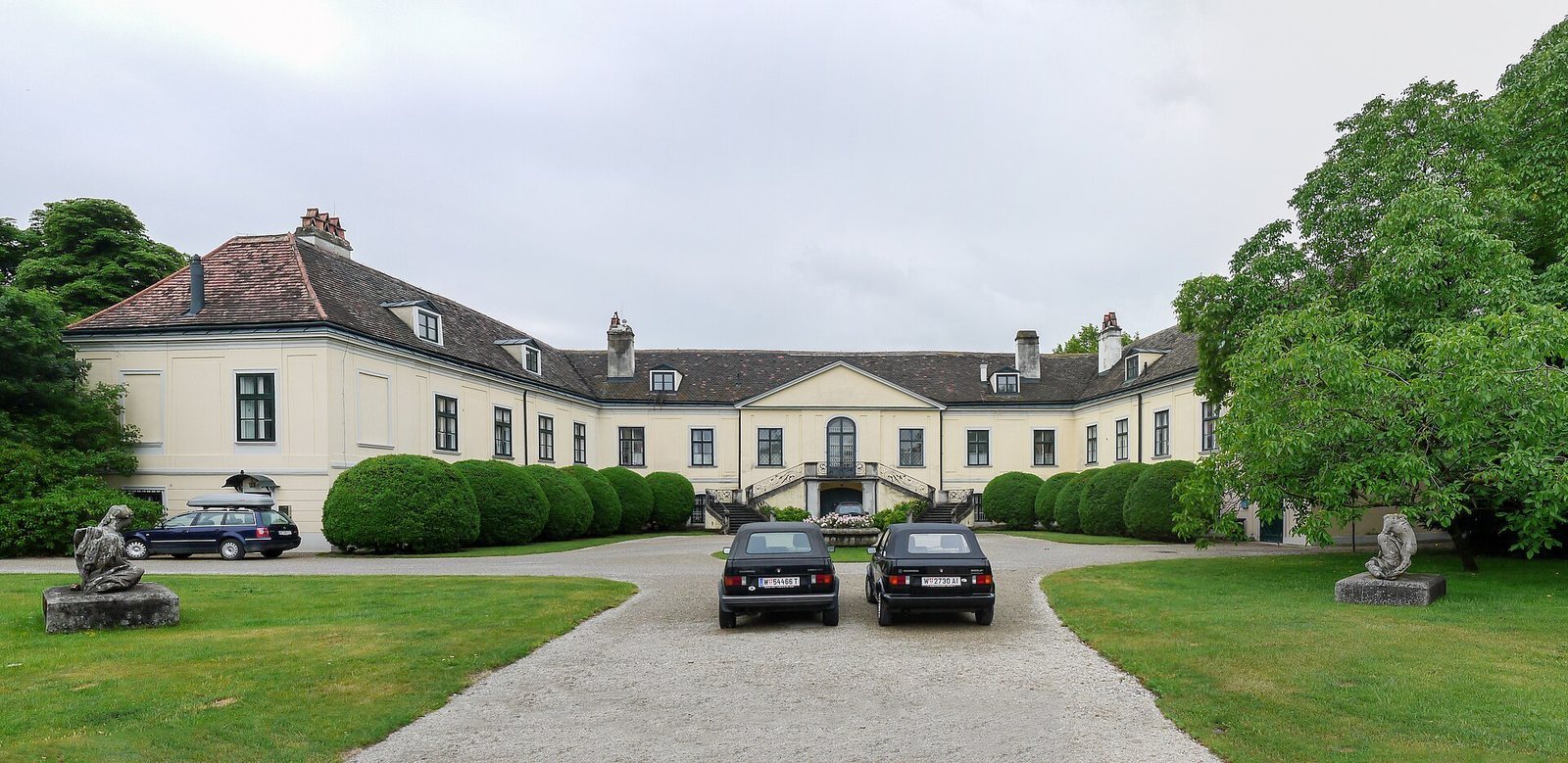
The two-storey main building has a high hipped roof and two side wings arranged around a courtyard of honor. Open stairways face both the courtyard and the park from the central block.
Castle and interiors
Ground-floor vaults
Groin vaults, formed by intersecting barrel-shaped ceilings, survive on the ground floor. They date from around the turn of the sixteenth to the seventeenth century.
Upper-floor panelling
Some upper-floor rooms retain wood panelling from around 1770, decorated with Rocaille carvings featuring irregular shell- and rock-inspired forms.
Park and approach
Landscape garden
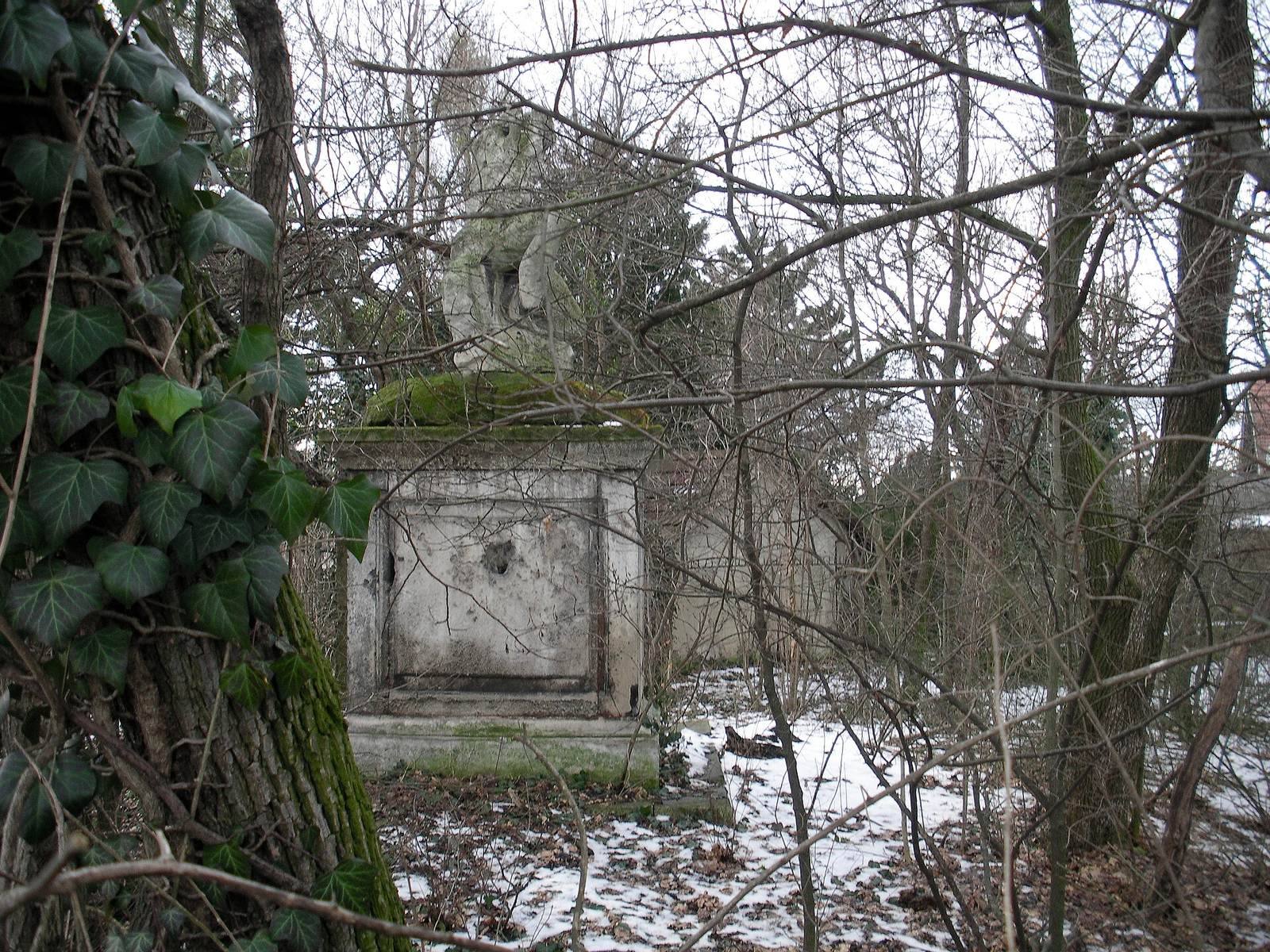
The extensive park lies south of the main building. Its basic layout derives from the English landscape garden established around 1770. Eighteenth-century features include artificial watercourses with stepped waterfalls, or cascades, a grotto, an artificial ruin, and a round temple. Stone benches and remains of bridges also survive in the grounds.
Chestnut avenue
The chestnut avenue leading to the castle, now Gregorygasse, was laid out in 1783 and aligned toward Schönbrunn.
Atlas figure
At the rear of the property, beside Kugelmanngasse and just behind the fence, stands a stone figure of Atlas carrying a celestial globe. Popularly called Kugelmann, the statue gave the street its name. In 1901, Primo Calvi described it as a large Atlas raising his hands to carry the globe.