Liesing Castle (Schloss Liesing): A Former Moated Estate in Vienna
Site at a Glance
- Popularity
- Medium
- Country
- Austria
- Primary era
- Early Modern
- Eras represented
- Medieval, Early Modern, Modern
- Civilizations
- Habsburg, Holy Roman Empire
- Site type
- Domestic
- Remains
- Castle
On this page13 sections
History
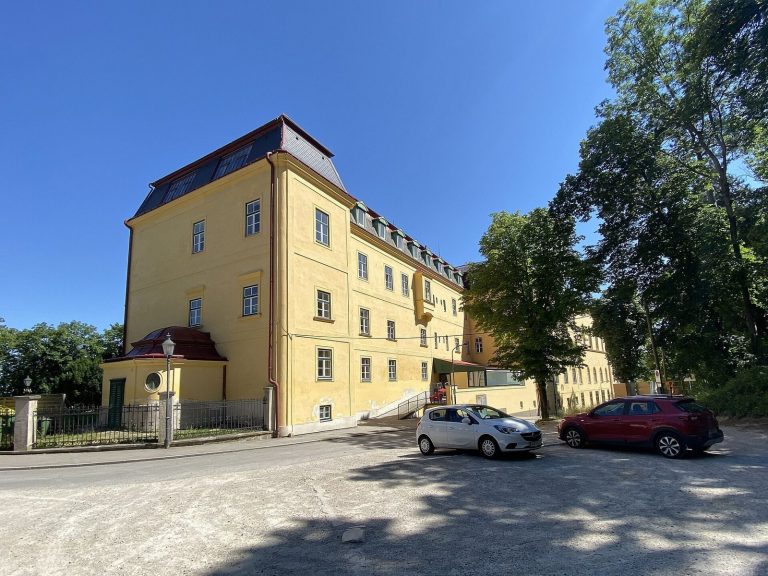
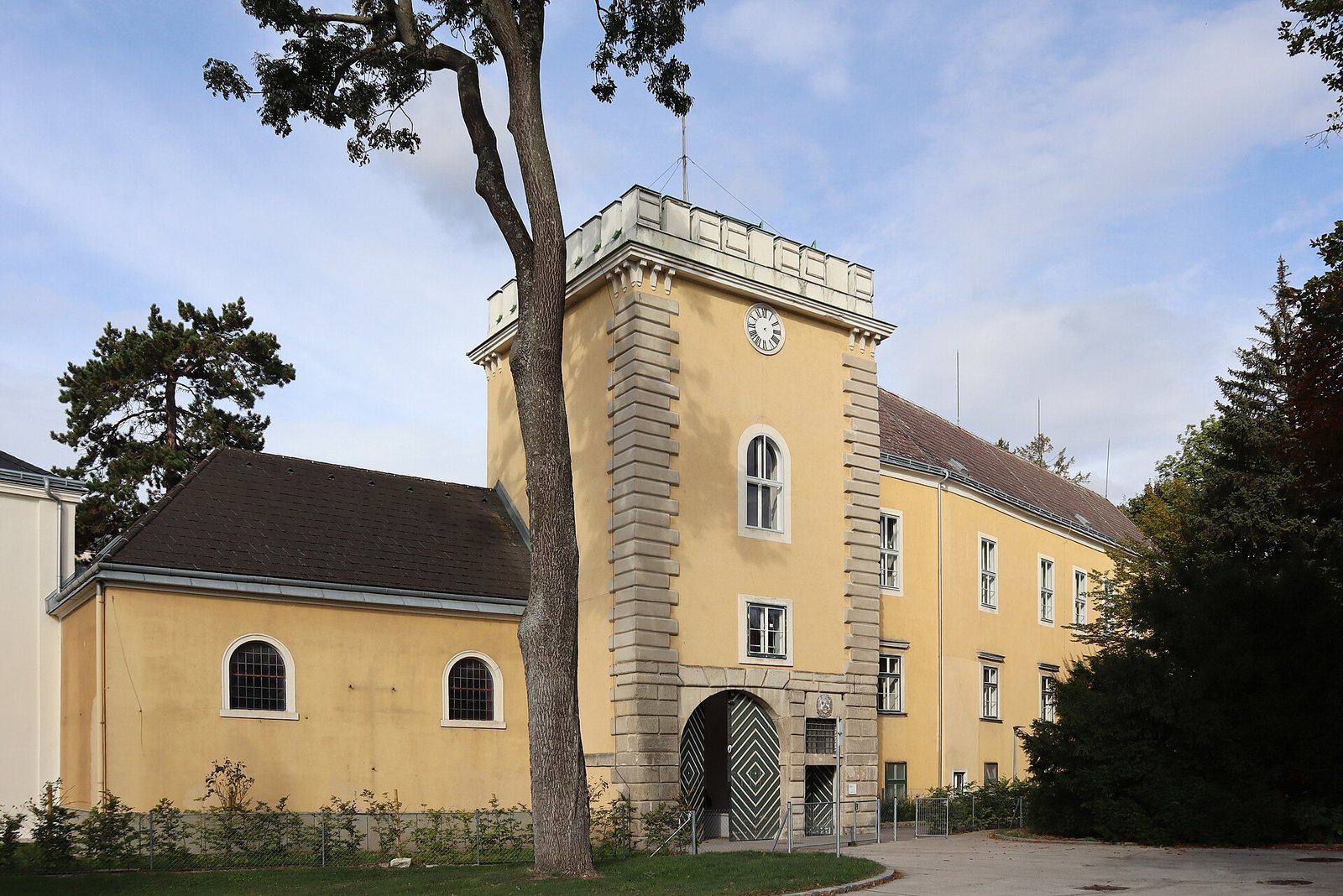
Liesing Castle, locally known as Schloss Liesing, is a former moated estate in the Liesing district of Vienna, Austria. First recorded as a farmstead in 1387, it was enlarged into a castle at the beginning of the eighteenth century during the Baroque period, a major European artistic and architectural style of the seventeenth and eighteenth centuries. In the nineteenth century, the estate housed the area’s first known industrial enterprise.
Farmstead and ecclesiastical ownership
The farmstead was known as Hausgraben or Auhof. It belonged to the local judge Georg Zeitlas from 1415 to 1435, then passed to Andreas Plank von Gars, a parish priest who became chancellor, a senior official serving a ruler, to the Habsburg ruler Albert II. Plank later gave the estate to Vienna’s Dorotheer Monastery.
Sieges and transformation into a castle
The estate suffered during the sieges of 1529 and 1683, and the second siege left it almost completely destroyed. A local legend holds that only a hazelnut tree in the park survived. The story inspired Liesing’s coat of arms, which shows a three-leaved hazelnut branch with four fruits above a blazing fire, alongside the year 1683.
The farmstead was rebuilt soon after the destruction. At the beginning of the eighteenth century, it was enlarged into a castle. Holy Roman Emperor Charles VI may have lodged there.
Private ownership and new uses
After the church relinquished the castle, Viennese printer and publisher Joseph von Kurzböck bought the estates of Ober- and Unterliesing, including the castle, from the Religious Fund in 1789. The fund was a state-administered body holding assets from religious institutions. The von Kurzböck family sold the property in 1795, when the land register named Nicolaus, Baron Weiß von Felzt, as its owner. Ownership changed repeatedly until the court jeweler Valentin von Mack acquired the estate in 1832.
After the business of Mack’s descendants failed, they sold the castle to Moriz Mandeles in 1848. Mandeles attempted to rent out the estate. An ammonium chloride factory operated there, and around 1857 the castle temporarily housed an institution that cared for and educated children with intellectual disabilities. In 1876, Moriz Mandeles’s son Friedrich sold the property to the City of Vienna because of financial difficulties. The city converted it into an old people’s home.
Municipal history and redevelopment
From October 12, 1924, to September 5, 1925, the castle and its grounds formed the local municipality of Neu-Liesing.
After a public negotiation procedure on April 21, 2006, a City of Vienna evaluation commission recommended a major redevelopment that included restoring the castle and building a residential care home. The redevelopment transferred the castle to ARWAG Holding AG. Since August 2013, it has been owned by MIGRA, an ARWAG sister company, which completed restoration to monument-protection requirements by 2018. The care home and park remained City of Vienna property.
A citizens’ initiative, Save Liesing Castle Park, was founded in July 2006 to protect the entire park, but did not achieve all its aims. The redevelopment included changes to the park, described below.
Remains
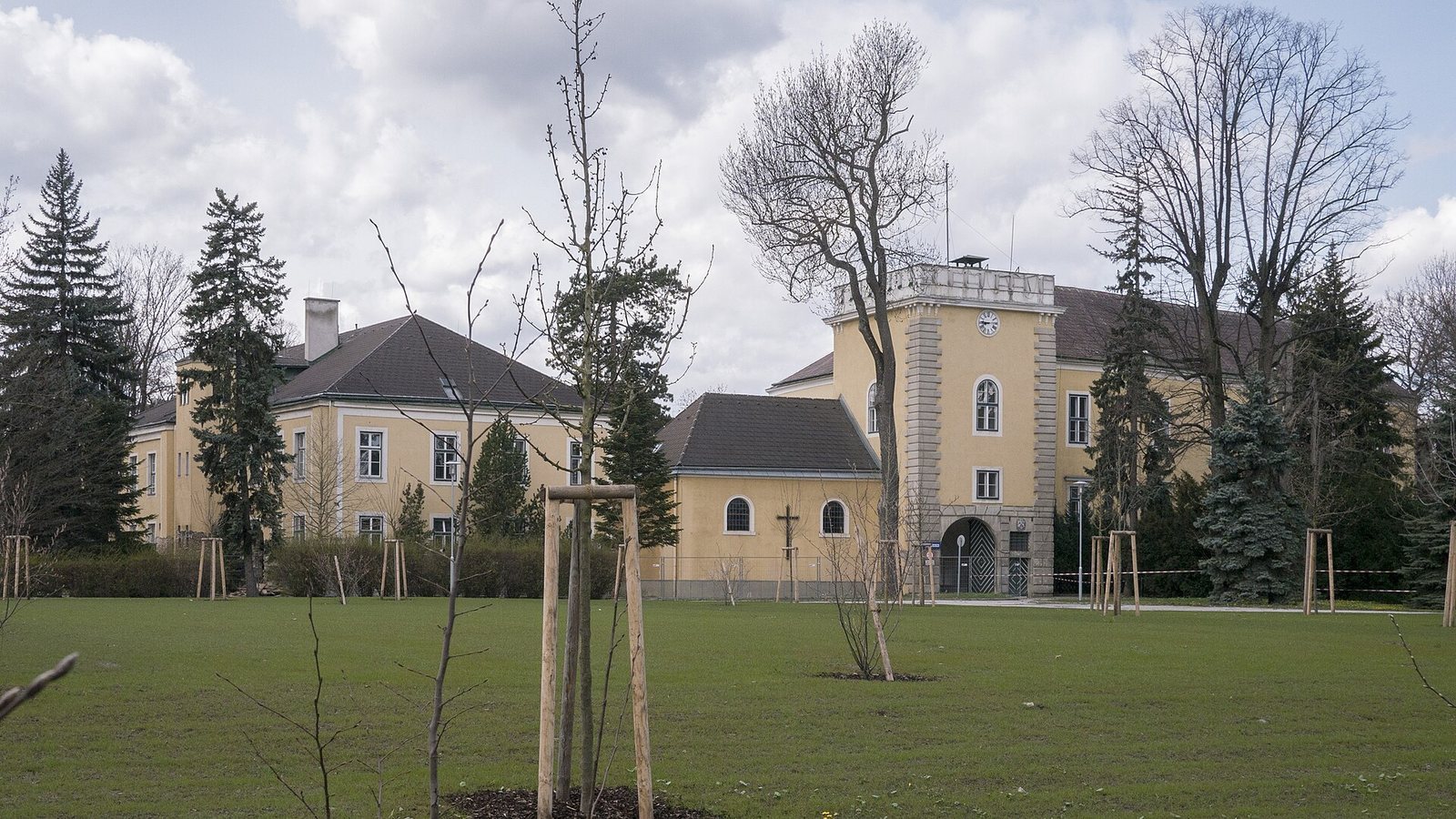
The castle stands within a large park and retains wings from early and late Baroque phases. The grounds also include a former moat, a residential care home, and landscaped areas created through later changes.
Castle and former water defenses
Wings and chapel
The early Baroque wing houses a City of Vienna music school, while the late Baroque wings contain 23 subsidized rental apartments. An extension beside the moat, partly replacing twentieth-century additions, contains 12 privately financed owner-occupied apartments that were gradually sold to private buyers. A chapel was built on the castle grounds between the east and south wings.
Moat and watercourse
The moat and an associated outlet extending across the Ketzergasse area may indicate a water connection between the Liesing and Petersbach valleys. That connection may have been artificial. Another possibility is that the Liesing stream once continued east before shifting to its present northward bend. Its former channel may have supplied the fortification at Hausgraben, then fed the present Petersbach through a ditch shown on old maps and also called Aubach.
Park and later development
Residential care home and park
Built between 2009 and 2012, the Liesing residential care home stands some distance from the castle and occupies about one-third of the park. The park is open to the public.
Former care building
As partial compensation for the park area used by the new care home, a large late-nineteenth-century care building on Perchtoldsdorfer Straße was demolished without replacement. Its former footprint was made green.
Buried wall
Construction uncovered a historic wall 4 to 5 metres below ground. It extended for 50 metres and was destroyed during the building work.