Schloss Altenhof: A Baroque Castle Complex in Austria


Site at a Glance
- Rating
- 4.6
- Popularity
- Low
- Country
- Austria
- Primary era
- Early Modern
- External website
- Open
- Eras represented
- Medieval, Early Modern
- Civilizations
- Habsburg, Holy Roman Empire
- Site type
- Domestic
- Remains
- Castle
On this page9 sections
History
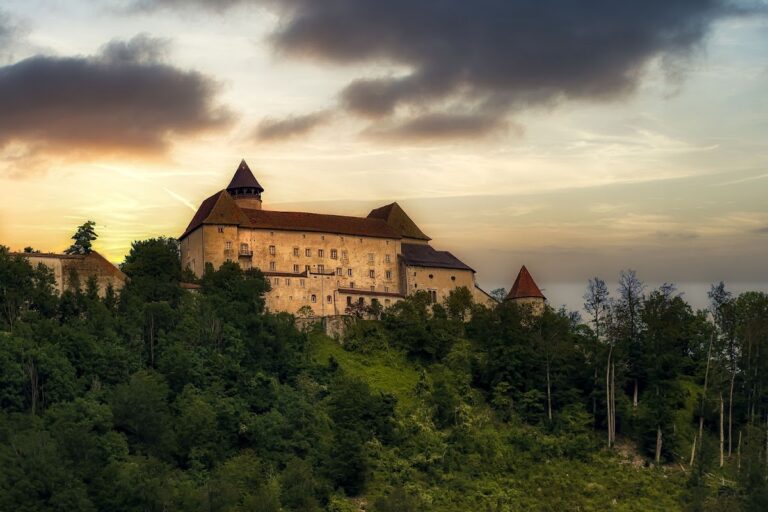
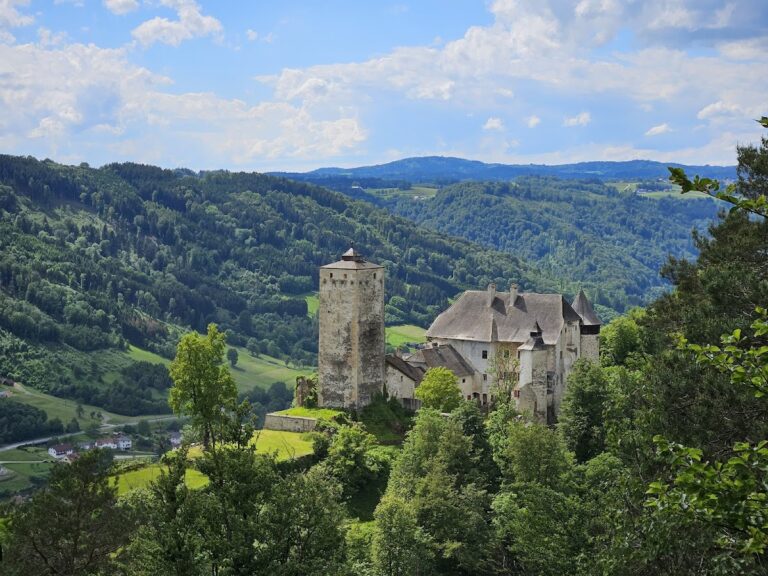
Schloss Altenhof is a historic castle complex in Austria, first recorded in 1204, whose present form reflects Baroque rebuilding after two destructive fires. Its history is closely linked with Falkenstein Castle and the noble families that controlled the region north of the Danube.
The Falkenstein lordship
In 1204, Wernhardus de Altinhoven was named as the owner of Altenhofen. During the thirteenth century, Altenhofen and Falkenstein Castle belonged to the Falkensteiners, a powerful noble family that encouraged the development of the surrounding territory.
The Falkenstein lordship later passed through marriage to Budiwoy von Skalitz, whose wife was the last Falkenstein heiress. Their descendants belonged to the Lords of Krumau, a collateral branch of the Witigones, a medieval noble dynasty active in Bohemia and the Austrian borderlands. Their son, Zawisch von Falkenstein, became prominent in Bohemia after rebelling against King Ottokar II Přemysl after 1277.
Zawisch was captured in January 1289, and King Wenzel II declared his possessions forfeited. Duke Albrecht I of Austria used this situation to besiege Falkenstein Castle, whose garrison eventually surrendered after starvation. The Habsburgs, a major European ruling dynasty whose Austrian branch acquired extensive Central European territories, then took possession of the associated estates.
Habsburg administration and noble ownership
Under Habsburg control, Altenhofen was administered by burgraves, officials responsible for managing and defending a castle or territorial district. It was also pledged as security or granted as a fief, meaning property held from a superior lord in return for service or allegiance. Leopold von Jedesberg served as burgrave in 1303.
At the beginning of the fifteenth century, Altenhofen became a fief of the Jagenreuter family. In 1452, Balthasar, Siegmund, and Erasmus Tagenreuter sold one-third of the property to the Melabrunner family. Dankwart Melabrunner, the last member of that family, died in 1475 and was buried in Pfarrkirchen church.
The Hörleinsperger family held the fief from 1485 until 1602. After Ulrich IV Herleinsperger died, the property passed to the Lords of Salburg. They united Altenhofen with Falkenstein and undertook its rebuilding. The Salburgs became barons in 1605 and counts in 1665, and the Salburg-Falkenstein family has retained ownership to the present.
Fire and reconstruction
A fire destroyed the castle completely in 1682. Count Johann Reichard von Salburg rebuilt it in the form that established the basis of the present complex and commissioned a chapel. The chapel was consecrated in 1708.
Another fire destroyed both the castle and chapel in 1724. They were rebuilt again, creating the complex whose architectural character survives today. Schloss Altenhof is also incorporated into the Upper Mühlviertel section of the Way of St. James, a network of Christian pilgrimage routes leading to the shrine of Saint James at Santiago de Compostela in Spain.
Modern uses and cultural activity
Until 1958, the castle served as the retirement home of the Rohrbach district. Since 1981, Clemens Hellsberg has organized annual summer benefit concerts at Schloss Altenhof for the Maltese Hospital Service. Hellsberg, an Austrian violinist and music administrator, served as president of the Vienna Philharmonic from 1997 to 2014.
Remains
Baroque castle complex
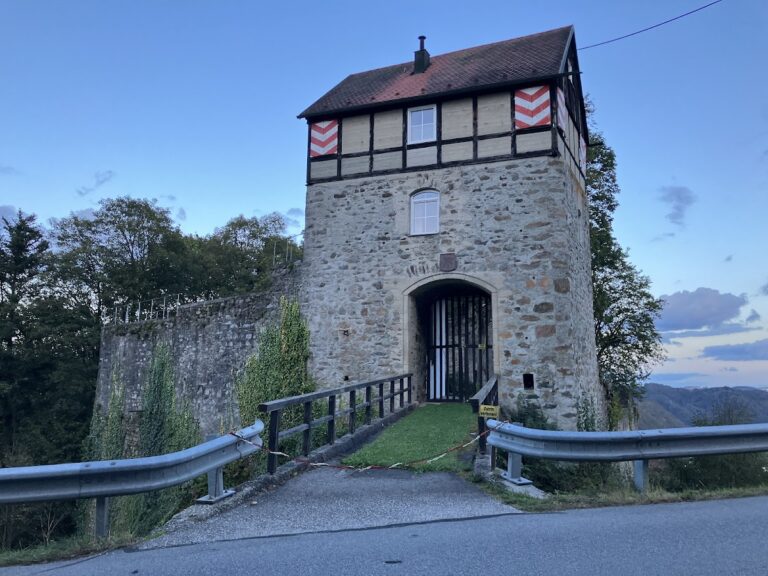
The surviving complex derives chiefly from Johann Reichard von Salburg’s rebuilding after the 1682 fire and from the renewed construction that followed the fire of 1724. Its architectural character is Baroque, a style known for elaborate forms, rich ornament, and dramatic interior effects. The grounds also include a plant nursery.
Castle church
The complex contains a Baroque castle church regarded as the largest private castle church in Austria. Its interior is richly decorated with stucco. The church is dedicated to Saint Joseph and the Blessed Virgin of Mount Carmel, and its present structure belongs to the sequence of construction and rebuilding that followed the fires of 1682 and 1724.
Castle chapel
A chapel was erected during the rebuilding after the first fire and consecrated in 1708. It was destroyed together with the castle in 1724 and subsequently rebuilt, forming part of the present architectural complex.
Nearby sites