Sayyid Yahya Murtuza Mosque: A Seventeenth-Century Mosque in Baku
Site at a Glance
- Rating
- 4
- Popularity
- Very Low
- Country
- Azerbaijan
- Primary era
- Early Modern
- Eras represented
- Early Modern
- Civilizations
- Safavid
- Site type
- Religious
- Remains
- Mosque
On this page6 sections
History
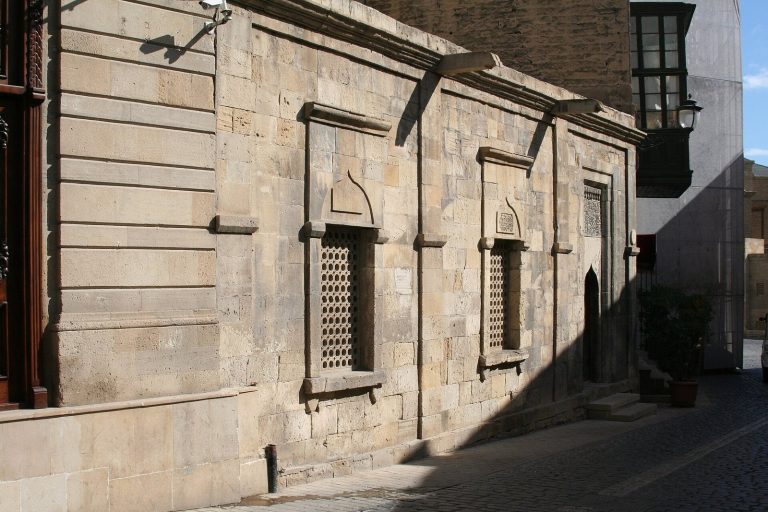
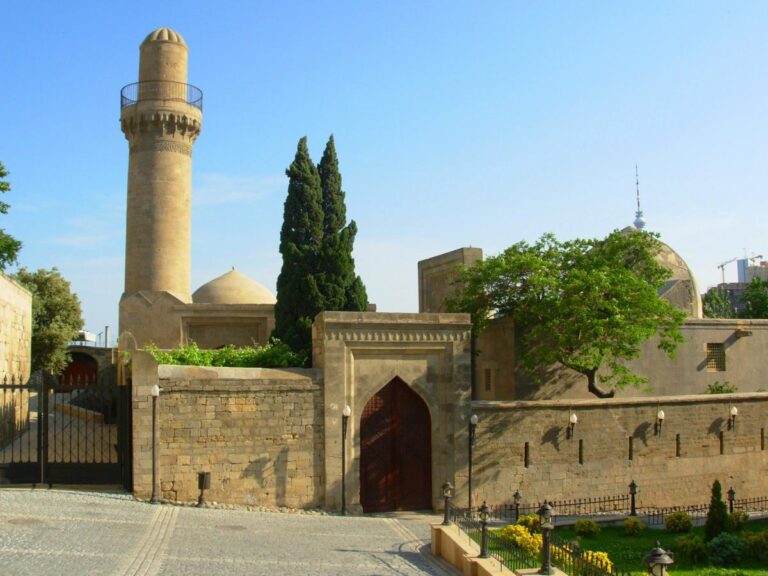
Sayyid Yahya Murtuza Mosque is a seventeenth-century mosque in Baku, Azerbaijan, built in the Shirvan-Absheron architectural style, a regional Islamic tradition associated with the historical Shirvan and Absheron areas. Located in the Old City beside a medieval caravan-trade route, it is also known as the Hazrat Ali Mosque.
Foundation and Religious Use
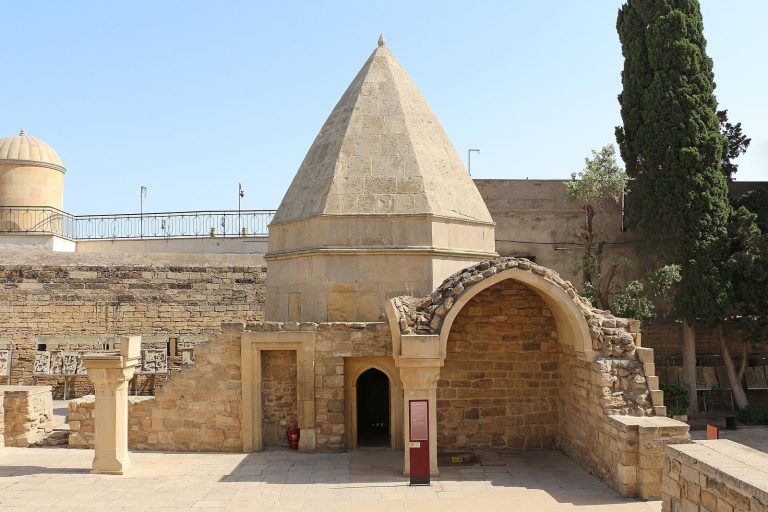
Sayyid Yahya Murtuza founded the mosque and paid for its construction from his personal wealth. He served as its akhund, a Muslim religious scholar or cleric. After his death, he was buried in the mosque courtyard according to his will, linking the building’s religious function with the memory of its founder.
Soviet Closure and Restoration
Religious use continued until 1928, when the mosque was closed during the Soviet campaign against religion in Azerbaijan. The building was then converted into a carpenter’s workshop. After Azerbaijan regained independence in the 1990s, it was restored and returned to use as a mosque. It later became part of the Icheri Sheher Juma Mosque, a congregational mosque associated with communal Friday prayers, and the Hazrat Mohammed Mosque religious community currently operates there.
On August 2, 2001, a decision of the Cabinet of Ministers of the Republic of Azerbaijan, No. 132, included the mosque among the country’s nationally important immovable historical and cultural monuments.
Remains
Plan and Architectural Form
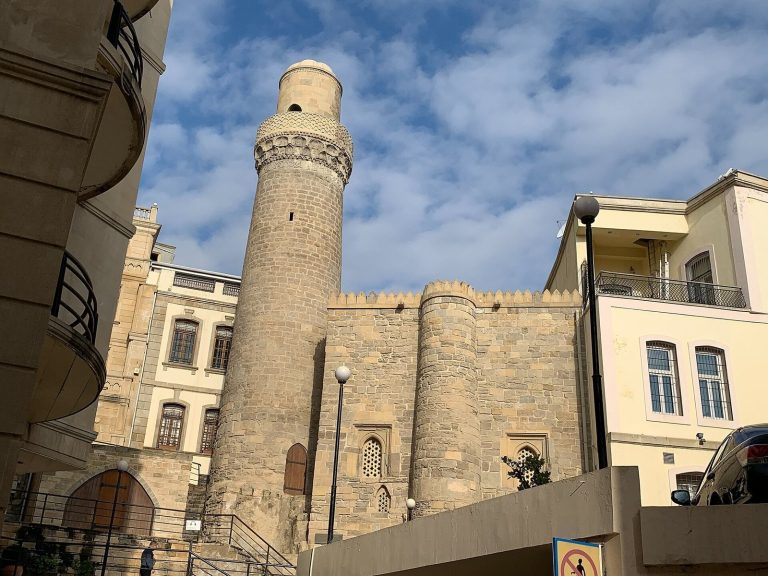
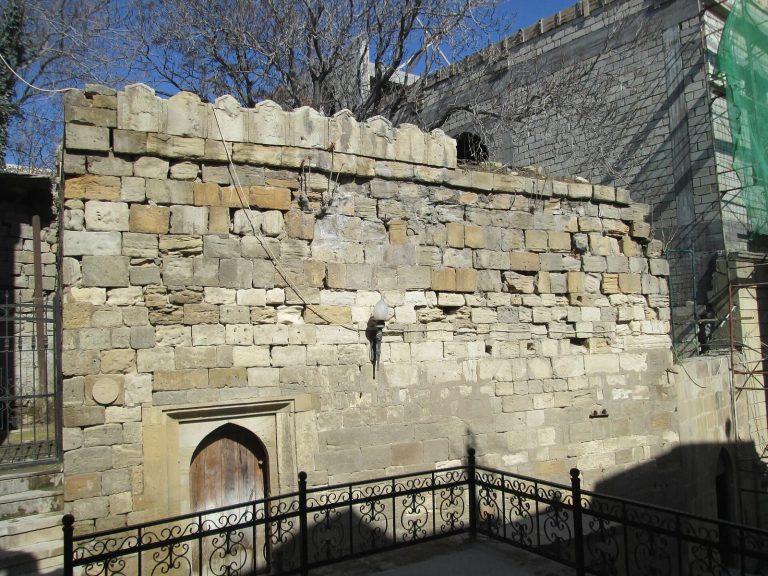
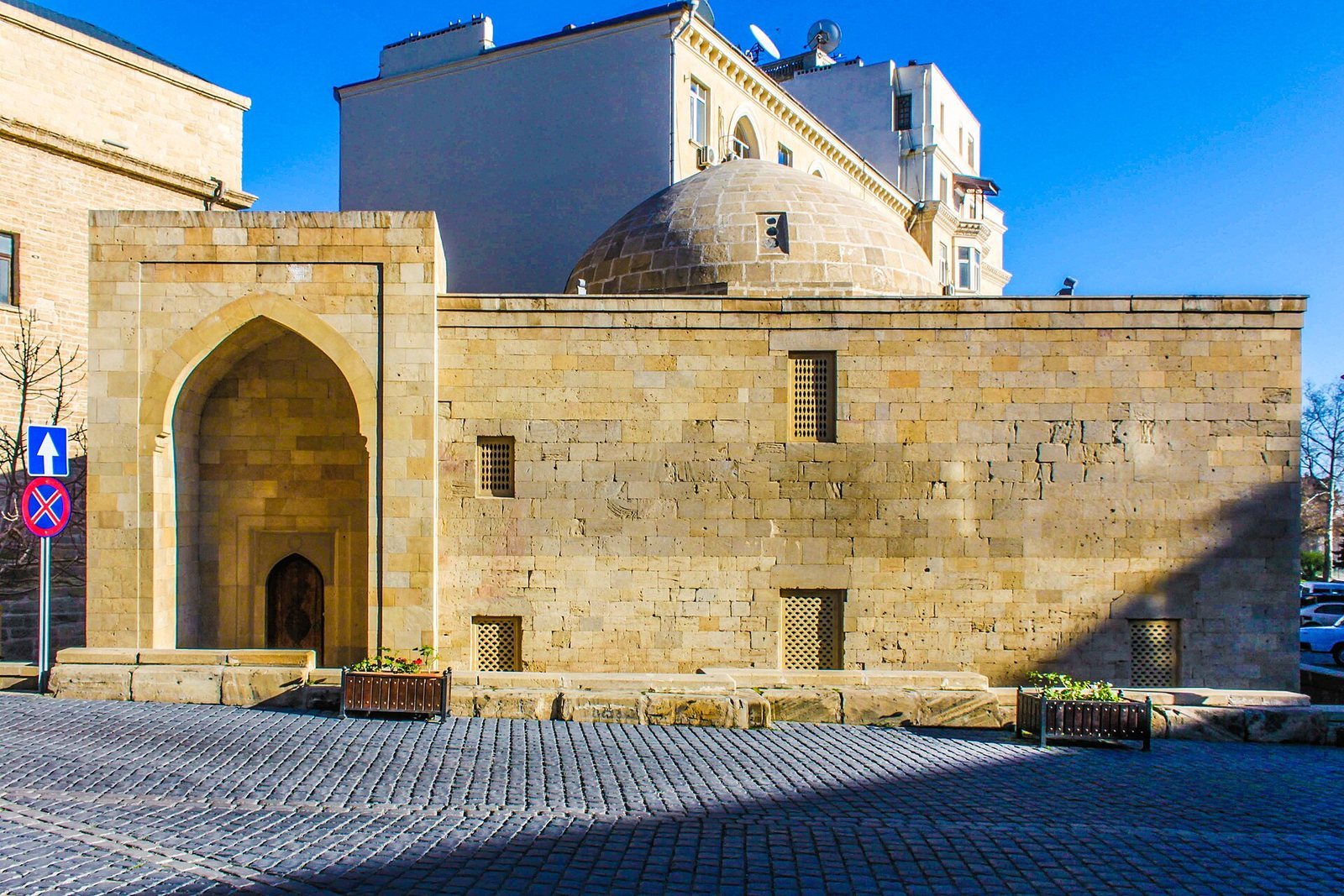
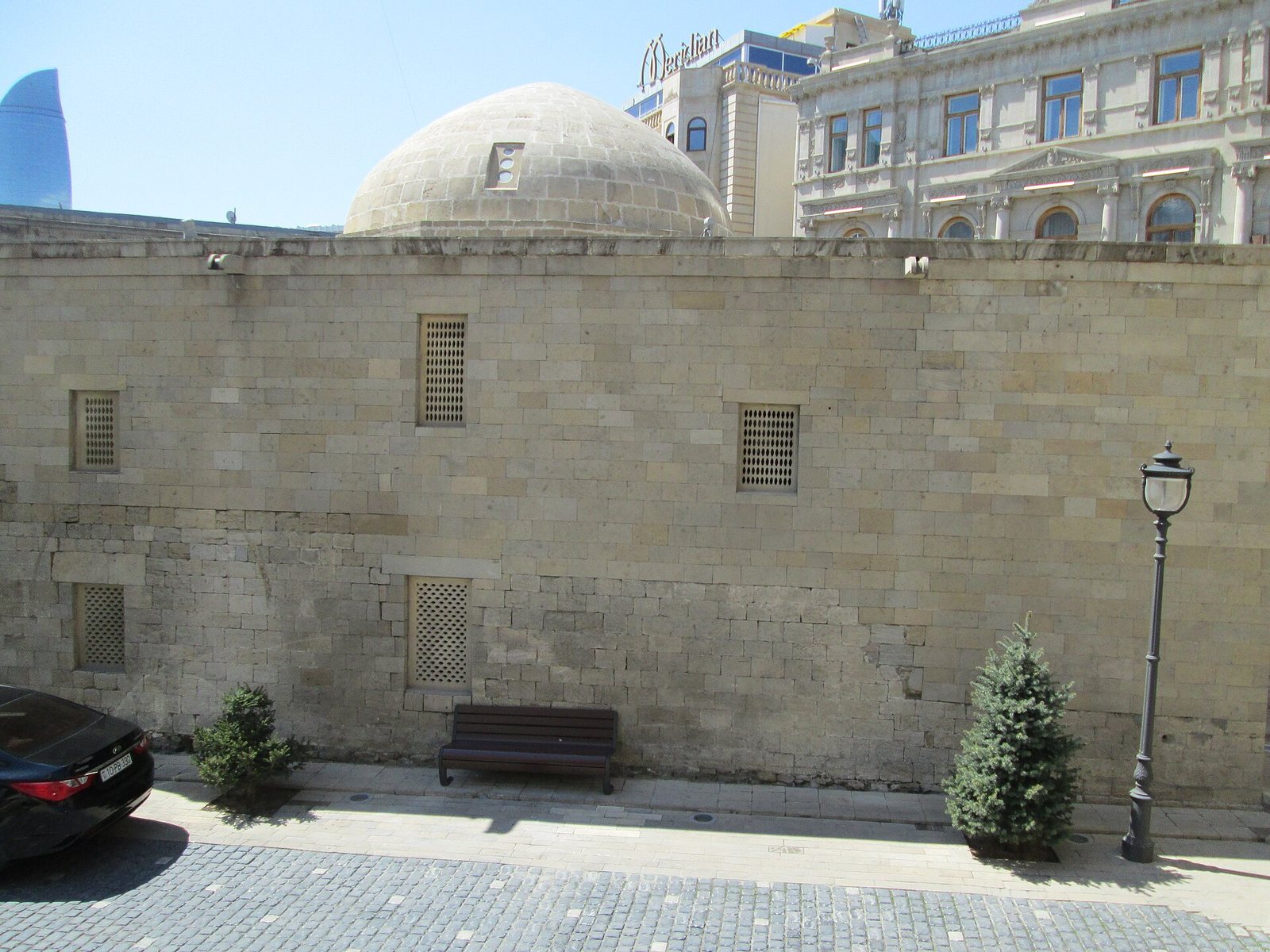
The mosque has a square plan organized around a central dome. Its architecture belongs to the Shirvan-Absheron tradition. The building has no minaret, while its principal interior feature is a mihrab, the prayer niche that indicates the direction of Mecca, set into the south wall.
Mihrab and Founder’s Grave
The mihrab has stalactite-tiered ornament, also called muqarnas, formed from layered cellular shapes that create a faceted decorative transition. Sayyid Yahya Murtuza’s grave lies beside the entrance door within the mosque precinct, preserving the burial place established there in accordance with his will.