Kursum Mosque: A Former Ottoman Mosque in Karlovo, Bulgaria
Site at a Glance
- Rating
- 4.8
- Popularity
- Very Low
- Country
- Bulgaria
- Primary era
- Medieval
- Eras represented
- Medieval
- Civilizations
- Ottoman
- Site type
- Religious
- Remains
- Mosque
On this page8 sections
History
Kursum Mosque, a former Sunni Muslim mosque in Karlovo, Bulgaria, was built in 1485 during the Ottoman period and is the city’s oldest surviving building. Traditionally attributed to the local ruler Ali Bey Karlizade, it belongs to the so-called sultan mosque type, a form associated with an Ottoman ruler or the Ottoman state. The mosque is no longer active and is affiliated with the Plovdiv Mufti’s Office.
Foundation and Ottoman use
Ali Bey’s connection with the mosque is also reflected in a waqf deed issued in Konya on 15 April 1496. A waqf was a charitable endowment whose revenues supported a religious or public institution. In the deed, Ali Bey converted part of his privately owned property into an endowment for the mosque. A tomb stood south of the building, while a cemetery, marketplace, and large hammam, or public bath, surrounded it.
The mosque was built at the boundary between the Turkish and Bulgarian parts of Karlovo, with the Bulgarian population living south of the building. Materials from an earlier Orthodox monastery on the site were reportedly incorporated into the mosque, and Christian signs remain visible on parts of the structure.
Earlier occupation and later changes
Archaeological soundings in and around the building in 2015 examined the site as part of efforts to stabilize the mosque and adapt it for museum use. The earliest evidence consists of handmade coarse pottery fragments and a coin of Apollonia Pontica, an ancient Greek colony on the western Black Sea coast, dating to the fourth century BC. Renewed use around the thirteenth century is represented by a partly sunken dwelling. The mosque itself was remodeled after the end of the seventeenth century.
Modern condition and legal history
Kursum Mosque has cultural-monument status. In November 2013, the Plovdiv District Court awarded the building to the Chief Mufti’s Office, but the decision was appealed and did not enter into force. The building was later used as a storage facility and was not maintained. In 2014, hundreds of nationalists, fascists, and football supporters attacked it and smashed its windows.
Remains
Layout and exterior
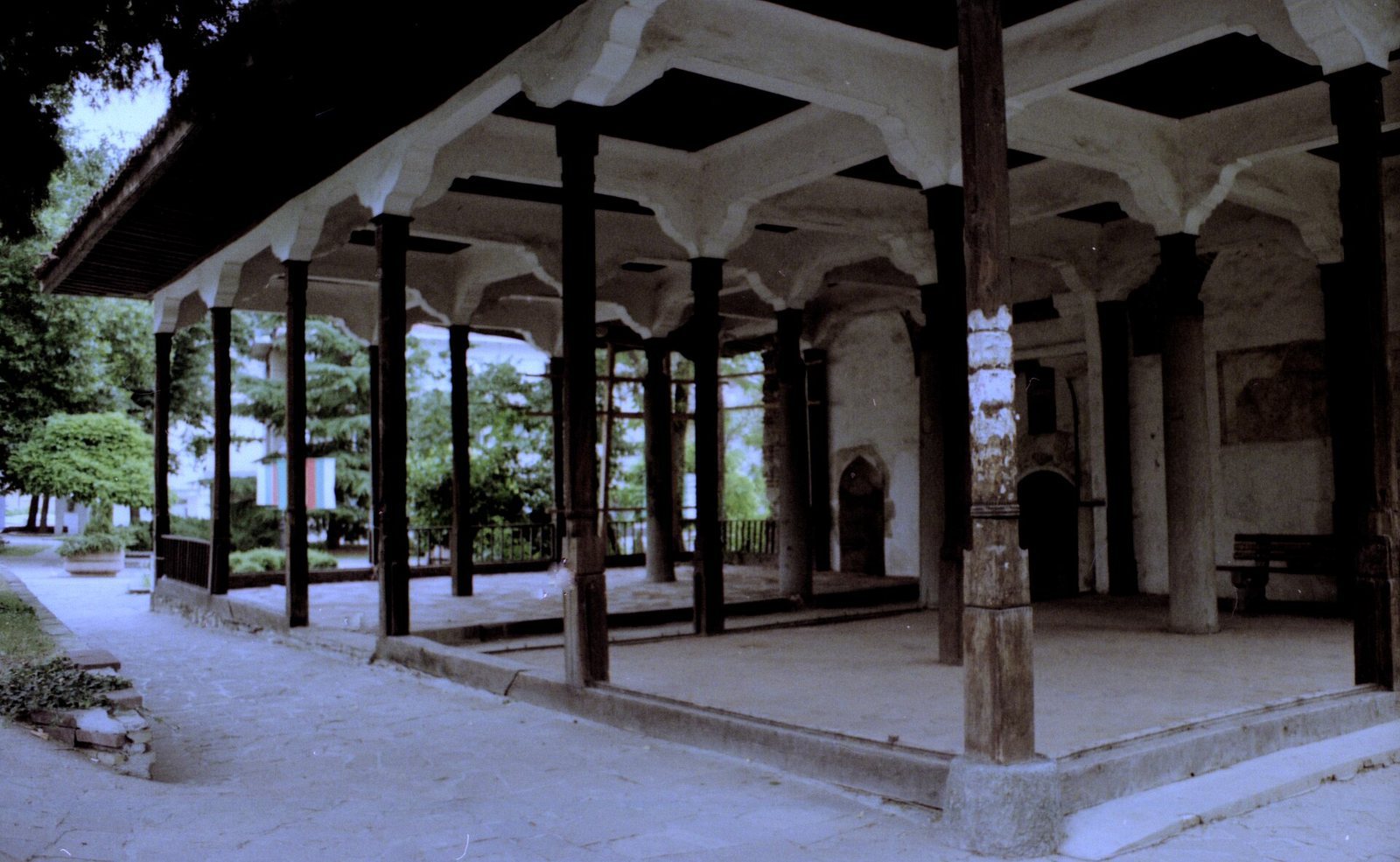
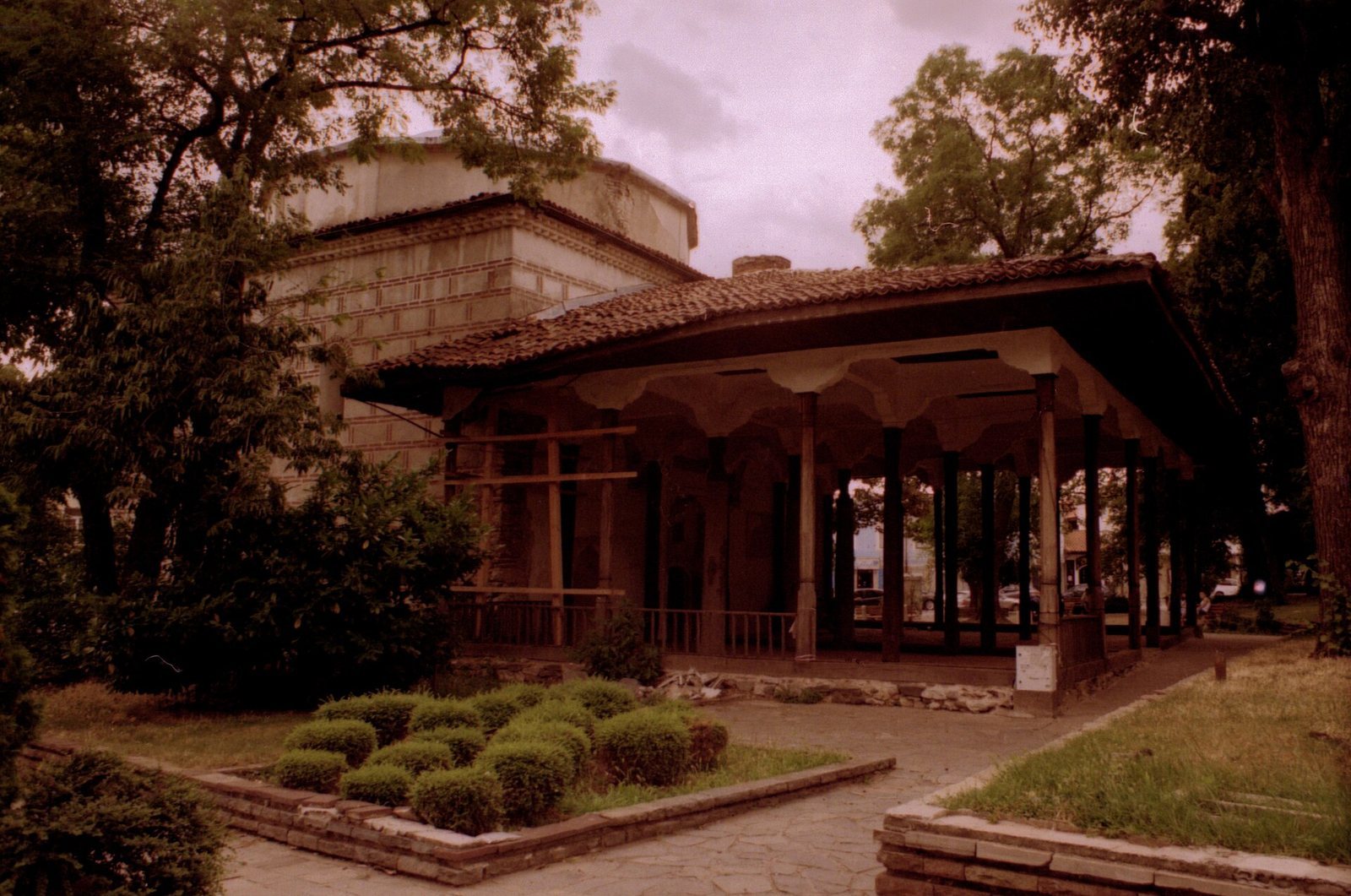
Kursum Mosque stands in Democracy Park in central Karlovo, at the intersection of General Gurko Street and General Kartsov Boulevard. Its Turkish name, Kurşunlu Camii, means “Lead Mosque,” referring to its lead roof. The surviving complex consists of a nearly cubic prayer hall, a northern entrance portico, and a partially destroyed minaret at the northwestern corner. A remnant of the minaret remains on the eastern wall.
The main body is set on a square measuring 10.4 metres on each side. Above it, a dome rises from a twelve-sided drum and reaches 12.7 metres from the floor. The facades use cellular masonry, with large smoothed facing stones framed on all four sides by pairs of bricks. Remains of wall paintings survive on the building. Arches on all four walls enclose two rows of windows and extend across the wall surfaces in relief.
Entrance and prayer hall
The original entrance arrangement included a vestibule covered by three small domes supported by four granite columns. This design has been compared with the fifteenth-century Eski Mosque in Yambol and Jumaya Mosque in Plovdiv, as well as the sixteenth-century Fatih Mehmed Mosque in Kyustendil and Banya Bashi Mosque in Sofia. A water source for ritual ablution, the washing performed before prayer, was located west of the main entrance beneath the portico.
Inside the prayer hall, a mihrab, the niche indicating the direction of Mecca, occupies the south wall. A minbar, the raised pulpit used for sermons, stands west of the mihrab. Beside the entrance is a balcony with a wooden structure. The interior frames of the large wall arches are decorated with rows of large upright red trefoils.
Archaeological evidence
The 2015 investigations connected the mosque with several earlier phases of activity at the location. Handmade coarse pottery and the fourth-century BC coin point to ancient use, while the partly sunken dwelling indicates renewed occupation around the thirteenth century. These remains were identified beneath and around the later Ottoman building during investigations related to structural stabilization and its proposed adaptation for museum use.