Sheikh Ibrahim Mosque: A Fifteenth-Century Mosque in Baku


Site at a Glance
- Rating
- 4.4
- Popularity
- Very Low
- Country
- Azerbaijan
- Primary era
- Medieval
- Eras represented
- Medieval
- Civilizations
- Shirvanshah
- Site type
- Religious
- Remains
- Mosque
On this page6 sections
History
Sheikh Ibrahim Mosque is a fifteenth-century stone mosque in Baku, Azerbaijan, built during the reign of Shirvanshah Ibrahim I. Located in the Old City on modern Asaf Zeynalli Street, it was constructed in 1415–1416 and reflects the medieval architectural traditions of the Shirvan region. Its name refers to Sultan Sheikh Ibrahim, who is mentioned in the building’s construction inscription.
Construction under Shirvanshah Ibrahim I
The mosque was commissioned by Haji Amirshah ibn Yaqub, whose role is identified by an inscription on the building. The date is given as 818 AH, corresponding to 1415–1416 in the Gregorian calendar. Shirvanshah Ibrahim I was a ruler of the Shirvanshah dynasty, which governed Shirvan, the historical region that included Baku during the medieval period. A second inscription records a later restoration by Agha Gafar, son of Haji Murad.
The mosque was affiliated with Shiism. Worship ended after the Soviet occupation of Azerbaijan, during the official anti-religious campaign that began in 1928. The building was then used for non-religious purposes.
Later use and protection
Since approximately 1991, the building has functioned as a madrasa under the Juma Mosque. A madrasa is an Islamic educational institution traditionally associated with religious and related scholarly study. Following the restoration of Azerbaijan’s independence, Sheikh Ibrahim Mosque was added to the national list of immovable historical and cultural monuments by Cabinet of Ministers decision no. 132, issued on August 2, 2001.
The mosque stands within the Walled City of Baku, a historic area that also includes the Shirvanshah’s Palace and Maiden Tower. The Walled City was inscribed on the UNESCO World Heritage List in 2000 under cultural criterion (iv), which concerns an important example of a type of building, architectural ensemble, or landscape illustrating a stage in human history.
Remains
Plan and dome
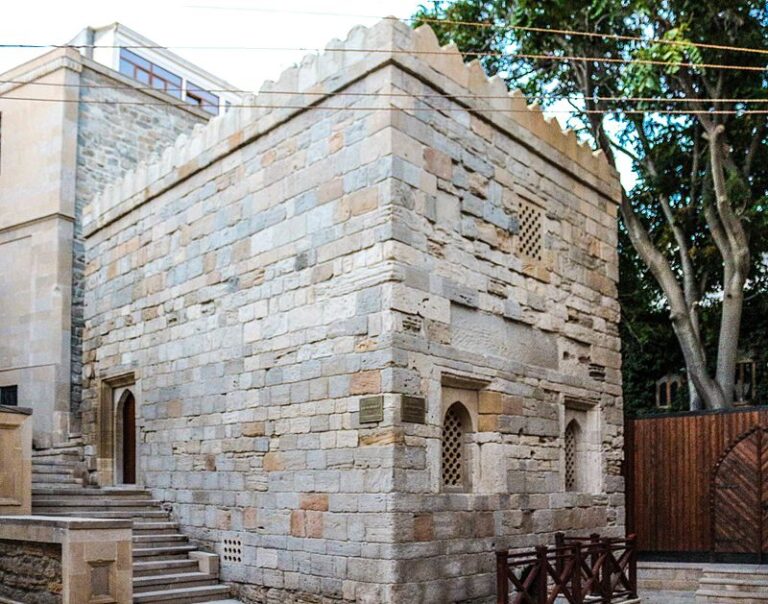
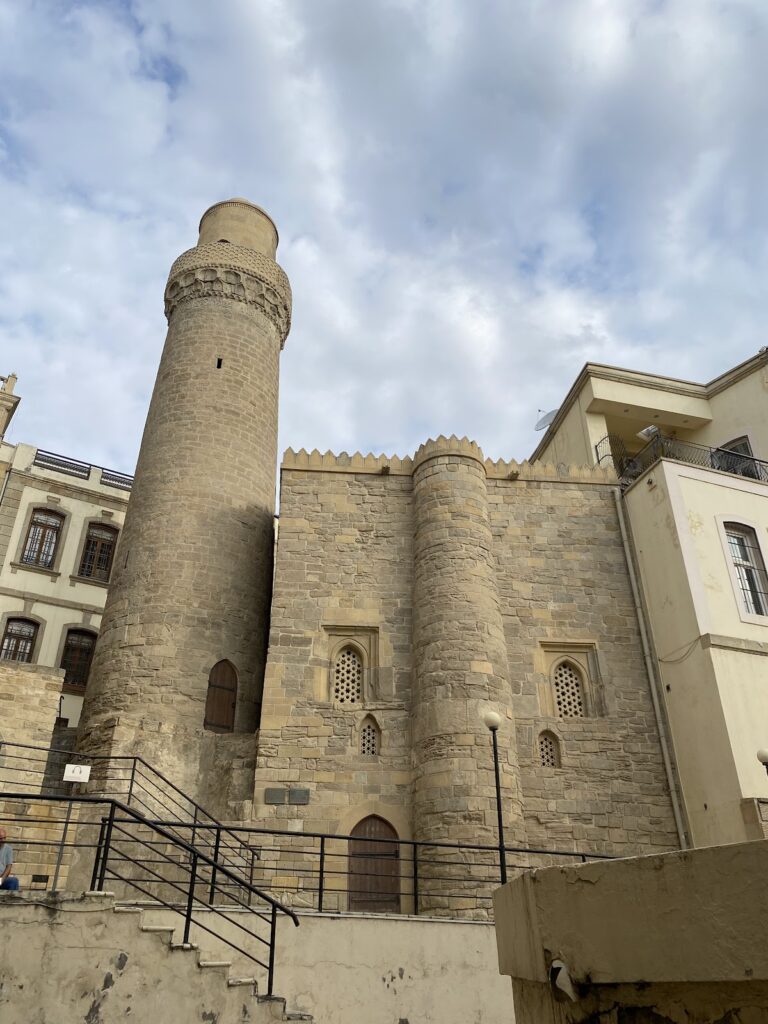
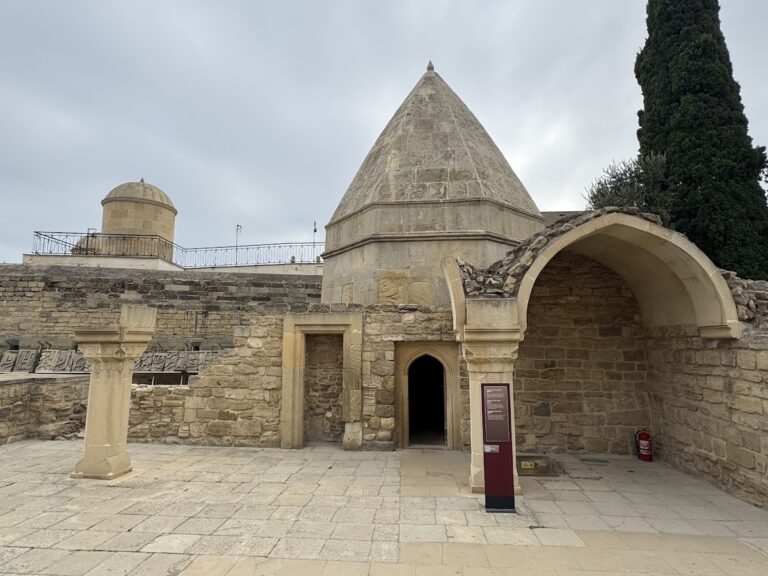
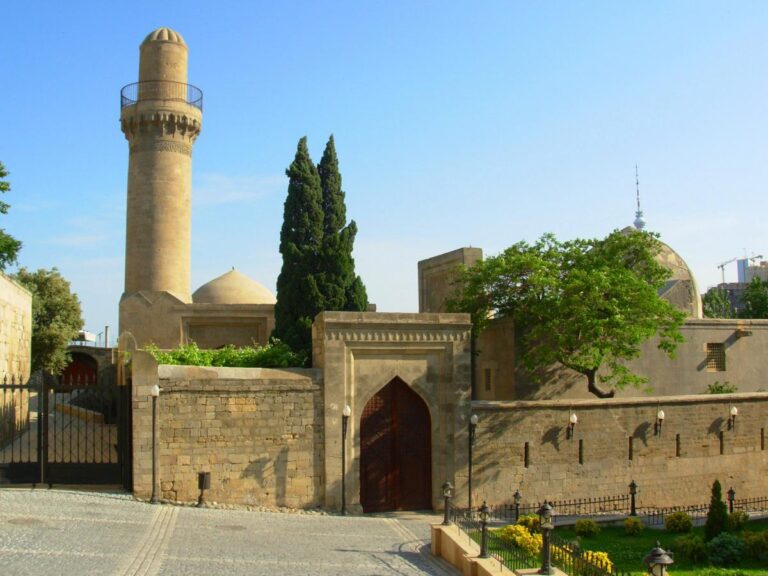
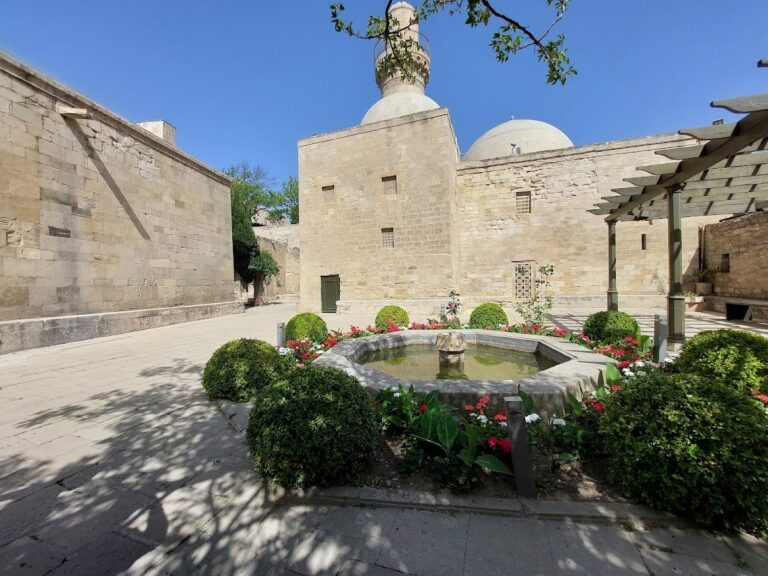
Sheikh Ibrahim Mosque has a quadrangular or rectangular plan and is built of stone. A single pointed stone dome covers the building, forming its principal upper feature. The mihrab, a niche indicating the direction of Mecca, is set in the longitudinal wall rather than in the customary lateral wall. This arrangement is one of the mosque’s distinctive architectural characteristics.
Façade and architectural character
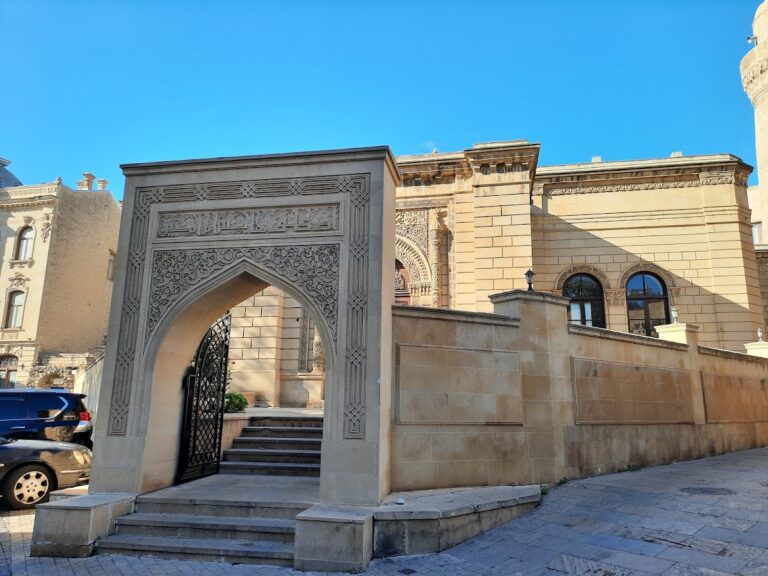
In the nineteenth century, the façade was divided into three rectangular sections, or frames. Each section contains a window with an arched or semicircular head, while the entrance is formed as a portal. These later façade changes introduced features associated with European architectural design.
The building combines national architectural motifs with European ones while retaining its older character. Its stone construction, pointed dome, framed façade, arched windows, and portal entrance express the layers of alteration through which the mosque’s present appearance developed.
Nearby sites