Sayid Alaouddine Mausoleum: A Medieval Sufi Shrine in Khiva, Uzbekistan
Site at a Glance
- Rating
- 3.4
- Popularity
- Very Low
- Country
- Uzbekistan
- Primary era
- Medieval
- External website
- Open
- Eras represented
- Medieval, Modern
- Civilizations
- Golden Horde, Khanate of Khiva
- Site type
- Religious
- Remains
- Tomb
On this page11 sections
History
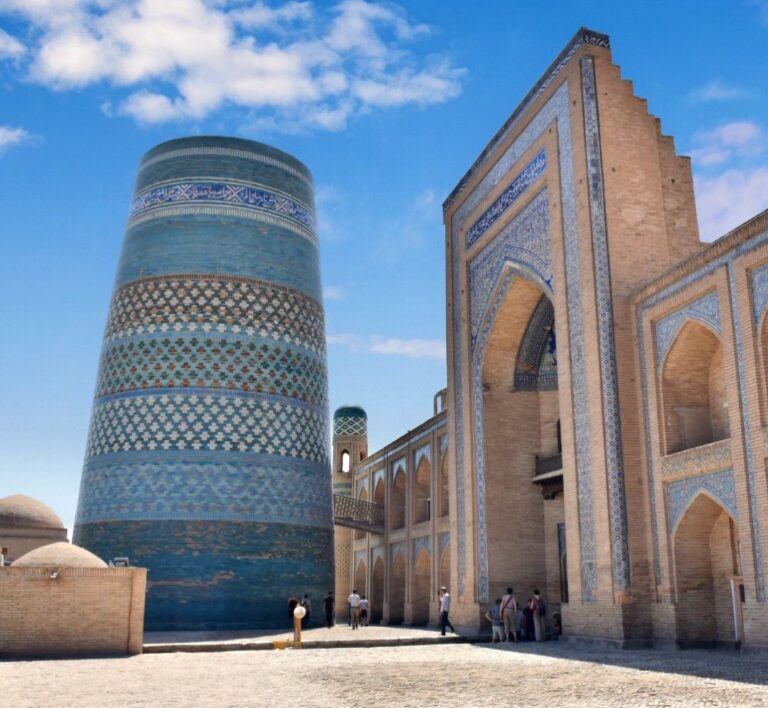
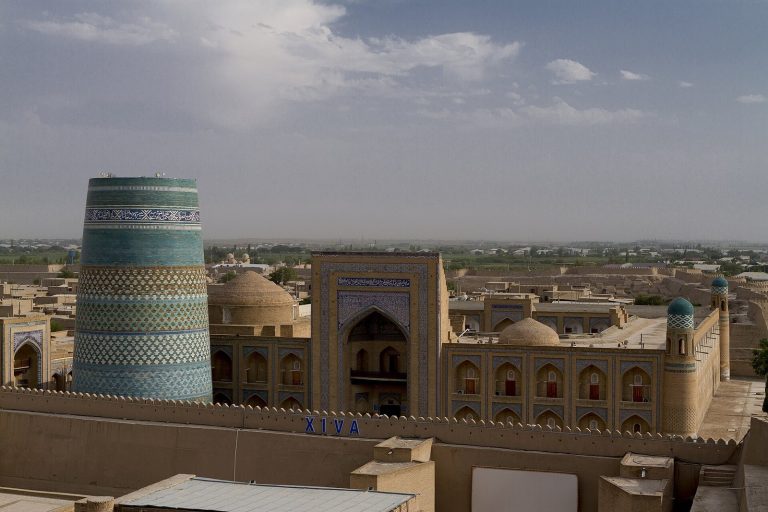
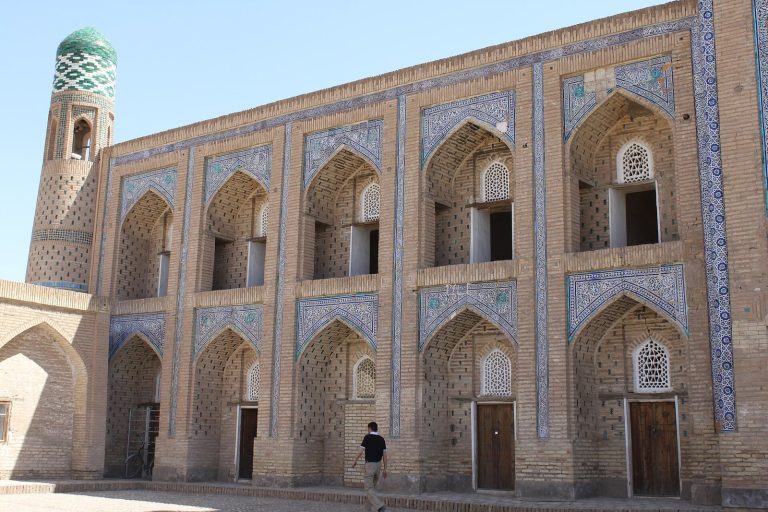
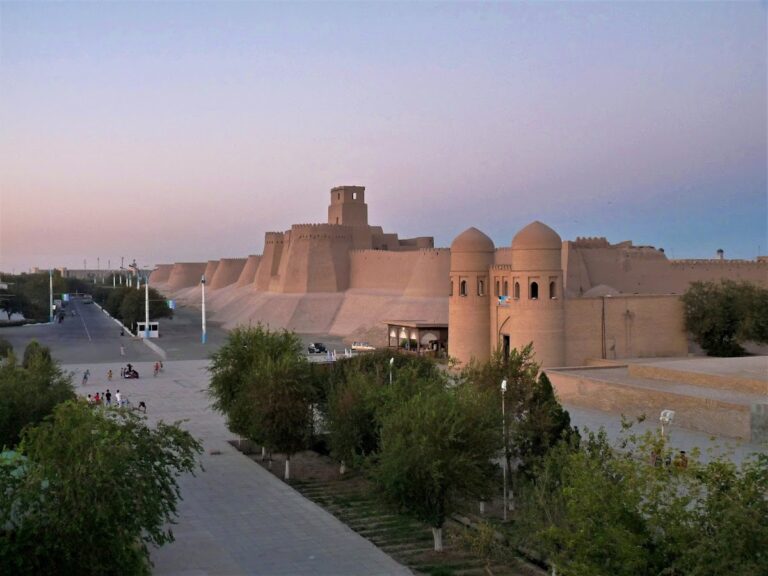
The Sayid Alaouddine mausoleum is an Islamic funerary monument in Khiva, Uzbekistan, built over the grave of the Sufi shaykh Sayid Alauddin in 1303. A Sufi shaykh was a spiritual master within Islamic mysticism. The monument stands in Itchan Kala, the historic walled inner area of Khiva, and preserves a long tradition of honoring renowned religious scholars and leaders with shrines over their graves.
Foundation as a Sufi shrine
Sayid Alauddin died on 18 March 1303. His teacher, the Sufi Amir Kulol, built the mausoleum over his grave in the same year. The funerary chamber belongs to the first half of the fourteenth century, making the monument one of the early Islamic memorial buildings preserved in Itchan Kala.
The mausoleum became a place of pilgrimage as visitors came to honor Sayid Alauddin. This use followed the wider practice of establishing shrines over the graves of respected scholars and shaykhs. The historian Ahmad Razi included Sayid Alauddin among the major shaykhs of Khwarazm and described him as a leading figure after Shaykh Najmuddin Kubra, a prominent medieval Sufi master and founder of the Kubrawiyya Sufi order.
Seventeenth-century addition and Khivan restoration
A second principal room, the ziyoratkhana, was added to the west of the funerary chamber in the seventeenth century. A ziyoratkhana was a chamber for religious visitation and prayer, and it also functioned as a khanaqah, a Sufi lodge or devotional assembly space.
During the reign of Allakuli Khan, who ruled Khiva from 1825 to 1842, substantial buildings were commissioned over the shaykh’s mausoleum and a large waqf endowment was assigned to it. A waqf was a charitable religious endowment whose income supported a religious or charitable institution. In 1825, Hamidkhoja, son of Khubbikulikhoja, directed a comprehensive restoration. The collapsed portal was rebuilt, the dome was repaired, and work was carried out on the cenotaph and the walls of the ziyoratkhana.
The restoration also shortened the arched wing of the decayed portal, closed the interior niches, paved the floor with brick, and replastered the walls with ganch, a gypsum-based plaster used in Central Asian architecture. A fourteen-line poem on the wall commemorates the restoration and gives information about the building and its architects.
Burial ground and modern study
Graves accumulated around the monument over many years, leaving the mausoleum partly buried below the surrounding ground level. Archaeological investigations examined these burials and gathered information about their earlier appearance as well as the monument’s past.
I. Notkin and V. Bulatova undertook a scholarly study of the mausoleum in 1957. Further repair work took place before the celebrations of Khiva’s 2,500th anniversary. The mausoleum forms part of Itchan Kala, which was inscribed on the UNESCO World Heritage List in 1990 under criteria (iii), (iv), and (v). It is also protected by the state.
Remains
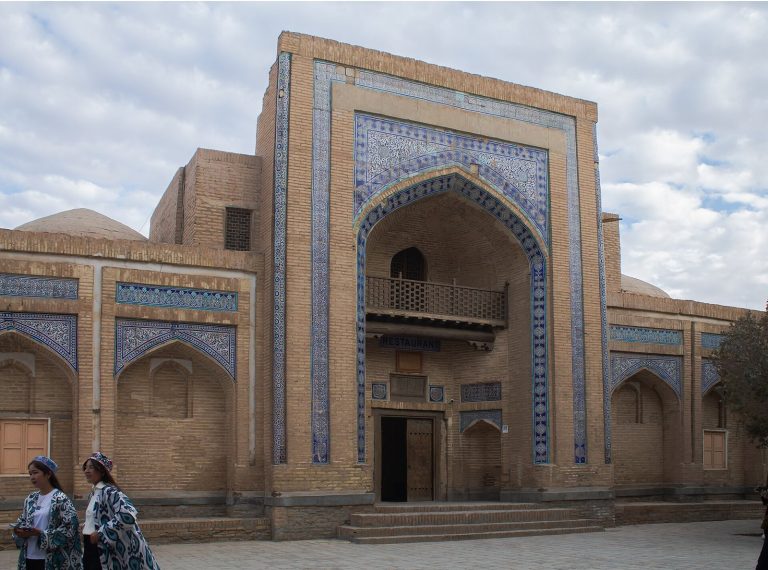
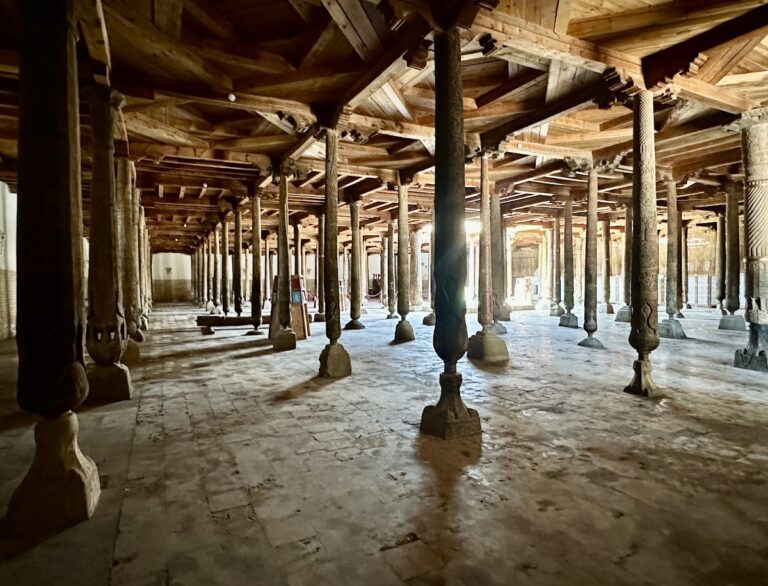
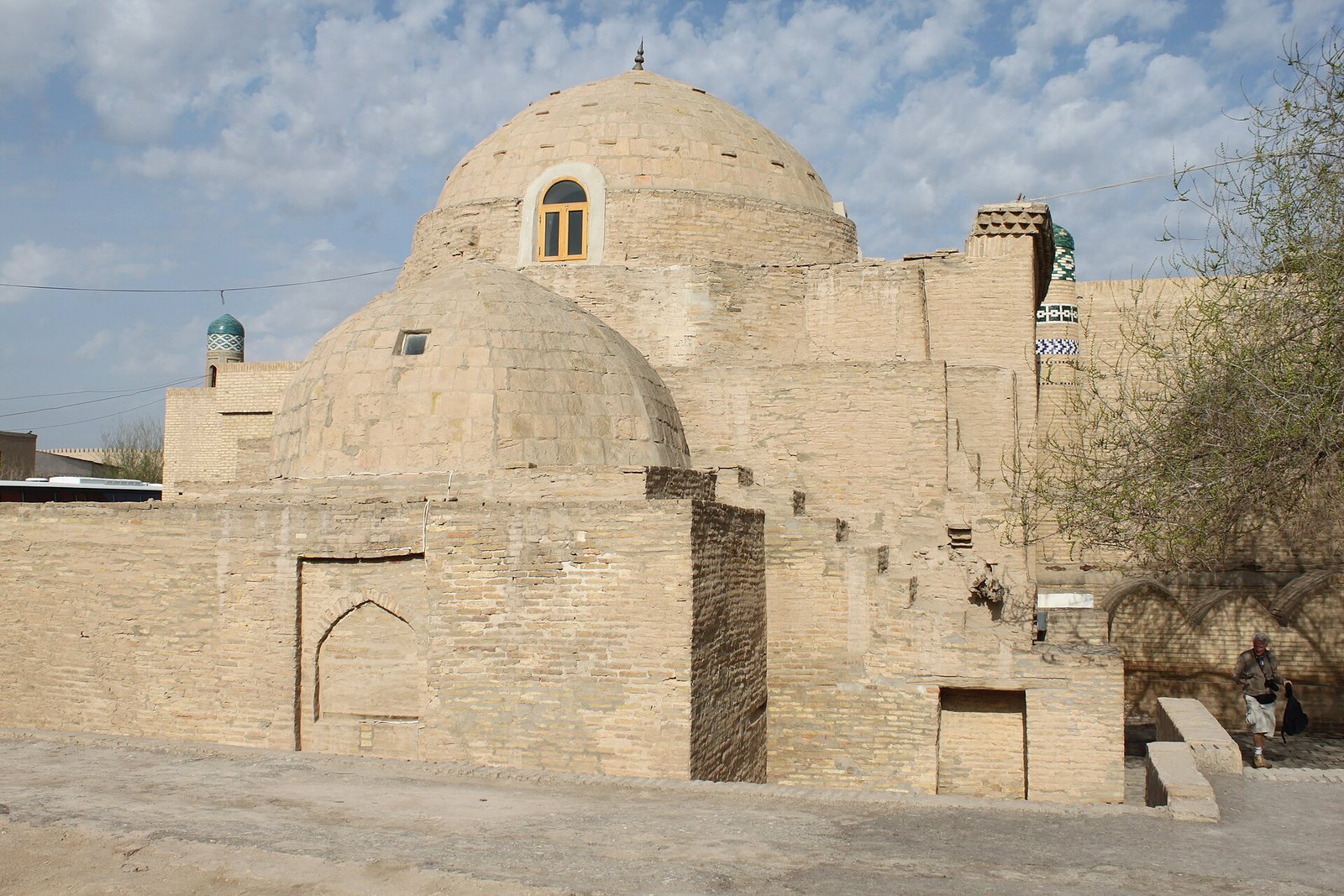
The mausoleum occupies a roughly square plan measuring approximately 13.0 by 10.4 metres. Its two principal rooms are covered by domes and arranged as a funerary chamber and a western pilgrimage chamber. The building stands near Itchan Kala’s western gate, on the eastern side of the Muhammad Niyaz Divanbegi Madrasa. Its surviving fabric combines medieval construction with the repairs and alterations carried out in 1825.
Funerary chamber
Medieval tomb and cenotaphs
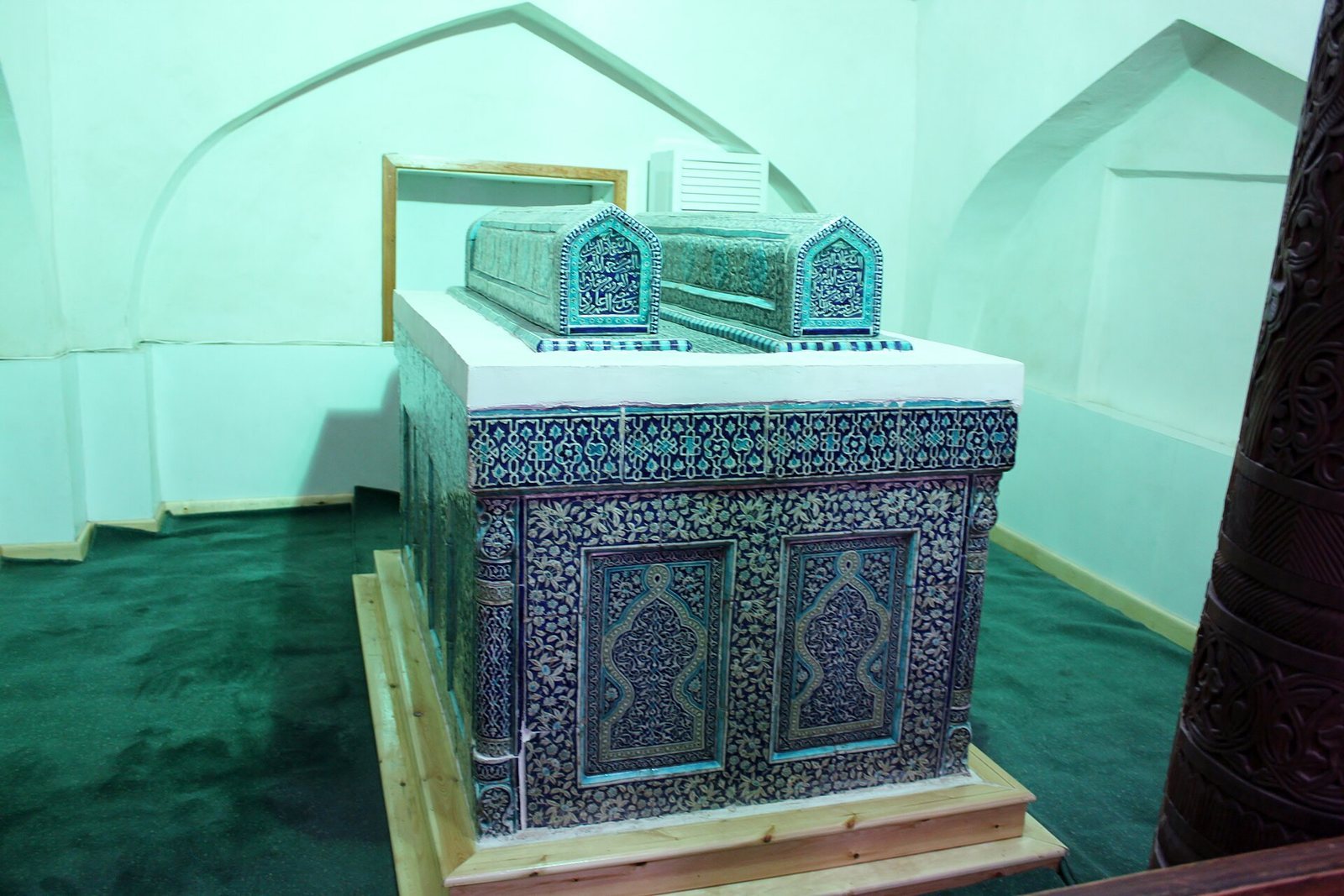
The funerary chamber, or gorkhana, was built in the first half of the fourteenth century, with its portal facing south. It contains a notable majolica tombstone from the same period. Majolica is glazed ceramic tile used for architectural decoration. The tomb’s tiled decoration is described as unique in Khiva, with comparable work associated with the mausoleum of Shaykh Najmuddin Kubra at Kunya-Urgench, the portal of the mausoleum of Turkan Agha in Samarkand, and the tomb of Qusam ibn Abbas in Shah-i Zinda. Qusam ibn Abbas was an early Islamic figure traditionally associated with the spread of Islam in Central Asia, while Turkan Agha belonged to the Timurid ruling family.
The cenotaphs are decorated with raised tile-work patterns. One carries an Arabic inscription giving Sayid Alauddin’s death date as 18 March 1303. The principal cenotaph takes the form of a raised platform with small, finely worked columns at its corners. The columns use geometric forms, and the platform walls contain carefully executed decorative panels.
Tradition of Amir Kulol’s second tomb
Two tombs stand in the funerary chamber, although only one body is interred there. Tradition holds that Amir Kulol intended to be buried beside Sayid Alauddin, his student’s grave, but died in Bukhara and was buried in that city instead. This tradition explains the second tomb within the chamber.
Ziyoratkhana
Prayer and devotional chamber
The ziyoratkhana stands west of the funerary chamber and dates from the seventeenth century. Its dome receives light through a window in the transitional structure beneath the dome. The interior walls are finished with ganch plaster, and Persian text written in Arabic nasta’liq script describes the construction of the building and names its architects. Nasta’liq is a flowing calligraphic script traditionally used for Persian writing.
Nineteenth-century repairs
The 1825 restoration altered the chamber as part of the wider repair of the mausoleum. The walls were replastered with ganch, while the collapsed portal was reconstructed and the dome was repaired. The restoration poem on the wall preserves a written account of this intervention alongside the architectural remains.