Sayhuite: An Inca Sanctuary and Religious Center in Peru
Site at a Glance
- Rating
- 4.5
- Popularity
- Low
- Country
- Peru
- Primary era
- Medieval
- Eras represented
- Medieval
- Civilizations
- Inca
- Site type
- Religious
- Remains
- Sanctuary
On this page5 sections
History
An Inca Water Sanctuary
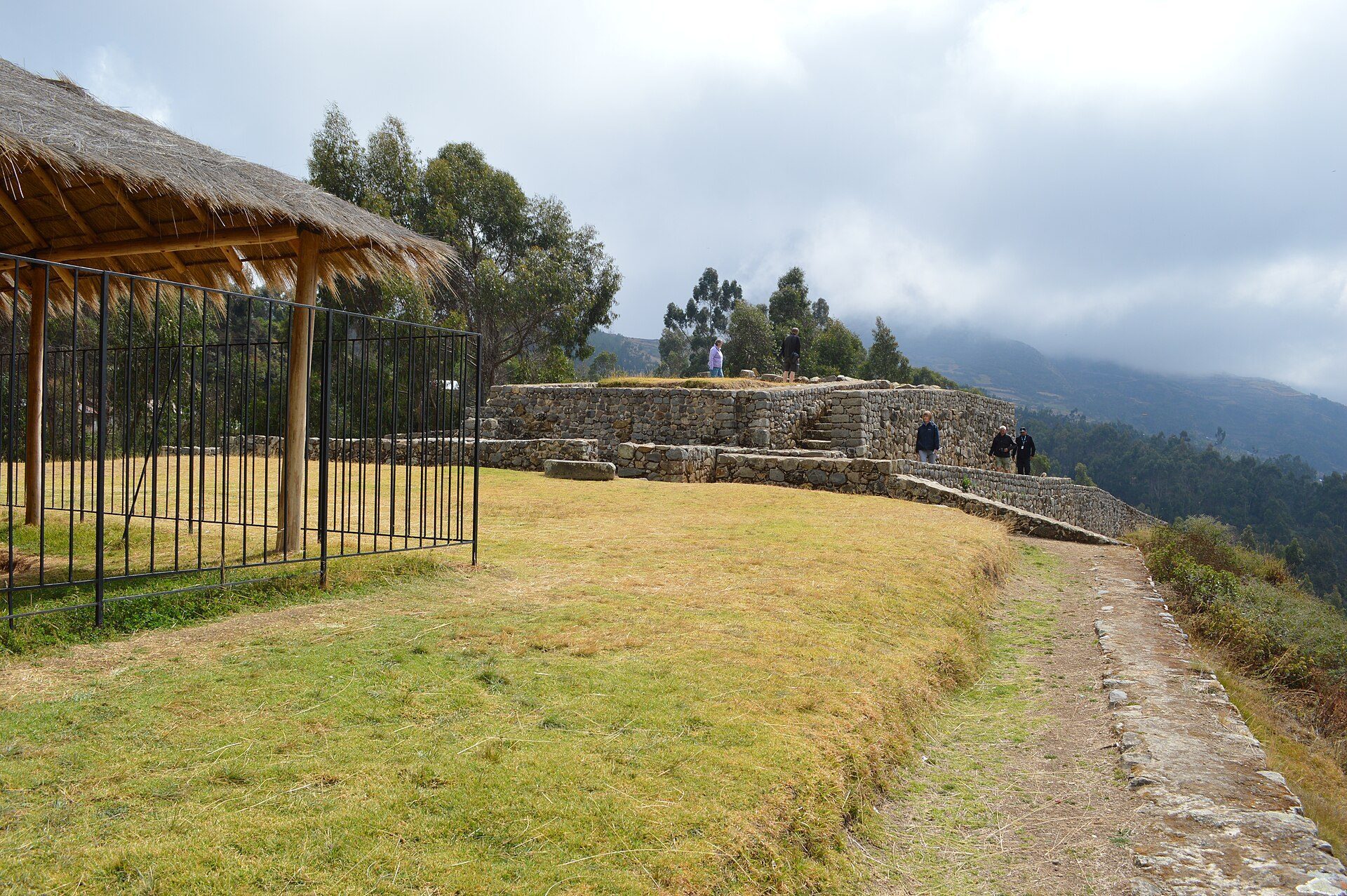
Sayhuite is an Inca archaeological sanctuary and religious center in Curahuasi District, Peru, at approximately 3,500 meters above sea level and about 47 kilometers east of Abancay. The Inca, the Andean imperial civilization that created and administered a large state before the Spanish conquest, used the site for religious practices centered on water. Rituals and ceremonies connected with water worship formed the setting in which the site’s carved monolith was used and understood.
Sayhuite occupied land that formerly belonged to the Sayhuite hacienda, owned by the Valer family. Its modern interpretation remains closely tied to the large stone at the summit of Concacha Hill. The precise meaning and original function of the monolith are uncertain, and the identity of its sculptors is unknown. Proposed interpretations describe it as a symbolic image of the universe or a valley, an object used in water worship, or a topographic model connected with the planning, testing, recording, or control of Inca hydraulic works. Such works included systems for directing, storing, and distributing water.
Colonial Memory and Later Interpretations
A colonial narrative cited by historian John Hemming describes the interior of the Sayhuite temple as containing large columns covered with textiles and decorated with gold bands about the thickness of a hand. The same account places the temple under the care of the priestess Asarpay, who reportedly avoided capture by Spanish forces by throwing herself into a nearby gorge approximately 400 meters high.
The site’s identification as a water-worship center rests partly on the water-like carved flows of the monolith and the ritual context in which it stood. Peruvian archaeologist Federico Kauffmann Doig connected the stone with water worship and interpreted its carved felines as naturalistic depictions of Qhoa, an Andean feline-like supernatural figure associated in some interpretations with rain and fertility. Another interpretation views the monolith as a scale model or stone plan prepared by Inca architects for hydraulic construction. Sayhuite is recognized as Cultural Heritage of the Nation of Peru.
Remains
The Sayhuite Monolith
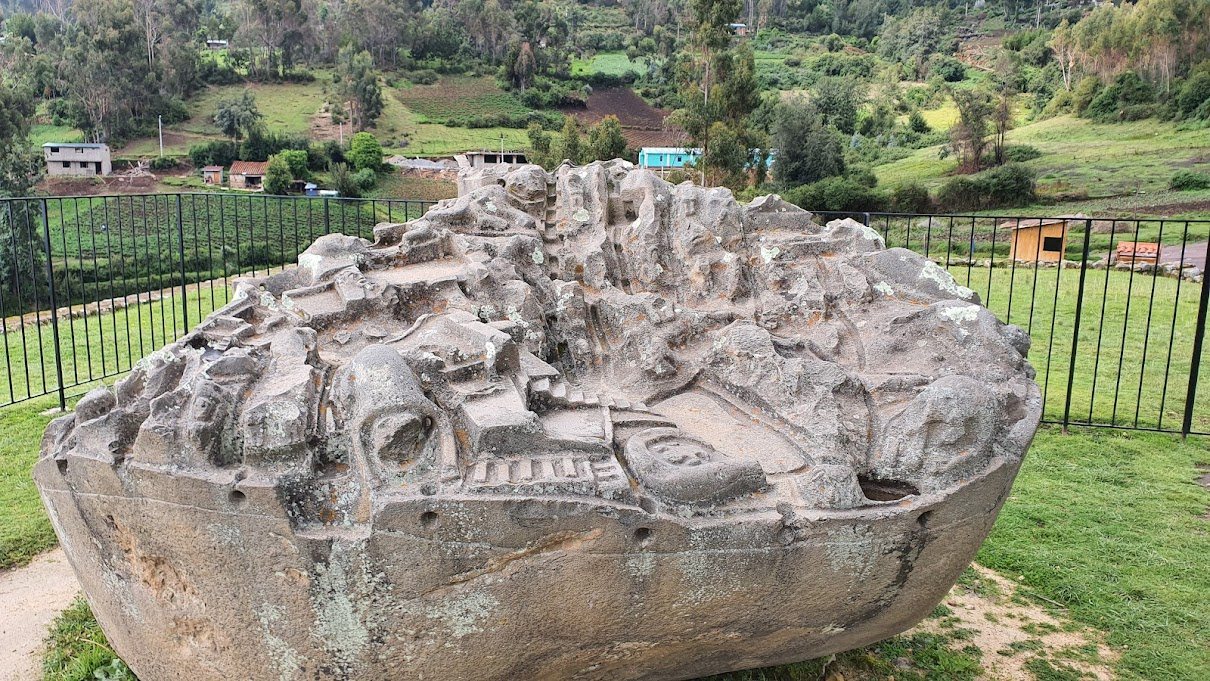
The principal surviving feature is a large, roughly spherical granite block at the summit of Concacha Hill. It measures approximately 2 meters in length, 4 meters in width, and 2.3 meters in height, with a circumference of about 11 meters. More than 200 carvings cover the stone, mainly across its upper half, where the sculptors used natural reliefs, hollows, and contours to shape the composition.
The carvings combine geometric, plant-like, animal, geographic, and human-made forms. Reptiles, frogs, felines, pumas, and lizards appear among representations of terraces, stairways, ponds, rivers, tunnels, channels, and irrigation routes. Some pairs of human figures stand at apparent river and lake sources while holding jars. The arrangement seems deliberately irregular rather than organized as a clearly ordered scene, a quality that has supported interpretations of the stone as a symbolic valley or image of the universe.
Receptacles in the granite could collect rainwater. This feature, together with the carved channels and flowing forms, has led to the suggestion that the monolith may have functioned as a gigantic paccha, an Andean ritual water installation or vessel used in the ceremonial handling or movement of water. The stone was modified repeatedly, either by changing the paths taken by water or by adding new routes. These alterations reinforce its association with hydraulic practice, although its original use remains unknown.