Temple of the Moon: An Inca Ceremonial Temple on Huayna Picchu
Site at a Glance
- Rating
- 4.7
- Popularity
- Low
- Country
- Peru
- Primary era
- Medieval
- Eras represented
- Medieval
- Civilizations
- Inca
- Site type
- Religious
- Remains
- Temple
On this page6 sections
History
The Temple of the Moon is an Inca ceremonial temple on Huayna Picchu in Peru, dating to approximately 1,500 years ago. The Inca were the Andean imperial civilization known for finely fitted stone construction and major ceremonial centres in the region of present-day Peru. The site was rediscovered in 1936, although its original purpose remains uncertain.
Name and Possible Functions
The name “Temple of the Moon” was assigned arbitrarily. One explanation holds that moonlight radiates through the cave at night. The complex has been interpreted in several ways, including as a place of worship, a royal tomb, a lookout post, a sacrificial site, or a ceremonial bathing complex. Caves were regarded as possible entrances for gods, supporting the interpretation of the site as a religious space. The cave may also have held mummies, but that possibility remains uncertain.
Inca Religious Concepts
The stonework is associated with three planes of Inca religion: Hanan Pacha, the upper world or heavens; Kay Pacha, the earthly world; and Ukju Pacha, the underworld. These realms are respectively associated with the condor, puma, and snake. A similar cave site near Ollantaytambo, originally called Choquequilla and sometimes also known as the Temple of the Moon, is a distinct monument.
Remains
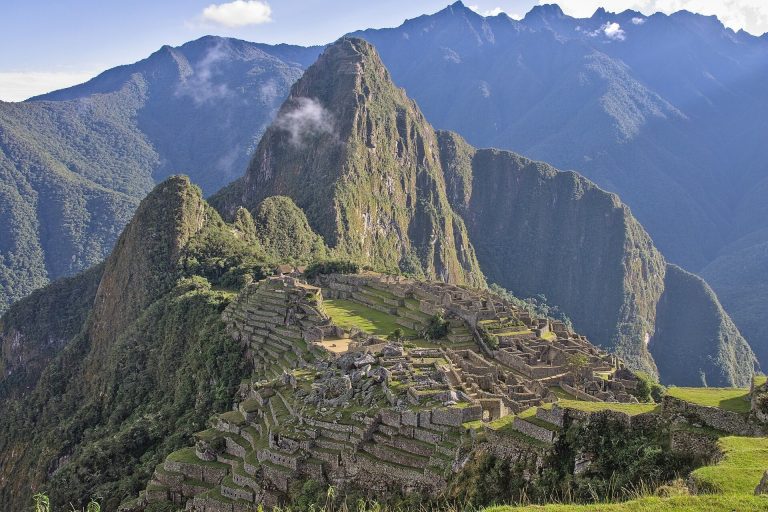
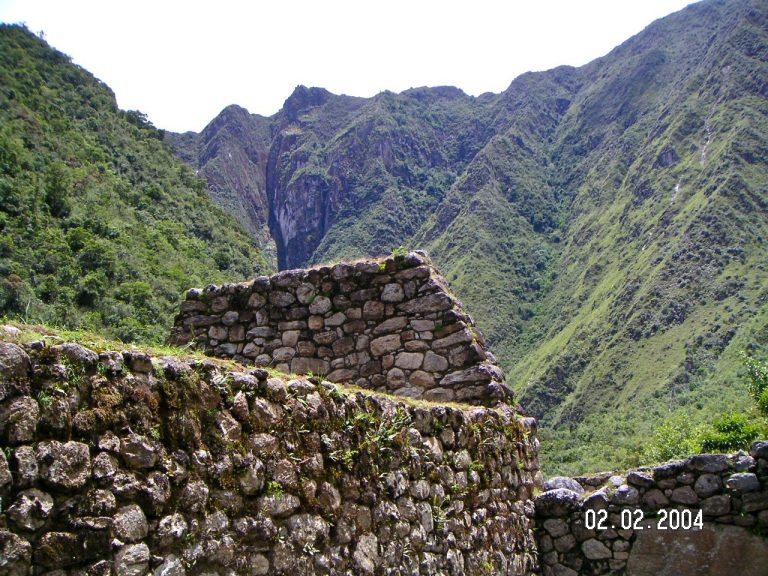
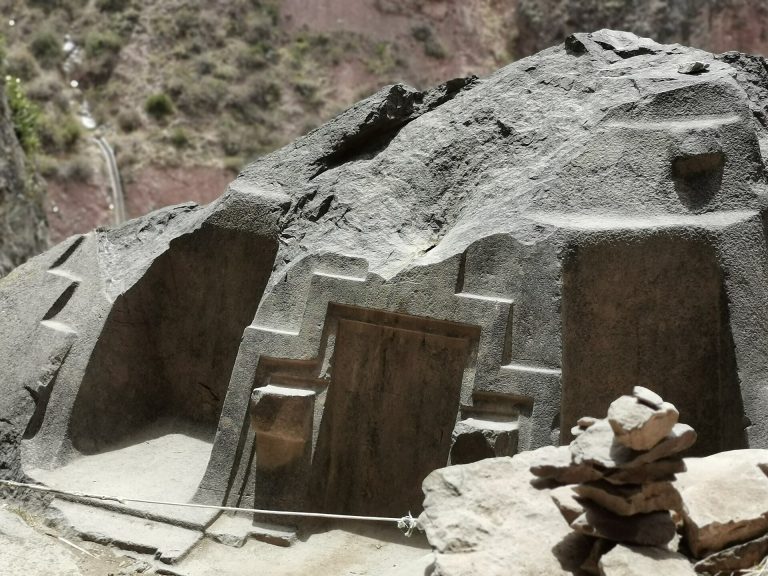
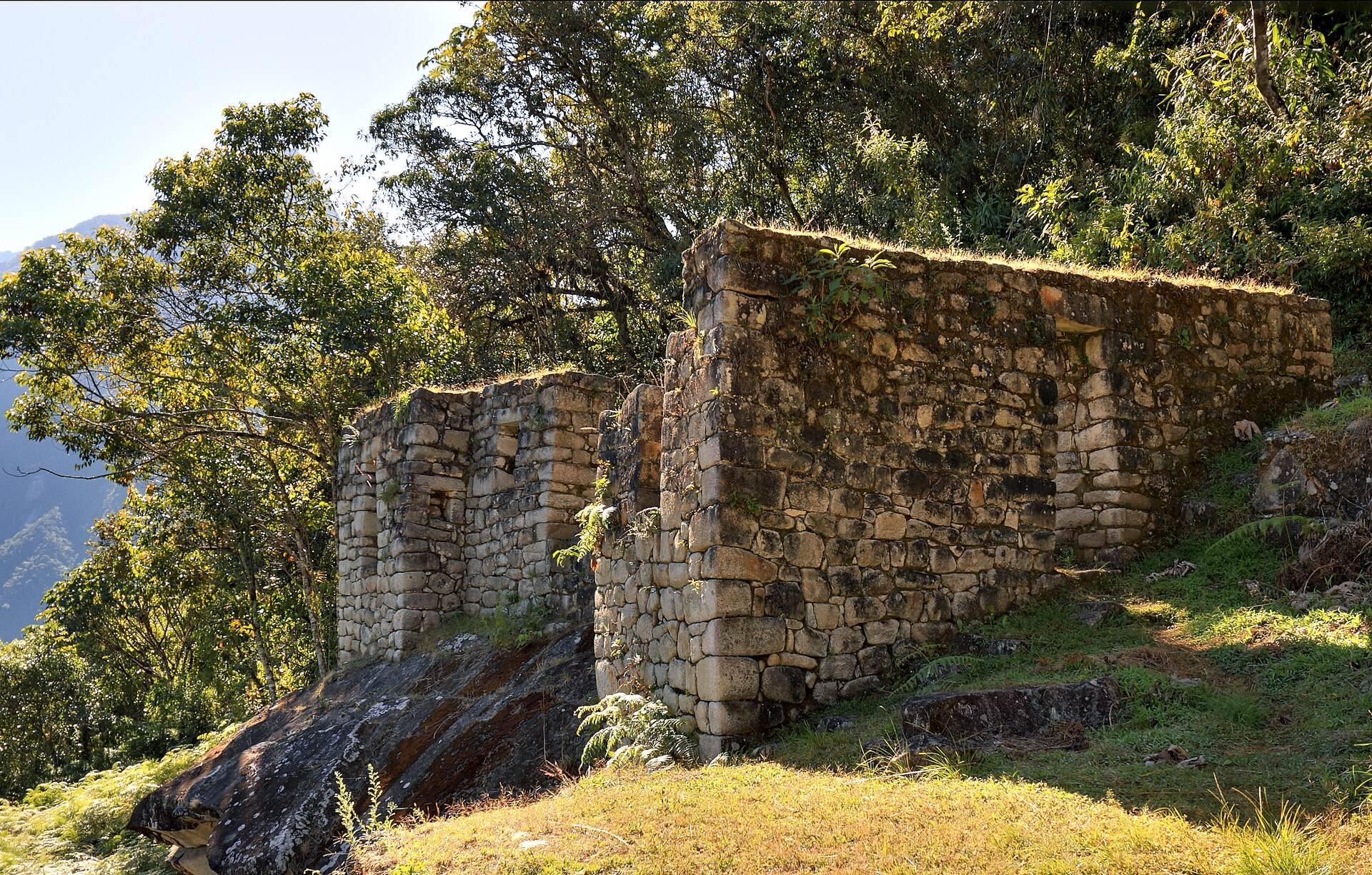
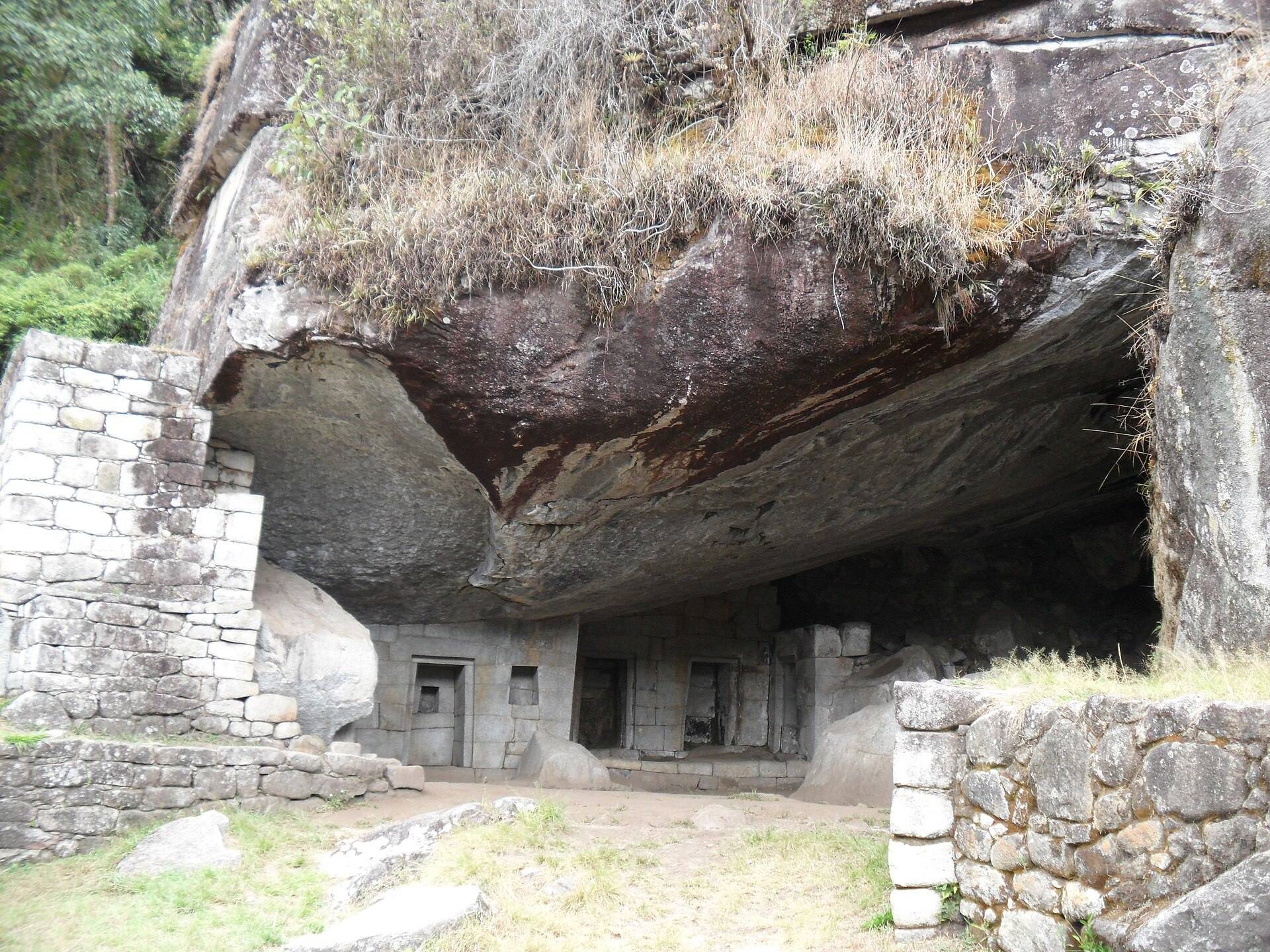
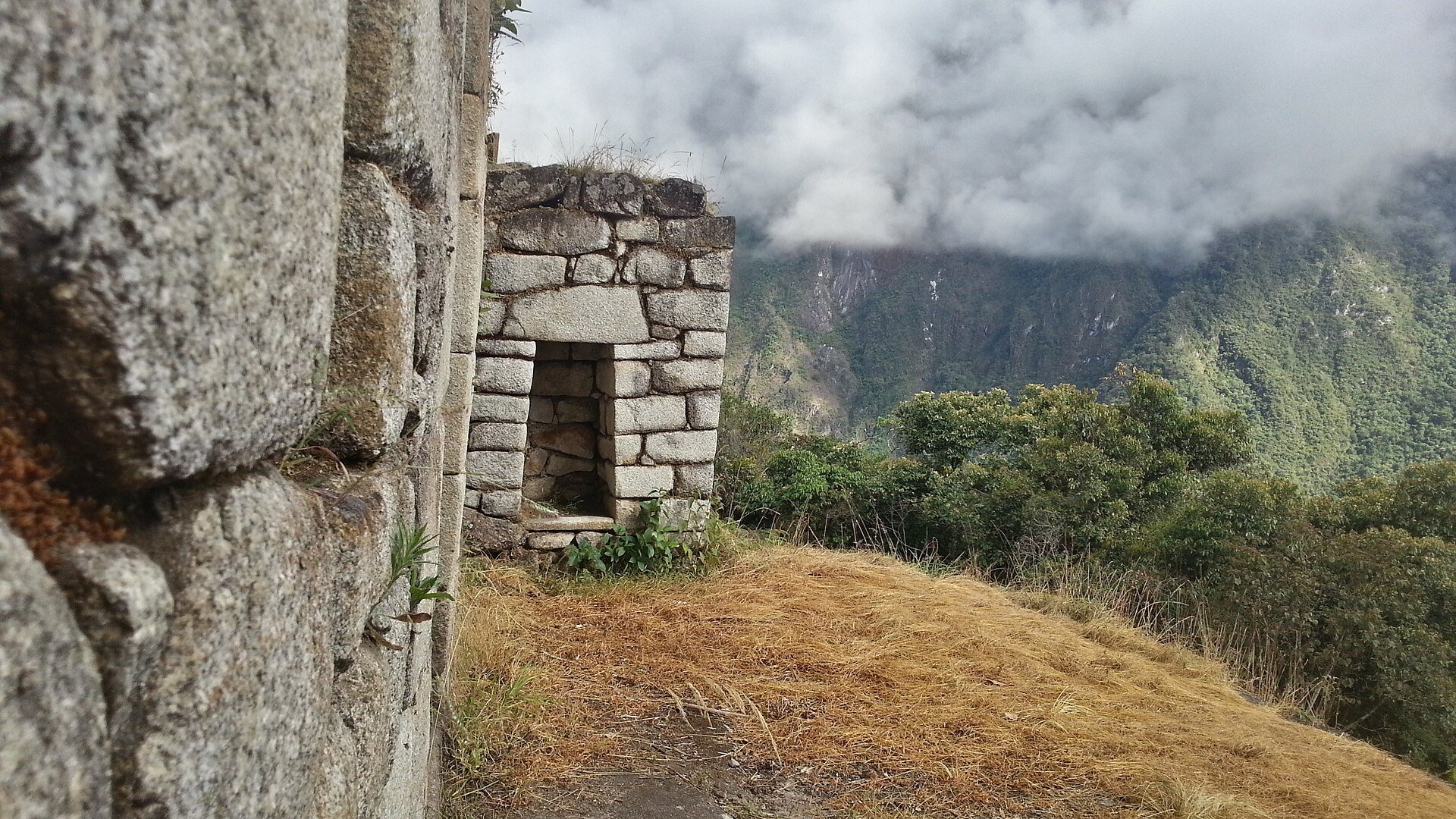
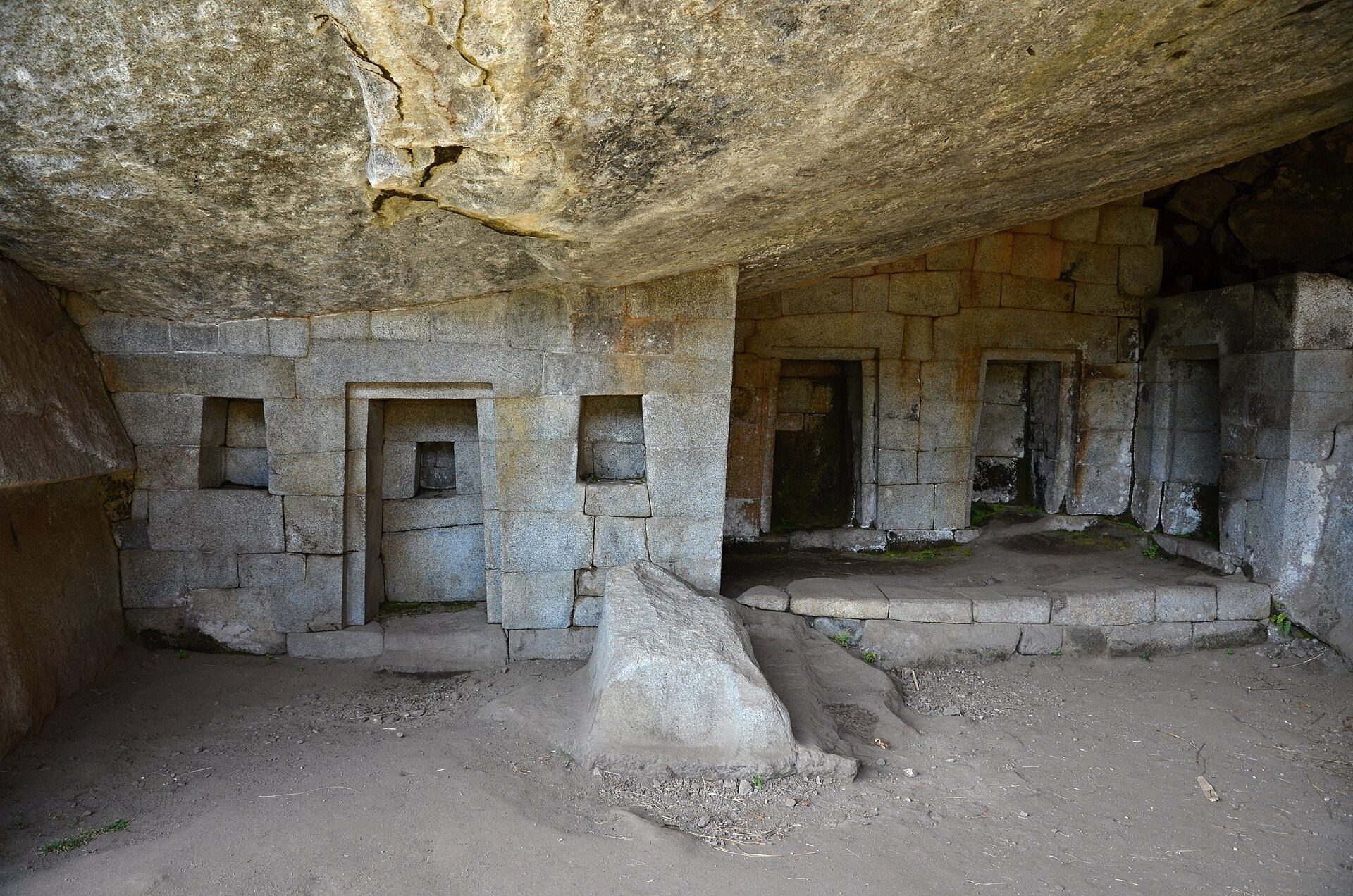
The complex lies on the north side of Huayna Picchu, the mountain rising above and near Machu Picchu, approximately 390 metres below the summit. Its construction combines stone masonry with a shallow, open-fronted cave. The premises are rectangular, with the mountain rocks forming the walls, while finely executed masonry includes niches and false doors.
Cave and Carved Interior
The overhanging cave forms the central architectural feature. At its centre is a stepped sculpture carved from the bedrock, also described as throne-like. Steps beside it lead farther into the cave. In front of the cavern, a rock carved as an altar extends the ceremonial character of the space. The interior contains six trapezoidal niches, or recesses that narrow toward their upper edges, along with vaulted niches and empty trapezoidal openings characteristic of Inca construction.
Platforms and Doorways
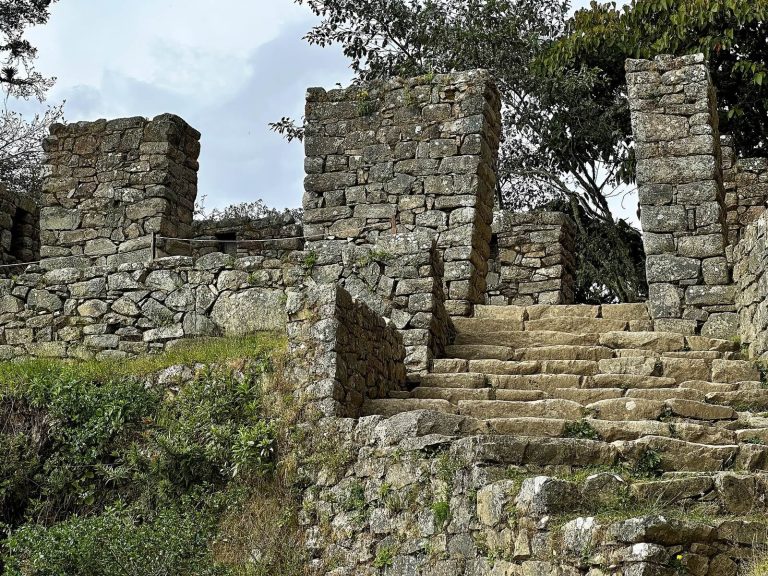
Beyond the cave stands a tall doorway with two projecting vertical side members framing the opening. Further structures include another cave-based construction. Strictly defined, the temple consists of a major platform supporting a building raised approximately 5 metres above the ground. That building has an entrance approximately 8 metres high and 6 metres wide.
The complex also has three doors: a front door about 1.60 metres high and two side doors about 1 metre high. Their arrangement is integrated with the masonry and the surrounding mountain rock, which together form the surviving architectural enclosure.