Santi Vincenzo e Caterina de’ Ricci: A Dominican Church and Monastery in Prato
Site at a Glance
- Rating
- 4.6
- Popularity
- Very Low
- Country
- Italy
- Primary era
- Early Modern
- External website
- Open
- Eras represented
- Early Modern
- Civilizations
- Grand Duchy of Tuscany
- Site type
- Religious
- Remains
- Monastery
On this page9 sections
History
Foundation and Expansion
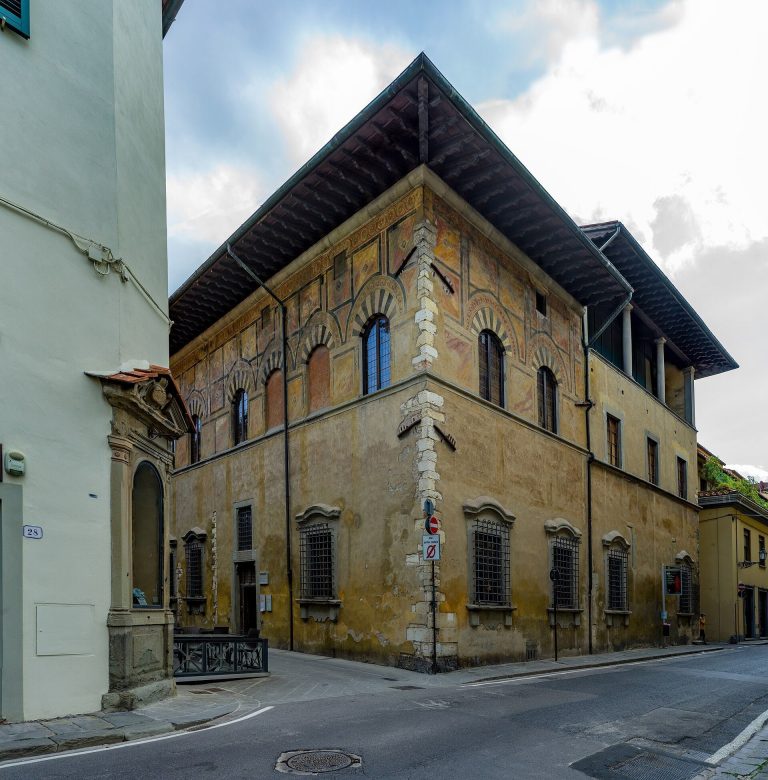
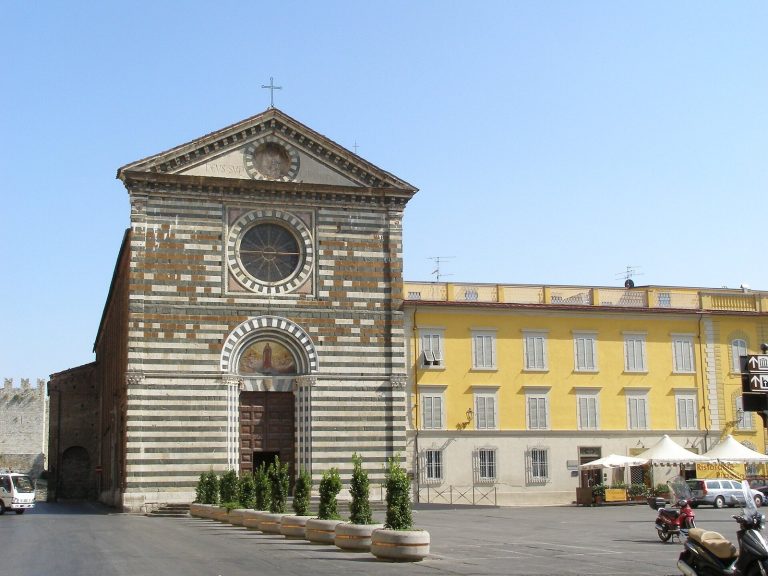
Santi Vincenzo e Caterina de’ Ricci is a Roman Catholic church and monastery in Prato, Italy, whose present character is late Baroque. A Dominican women’s monastery dedicated to Saint Vincent Ferrer was established in the early sixteenth century, and the adjoining enclosed Monastery of San Vincenzo was founded in 1503. The complex expanded greatly during the second half of the century, reflecting the growth of the religious community and its institutional importance in Prato.
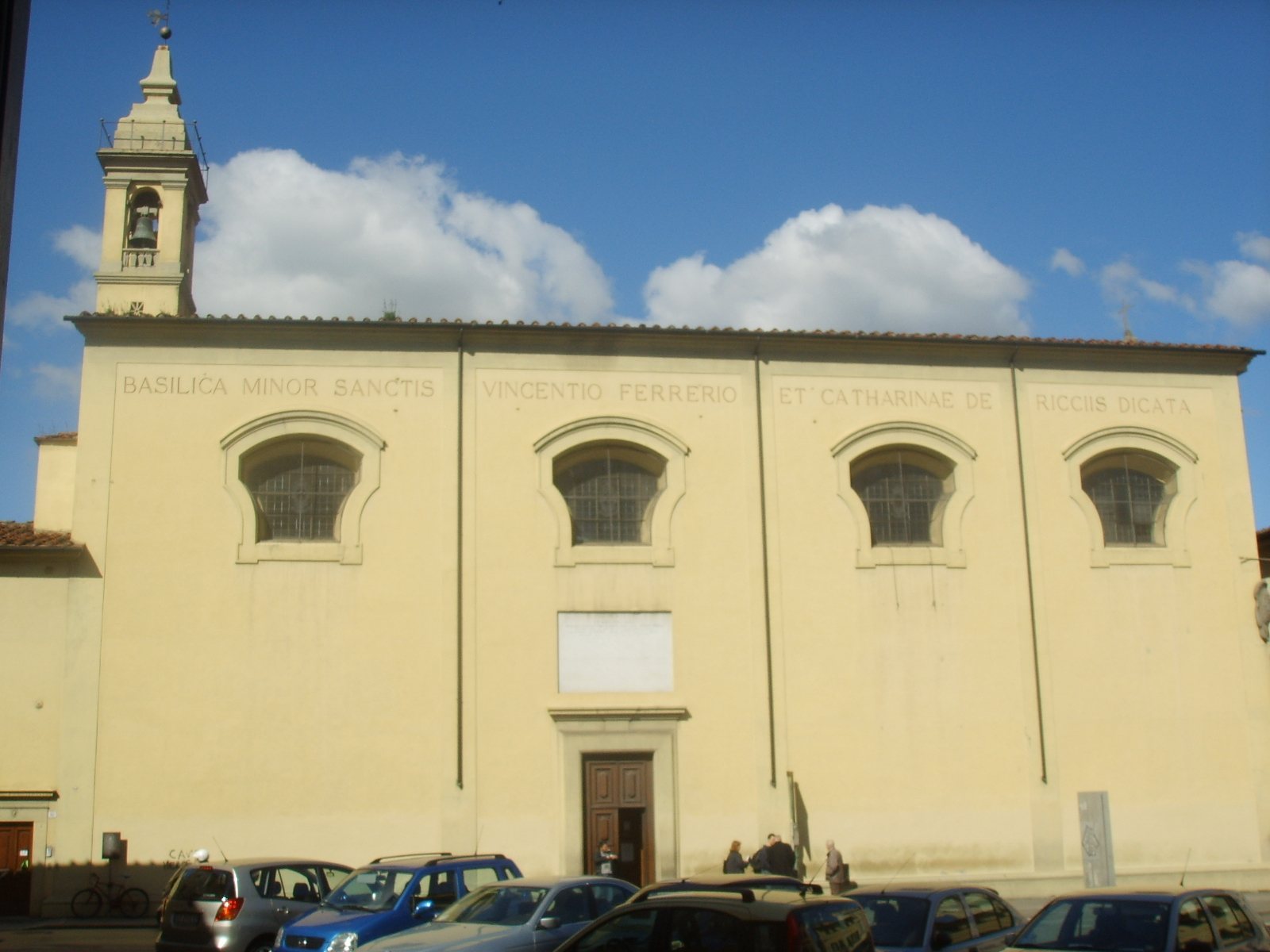
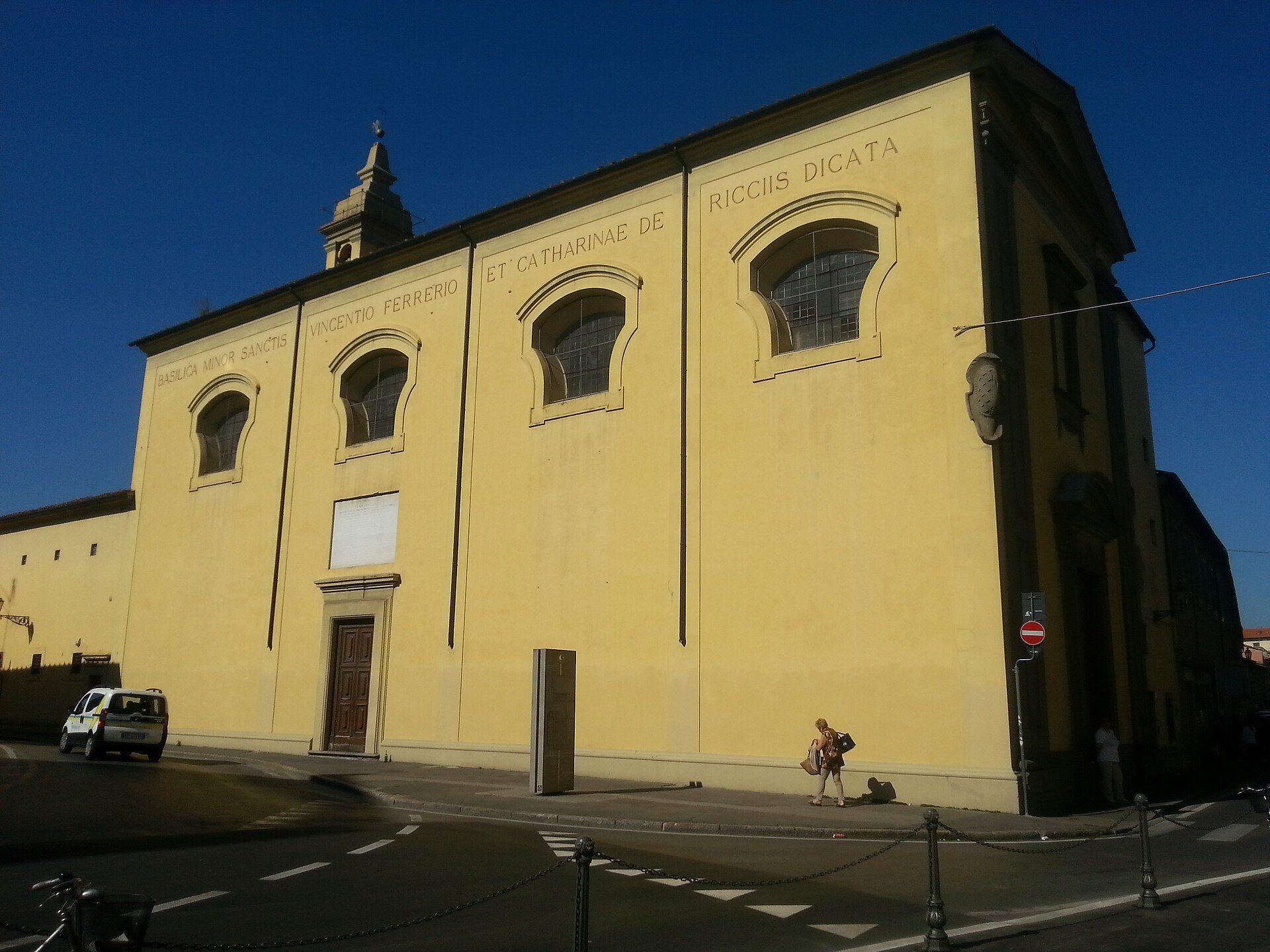
The original church was completed at the end of the sixteenth century. Between 1732 and 1735, it was substantially renewed after Caterina de’ Ricci was beatified in 1732 and during the period leading to her canonization in 1742. The reconstruction is attributed to Giovanni Battista Bettini and Girolamo Ticciati, and gave the church the late Baroque architectural character it retains today.
Caterina de’ Ricci and the Monastery
Caterina de’ Ricci entered the monastery when she was thirteen. Her early spiritual formation was influenced by the teachings associated with Girolamo Savonarola, the Dominican preacher and reformer in Florence. She later developed a distinctive mystical spirituality, marked by prolonged ecstatic experiences of Christ’s Passion, stigmata, a mystical marriage understood as a visionary union with Christ, and the reported miraculous embrace of the Crucifix between 1541 and 1543.
Caterina eventually guided the monastery for many years and helped enlarge it through the generosity of Filippo Salviati, whom she described as her spiritual son. Her influence extended through Florentine and Tuscan society, while her reputation as a Dominican nun and mystic shaped the religious identity of the community. She was later canonized as a saint by the Catholic Church.
The Sack of Prato and Later Veneration
The monastery’s religious history is also connected with the Sack of Prato in 1512, when Spanish mercenaries attacked the city. A tradition holds that the troops stopped before the venerated image in the Madonna dei Papalini Chapel and spared the convent. The soldiers are identified with forces of Ferdinand II of Aragon and Pope Julius II. The chapel therefore became associated with a local tradition of protection during a violent episode in Prato’s history.
Caterina was buried beneath the monastery’s Madonna dei Papalini Chapel until 1732. Her body was then placed beneath the church’s main altar, and this association with her relics contributed to the church’s promotion as a minor basilica. A minor basilica is a Catholic church granted a special honorary status by the pope, distinct from a cathedral, which is the seat of a bishop. The basilica belongs to the Diocese of Prato and remains part of the Dominican religious context.
Remains
The Baroque Church
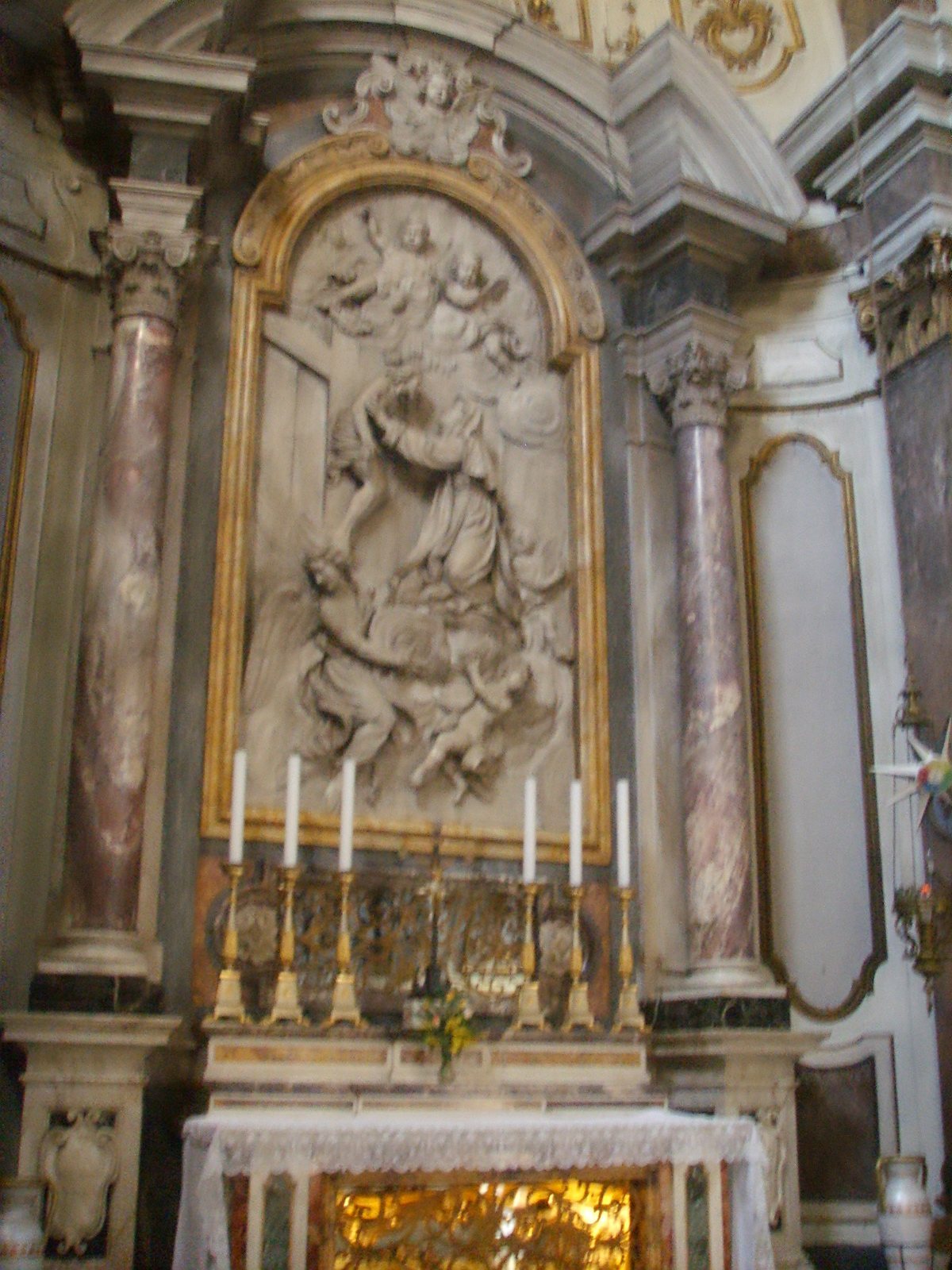
The church combines a Baroque interior and exterior with frescoes, stucco, relief sculpture, marble altars, and ceremonial vestments. Its walls are linked to the apse by concave pilasters, creating a continuous architectural frame around the sanctuary. The marble high altar carries a white-marble relief by Girolamo Ticciati showing Saint Catherine embraced by the Crucifix. Beneath it, a silver urn contains the incorrupt body of Caterina de’ Ricci.
Reliefs by Girolamo Ticciati and Vincenzo Foggini depict miracles associated with Saint Catherine. The marble altars include Vincenzo Meucci’s Martyrdom of Saint Catherine of Alexandria, Michele delle Colombe’s sixteenth-century Nativity, and paintings by Giovanni Antonio Pucci. Pucci also painted the ceiling frescoes, which represent the Glory of Saint Catherine and Angels. One chapel contains a refined marble Madonna and Child, a youthful work by Matteo Civitali dated approximately to 1461–1462.
Monastic Spaces and the Madonna dei Papalini Chapel
The adjoining monastery contains an atrium, an antechamber, the large monastic choir, a shrine for Caterina’s urn, the cell associated with her death, the chapel associated with the reported embrace of the Crucifix, and a relic chapel. The shrine containing the urn is decorated with paintings by Gian Domenico Ferretti. Other ground-floor spaces include the workroom, wardrobe, and pharmacy, while some upper-floor cells are seen on particular occasions.
The Madonna dei Papalini Chapel dates from the seventeenth century. Its ceiling is decorated with papier-mâché rosettes, and its venerated image is an early-sixteenth-century maiolica bust, meaning a ceramic sculptural bust with a tin-glazed finish, dressed in an eighteenth-century garment. The chapel also contains Santi di Tito’s panel of the Madonna Appearing to Saint Hyacinth.
The Monastic Choir
The large monastic choir was built between 1558 and 1564 to a design by Baccio Bandinelli. It has a vaulted ceiling with lunettes, curved or semicircular sections containing decoration or openings, and tall walnut choir stalls dated 1564. Sixteenth-century paintings by Michele delle Colombe, Ridolfo del Ghirlandaio, and Francesco Brina remain in the choir. Brina is attributed with the Saint Dominic and Saint Vincent Ferrer on the right wall, executed between 1559 and 1561.
A later series of Dominican devotional paintings by Lorenzo Lippi dates from the late 1650s or early 1660s. It includes the Martyrdom of Saint Catherine, the Flagellation of Christ, Saint Charles Borromeo Adoring the Crucifix, and Saint Francis de Sales Receiving the Virgin’s Blessing. The choir altar contains a sixteenth-century wooden Crucifix attributed to Antonfrancesco Bugiardini. It is flanked by two large arched altarpieces by Michele delle Colombe, dated 1576, depicting the Assumption and various Scenes from the Passion.
Relic Chapels and the Chapel of Loreto
The chapel associated with the reported embrace of the Crucifix preserves the wooden Crucifix in an early-eighteenth-century altar-reliquary. The adjoining chapel houses relics. These spaces retain the material setting of traditions central to Caterina’s spiritual reputation, while the monastery’s shrine preserves her urn in a separately decorated devotional setting.
In the garden of the retirement home occupying part of the monastery stands the Chapel of Madonna di Loreto, built in 1559–1560. Its dimensions repeat those traditionally assigned to the Holy House of Loreto, the shrine identified in Catholic devotion with the house associated with the Virgin Mary’s early life. The chapel contains a notable panel by Michele Tosini.