St. Margaretha: Catholic Parish Church of Heimbach-Weis in Germany
Site at a Glance
- Rating
- 4.5
- Popularity
- Very Low
- Country
- Germany
- Primary era
- Early Modern
- Eras represented
- Medieval, Early Modern, Modern
- Civilizations
- German, Holy Roman Empire
- Site type
- Religious
- Remains
- Church
On this page8 sections
History
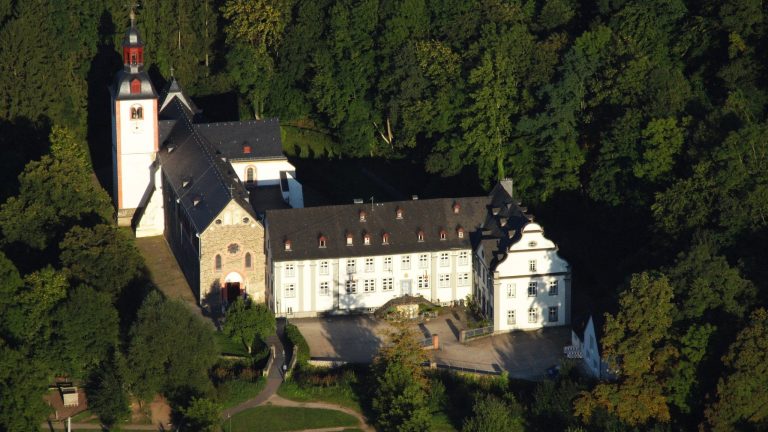
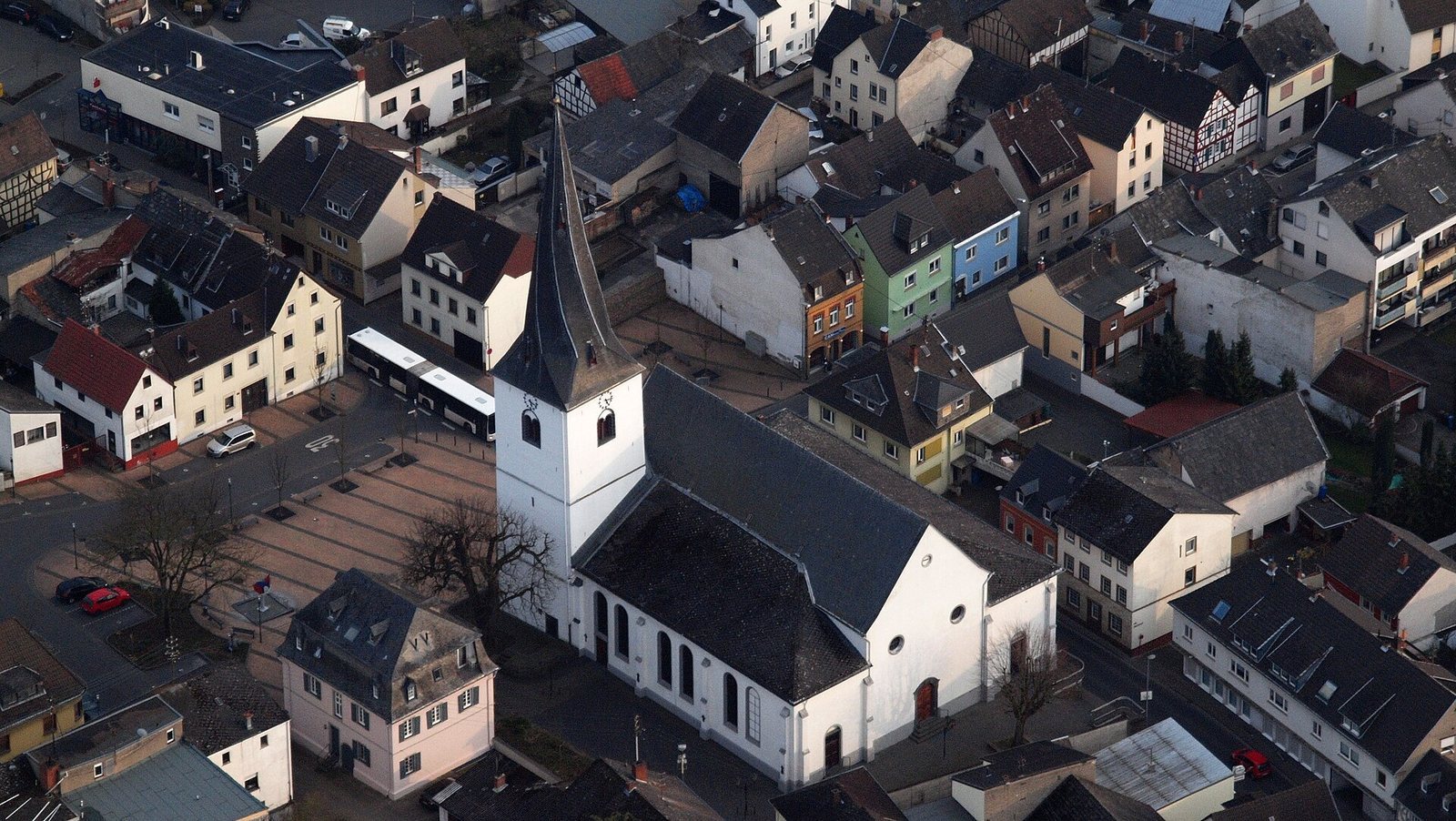
St. Margaretha is the Catholic parish church of Heimbach-Weis in Neuwied, Germany. The present church was built in 1771–1772 in Gothic forms to a design by Johannes Seiz, an eighteenth-century architect associated with ecclesiastical buildings in the former Trier territories. It serves a parish whose history reaches back to around 1200.
Medieval parish and patronage
The medieval parish comprised Heimbach, Weis, and Gladbach. Its first church at Heimbach has no known foundation date, but the parish appears in records around 1200. The church was founded by the Lords of Rumerdorp, who later adopted the name Isenburg. The same family founded Rommersdorf Abbey in 1117, and the Lords of Isenburg retained the parish patronage until the middle of the fourteenth century.
Heimbach and its church were destroyed during the conflict between Balduin, Elector of Trier, and Gerlach of Isenburg. In 1351, under pressure from Archbishop Balduin, Gerlach transferred the parish patronage to Rommersdorf Abbey. The patronage passed to Kurtrier in 1570, when the electorate and ecclesiastical territory were governed by the archbishops of Trier.
Fire and eighteenth-century rebuilding
A major fire destroyed almost all of Heimbach in 1569, and the church bells melted in the blaze. A replacement church was built approximately on the site of the burned building. By about 1770, this church was too small and was probably damaged. A surviving description says that it could hold only half of the parish’s 1,564 members and was exposed to rain and wind. Archbishop Johann Philipp von Walderdorff of Trier then authorized its demolition and replacement.
The new church was constructed in 1771–1772. Its completion is stated as 1771, and Abbot Werner Diepram of Rommersdorf dedicated it on 5 January 1772. The building replaced the former nave of the 1569 church. In 1820, enlargement was considered as the congregation had grown to 2,000 members. Two side aisles were eventually added between 1891 and 1896.
Later changes and parish use
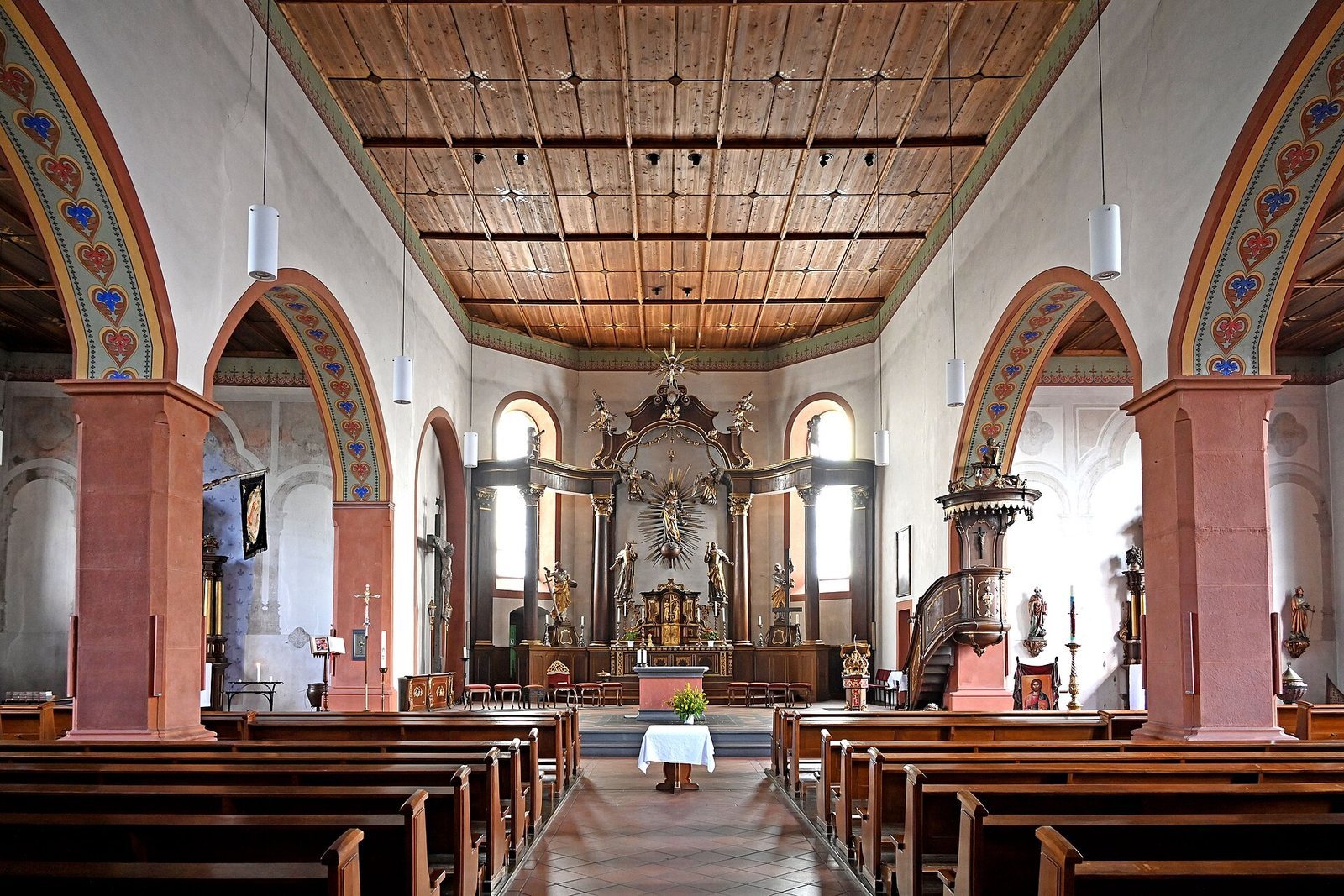
St. Margaretha suffered damage during the Second World War. The interior was altered in 1963, when flat ceilings were installed in the central nave and the side aisles. The parish church now belongs to the Rhine-Wied deanery in the Diocese of Trier.
Remains
Romanesque bell tower
The church incorporates the walls of an earlier Romanesque bell tower. Its three stories are undivided, and the ashlar walls reach a thickness of up to two metres. Their unusual mass has led to an interpretation that they may derive from an original keep. The tower is capped by a steep, eight-sided roof with a slight twist.
Three bells were cast in 1575 by Dietrich, a bell founder from Cologne. The largest, dedicated to Saint Margaretha, was recast in 1581. Its extensive inscription describes the rebuilding of the church, linking the surviving bell to the building’s sixteenth-century history.
Hall church and historic furnishings
The main building from 1772 is a hall church with a chancel extension measuring five-eighths of a circle. The central nave and side aisles have flat ceilings installed in 1963. The reconstructed high-altar retable follows the Baroque design by Johannes Seiz. Surviving original elements include the triumphal arch, three female saints, and several angels. The communion rail and pulpit also come from this furnishing.
An eighteenth-century bust of Saint Margaretha remains in the church. A Late Gothic stone cross from about 1480 came from the monks’ cemetery of Rommersdorf Abbey. It is associated with the circle of Niclas Gerhaert van Leyden, meaning the sculptor’s workshop or artistic milieu rather than necessarily the artist himself.
Organ from Rommersdorf Abbey
The organ was built between 1738 and 1740 by Johann Michael Stumm for Rommersdorf Abbey. Military operations in 1803 severely damaged it: eight stops, the selectable sound-producing ranks, were destroyed completely, while additional stops were partly destroyed. After the abbey was dissolved during secularization, the instrument was transferred to the Heimbach parish church in 1809.
During a repair by the Neuwied organ builder Weil in 1856, the organ was reduced to two manuals, or keyboards. The rear-positive, a small organ division traditionally placed behind the player near the gallery parapet, was moved into the lower case, and the specification was altered. Klais restored the instrument in 1964, adding a new electric console, constructing a new lower division, returning the rear-positive to the gallery parapet, and adding four stops to the pedal, the foot-operated keyboard. Further maintenance took place in 2021, and the organ now has 37 stops.