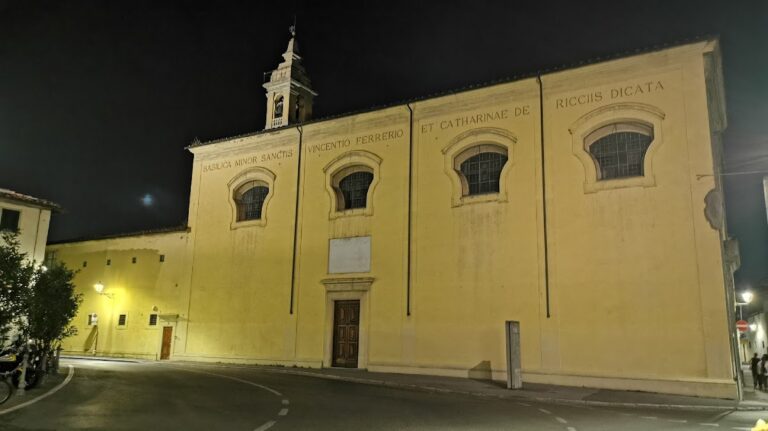
Palazzo Vescovile: The Episcopal Palace of Prato


Site at a Glance
- Rating
- 4.3
- Popularity
- Very Low
- Country
- Italy
- Primary era
- Medieval
- External website
- Open
- Eras represented
- Medieval, Early Modern
- Civilizations
- Grand Duchy of Tuscany, Holy Roman Empire
- Site type
- Religious
- Remains
- Palace
On this page13 sections
History
Palazzo Vescovile is a historic episcopal palace in Prato, Italy, whose construction and alteration span the twelfth to eighteenth centuries, with further renovation in the nineteenth century. Its oldest surviving section belongs to the medieval complex of the parish church of Saint Stephen and the canons’ residence, while the building later became the historic home of the provosts and the residence of the Bishop of Prato.
Early settlement and the medieval parish
The earliest archaeological sequence beneath the palace begins in an agricultural layer containing material from the late fourth or early third century BC through the sixth century AD. The finds include a small group from the Hellenistic Etruscan period, objects from the Roman imperial period, and late-antique material from the sixth century.
The sixth-century remains probably belonged to an early Christian settlement, or plebs, meaning a parish community organized around a local place of worship. Here, that community gathered around the church dedicated to Saint Stephen. The area left no traces of activity from the late sixth century, after the Lombard invasion, until the second half of the ninth century.
Around 885, an elderly woman was buried alone in the area, at some distance from the church and outside a cemetery. Around the transition between the first and second millennia AD, the ground was used intensively, probably as a work site connected with the nearby parish church and the canons’ residence rather than as a residential area.
Defenses, canons’ buildings, and palace formation
During the central Middle Ages, the area stood at the edge of the developing settlement of Borgo al Cornio. Early defenses probably consisted of an earthwork and ditch. Around the mid-twelfth century, solid walls of the castrum, a fortified settlement defined by defensive walls and earthworks, were built along this stretch, apparently following the line of the earlier fortifications.
Toward the end of the twelfth century, the canons’ cloister wall was constructed. The oldest part of the present palace is the canons’ domus nova, or new house, built during the first twenty years of the thirteenth century against the city walls. Renovations and extensions continued over later centuries. By the end of the fourteenth century, the area beside the older walls had acquired an economic function and contained several basins made with cocciopesto, a waterproof mortar of lime and crushed ceramic fragments. In the sixteenth century, this zone was transformed into the monumental atrium of the present palace.
Episcopal residence and modern uses
Palazzo Vescovile was the historic residence of the provosts of the parish church. Cardinal Carlo de’ Medici served as the last Prato provost before the creation of the diocese, holding the office from 1619 to 1653. His stone coat of arms was placed above the entrance.
From 1653, the Diocese of Prato was united with the Diocese of Pistoia under a single bishop for approximately three centuries. On 25 January 1954, Pope Pius XII separated Prato from Pistoia. This began the succession of bishops of Prato who were permanently resident in the palace.
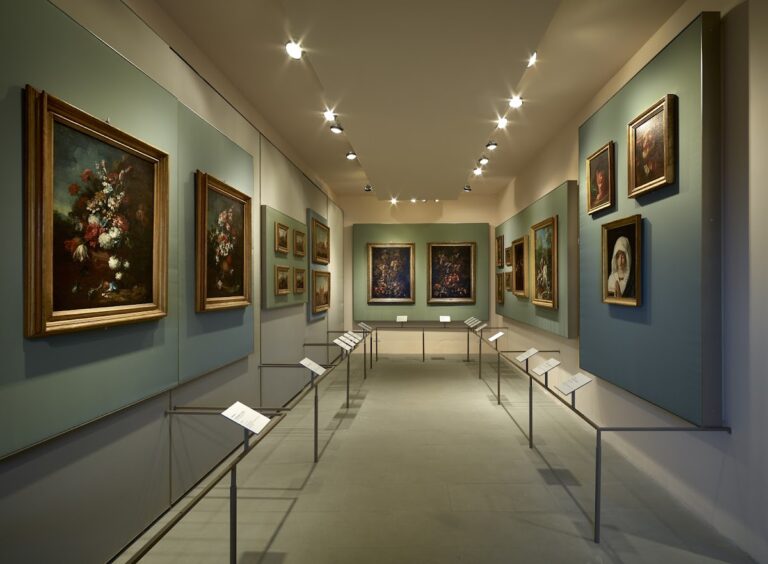
The Diocese of Prato owns the multi-period building. Since 1967, its ground floor has housed the Museo dell’Opera del Duomo. The first floor contains the bishop’s apartment, the episcopal hall, and a red room used for diocesan council meetings, while the second floor houses the diocesan curia, the administrative body assisting a bishop in governing a diocese.
Remains
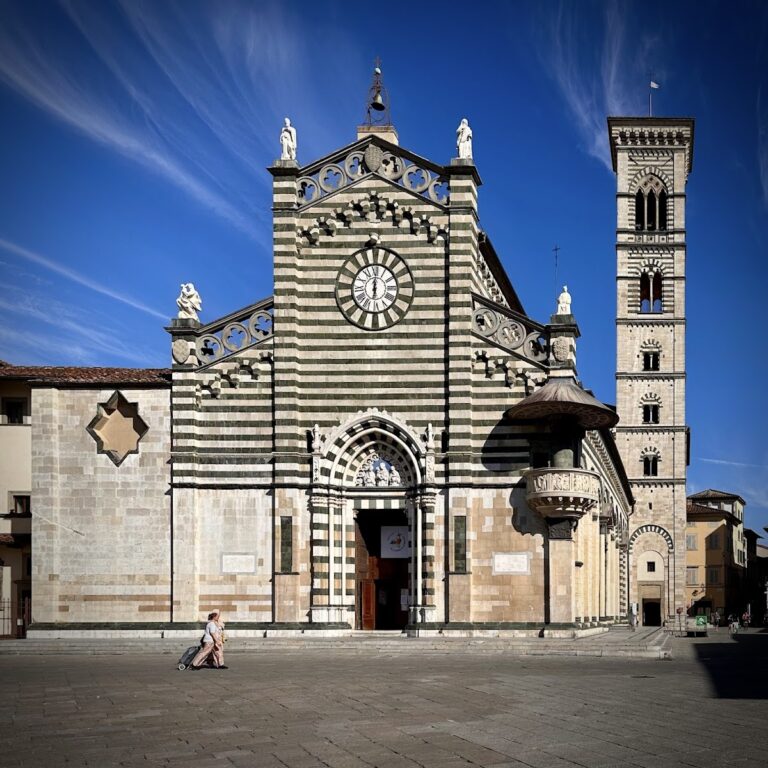
Palazzo Vescovile stands on Piazza del Duomo and rises three floors. Its oldest surviving section faces the Romanesque cloister, a medieval cloister characterized by substantial masonry, rounded arches, and massive forms. The cloister is now incorporated into the route of the Museo dell’Opera del Duomo. Archaeological deposits beneath the palace preserve evidence of earlier activity, medieval construction, fortifications, and later economic use.
Archaeological layers and medieval activity
Early deposits and burial
The buried sequence includes material from the Hellenistic Etruscan period, the Roman imperial period, and late antiquity. The sixth-century material relates to the early Christian settlement associated with Saint Stephen’s church. The sequence also includes the isolated burial of an elderly woman dating to around 885, placed apart from the church and outside a cemetery.
Work site and cobbled road
Three ovens and a small hut survive beneath the palace. They were probably connected with a medieval work site serving the nearby parish church and the canons’ residence. Remains of a cobbled road were found in front of the present Museo dell’Opera del Duomo and beside the palace entrance, suggesting that a route crossed or ran through this area around the transition between the first and second millennia AD.
Fortifications and basins
The archaeological remains also include artificial accumulations of clay and gravel associated with the earlier fortifications and the later medieval defensive walls. Several late-fourteenth-century basins made of cocciopesto belong to the period when the area had acquired an economic function.
Palace interiors and artistic features
Entrance and atrium
The facade has a rusticated portal, whose outer masonry faces are deliberately roughened or deeply jointed to create a textured appearance. The stone coat of arms of Cardinal Carlo de’ Medici surmounts the entrance. Inside, the sixteenth-century transformation of the area beside the older walls produced the monumental atrium.
Sixteenth-century hall
A large sixteenth-century hall is decorated with canvases depicting stories of Saint Pius V. The paintings date from 1712 and were made by Ranieri del Pace, Ottaviano Dandini, and Niccolò Lapi.
Chapel of the Holy Girdle
A small chapel contains late-sixteenth-century frescoes devoted to miracles associated with the Holy Girdle, the Marian relic traditionally associated with the Virgin Mary and venerated in Prato. The same subject appears in a 1608 altarpiece by Domenico Frilli Croci.
Nearby sites