Santa Maria Nova in Vicenza: A Palladio-Attributed Church and Augustinian Convent
Site at a Glance
- Popularity
- Medium
- Country
- Italy
- Primary era
- Early Modern
- Eras represented
- Early Modern
- Civilizations
- Venetian
- Site type
- Religious
- Remains
- Church
On this page10 sections
History
Santa Maria Nova is a former Augustinian convent church in Vicenza, Italy, whose late-sixteenth-century design is attributed, with some dispute, to Renaissance architect Andrea Palladio. Completed by 1590, it is the only complete church design attributed to Palladio that was built in the city.
Foundation and church design
In 1538, four nuns received permission to leave the Monastery of Sant’Antonio at Schio and establish a community in Vicenza. They were Lodovica Trenta, Domicilia Manfroni, and sisters Angelica and Benvenuta of the Lanzè family. With help from Don Agostino Branzo, they bought land on 10 October in Contrada di Bello, in Borgo Porta Nova. Building work on their convent began in 1539.
Lodovico Trento paid for the rebuilding of the small church attached to the convent in 1573. Palladio is considered its likely designer, with a plan thought to have been prepared around 1578. He died in 1580, before the builder Domenico Groppino carried out the work. In 1583, Montano Barbarano, whose daughters lived at the convent, also set aside substantial funds for construction. Although Groppino was a trusted builder of Barbarano, the design is attributed to Palladio rather than to him. The attribution has been debated, but the church’s architectural similarities to Palladio’s work support it.
Convent, school and dedication
The Augustinian convent became one of Vicenza’s important religious communities and welcomed women from local noble families, including the Valmarana, Piovene, Angarano, Revese, Garzadori and Monza families. Its nuns also operated a boarding school for girls from aristocratic households, which continued until 1797.
The church was consecrated in 1616 by Raffaele Inviziati, Bishop of Zante and Cephalonia, acting for Giovanni Delfino, then Cardinal and Bishop of Vicenza. It was dedicated to the Annunciation of Mary, the Christian account of the angel Gabriel telling Mary that she would bear Jesus. The dedication reflected local Catholic devotion. The name Nova may refer either to the church’s status as the latest local church dedicated to Mary when it was built, or to its position in Borgo Porta Nova. The seventeenth century was a high point in the church’s fortunes, and its roof had been repaired by then.
Suppression and changing uses
French forces entered Vicenza in 1797, forcing the nuns to leave. The church was deconsecrated in the early nineteenth century, and its artworks were dispersed as the building deteriorated after seizure and abandonment. Under the Napoleonic suppression decrees of 1806 and 1810, the church and convent became state property. They were used at different times for military accommodation and storage before the municipality acquired the complex.
The municipality exchanged the complex for Palazzo Cordellina in Contra’ Riale and transferred it to the Cordellina Foundation. Following alterations to the building, the Foundation moved the municipal boarding college of the same name there from Contra’ San Marcello in October 1927. The college closed in 1929; its decline was associated with imposed educational changes and the appointment of new heads. The former convent then served military purposes and, after the Second World War, housed Giulian-Dalmatian refugees until the 1960s.
Restoration and heritage recognition
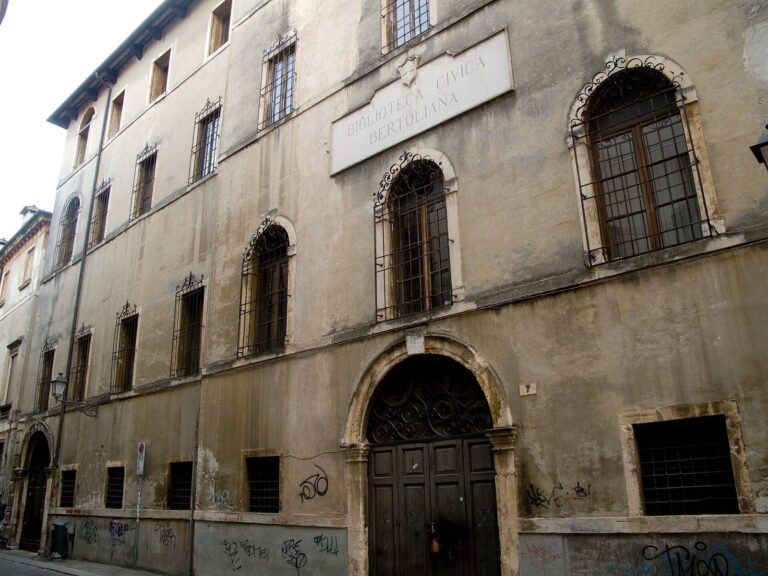
In the 1970s the church belonged to the parish of Santa Croce Carmini, and restoration took place in the 1980s. From 2007, part of the Bertoliana Civic Library’s historical archive was stored in the church; it was removed at the end of 2023. Santa Maria Nova is counted among Vicenza’s 23 Palladian monuments within the UNESCO World Heritage property City of Vicenza and the Palladian Villas of the Veneto, associated with designation dates of 1994 and 1996.
Remains
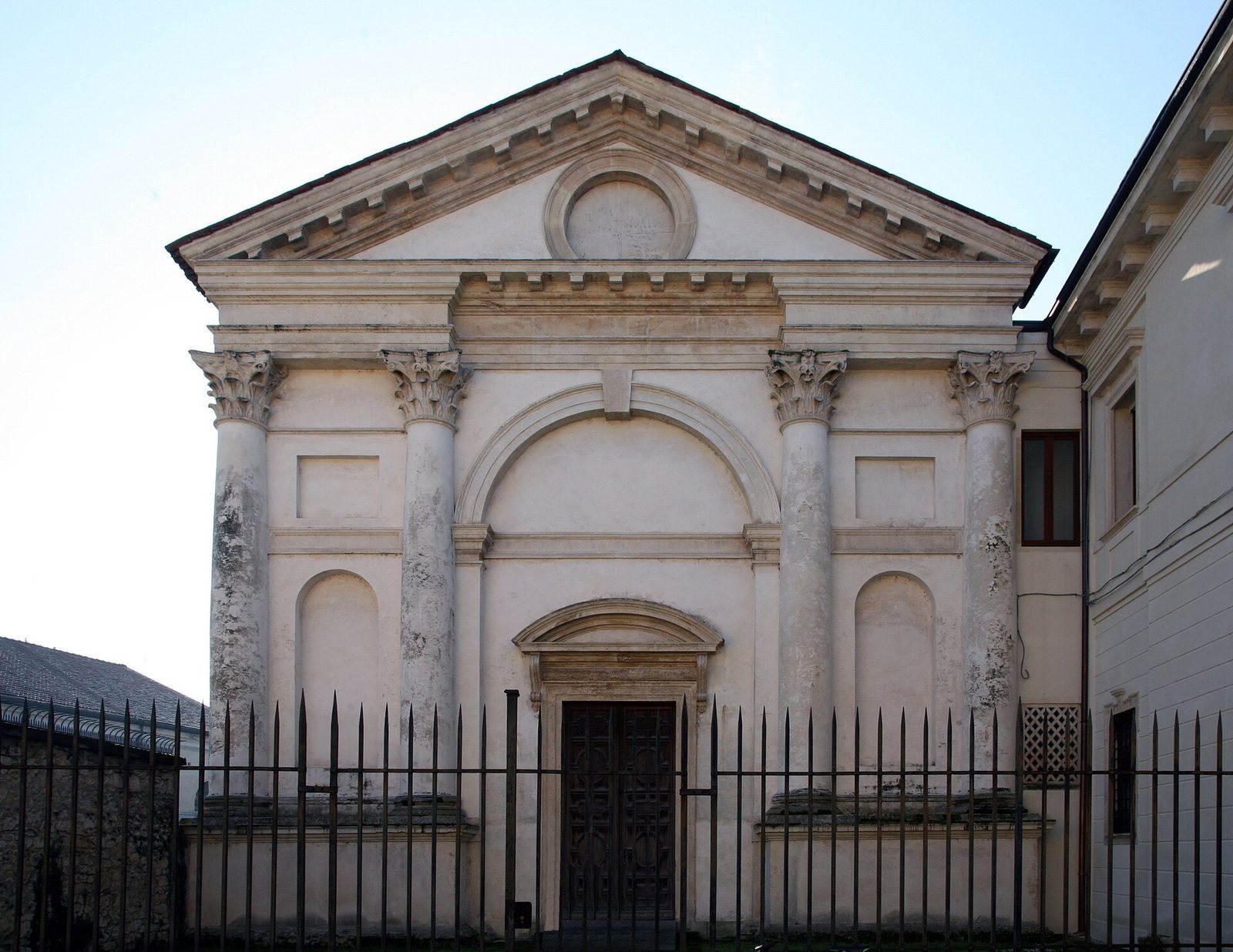
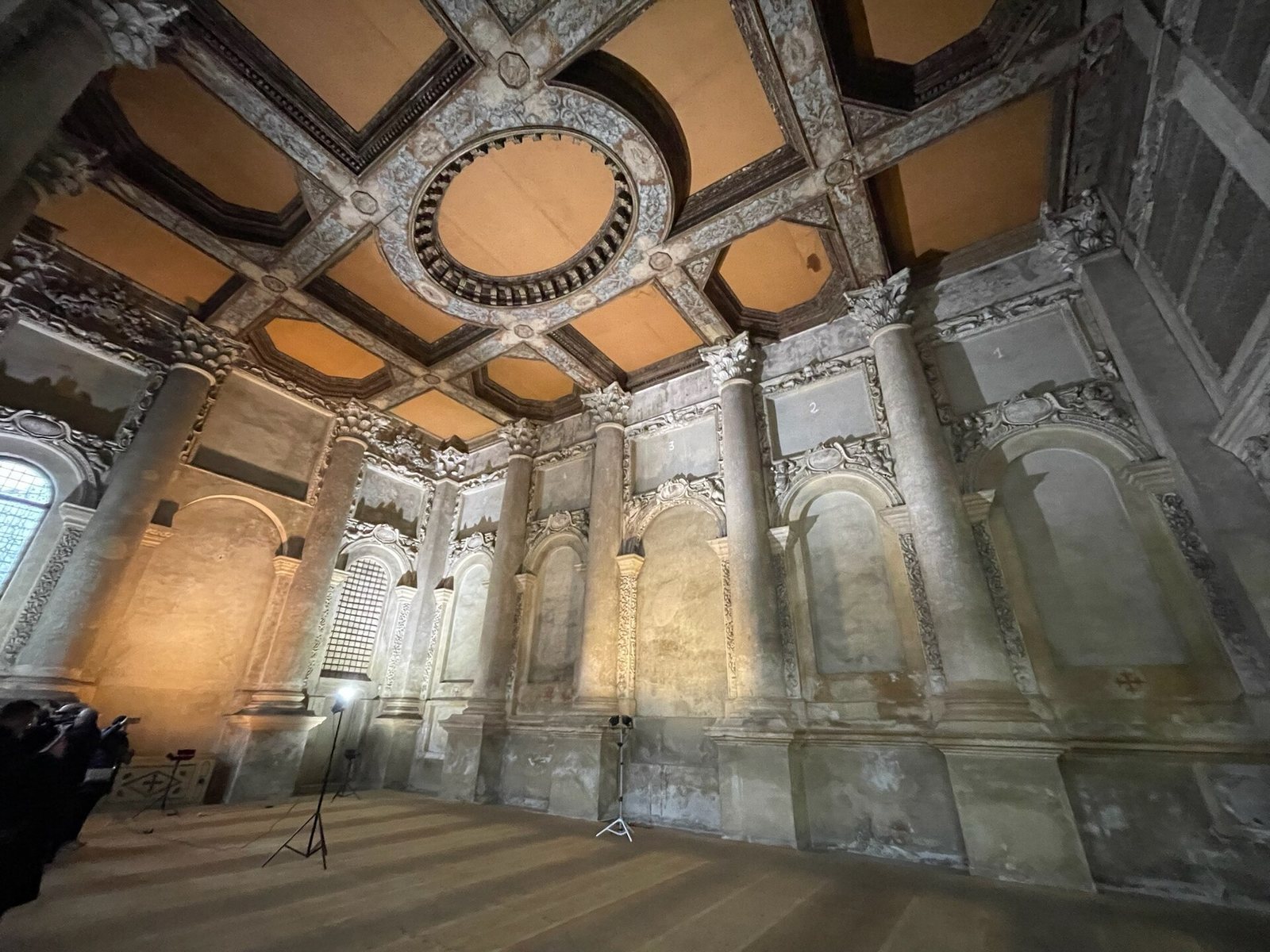
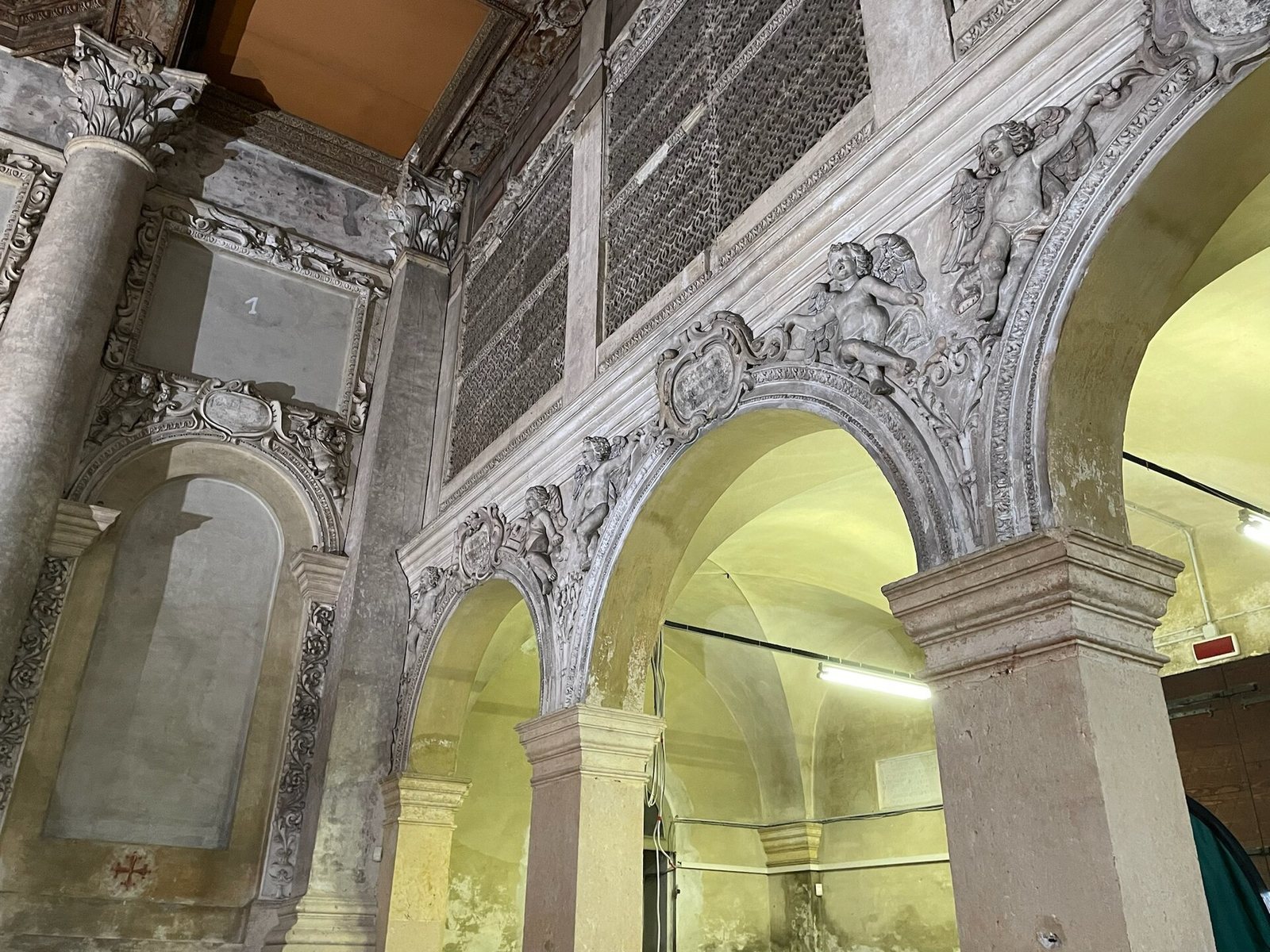
The church’s layout centres on a single nave, with a three-part façade composed in the manner of a Roman temple. Inside, classical architectural forms frame stucco decoration and a wooden ceiling with recessed panels.
Façade
Four columns stand on a high base and support an entablature, the horizontal structure above the columns, and a triangular pediment, the upper gable-like part of the façade. A round opening occupies the pediment’s centre. The façade’s side sections contain shallow niches topped by sealed decorative windows. Above the entrance, a window that once provided light to the nuns’ choir is now blocked. The doorway itself sits within a recessed arch.
Interior
Nave and choir
Wall-attached Corinthian half-columns, a classical column form, rise from bases to the ceiling. Arches and square panels bordered with stucco fill the spaces between them. The ceiling is wooden and divided into recessed panels, or coffers; paintings once set into these panels have been lost, while stucco decoration remains on the walls. The interior has been compared with Maison Carrée, the Roman temple at Nîmes that Palladio illustrated in The Four Books of Architecture.
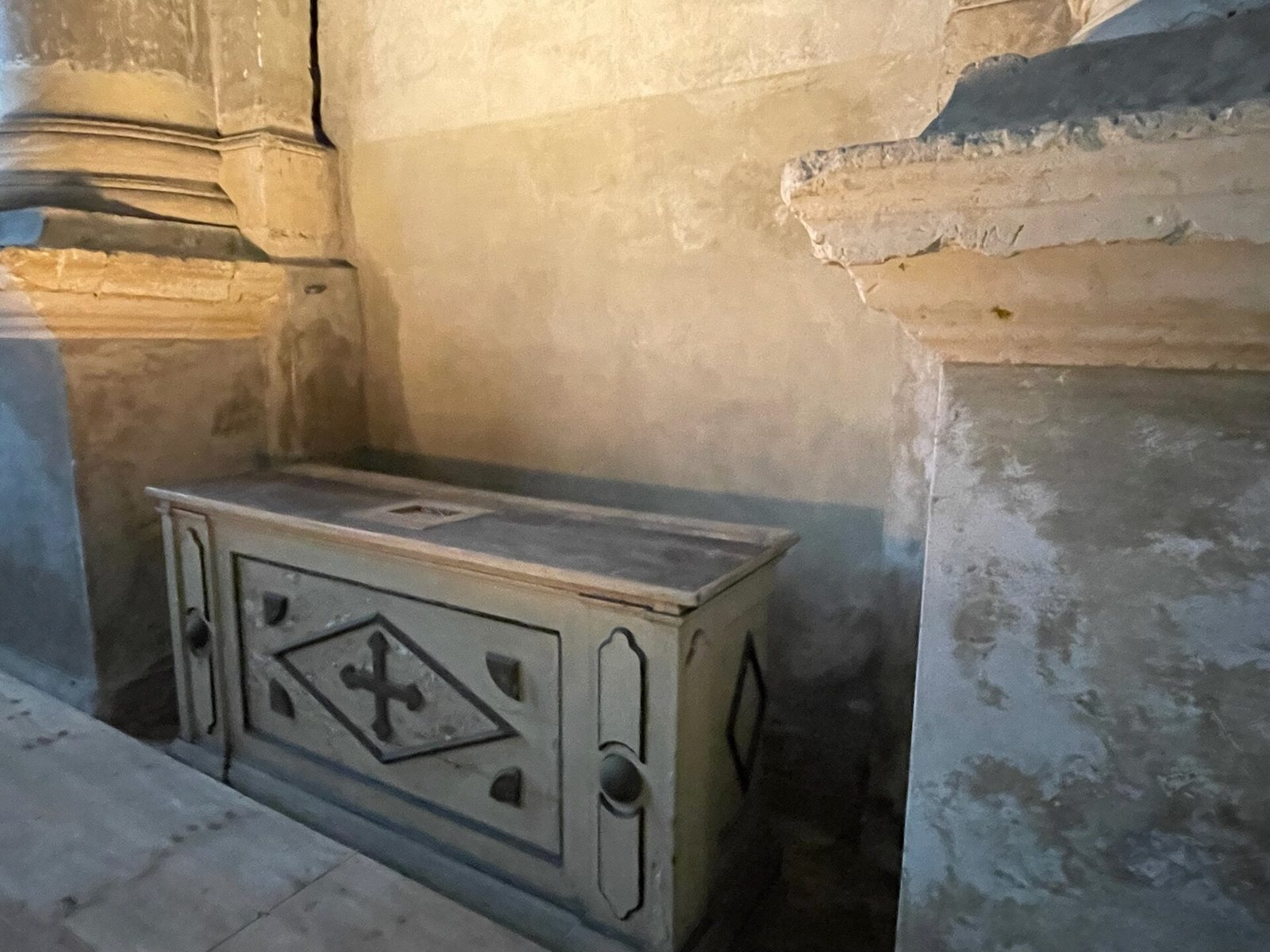
A screened choir allowed the nuns to take part in services without being seen. The church once had five altars, accompanied by paintings. A small wooden altar now in the church came from storage at the nearby parish of Santa Croce Carmini.
Paintings and surviving works
Francesco Maffei, Alessandro Maganza and his workshop, Andrea Vicentino, Palma il Giovane, and Giulio Carpioni contributed paintings for the side walls and ceiling panels. On the left wall, the scenes, moving from the entrance inward, showed Pentecost, Jesus debating with the doctors, the Presentation of Jesus at the Temple, the Adoration of the Shepherds, and the Visitation of Mary to Elizabeth. The opposite wall, followed from the façade toward the main altar, depicted the Resurrection, Crucifixion, Road to Calvary, Circumcision, Flagellation of Christ, and Agony in the Garden.
Three large paintings once mounted on the rear wall survive in other collections or churches. Palma il Giovane’s Annunciation is in Venice’s Church of Madonna dell’Orto. Alessandro Maganza’s Crowning with Thorns is on deposit from the Gallerie dell’Accademia in the parish church of Sossano, while Andrea Vicentino’s God among the Angels, with Saint Francis, Saint Augustine, and a Donor below is held by the Gallerie dell’Accademia. Maffei’s Jesus Handing the Keys to Peter is in Vicenza’s Civic Pinacoteca, and other works from the church are held at Palazzo Chiericati.