Santa Maria del Piratello: Marian Shrine and Pilgrimage Church in Imola
Site at a Glance
- Popularity
- Medium
- Country
- Italy
- Primary era
- Medieval
- Eras represented
- Medieval, Early Modern, Modern
- Civilizations
- Papal States
- Site type
- Religious
- Remains
- Sanctuary
On this page9 sections
History
Santa Maria del Piratello is a Roman Catholic Marian shrine on the Via Emilia, about three kilometres west of Imola, Italy. The church was authorized in 1489 and consecrated in 1492. The shrine became the home of Imola’s oldest Marian cult and a place of pilgrimage on the route to Loreto, a major Catholic destination associated with the Holy House of Mary. It was also one of the Marian pilgrimage shrines of the Papal States, territories in central Italy ruled by the pope.
Foundation and Franciscan community
The shrine’s founding tradition is set in 1483. On 27 March, Stefano Mangelli, a pilgrim walking from Cremona to Loreto, stopped near Imola to pray before a roadside image of the Virgin. The story says that Mary appeared to him, identified herself as the Immaculate Mary, Queen of Eternal Life, and asked for a sanctuary to be built there. Roses reportedly flowered out of season, while two candles lit on their own and the flowers gave off a strong fragrance. Mangelli brought the roses to Imola’s authorities, who accepted the request. The tradition places Piratello among the first three sites where Mary declared herself the Immaculate Conception, the Catholic teaching that she was preserved from original sin from the moment of her conception.
On 8 February 1489, Caterina Sforza, ruler of Imola and Forlì, secured Pope Innocent VIII’s permission for a church and convent. The church was consecrated on 27 March 1492. Caterina entrusted the shrine to the Third Order Regular of St Francis, a Franciscan order whose members live in community under a rule. Its first friars came from the order’s Lombard Congregation, a regional branch whose members were established in Forlì along the Loreto route. Geremia Lambertenghi, the first vicar at Piratello, took part directly in overseeing construction.
The convent was serving as a novitiate by 1566, a community where candidates prepared for religious vows. This is the earliest such record for the order. The friars later held numerous provincial and general chapters there. To accommodate pilgrims, the church was enlarged in 1525 and again between 1532 and 1540.
The image and the city
On 4 February 1617, Imola’s municipality authorized the sacred image to enter the city each year. It made its first such entry on 30 April, carried by the Confraternity of the Holy Sacrament during the three days of the Minor Rogations, Christian processions and prayers seeking blessing and protection. Blessed Bishop Rodolfo Paleotti placed a silver diadem on the image. A formal coronation was requested from the Chapter of St Peter, the body of canons associated with St Peter’s Basilica in Rome, in 1711. On 15 August 1714 the image received a gold diadem. The municipality later called it the Adornment of the people of Imola.
The Rogations procession became Imola’s leading religious procession. Until the mid-twentieth century, crowds gathered along the Via Emilia and neighbouring streets for the image’s arrival. Processions continue to carry it between the shrine and the city, including a ceremony at Porta Bologna where the bishop blesses Imola. The Feast of the Sacred Image is held on 27 March.
Suppression and nineteenth-century changes
In 1798, Napoleonic authorities suppressed religious congregations in the Imola area and requisitioned some of the shrine’s property. After the Restoration, the return of pre-Napoleonic political orders, the Observant Franciscans could not regain the convent. Reform Franciscans, a distinct reform branch of the order, occupied it from 9 August 1821 until May 1845 and again briefly in 1860–61. Two diocesan priests, clergy who did not belong to a religious order, served the shrine in the meantime.
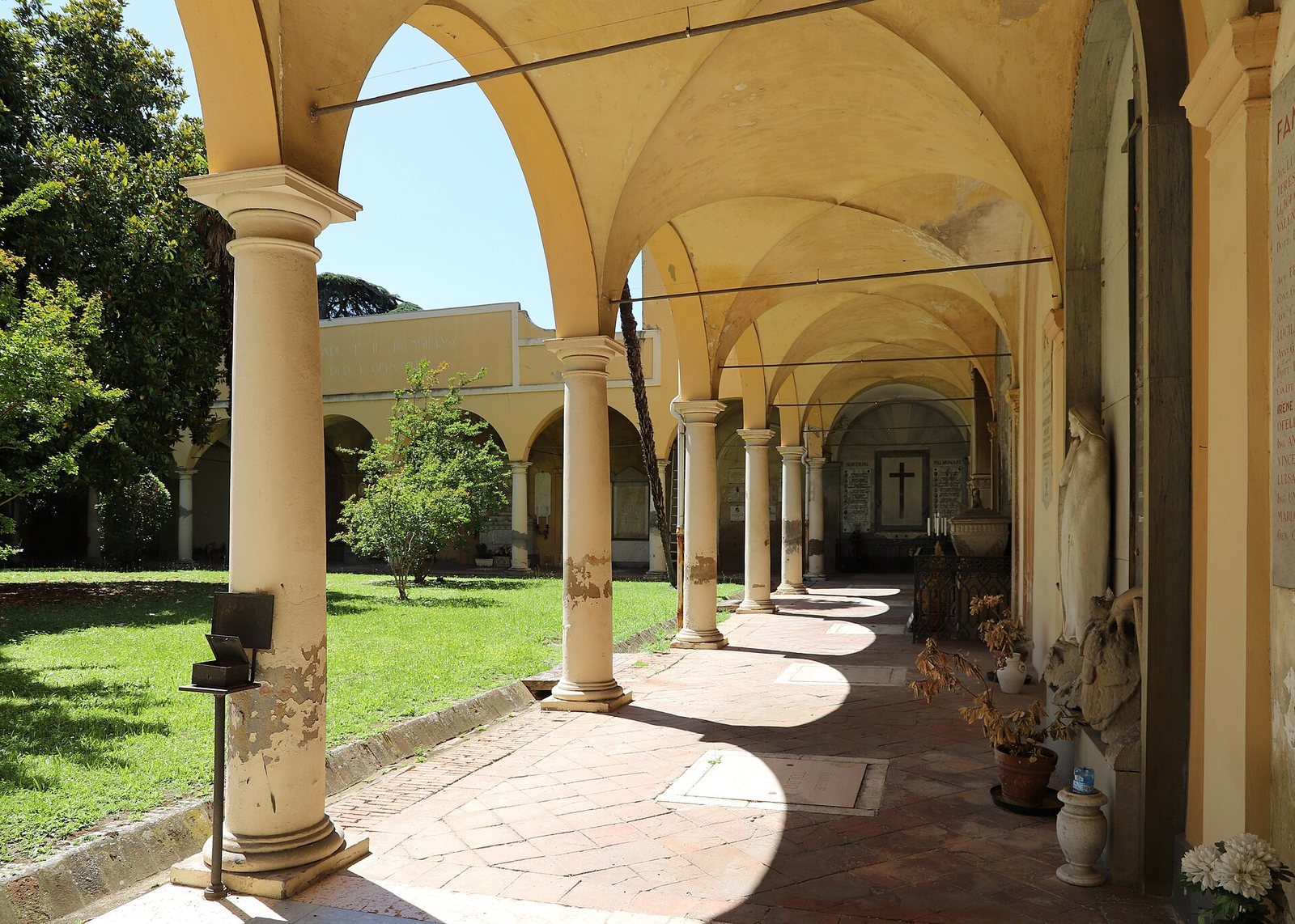
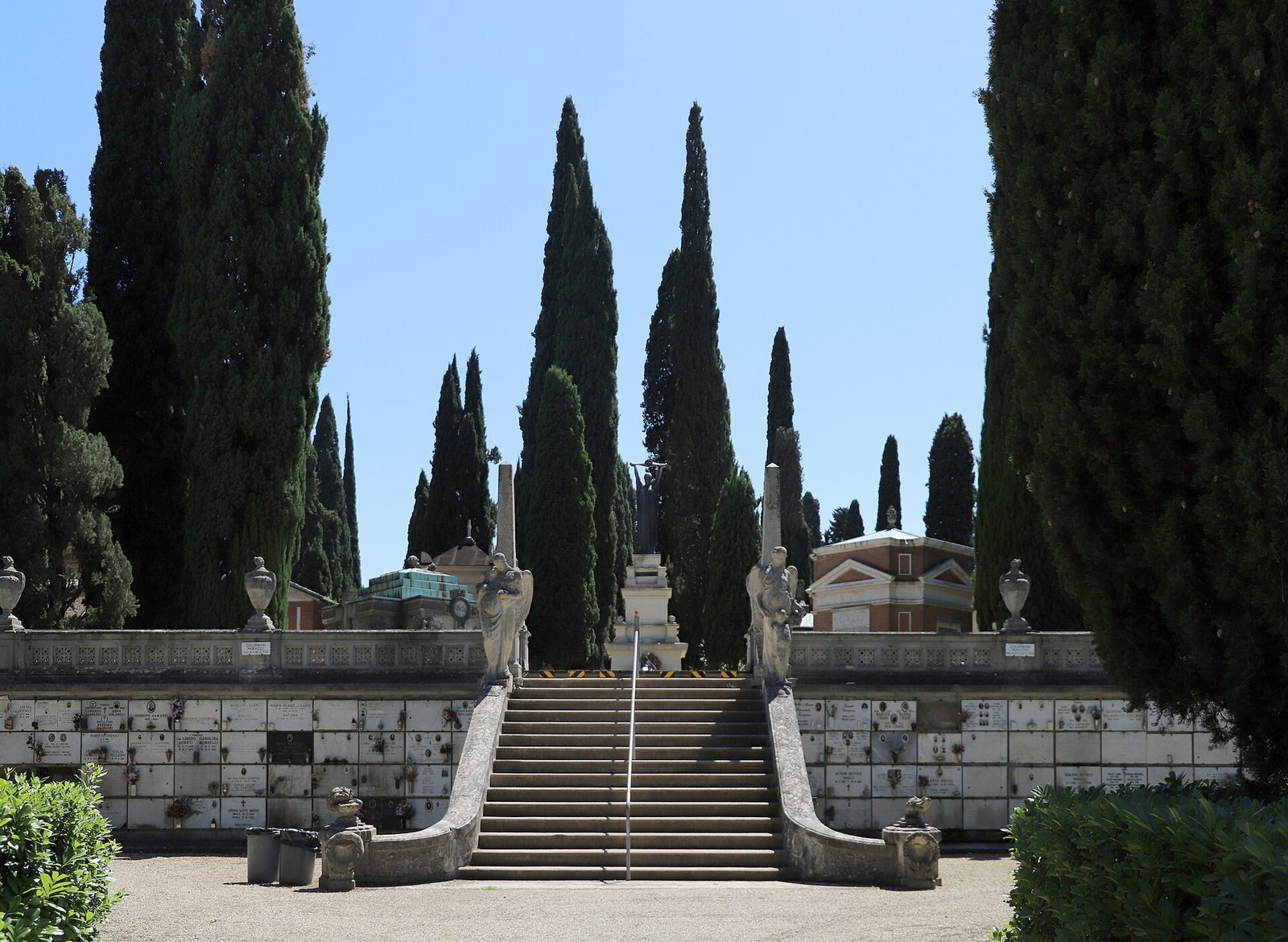
The former cloisters and monastic grounds were approved for use as a cemetery in 1817, and it opened in October 1821. In 1814, Pope Pius VII stopped at the shrine while returning from exile in France, ordered by Napoleon Bonaparte. The visit was regarded as a prelude to the pope’s return to Rome. When Pius IX was bishop of Imola from 1832 to 1846, he kept a private room in the basilica complex for prayer. In the 1850s he promoted plans for a portico that was never built and encouraged the planting of the linden avenue in front of the church.
In 1883 the shrine and convent came under the direct authority of the bishop of Imola, and the church was restored. In 1911, amid strong local anticlericalism, the municipality barred the sacred image from entering the civil hospital during the Rogations. The ban was repeated each year until it was lifted in 1923.
Twentieth-century status
The Third Order Regular of St Francis resumed care of the shrine on 30 May 1943. The church escaped the many bombings of Imola during the Second World War and gave shelter to numerous refugees. It became a parish in 1946, and Pope Pius XII granted it the title of minor basilica, an honorific status conferred by the pope, on 8 December 1954. The cemetery’s Monumental Field opened in 1916.
Remains
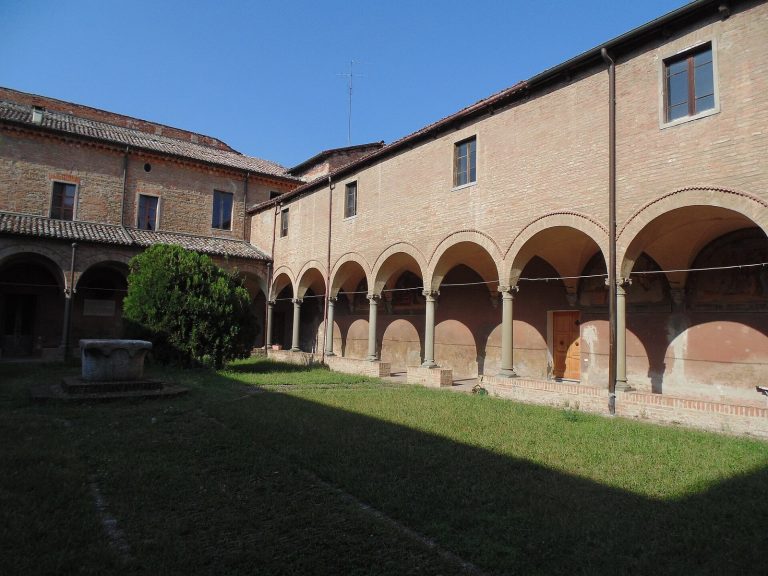
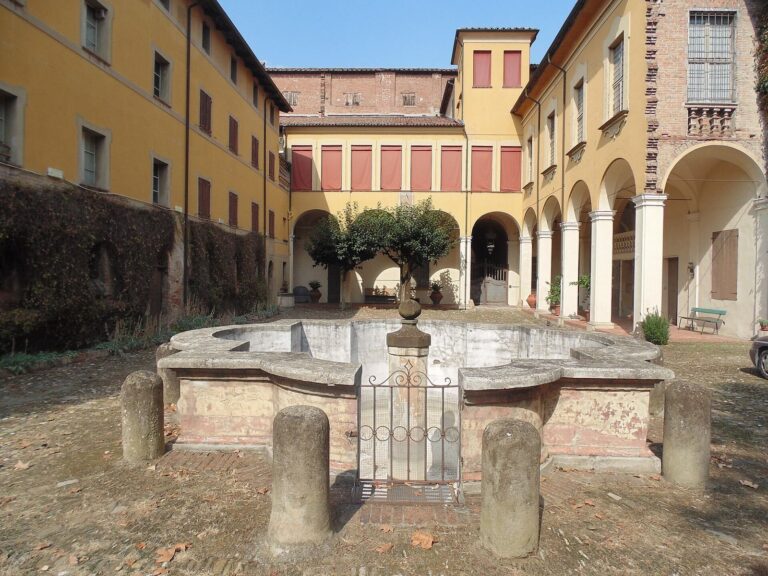
The church stands beside the former Franciscan convent on the Via Emilia, about three kilometres west of Imola. The cemetery occupies the old cloisters and surrounding monastic grounds, with the Monumental Field as one of its sections.
Church and bell tower
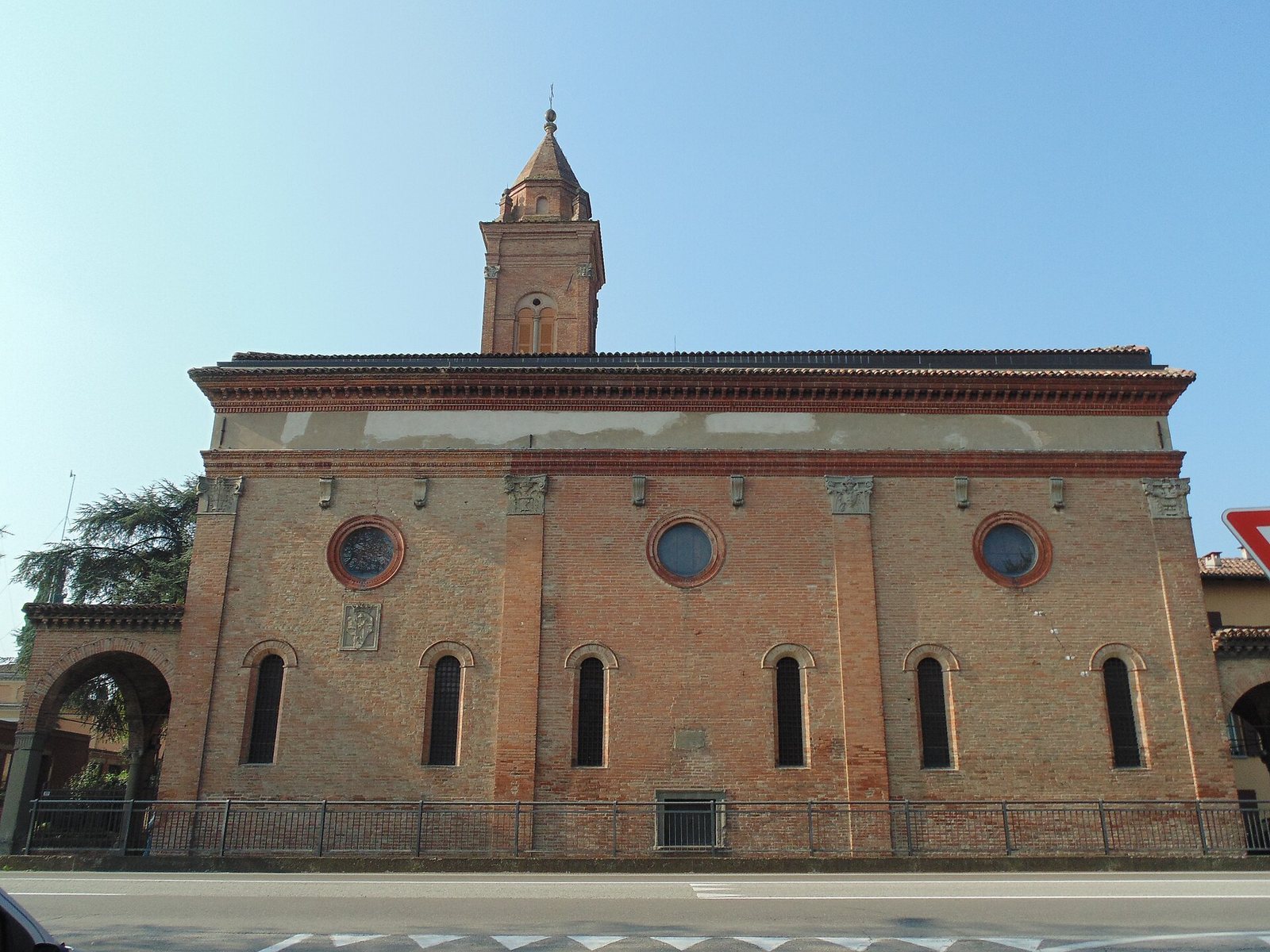
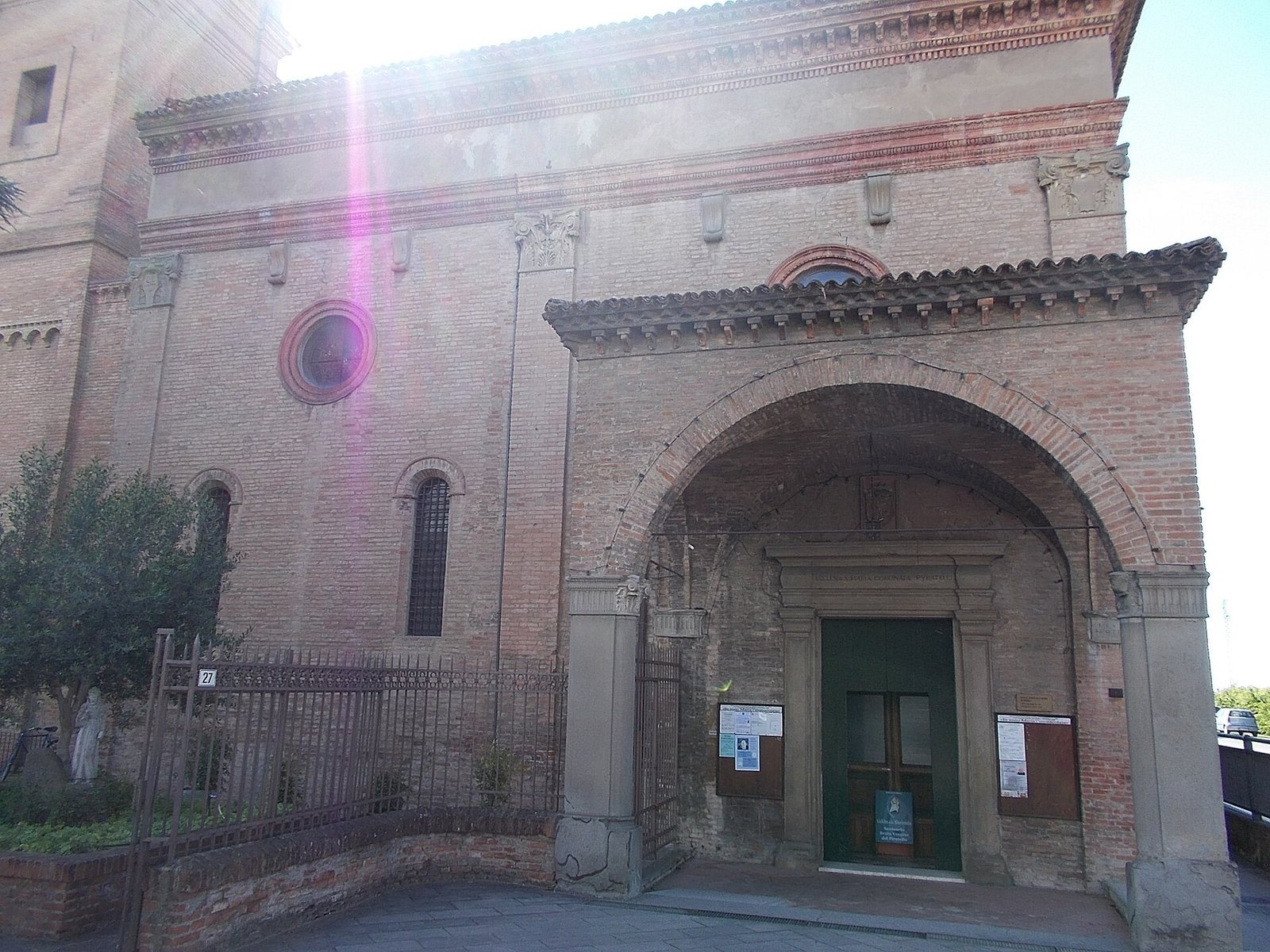
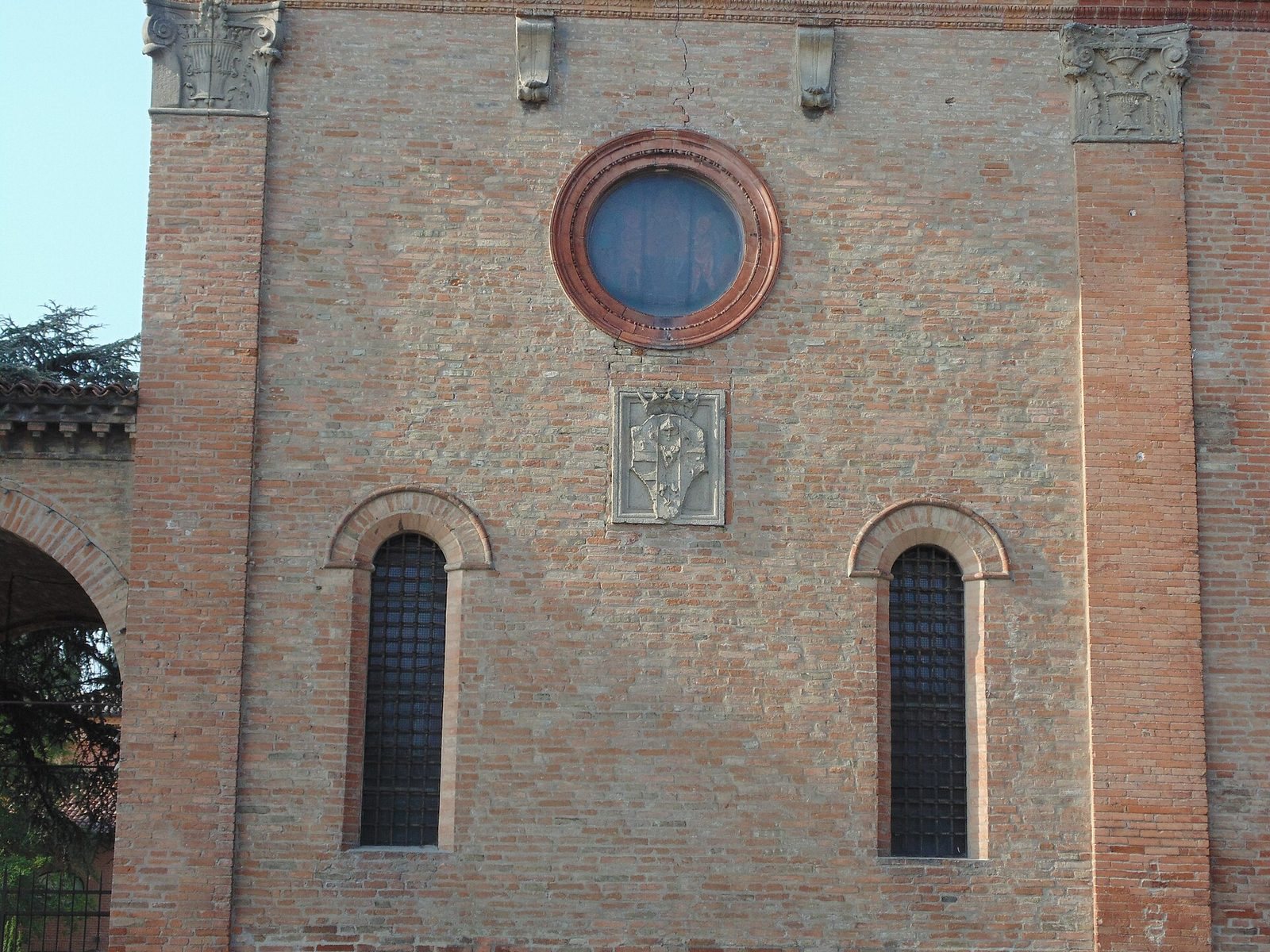
The church has a rectangular plan, a portal topped by a small portico, and an interior arranged in two naves that cross the main axis. Its interior decoration dates to the nineteenth century. A sandstone plaque installed on the exterior in 1525 still has a legible inscription. The visible bell tower was built in the early sixteenth century to a design by Bramante.
Sacred furnishings and paintings
A fifteenth-century fresco by an anonymous painter, showing the Madonna of Piratello, occupies the centre of the church’s end section. Four paintings of the Evangelists and the decorated panel on the front of the altar are attributed to Guercino’s school. The sandstone ciborium, a carved structure associated with an altar, dates to about 1494 and was made by Pier Severo da Piancaldoli and Antonio da Reggio.
Shrine museum
The museum in part of the former convent preserves fifteenth-century stained-glass windows showing the Annunciation, probably made to a design by Guiduccio da Imola. Its collections also include wooden offerings made in fulfilment of vows or in thanks, ancient manuscripts, and a manuscript handwritten by Blessed Lambertenghi. His relics include a bed assembled from 189 nails and a container holding the principal instruments of penance he used during his years at the shrine.