Santa Maria dei Miracoli: A Lombard Renaissance Sanctuary in Brescia


Site at a Glance
- Rating
- 4.6
- Popularity
- Low
- Country
- Italy
- Primary era
- Early Modern
- External website
- Open
- Eras represented
- Medieval, Early Modern
- Civilizations
- Venetian
- Site type
- Religious
- Remains
- Sanctuary
On this page9 sections
History
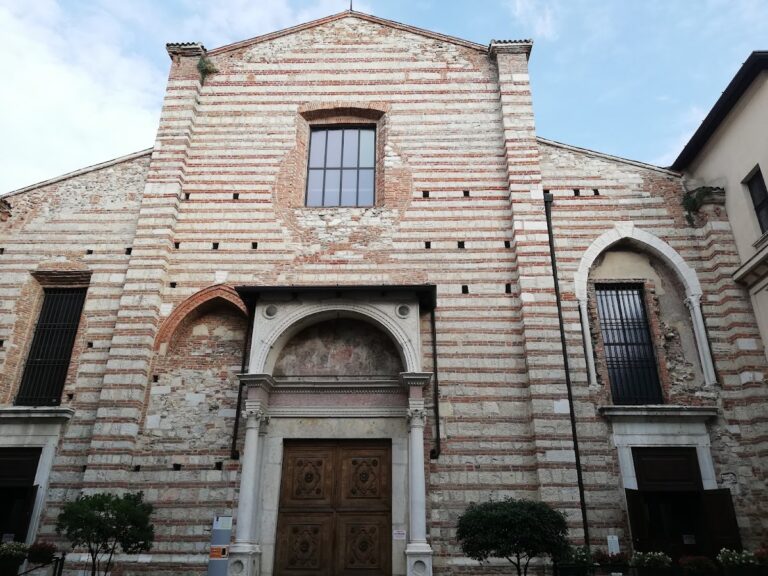
Santa Maria dei Miracoli is a Roman Catholic sanctuary in Brescia, Italy, built in the Lombard Renaissance style between 1488 and 1523. It developed from devotion to a votive fresco of the Madonna and Child in the San Nazaro quarter, which was believed to have miraculous powers after Brescia suffered a plague between 1480 and 1484.
Foundation and Renaissance construction
The image was painted on the façade of a house, and its reputation drew popular religious devotion. In 1486, negotiations began to purchase the house so that a sanctuary could be established around the revered image. Construction began in 1488, and the building was enlarged as the number of worshippers and charitable offerings increased.
The project brought together leading artists of Renaissance Brescia. Giovanni Antonio Amadeo, a prominent northern Italian architect and sculptor, designed the façade, while Ludovico Beretta devised the plan and its cylindrical front dome before 1490. The lower and most refined level of the façade, associated with the Sanmicheli workshop, was completed by 1500. Sixteen sculptors contributed to its decoration, including Gasparo da Cairano, Antonio della Porta, Giovan Battista da Sesto, and Giovanni Stefano da Sesto.
Religious development
During Carlo Borromeo’s visit to Brescia around the beginning of 1580, he directed that the votive fresco be moved inside the sanctuary, which was still under construction. Borromeo was a Catholic cardinal and archbishop of Milan whose reforms helped shape Counter-Reformation religious practice. In the following centuries, the church received paintings, frescoes, stucco work, and a series of canvases representing the Life of Jesus in the presbytery, the area surrounding the main altar and traditionally reserved for clergy.
War damage and later preservation
Bombardment during the Second World War severely damaged the interior and destroyed much of its wall-painting decoration. The façade and the valuable sculptures of the first dome survived. After the war, the sanctuary was radically reconstructed, while much of its original sculptural heritage was preserved.
In 2019, Santa Maria dei Miracoli received a pipe organ built in 1974 by the Dutch firm Koch. The mechanically operated instrument has 13 stops, two manuals, and a pedalboard. It replaced the earlier Tonoli organ in the counter-façade gallery, which had been lost during the Second World War.
Remains
Marble façade and portico
Santa Maria dei Miracoli is constructed in polychrome marble, with an elaborate façade screen and portico forming its most prominent exterior feature. The façade’s sculptural richness has been compared with the Renaissance exterior of the Charterhouse of Pavia. Its later-added porch is divided by straight-grooved columns resting on a single high base. These columns support a rectangular tribune, above which stands a narrow kiosk crowned by a triangular pediment.
Interior layout and domes
The interior follows a square plan divided into three naves by pillars and columns. Multiple domes are concealed by a tiburium, an outer structure that encloses and emphasizes a dome or group of domes when viewed from outside. The building terminates in an apse. Its interior architectural decoration is attributed to Gasparo da Cairano and his workshop, linking the spatial design with the sculptural program of the Renaissance sanctuary.
Sculpture and painted decoration
Gasparo da Cairano produced the cycle of Apostles for the first dome, while Tamagnino created the accompanying cycle of Angels. Both cycles were delivered and paid for in 1489. The church also contains paintings by Enrico Albrici, Ottavio Amigoni, Giuseppe Fali, Pier Maria Bagnadore, Tommaso Bona, Grazio Cossali, Pietro Marone, and other artists. Their subjects include Christ, the Virgin Mary, the Apostles, and episodes from the life of Jesus.
Grazio Cossali’s frescoes of the Baptism of Christ and the Adoration of the Shepherds remain in the church. The presbytery contains the cycle of canvases depicting the Life of Jesus, produced by several Brescian artists, including Tommaso Bona and Pier Maria Bagnadore.
Works formerly held in the sanctuary
Moretto’s Pala Rovelli, painted in 1539, depicts Saint Nicholas of Bari presenting two children to the Virgin. Moretto was a Brescian Renaissance painter. The work was formerly in Santa Maria dei Miracoli and is now held by the Pinacoteca Tosio Martinengo, an art museum in Brescia.