Saint-Feuillen Collegiate Church: A Historic Collegiate and Parish Church in Belgium
Site at a Glance
- Rating
- 4.5
- Popularity
- Very Low
- Country
- Belgium
- Primary era
- Medieval
- Eras represented
- Medieval, Early Modern
- Civilizations
- Habsburg, Holy Roman Empire
- Site type
- Religious
- Remains
- Church
On this page10 sections
History
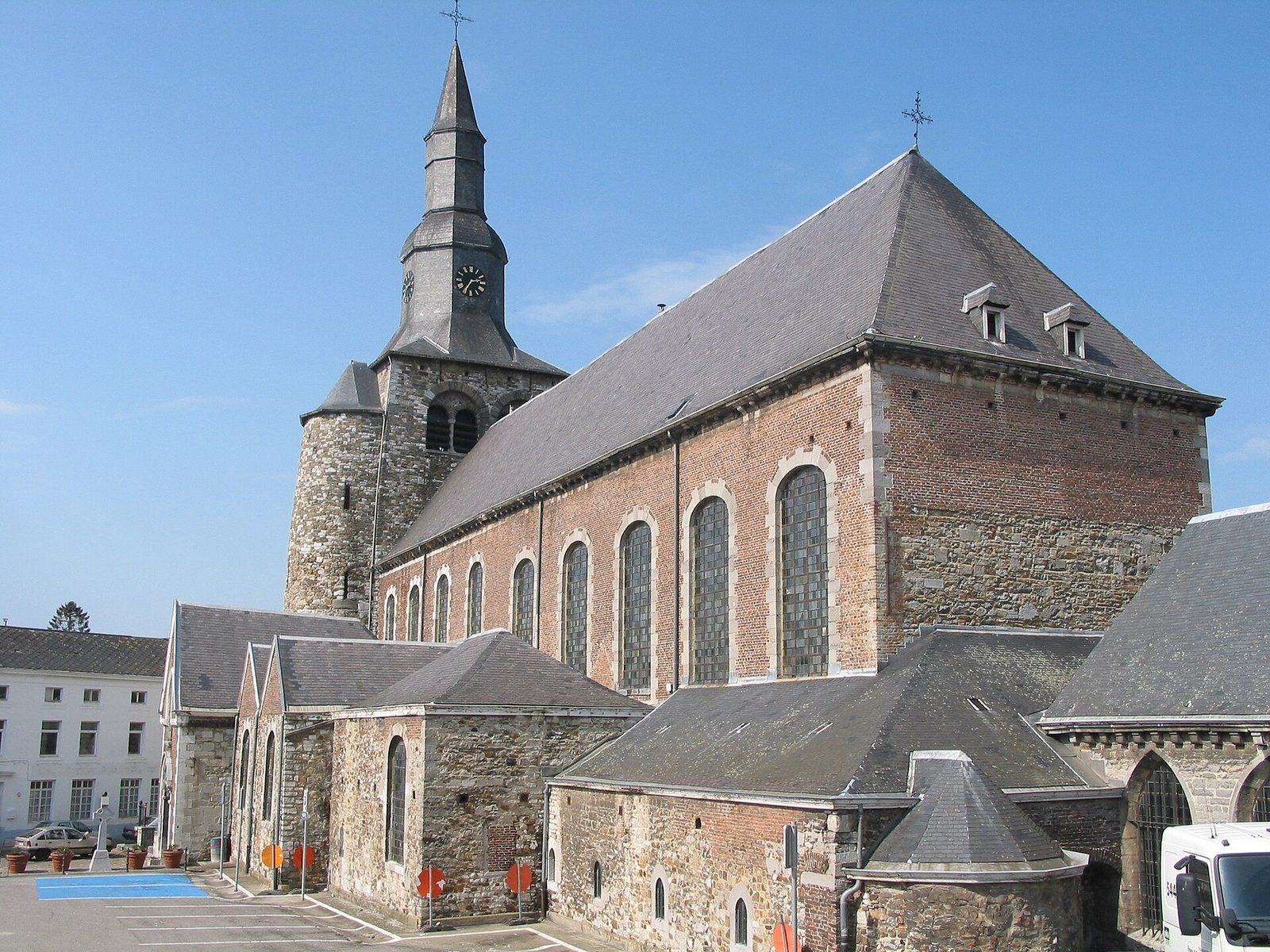
Saint-Feuillen Collegiate Church is a historic Catholic church in Fosses-la-Ville, Belgium, whose origins reach back to a monastery founded in 651 by the Irish monk Feuillen. The present building broadly preserves the form created during a major eleventh-century rebuilding, including a massive Romanesque tower and an exterior crypt dating from 1086. The church developed from a missionary foundation into a collegiate church, a church served by a chapter of canons who maintained its liturgy and communal worship.
The monastery of Feuillen
Feuillen came to evangelize the Entre-Sambre-et-Meuse region and established his monastery beside the Bebrona, identified with the Biesme. The land was donated by the family of Pepin of Landen, a seventh-century Frankish nobleman connected with the later Carolingian ruling family. Like other Merovingian foundations of the period, the monastery primarily housed itinerant monks who travelled through the surrounding area to spread Christianity.
Feuillen was murdered by brigands near Roeulx in 655. In accordance with his expressed wish, he was buried at Fosses, and a cult developed around his tomb. The memory of his burial and the traditions surrounding his life continued to shape the religious identity of the foundation.
From monastery to collegiate church
Around 900, the monks transferred the monastery and its dependencies to the Bishop of Liège. In 910, the bishop established a chapter of 30 canons at Fosses to maintain the tradition of choral singing. As the settlement prospered, a much larger church was built around 1090, replacing the earlier Carolingian church. During the eleventh century, the institution was enlarged and transformed into a collegiate church.
Canonical houses were built beside the church, reflecting the presence of the chapter and its communal religious life. Warfare and economic decline affected Fosses during the sixteenth and seventeenth centuries. The chapter was suppressed in 1794 during the French occupation.
Parish church and later status
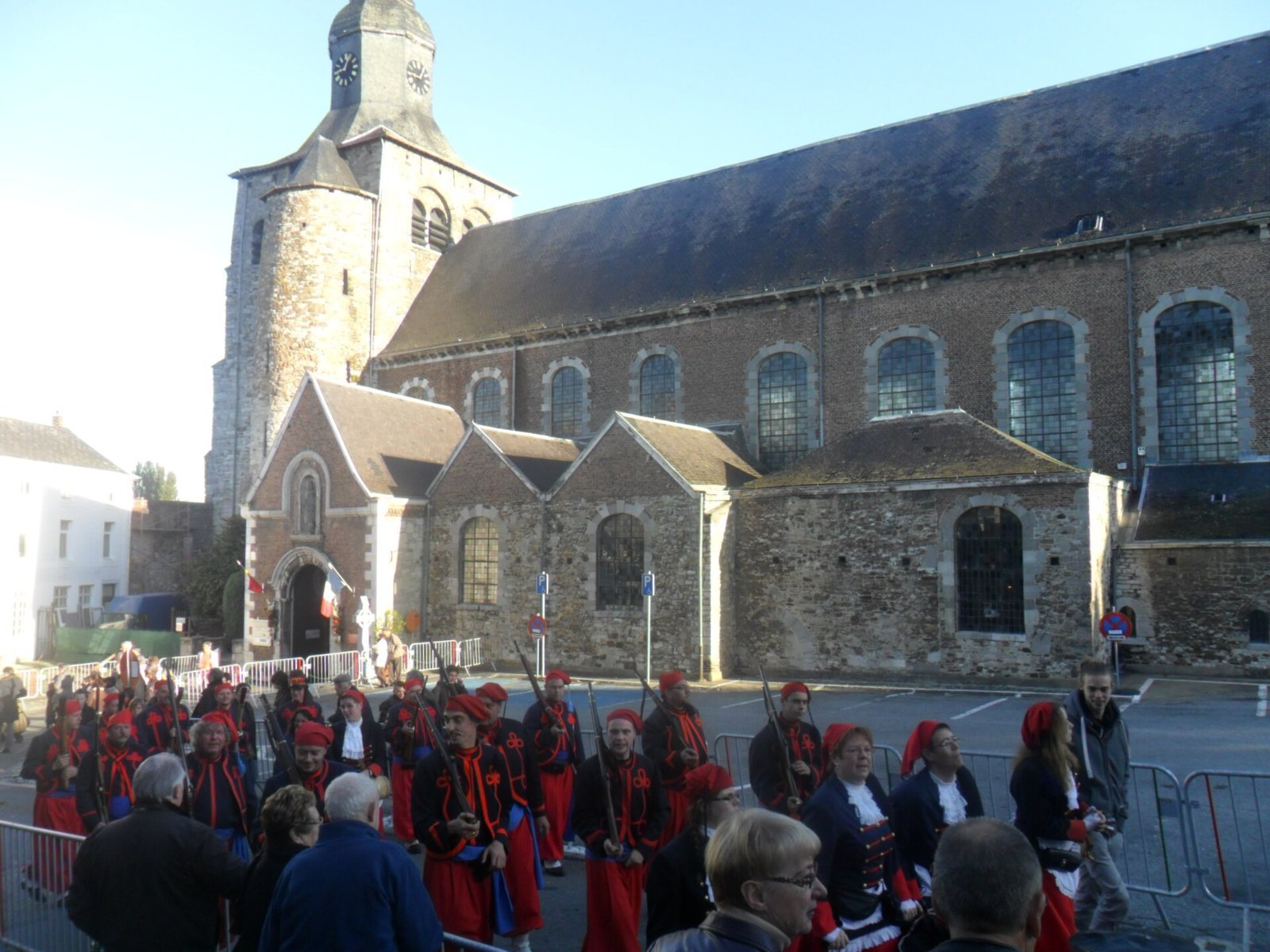
Although it retains the title of collegiate church, Saint-Feuillen now functions as a deanery church and parish church. Since 1801, the Fosses deanery has belonged to the Diocese of Namur. The church remains the principal Catholic place of worship and parish church of Fosses-la-Ville, and it has been a protected listed heritage monument since 1941.
Remains
Romanesque church fabric
The present church broadly follows the form established by the large rebuilding of the eleventh century. Its principal surviving elements include a massive Romanesque tower and an exterior crypt dated to 1086. The crypt and tower preserve the architectural character of the medieval foundation, while the canonical houses beside the church reflect the institutional organization created after the chapter was established.
Decorated choir
Paintings of Saint Feuillen
Eight paintings fixed to the choir walls date from 1765. Together they portray legendary episodes from Saint Feuillen’s life, including the martyrdom of his mother after her conversion to Christianity, the baptism of Feuillen, Fursy, and Ultain by their uncle, Saint Brendan, and Feuillen’s consecration as a bishop. Other scenes show his reception by Saint Gertrude of Nivelles, the construction of the monastery at Fosses, his murder with his companions by brigands, Gertrude’s discovery of his body, and the return of his remains to Fosses.
Wooden choir stalls
The wooden choir stalls date from 1524 and are carved with scenes from the life of Saint Feuillen. Their imagery continues the church’s visual emphasis on the saint and connects the furnishings with the religious traditions associated with his tomb.
Carillon
A carillon of 19 bells was donated in 1934 by Mrs Delmotte-Lemaître. It has a range of one octave and two-thirds and uses a standard keyboard without a pedalboard. The bells can be played manually as well as by the automatic mechanisms that sound tunes at the hour and half-hour. The tune currently used is “Chinels.”