Suwa Shrine: Kitakami’s Shinto Guardian Shrine in Japan

Site at a Glance
- Rating
- 4.3
- Popularity
- Low
- Country
- Japan
- Primary era
- Modern
- External website
- Open
- Eras represented
- Early Modern, Modern
- Civilizations
- Japanese, Tokugawa
- Site type
- Religious
- Remains
- Sanctuary
On this page17 sections
History
Suwa Shrine is a Shinto shrine in Kitakami, Japan, traditionally founded in 807 during the early ninth century. The imperial general Sakanoue no Tamuramaro, acting under Emperor Kanmu’s order during the pacification of northeastern territories, invited a deity from Suwa Grand Shrine in Shinano. The foundation was associated with prayers for regional development and the growth of industry. Today, the shrine occupies an urban position between Kitakami City Hall and Kitakami Station.
Foundation and Medieval Associations
The shrine’s principal deities are Takeminakata-no-kami, Amaterasu Omikami, Oyamatsumi-no-Mikoto, Hondawake-no-Mikoto, Sugawara no Okami, and Ukemochi no Kami. Other deities were added over time as the institution developed. Jikaku Daishi, the posthumous title of the Tendai Buddhist monk Ennin, is traditionally said to have established several halls at the site.
During the eleventh century, prayers were offered at the shrine while Minamoto no Yoriyoshi campaigned under Emperor Reizei’s order against Abe no Yoritoki, a leader of the Abe family in northeastern Japan. After the campaign, the shrine buildings were repaired as an act of thanksgiving. These traditions connect Suwa Shrine with the religious and military history of the region.
Relocation and Religious Change
Suwa Shrine was originally located at Motomiya, in present-day Saiwai-cho. In 1734, Nanbu Toshimi, the eighth lord of the Morioka domain, granted the shrine estates at its present location because of his strong devotion. During the period of Shinto-Buddhist syncretism, when Shinto worship and Buddhist institutions operated together, the complex was known as Suwayama Gokokuji and functioned as a combined temple and shrine. Residents of surrounding towns and villages also revered it as Suwa-no-miya and Osuwa-san.
After the Meiji Restoration, the institution was formally called Suwa Shrine and was designated a former district shrine, a rank in Japan’s prewar shrine classification. It served as the chief guardian shrine and ujigami, or community and territorial guardian deity, of Kitakami and the whole of Waga District. Its annual festival is held on September 7.
Modern Development and Commemoration
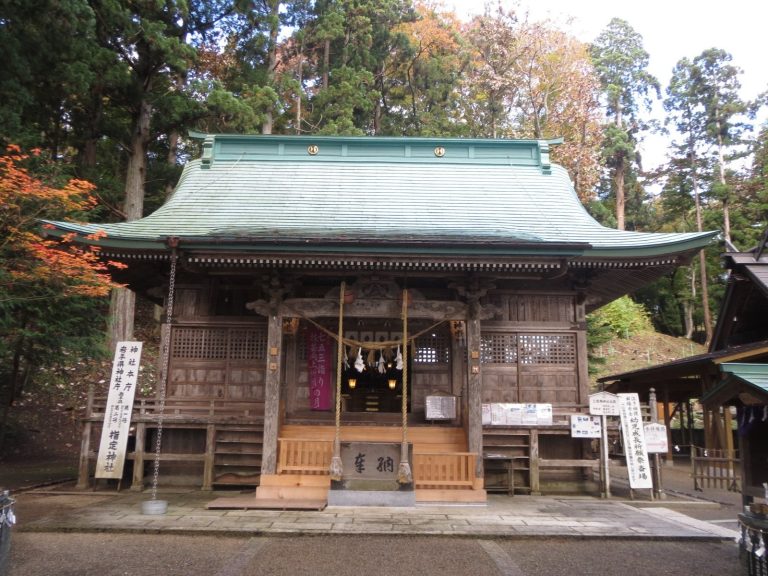
In 1928, the main sanctuary was repaired and a worship hall was constructed to commemorate Emperor Showa’s enthronement. A monument in the precinct records the names of contributors to that work. In 2020, a commemorative dedication ceremony followed the new construction or renovation of two shrine buildings.
The precinct’s later monuments reflect religious, cultural, and community events. They include memorials for a 1976 national sencha tea convention, a 1989 tea-association anniversary, a 1991 folk-dance association anniversary, and prayers for reconstruction after the Great East Japan Earthquake in 2014.
Remains
Main Shrine Buildings
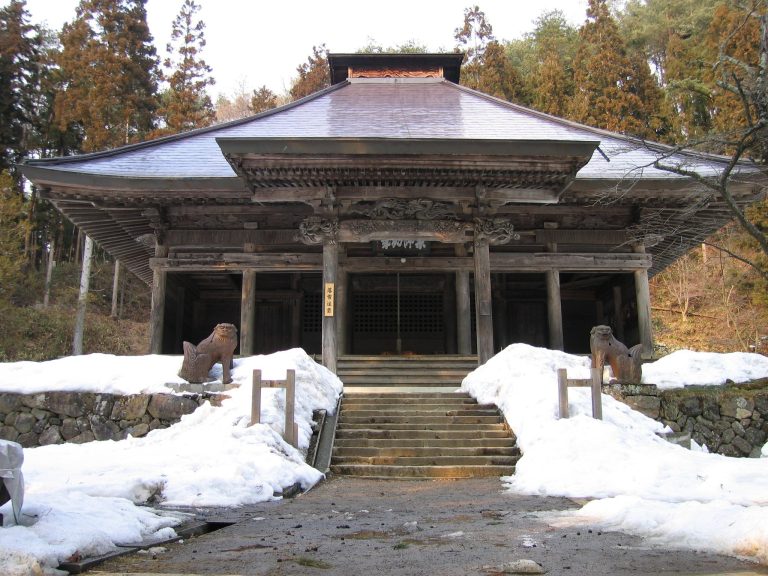
The complex is organized around the main sanctuary and the worship hall, the principal buildings of the shrine. The sanctuary was repaired and the worship hall built in 1928 in connection with the commemoration of Emperor Showa’s enthronement. Their history is also represented by a contributor monument in the precinct. Two buildings were newly constructed or renovated before a commemorative dedication ceremony in 2020.
Subsidiary Shrines and Sacred Features
Inari and Kensei Shrines
The subsidiary Inari Shrine is dedicated to Ukanomitama-no-kami and affiliated with Fushimi Inari Shrine. Nearby, the Kensei Shrine is dedicated to Sarutahiko-no-Okami and affiliated with Makibori Shrine. The Yasaka Shrine honors Susanoo-no-Mikoto, while the Konpira Shrine is dedicated to Omononushi-no-kami.
Akiba Shrine and Fudoson
An Akiba Shrine dedicated to Kagutsuchi-no-kami and affiliated with Akiha-yama Hongu Akiha Shrine also stands within the precinct. Fudoson, the Buddhist deity Acala, is enshrined there as a wrathful protector associated with spiritual discipline and the destruction of obstacles.
Daikoku Shrine
The Daikoku Shrine is dedicated to Okuninushi-no-Mikoto. During Suwa Shrine’s annual festival, it serves as the temporary sacred lodging place for the deity.
War Memorials
Yamato Shrine
The Yamato Shrine commemorates 2,174 war dead from the Kitakami, Towa, Yuda, and Sawauchi municipalities. The memorial includes those who died in the First Sino-Japanese War, the Russo-Japanese War, the Second Sino-Japanese War, and the Pacific War.
Hakkoda Memorial
A separate memorial monument honors those who died in the Hakkoda mountain marching disaster.
Cultural and Community Monuments
Basho Poem Monument
Beside Fudoson stands a stone monument bearing a haiku by Basho: “First winter shower, even the monkey seems to want a little straw rain cape.” The Genko-ren, a group of haiku poets from the Kurosawajiri region, erected it on October 12, 1781.
Tea Monuments
A monument commemorating a tea-serving event was erected in May 1989 for the 1976 national Michinoku convention of the Kofu sencha school. The Kitakami Tea Ceremony Association also established a tea-bowl mound in 1989 to mark its tenth anniversary.
Fan Mound and Kizuna Monument
The Kitakami Folk-Dance Association erected a fan mound in 1991. In 2014, the Kitakami West and Taipei West Rotary Clubs established the Kizuna Monument for prayers for reconstruction after the Great East Japan Earthquake.