Sannowakeme Otsukayama Kofun: A Kofun-Period Burial Mound in Japan
Site at a Glance
- Popularity
- Low
- Country
- Japan
- Primary era
- Classical
- Eras represented
- Classical
- Civilizations
- Unclassified
- Site type
- Burial
- Remains
- Burial Mound
On this page7 sections
History
Fifth-century origins
Sannowakeme Otsukayama Kofun is a burial mound in Japan, probably built around the middle of the fifth century during the Kofun period, an era associated with monumental tomb construction. It is the largest tomb in the Toyoura Kofun Group, which comprises more than ten mounds across the Ichinowakeme, Sannowakeme, and Tomita districts, and is among the largest in Chiba Prefecture.
The mound’s scale and the possible use of a long stone coffin assembled like a chest have been interpreted as signs of a powerful regional leader. This person may have controlled water transport along the lower Tone River and maintained ties with the Yamato court, an early Japanese political authority centered around present-day Nara and Osaka. Such coffins were rare in the Kanto region and associated with leading chiefly tombs. Comparable examples include Ota Tenjinyama and Ofujiyama in Gunma Prefecture, and Takayanagi Choshizuka in Chiba Prefecture.
Modern investigation and status
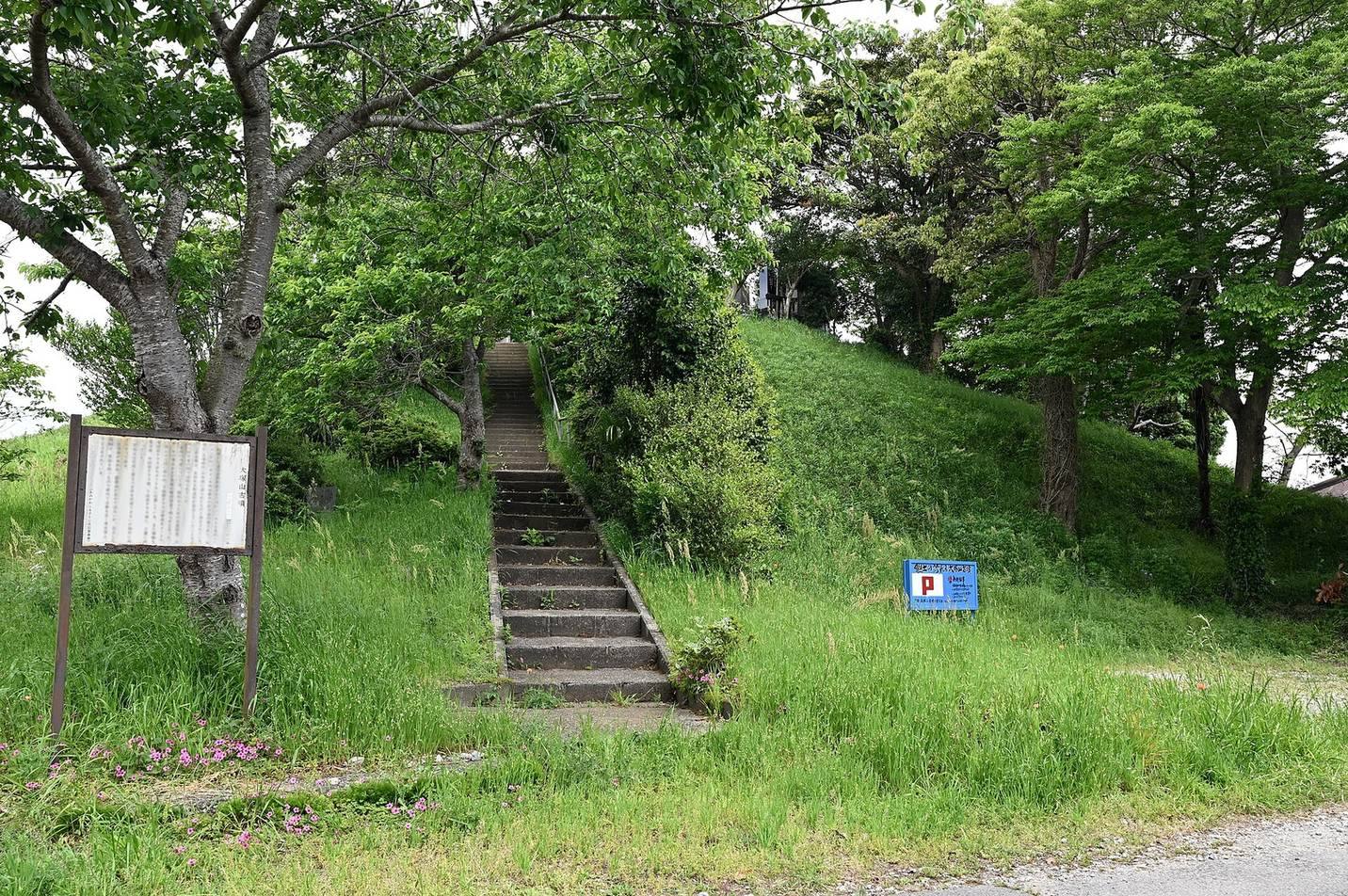
The former Omigawa Town Board of Education surveyed the mound in 1984 and published its findings the following year, then carried out a confirmation survey in 1986, reported in 1987. Katori City designated the kofun a historic site on June 2, 2014. Its summit is now used as a communal cemetery.
Remains
Mound and moat
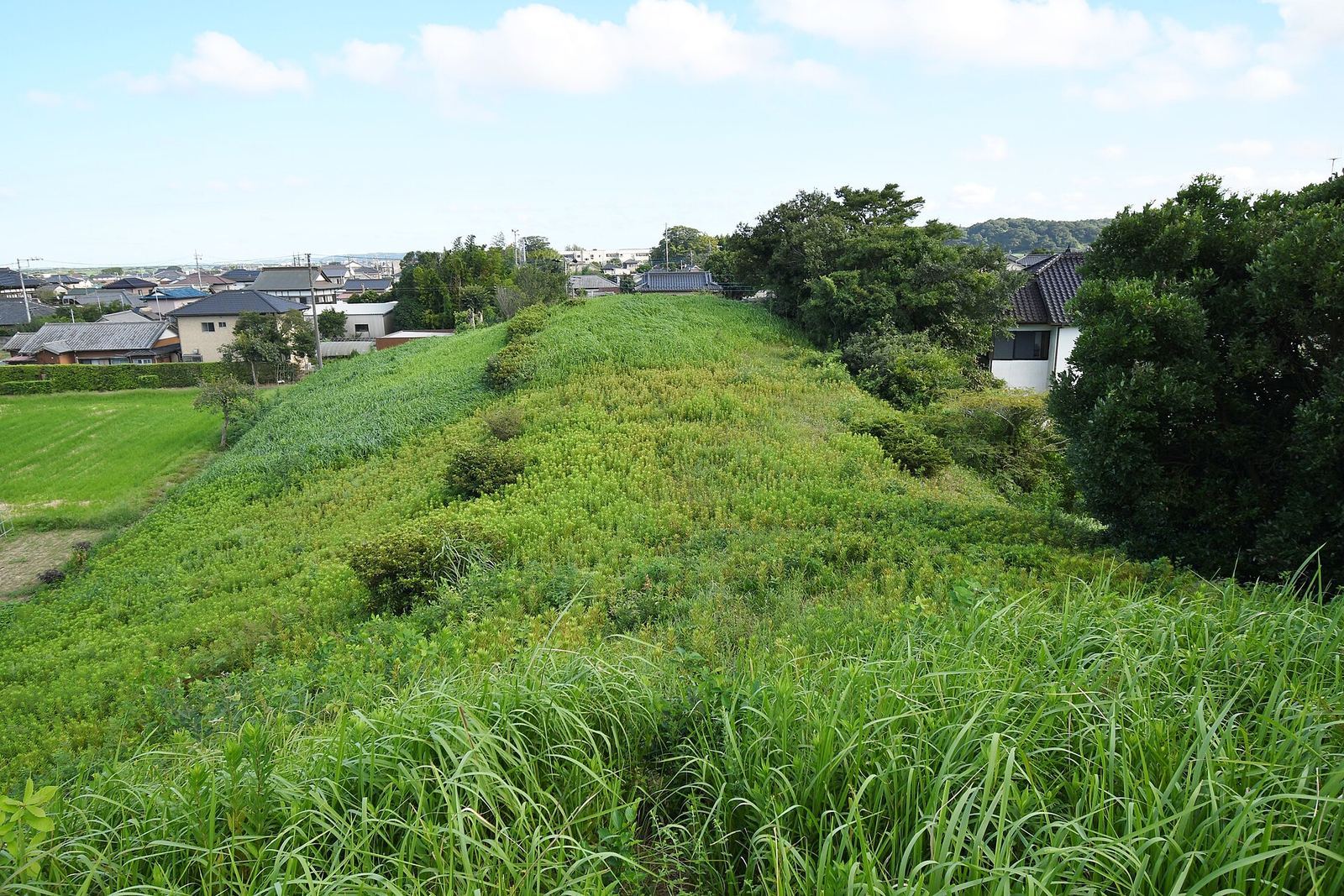
The mound stands on a natural levee, a raised strip of land formed by river deposits, on the southern bank of the lower Tone River, which formerly flowed through this area as the Kinu River. Its keyhole-shaped plan combines a circular rear section with a rectangular front section. The three-tiered mound measures 123 meters in length and faces southeast. The circular rear section is 68 meters across and 9.5 meters high; the rectangular front is 62 meters wide and 7.5 meters high. A shield-shaped moat encircles the mound.
Haniwa
Rows of haniwa, clay objects associated with ancient Japanese burial mounds, were set along the summit and terraces. They include cylindrical forms as well as examples shaped like morning-glory flowers.
Burial evidence and finds
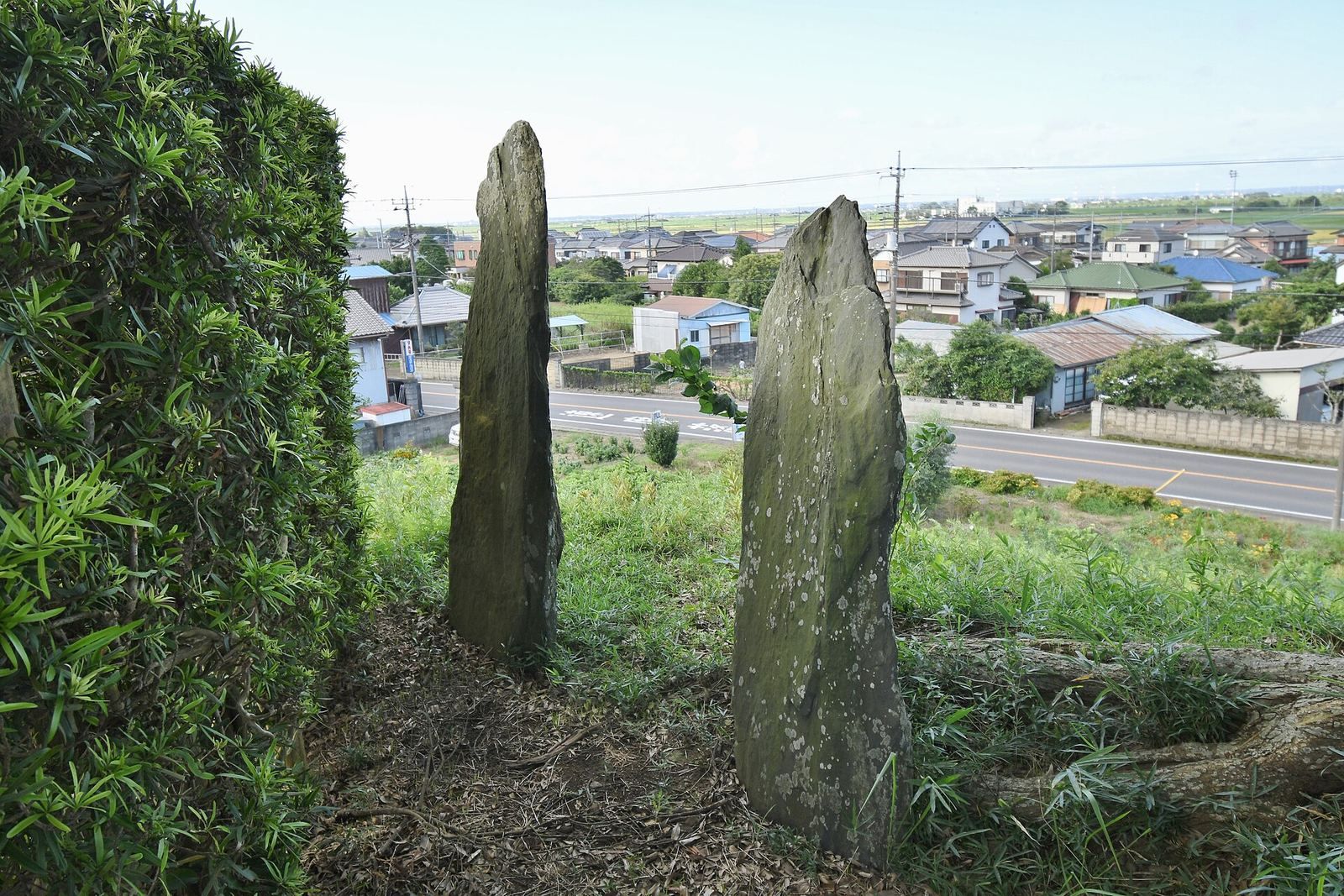
The burial facility has not been identified. Three slabs of crystalline schist, a metamorphic rock with a pronounced crystalline texture, remain on the summit of the rear section. They are thought to be two side slabs and a base slab from a long, chest-shaped stone coffin. Grooves in the base slab would have joined the coffin’s side and end walls. Finds from the mound are stored and displayed at the Katori City Cultural Property Preservation Hall, inside the Omigawa Civic Center Ibuki-kan in Hanegawa.