Roman Villa El Vergel: A Roman Rural Estate and Palatial Complex in Spain
Site at a Glance
- Rating
- 3.5
- Popularity
- Very Low
- Country
- Spain
- Primary era
- Classical
- External website
- Open
- Eras represented
- Classical
- Civilizations
- Roman
- Site type
- Domestic
- Remains
- Villa
On this page8 sections
History
Roman Villa El Vergel is an archaeological site near San Pedro del Arroyo in Ávila Province, Spain, founded by the Romans as an agricultural settlement during the first or second century AD. In the third century, during the Late Roman Empire, it developed into a monumental villa combining elite residences with agricultural production. Occupation continued at least until the end of the fifth century AD.
Roman foundation and expansion
The settlement stood in the northernmost part of the former Roman province of Lusitania, a province covering much of western Iberia, within the administrative district of the Conventus Emeritensis, which was centered on Emerita Augusta, modern Mérida. Its wider archaeological area now covers about 40 hectares in an elongated north-south zone around the modern town, with associated remains extending across both banks of the Espinarejo River and south of the Madrid-Salamanca railway.
The original agricultural establishment was transformed in the third century into a large rural estate center. A Roman villa could combine the owner’s residential and representational spaces with agricultural production and facilities serving the estate. At El Vergel, this later development produced a palatial sector organized around a large courtyard and furnished with elaborate mosaics. The complex remained in use through the later Roman period and into the fifth century.
Discovery and archaeological investigation
The first recorded discovery of Roman remains at San Pedro del Arroyo occurred in 1905, when Fausto Rico informed Manuel Gómez-Moreno of a building, three pieces of Roman mosaic, six burials, numerous stones, and millstones. Some of these finds entered the founding catalogue of the Ávila Museum. Antonio Molinero Pérez reported the site’s rediscovery in 1930, including an earlier mosaic found beside the parish church.
During the 1980s, the site was entered into the provincial archaeological inventory as a rural Roman villa under the name El Vergel II. A survey directed by Carlos García-Cruces in 1992 defined the wider archaeological area and identified evidence for a settlement, rural villa, funerary site, and cultic use associated with a hermitage.
Scientific excavations began in 2002 after a tractor exposed the cover of a Visigothic grave beside the N-501 road. A preliminary investigation identified six tombs, while work connected with the extension of the municipal cemetery revealed buildings with polychrome geometric mosaics. Excavation of the principal palatial sector continued from 2006, with further campaigns between 2006 and 2016 and another in 2019. Geomagnetic survey followed in 2020.
Preventive archaeological work during construction of the San Pedro del Arroyo to Chaherrero section of the A-50 motorway uncovered eleven Late Roman burials in the protected surroundings in 2007. The 2019 campaign completed the investigation of rooms south of the peristyle mosaic with diamond designs and showed that parts of the villa had later been reused for burials. It also demonstrated that the buildings continue beneath the wall of the town cemetery.
Later use and protection
After the Roman period, the area continued to serve funerary and religious purposes. Visigothic burials were later overlain by an early medieval cemetery associated with a hermitage. These later phases connect the villa with the changing settlement and religious landscape that followed the weakening of Roman imperial rule in Iberia. The Visigoths, a Germanic people, established a kingdom across much of the peninsula during this transition.
Roman, Visigothic, and early medieval remains, together with the hermitage and associated archaeological materials, led to the site’s declaration as an Asset of Cultural Interest in 2016, in the category of archaeological zone. Excavation, conservation, and interpretation work has included a permanent enclosure around the palatial sector from 2015, protective works and interpretation infrastructure between 2017 and 2018, and mosaic conservation and drainage improvements in 2020 and 2021. Finds from the funerary excavations and the 1905 discoveries have also entered the Ávila Museum, including two Roman funerary stelae recovered in 2007.
Remains
Palatial sector
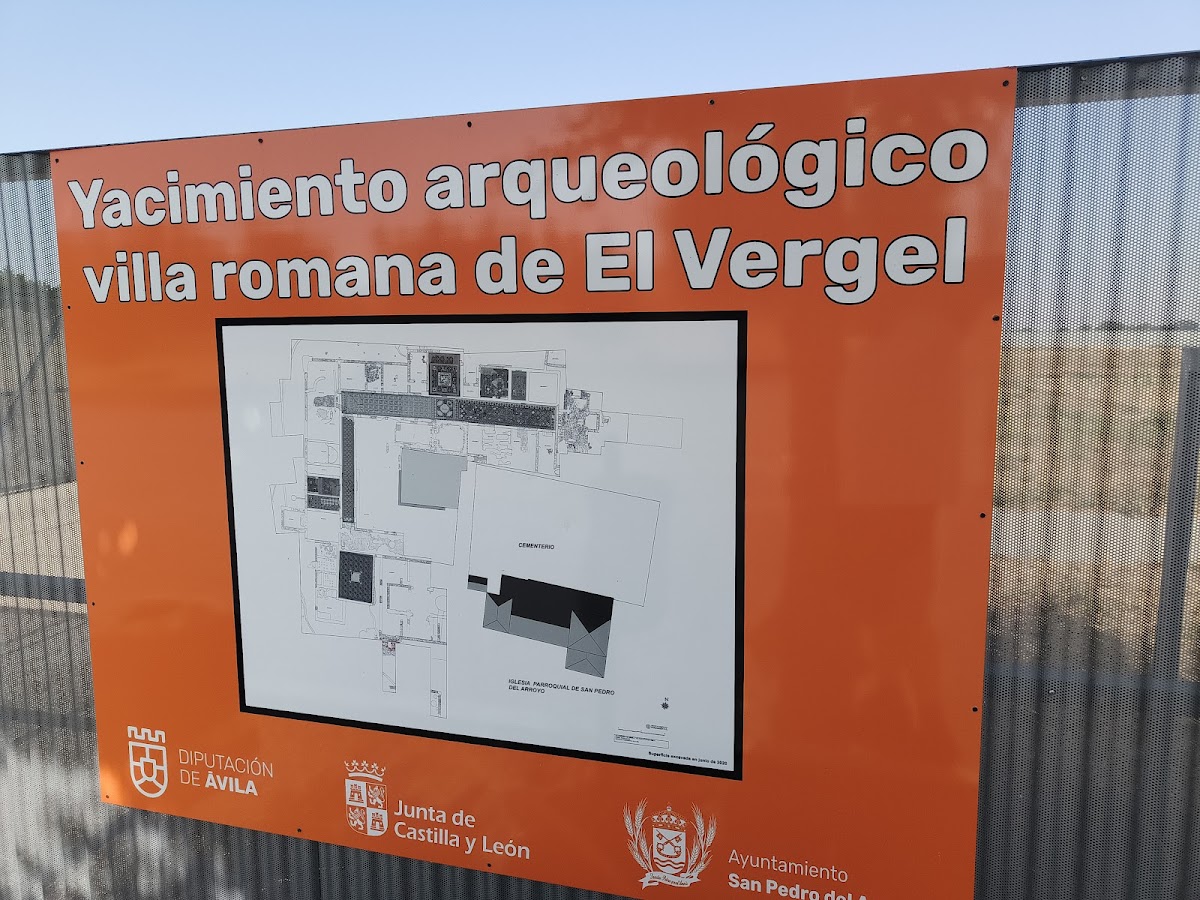
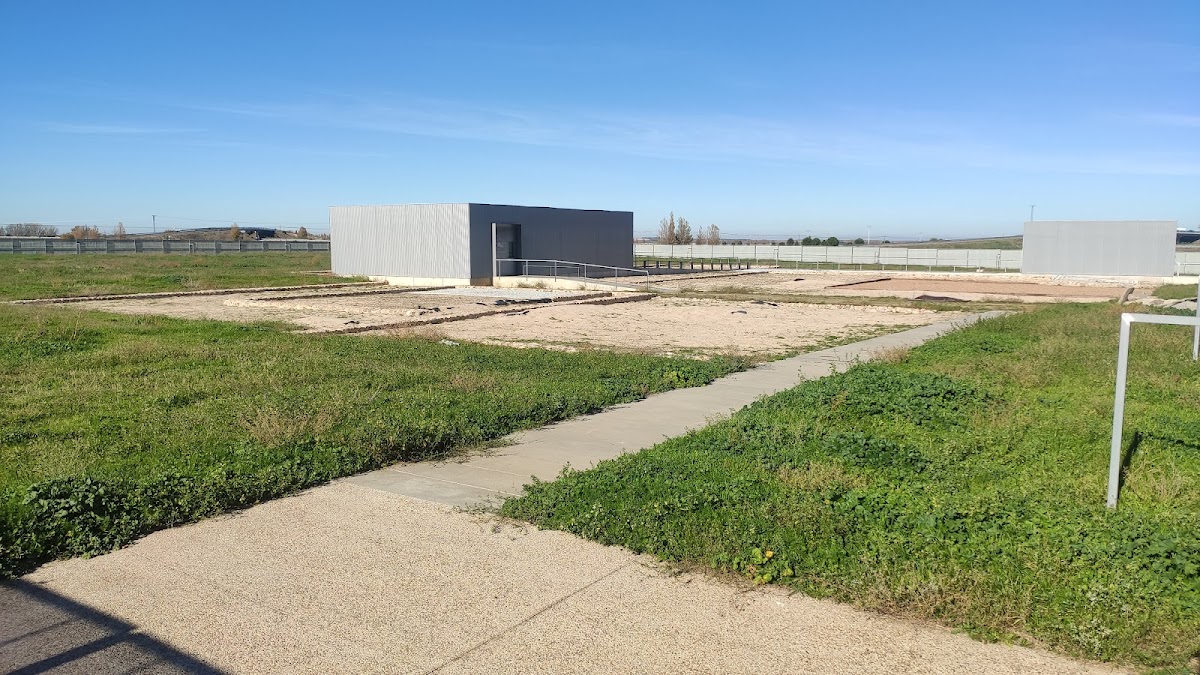
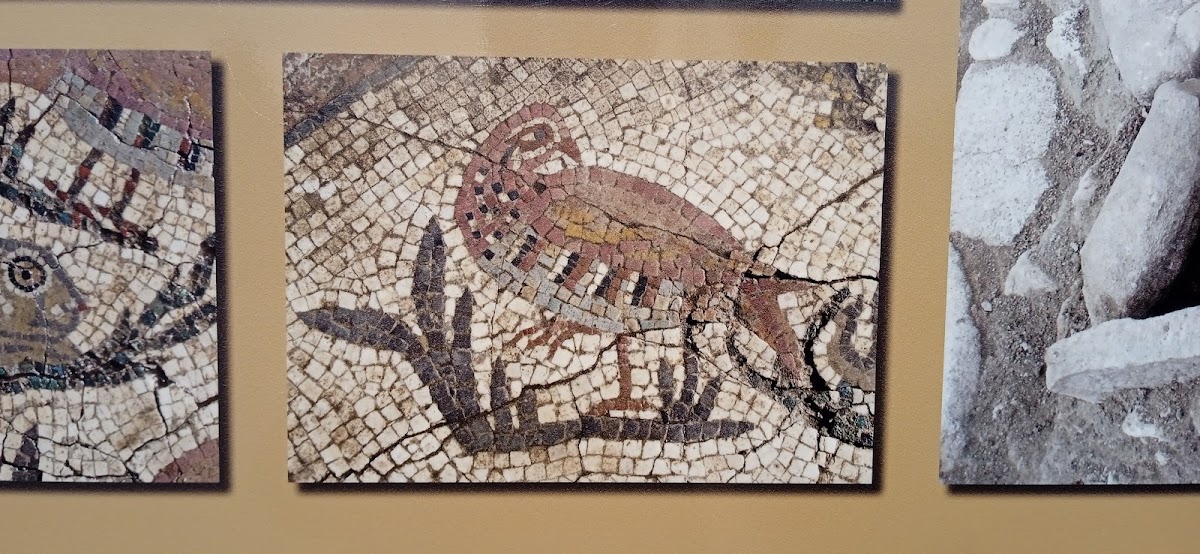
The principal palatial sector occupies an alluvial formation on the left bank of the Espinarejo River, on its fluvial terrace. The excavated area covers about 3,000 square metres, while the wider archaeological remains extend across a much larger zone. By 2015, excavation had identified 37 rooms. Ten contained high-quality mosaics made from tesserae, the small stone, ceramic, or glass pieces used to form mosaic patterns. Other rooms had floors made from opus signinum, a cement-based Roman surface containing crushed ceramic, or from compacted earth.
Residential and representational rooms were arranged around a rectangular peristyle measuring approximately 70 by 35 metres. A peristyle is a courtyard bordered by a continuous colonnade or covered passage. Internal structures divided parts of the central courtyard, where a large pool or tank was installed. Its central structure was built in opus caementicium, Roman concrete, and adjoining walls were attached to it.
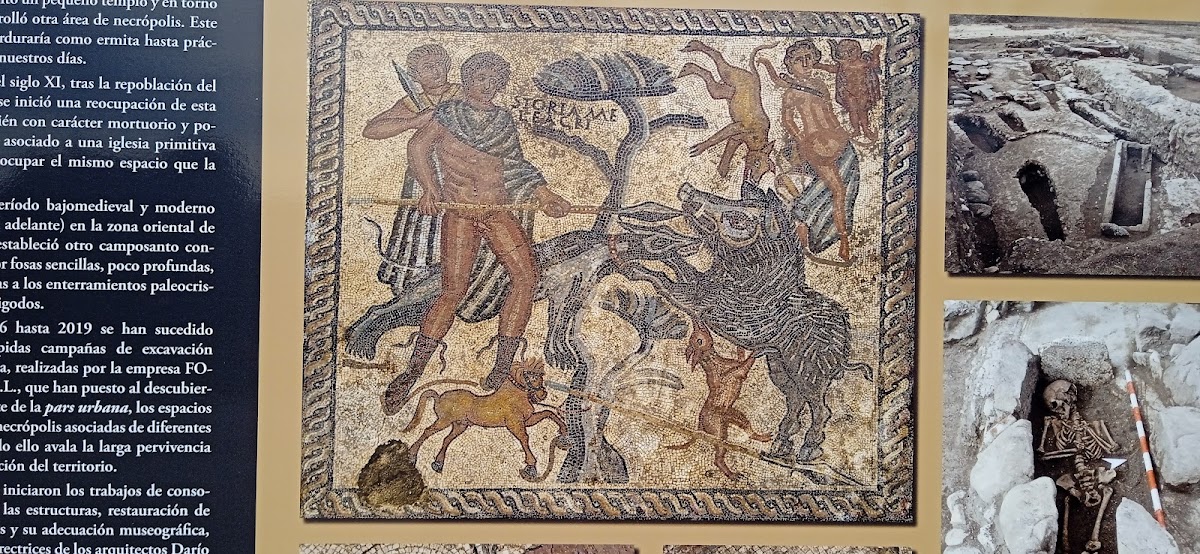
At least three mosaics contain figured scenes. The most notable presents the myth of Meleager and the Calydonian boar hunt, including the figures of Meleager and Atalanta. Other pavements use geometric decoration, including a design based on repeated diamond shapes. Together, the rooms, courtyard, water feature, and decorated floors show the range of residential and representational spaces within the late Roman complex.
Funerary and religious areas
The Late Roman cemetery lies slightly less than 500 metres northeast of the palatial sector. It contained eleven burials in simple graves cut into sandy subsoil. The graves generally followed a west-east orientation and were arranged in roughly aligned rows. In two instances, later burials overlapped and destroyed earlier graves. Some of the graves contained objects placed with the dead.
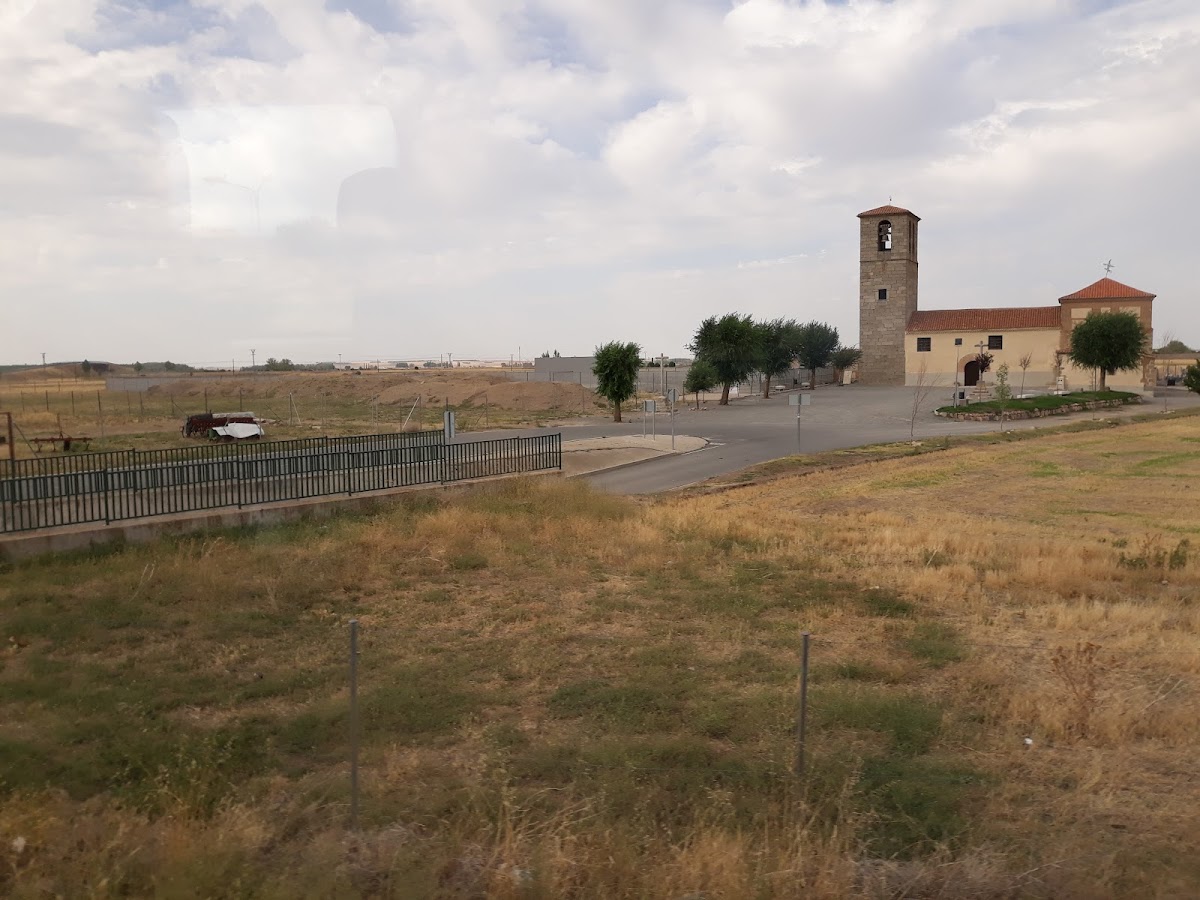
A later Visigothic cemetery was overlain by an early medieval cemetery associated with the hermitage. The early medieval burials included anthropomorphic graves shaped to follow the human body, as well as large granite sarcophagi whose contents had been looted. Around the parish church, the archaeological materials include remains connected with the villa, the later cemeteries, and the site’s subsequent cultic use.
Objects and building materials
The excavated material includes pottery used for cooking, dining, and storage, together with fine tableware. The tableware includes Hispanic and African terra sigillata, a fine Roman ceramic usually covered with a glossy red slip, as well as Late Hispanic examples, some bearing mould-made geometric decoration. Painted pottery made in an indigenous tradition also occurs among the finds.
Building materials include flat tegula roof tiles with digital undulations and Roman lateres, or bricks. Glass, metal objects, and coins add to the material recovered from the settlement. Medieval coins of Alfonso X were found during the 2019 campaign, providing evidence for activity in the area long after the Roman villa had ceased to function as an elite rural estate.
Two decorated Roman funerary stelae, upright stones associated with burials, were reused as the walls of burial pit 339. Excavated in 2007, they are now held by the Ávila Museum. Their reuse illustrates how elements from the Roman complex and its funerary landscape remained available for construction during later phases of burial activity.