Roman Theatre of Córdoba: An Augustan Monument in Spain
Site at a Glance
- Rating
- 4.3
- Popularity
- Very Low
- Country
- Spain
- Primary era
- Classical
- Eras represented
- Classical, Modern
- Civilizations
- Roman
- Site type
- Entertainment
- Remains
- Theatre
On this page7 sections
History
The Roman Theatre of Córdoba in Córdoba, Spain, was built by the Romans between the first century BC and the first century AD, probably during the Augustan period, the early imperial era associated with Augustus. Its decoration may have continued during the Julio-Claudian period, which followed Augustus and lasted from AD 14 to 69. The theatre formed part of Corduba, the capital of Baetica, a Roman province covering much of southern Hispania and broadly corresponding to present-day Andalusia.
Construction and Roman Córdoba
Many studies place the theatre’s construction in the Augustan period, possibly before 5 BC. Under Augustus, Corduba became the capital of Baetica and was regarded as one of the most Romanized cities in the Roman Empire. The theatre reflected the city’s importance and became the second-largest theatre in the empire, surpassed only by the Theatre of Marcellus in Rome.
The building’s ornamentation and decoration may have continued into the Julio-Claudian period. Its scale and position within the capital of Baetica made it an important public building during the early Roman Empire.
Damage, Reuse, and Burial
The theatre remained in use until the third century, when an earthquake severely damaged it. An attempt to restore the building was made during the fourth century, but its stones were later taken for use in other buildings. This spoliation prevented the theatre from being fully restored.
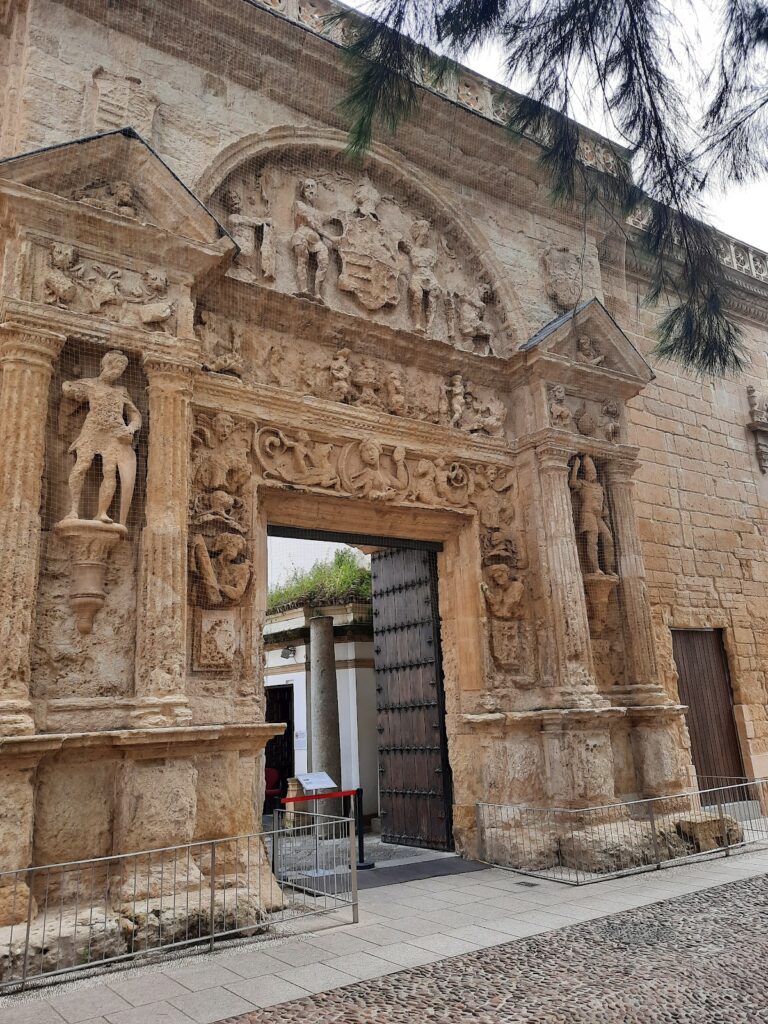
During the Middle Ages, the area became residential. The Páez de Castillejo family palace was built over part of the theatre’s remains, which then remained covered. The Archaeological and Ethnological Museum was transferred to the palace in 1959, placing the surviving Roman fabric within a later architectural setting.
Rediscovery and Interpretation
The theatre was rediscovered archaeologically in 1994, although nineteenth-century inscriptions had already indicated its existence. Excavation recovered approximately 30 percent of the building and established its overall dimensions. A later restoration by the Archaeological Museum of Córdoba created an annex where the remains could be viewed on a larger and clearer scale than in the museum’s earlier interior display.
Remains
Layout and Construction
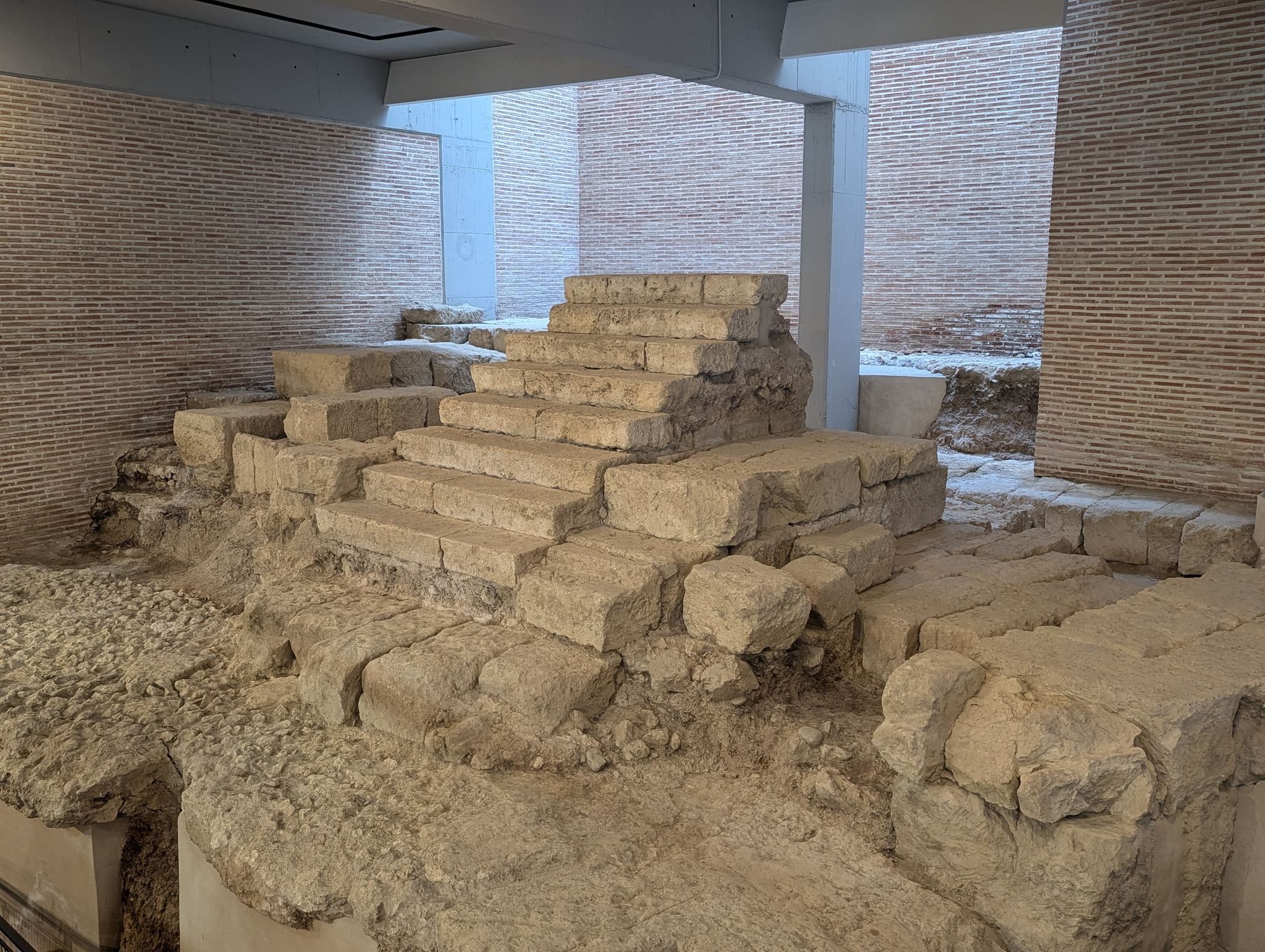
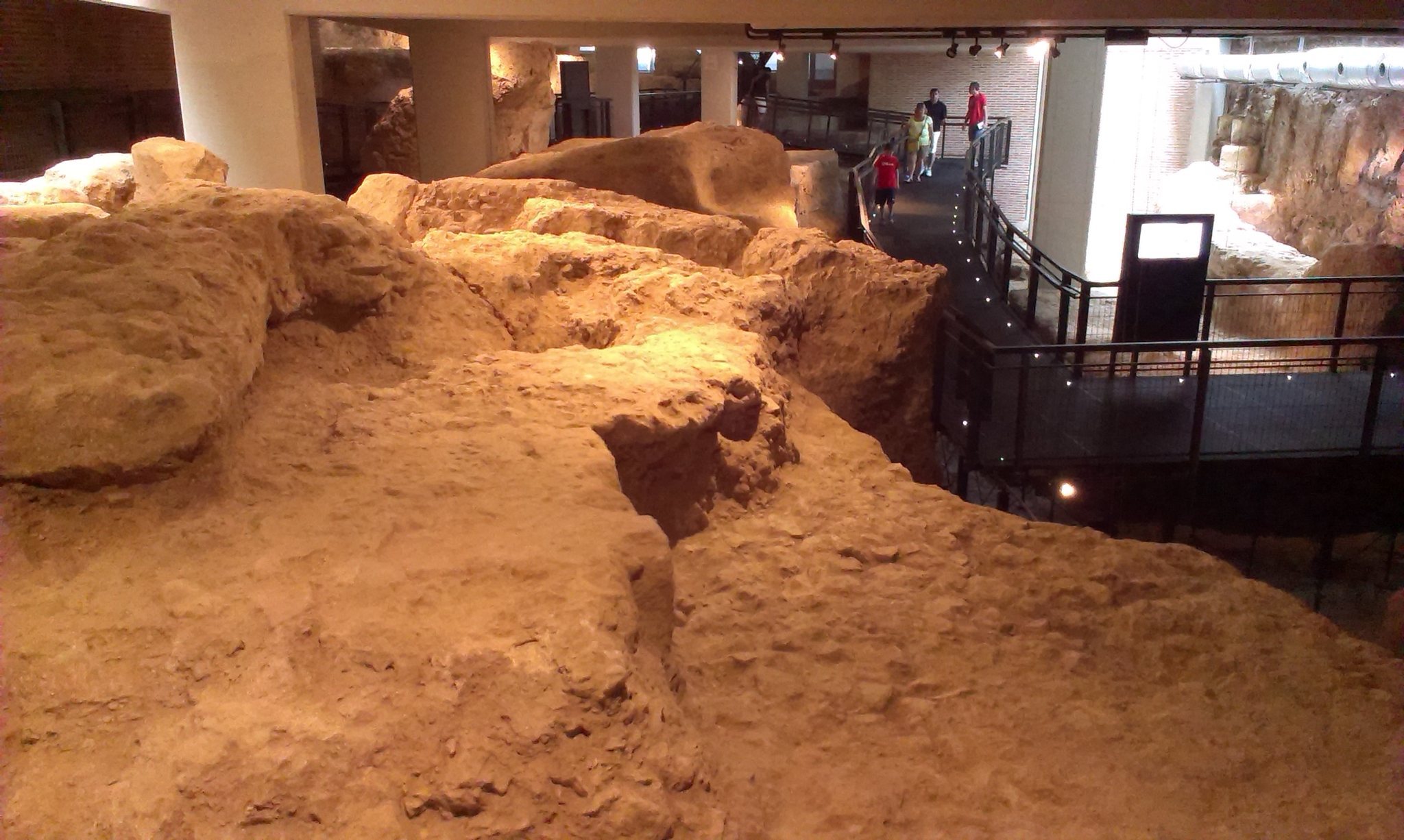
The surviving remains lie beneath the present Archaeological and Ethnological Museum of Córdoba, inside a covered and walled area. Excavation exposed approximately 30 percent of the foundations and established the theatre’s general size. The builders selected a high part of the city and used the natural slope of the ground to form the seating terraces and other graded areas.
The cavea, the semicircular seating area, had a diameter of 124.23 metres and held approximately 15,000 spectators. The theatre’s exterior included three terraces that gave access to different seating levels. Their remains survive beneath a museum courtyard, while part of the staircase linking the lower and middle terraces can be seen in one of the museum’s exhibition rooms.
Possible Traces of the Performance Spaces
Studies propose that Jerónimo Páez Square preserves a fossilized trace of the orchestra, the space in front of the stage traditionally associated with musicians. Marqués del Villar Street may preserve a corresponding trace of the scena, the stage or performance area. These proposed relationships help place the theatre’s performance spaces within the modern urban landscape.