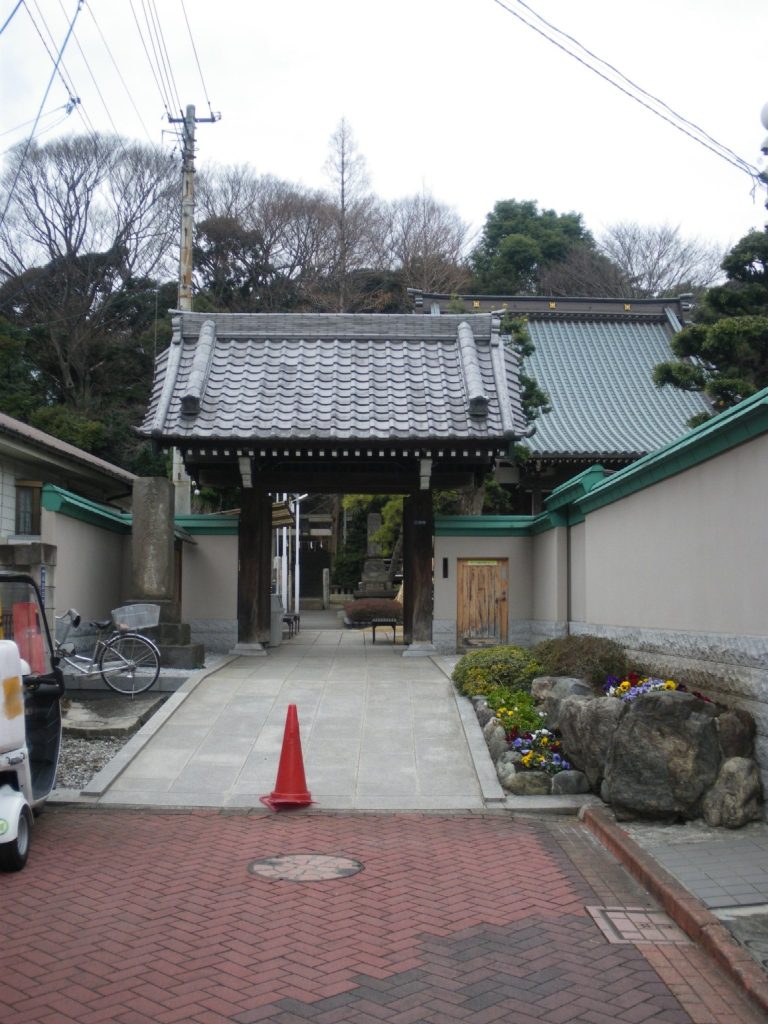
Rokugo Shrine: A Heian-Period Hachiman Shrine in Tokyo


Site at a Glance
- Rating
- 4.1
- Popularity
- Low
- Country
- Japan
- Primary era
- Early Modern
- External website
- Open
- Eras represented
- Medieval, Early Modern
- Civilizations
- Kamakura shogunate, Tokugawa
- Site type
- Religious
- Remains
- Sanctuary
On this page12 sections
History
Rokugo Shrine is a Shinto shrine in Japan, traditionally established in 1057 during the late Heian period. Shrine tradition connects its foundation with the Minamoto commanders Minamoto no Yoriyoshi and his son Minamoto no Yoshiie, who raised the Minamoto clan’s white flag on a giant cedar at this place, gathered troops, and prayed to Iwashimizu Hachimangu, a major Hachiman shrine in Kyoto, for military success.
Minamoto foundations
After their victory in the Former Nine Years War, an eleventh-century conflict in northern Japan involving the Minamoto military house and regional opponents, Yoriyoshi and Yoshiie are said to have returned and established the shrine by inviting a divided spirit from Iwashimizu Hachimangu. Rokugo Shrine became the tutelary shrine of the wider Rokugo area. The Engishiki, a tenth-century compilation of regulations and ritual procedures that also lists officially recognized shrines, includes an entry for Hieda Shrine in Ebara District of Musashi Province associated with this tradition.
In 1189, Minamoto no Yoritomo followed the precedent attributed to his ancestors by raising a white flag and praying for victory during his campaign against Minamoto no Yoshitsune and the Northern Fujiwara clan. Two years later, he ordered his military retainer Kajiwara Kagetoki to construct the shrine buildings. A purification stone in the precinct and a female lion head preserved as a shrine treasure are both traditionally connected with offerings by Yoritomo, while the drum bridge before the shrine gate is attributed to Kagetoki.
Hachiman worship and the Edo period
The shrine’s principal deity is Hachiman, represented here by Hondawake no Mikoto, a Shinto name associated with Emperor Ojin. Hachiman was traditionally linked with warfare and the protection of imperial and warrior orders. The shrine originally worshipped the three Hachiman deities, including Jingu Kogo, the legendary Empress Jingu, and Hime Okami. The date of the change in this arrangement is uncertain.
An Edo-period text relates that, during a boat-hauling festival, one sacred palanquin drifted across Tokyo Bay to Kazusa Province, while another represented a highly violent deity whose repeated curses led to its burial in the ground. The main sanctuary, built in 1719, has a form intended for three deities, placing the episode after that construction. During the Edo period the shrine was called Rokugo Hachimangu and was associated with Hojuin, a Buddhist temple west of the shrine across the Tokaido, the major historical road linking Edo with Kyoto along Japan’s eastern and central coast.
Tokugawa Ieyasu granted the shrine an estate of eighteen koku through a vermilion-seal document in 1591. In 1600, he ordered the construction of the Rokugo Bridge over the nearby Rokugo River and presented a dedicatory prayer for its completion. Tradition also holds that the shrine’s sacred palanquin took part in the bridge’s inaugural crossing ceremony. The shrine consequently uses both the tomoe emblem associated with Hachiman worship and the Tokugawa triple-hollyhock emblem.
Modern status and continuing rites
Hojuin was abolished during the Meiji Restoration, the nineteenth-century transformation that ended the Tokugawa shogunate and reorganized Japan’s political and religious institutions. Rokugo Shrine became a Tokyo Prefectural district shrine in 1872 and received its present name in 1876. A 930th-anniversary observance took place in 1987.
The annual grand festival is held on June 3. Its rites include receiving sacred spirits into mikoshi, portable shrines used to carry a deity during a ritual procession. Approximately forty mikoshi from fourteen Rokugo neighborhood associations take part, alongside a lion dance said to have continued for several hundred years, a sacred-lion procession, Rokugo festival music, and a procession carrying the sacred object through the fourteen associations.
The Rokugo Shrine boat-hauling festival was held on the Rokugo River in the Tamagawa estuary from the Edo period. It was regarded as one of the three major boat festivals of the Kanto region. When Haneda and Daishikawara on the opposite bank formed part of the shrine’s parish communities, a sacred palanquin was placed on a ceremonial boat and pulled by four auxiliary boats with a rope approximately 45 meters long. Boats from the various communities, musicians, flags, and spectators’ boats followed the procession.
Remains
The precinct contains a torii, a traditional shrine entrance gate, a shrine gate, and a worship hall. The main sanctuary was constructed in 1719 in a form designed to enshrine the three Hachiman deities. Together, these buildings preserve the central arrangement of a shrine whose history combines local worship with traditions connected to the Minamoto and Tokugawa houses.
Shrine buildings and ritual objects
Sanctuary and precinct features
The 1719 main sanctuary has an architectural arrangement for three deities. The precinct also contains the purification stone associated by tradition with Minamoto no Yoritomo. A female lion head, likewise attributed to Yoritomo as an offering, is preserved as a shrine treasure. In front of the shrine gate stands the drum bridge traditionally regarded as a donation by Kajiwara Kagetoki.
Portable shrines
The First Mikoshi was newly made in 1932. It measures 1.21 meters in width and 1.96 meters in height, and weighs 450 kilograms without its carrying poles. The Second Mikoshi dates from 1863 and was repaired by the parishioner youth association in 1980. These portable shrines form part of the ritual equipment used in the shrine’s festival processions.
January archery ceremony
A traditional archery ceremony takes place every January 7. It prays for children’s good fortune, health, and advancement and is traditionally linked to an offering by Minamoto no Yoritomo. The rite was formerly conducted as foot archery. In 1998, it incorporated a mounted wooden horse and shooting at a square cedar target.
Range and target
For the ceremony, an archery range is erected before the shrine. Eighteen blue-bamboo poles form a railed fence, which is covered with reed screens. At its center is an eight-direction white-eye target, made from paper bearing eight different pairs of eyebrows and eyes arranged in two vertical rows and mounted within a large concentric-eye design.
Bows and shooting sequence
The bow is made from camellia wood and has a hemp string. The arrows are approximately one meter long, made from dwarf bamboo, and fitted with Nishinouchi arrow feathers. Boys aged twelve or younger from the shrine’s parish communities take part, with their order decided by drawing lots. In the traditional sequence, the first and second archers cross their arrows and shoot over the target and three large ritual wands. The third and fourth shoot at the first eye, while the fifth and sixth aim at the second eye. In the form introduced in 1998, the archers mount a wooden horse before the white-eye screen and shoot whistling arrows at the square cedar-board target.
Recorded shrine treasure
Rokugo Shrine also possesses a Four Deities treasure. It was recorded in the 1831 work Record of Annual Events in the Eastern Capital, adding a written Edo-period reference to the objects and ritual traditions preserved by the shrine.