Hongyō-ji Temple: A Nichiren Buddhist Subtemple in Tokyo


Site at a Glance
- Rating
- 4.4
- Popularity
- Low
- Country
- Japan
- Primary era
- Unclassified
- External website
- Open
- Eras represented
- Unclassified
- Civilizations
- Unclassified
- Site type
- Religious
On this page7 sections
History
Hongyō-ji Temple is a Nichiren Buddhist temple in Ikegami, Tokyo, Japan, traditionally founded in 1283 on the former residence of Ikegami Munenaka. Nichiren Buddhism is a Japanese tradition centered on the Lotus Sutra, which it regards as the supreme Buddhist teaching. Hongyō-ji is the leading subtemple of Ikegami Honmon-ji and belongs to the Ikegami–Daibō lineage and the five head temples of the Ikegami branch.
Origins at the Ikegami Residence
The site originally formed part of Ikegami Munenaka’s residence. In 1276, a private Buddhist hall within the residence was converted into a Lotus Hall. After Nichiren’s death, Munenaka is traditionally said to have donated the residence and its land to Nichō, a disciple of Nichirō. The temple is considered to have been established soon afterward, in 1283.
Nichiren’s Final Days
Nichiren, the thirteenth-century monk who founded Nichiren Buddhism, stayed at Munenaka’s residence from September 18, 1282, while traveling to Hitachi for hot-spring treatment. He died there on October 13. His body was cremated at the site on October 15, and his ashes were deposited at Kuon-ji according to his will. These events established Hongyō-ji as a sacred place associated with the end of Nichiren’s life.
Institutional Development and Traditions
Because of its especially high standing among the subtemples of Ikegami Honmon-ji, Hongyō-ji became known as Daibō. It was originally an intermediate head temple, a rank above an ordinary temple but below a principal head temple, and was elevated to head-temple status as a temple of historical origin in 1986.
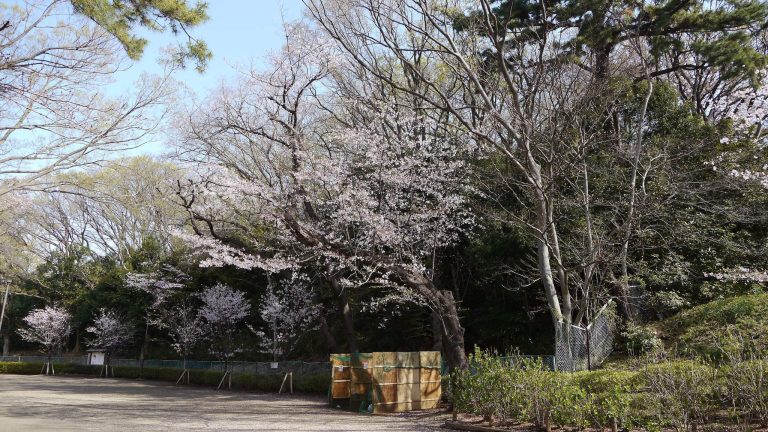
Two traditions remain associated with Hongyō-ji. The Oeshiki cherry is said to have blossomed out of season when Nichiren died, and the tree is traditionally regarded as surviving. Hikizuri tofu, a tofu dish, is said to have been served by Munenaka and his wife when Nichiren arrived at their residence. The former site of Nichiren’s death is designated by the Tokyo metropolitan government as the “Historic Site of Nichiren’s Death.”
The grounds also include the graves of Eihime, the wife of Uesugi Tsunanori and principal wife of the lord of Yonezawa; Oishi Yoshimaro, a senior retainer of the Hirosaki domain; Kano Tanyu, a leading figure of the Kano school; and Kawakami Gensai, a samurai of the Kumamoto domain and an activist for imperial rule.
Remains
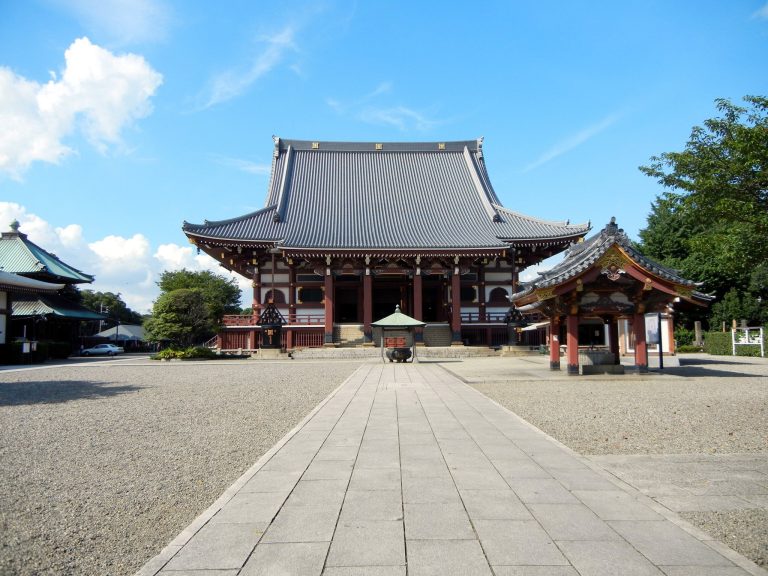
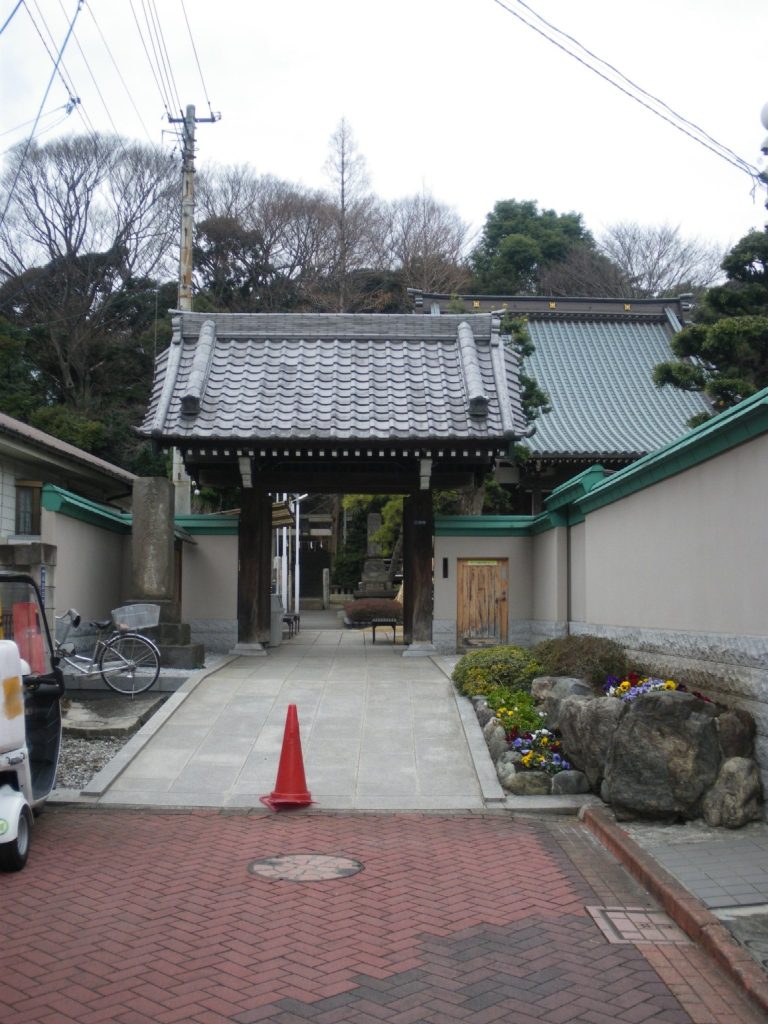
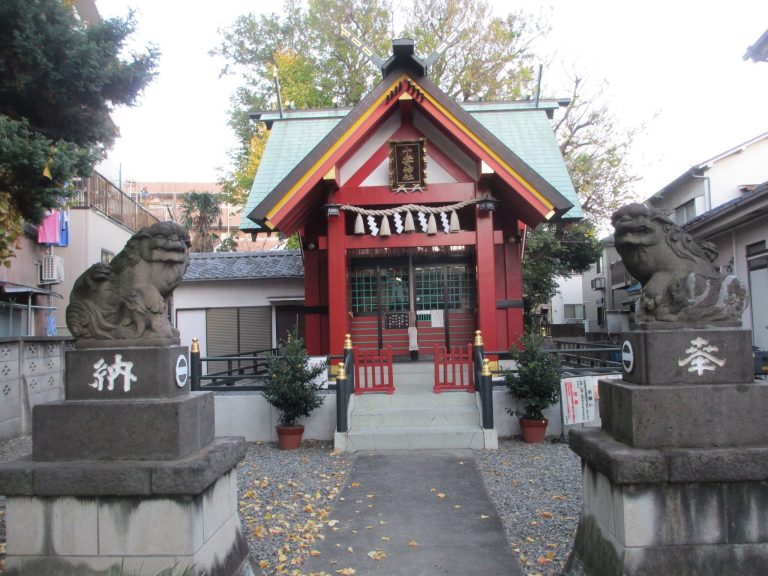
Hongyō-ji’s grounds occupy the site of Ikegami Munenaka’s former residence. The surviving features focus on the Buddhist spaces and traditions connected with Nichiren’s final days, including a hall built on the location of the residence’s former Buddhist room and the traditionally associated Oeshiki cherry.
The Room of Final Passing
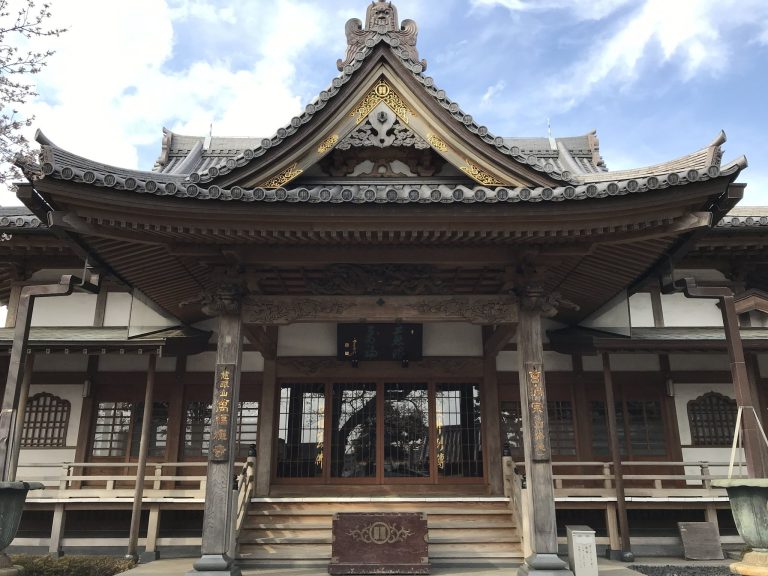
The “Room of Final Passing” is a Buddhist hall built on the site of the room that served as the Buddhist room of Munenaka’s residence. Nichiren died in that room in 1282. The temple’s principal object of worship is the Three Treasures, meaning the Buddha, the Buddhist teaching, and the Buddhist community.
Oeshiki Cherry
The temple grounds contain the Oeshiki cherry, a tree traditionally linked to Nichiren’s death. According to the tradition, it blossomed out of season at the time of his death, and it is said to have survived.