Zenkei-ji Temple: A Nichiren Buddhist Memorial Temple in Tokyo

Site at a Glance
- Rating
- 4.2
- Popularity
- Very Low
- Country
- Japan
- Primary era
- Modern
- External website
- Open
- Eras represented
- Early Modern, Modern
- Civilizations
- Tokugawa
- Site type
- Religious
On this page11 sections
History
Zenkei-ji Temple is a Nichiren Buddhist temple in Ota City, Tokyo, Japan, founded in 1291 by the priest Nichiho at the request of Masuda Saburoemon. Its formal name is Hokkozan Zenkei-ji, and its principal object of worship is the Three Treasures Founder, a Nichiren Buddhist principal image representing the Buddha, Buddhist teaching, and Buddhist community. The temple was formerly affiliated with Honkoji in Shinagawa as its head temple within the Jushi lineage.
Foundation and local setting
Masuda Saburoemon was a resident of Arai-juku village, the name used for the surrounding area until the Edo period, when it formed part of the domain of the hatamoto Kihara family. A hatamoto was a direct retainer of the Tokugawa shogunate who could hold land and exercise local authority. Zenkei-ji subsequently gained the devotion of residents in the village.
The area was originally wetland and poorly suited to agriculture. Unjust land surveys and relatively high taxation contributed to the poverty of the villagers. These conditions shaped the crisis that later made the temple a place of remembrance for local representatives who challenged the tax burden.
The Arai-juku appeal
During the rule of Kihara Hyosaburo Shigehiro, a major drought struck the area in 1673. A flood of the Tama River destroyed the local crops in 1674. In 1674 and 1675, the villagers submitted nineteen-article petitions requesting reductions in taxation, but their requests were rejected.
In December 1675, six village representatives decided to travel to Edo to appeal directly to the shogunate. After entering Edo, they were captured when they were almost at their destination. It has been suggested that someone connected with the Kihara family had informed against them in advance. Because a direct appeal to the shogunate by farmers was treated as a serious crime, the six men were beheaded at the Kihara family’s Edo residence in January 1676.
Memorialization and later development
The six men were treated as criminals, and their bodies were not publicly welcomed back into Arai-juku. Discussion of them was also prohibited. Nevertheless, the temple’s abbot Nichio took custody of their bodies. In 1679, a villager secretly created a grave for them, presenting it publicly as the grave of his own parents while recording the six men’s posthumous Buddhist names. A posthumous Buddhist name is a religious name assigned to a deceased person for memorial rites and graves.
The men began to be called the “Six Righteous Villagers” during the Taisho period, the imperial era from 1912 to 1926. Tokyo Prefecture designated their grave a historic site in 1931. The grave was moved to its present location in 1972 because of road widening. A copy of the villagers’ petition was designated a Tokyo cultural property in 1964.
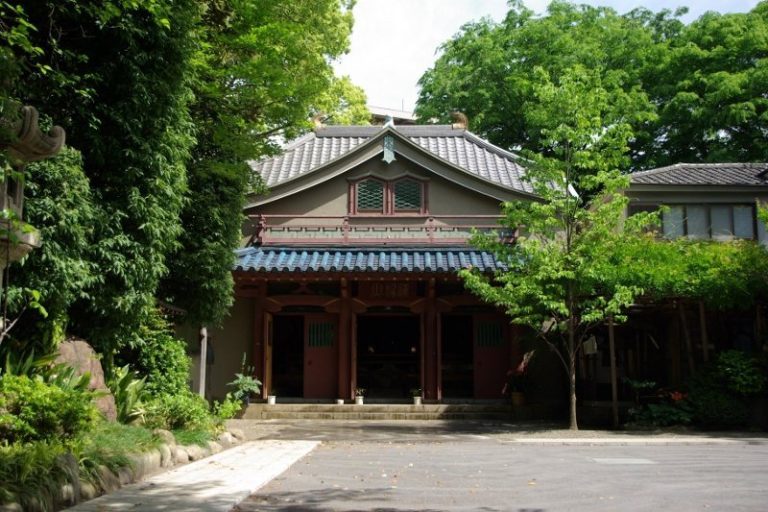
The present main hall was completed in 1930, and the temple grounds were expanded in 1971. Zenkei-ji established Zuiunkan parishioners’ hall in 1999. An annual memorial Buddhist service for the six righteous villagers is held on February 11 and attended by many local residents.
Remains
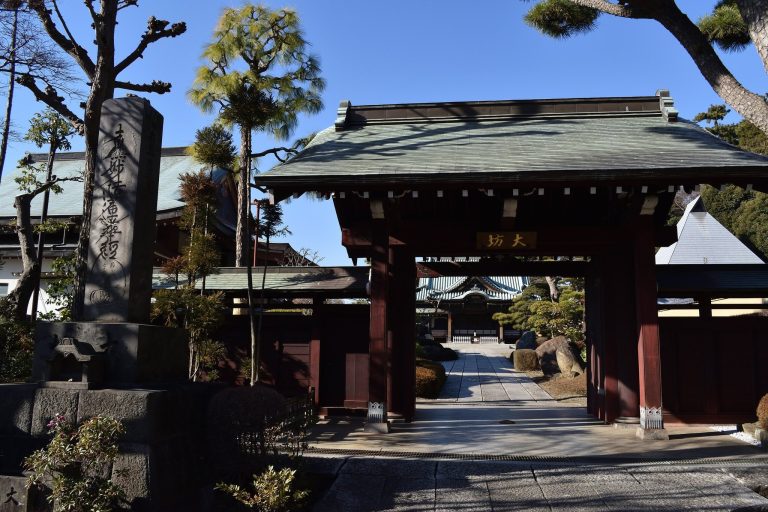
Zenkei-ji’s grounds contain the main hall, the grave of the six Arai-juku righteous villagers, a cemetery, and Zuiunkan parishioners’ hall. The grave is the principal memorial feature, while the petition copy preserves documentary evidence connected with the villagers’ effort to obtain tax relief.
Memorial features
Grave of the six righteous villagers
The grave of the six righteous villagers was created in 1679 under the outward designation of a family grave. It commemorates the six representatives executed in Edo in January 1676. The grave was moved to its present position in 1972 during road widening and remains the central memorial feature associated with Zenkei-ji.
Petition copy
The temple also includes a copy of the “Petition of the Arai-juku Village Headman and All Villagers.” A village headman was the official responsible for representing a village and managing its affairs. The document records the petition submitted in connection with the villagers’ attempt to secure tax relief, and the copy received designation as a Tokyo cultural property in 1964.
Temple buildings and grounds
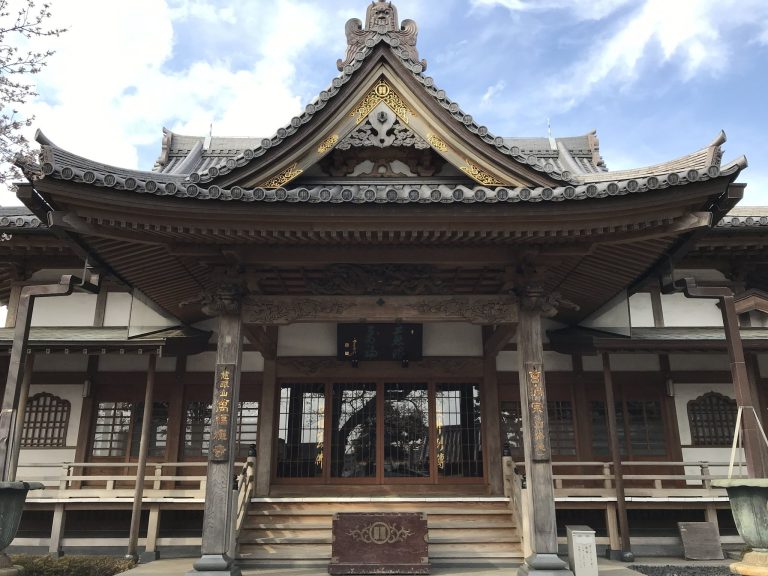
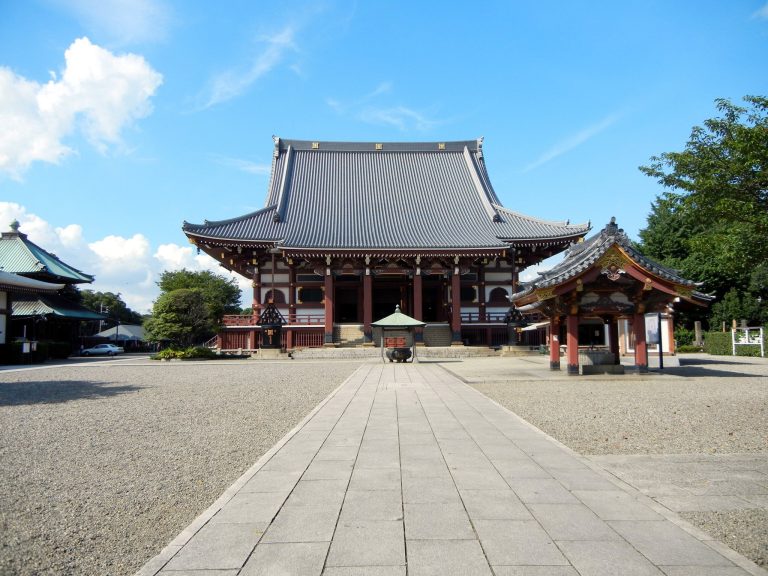
Main hall
The present main hall dates from 1930. It forms part of the temple complex, whose grounds were expanded in 1971.
Zuiunkan parishioners’ hall
Zuiunkan was founded in 1999 as a parishioners’ hall. It is used for funerals and memorial services for people of any religious affiliation.