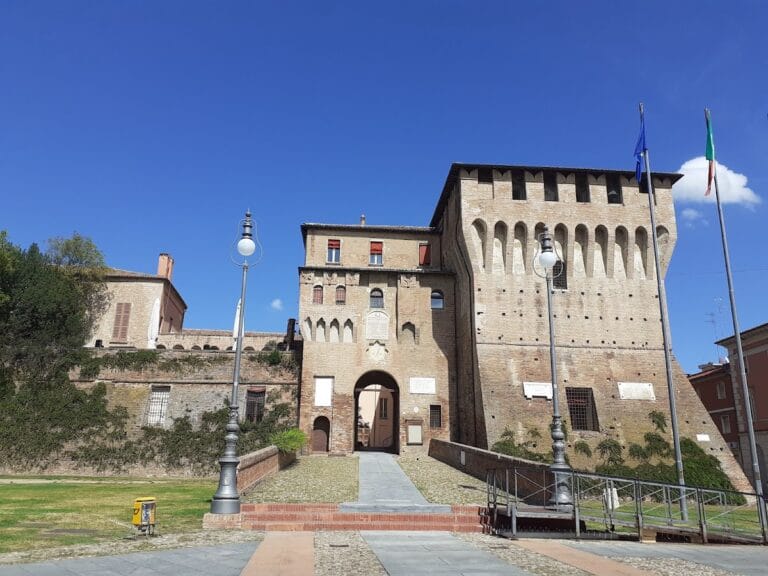
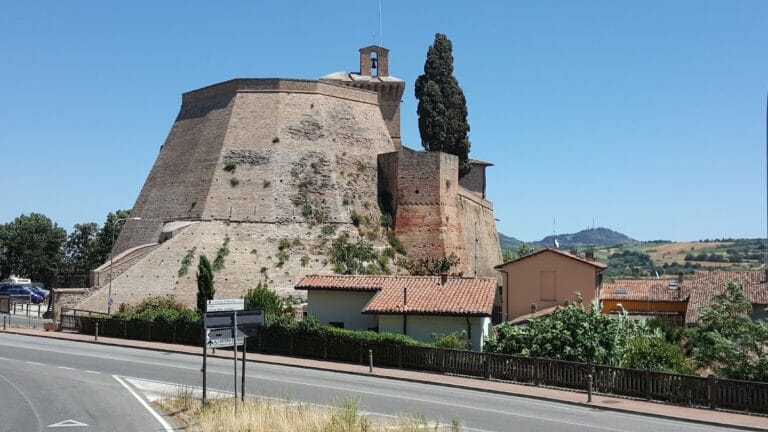
Rocca Manfrediana: A Medieval Fortress in Brisighella, Italy
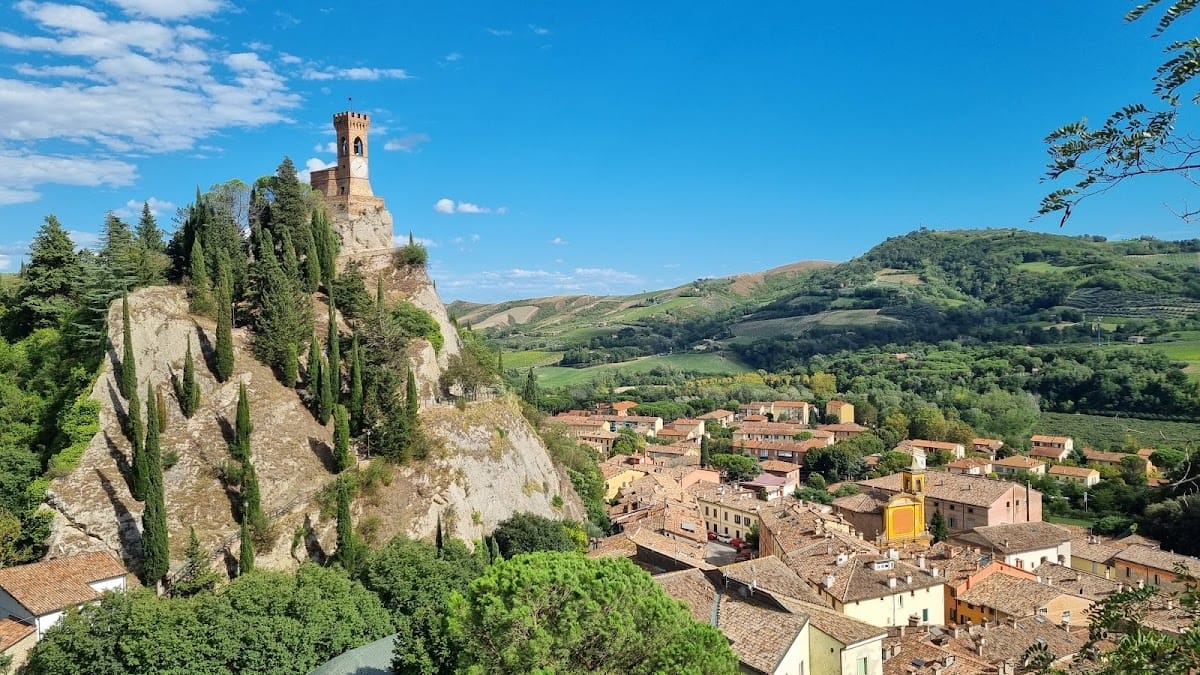
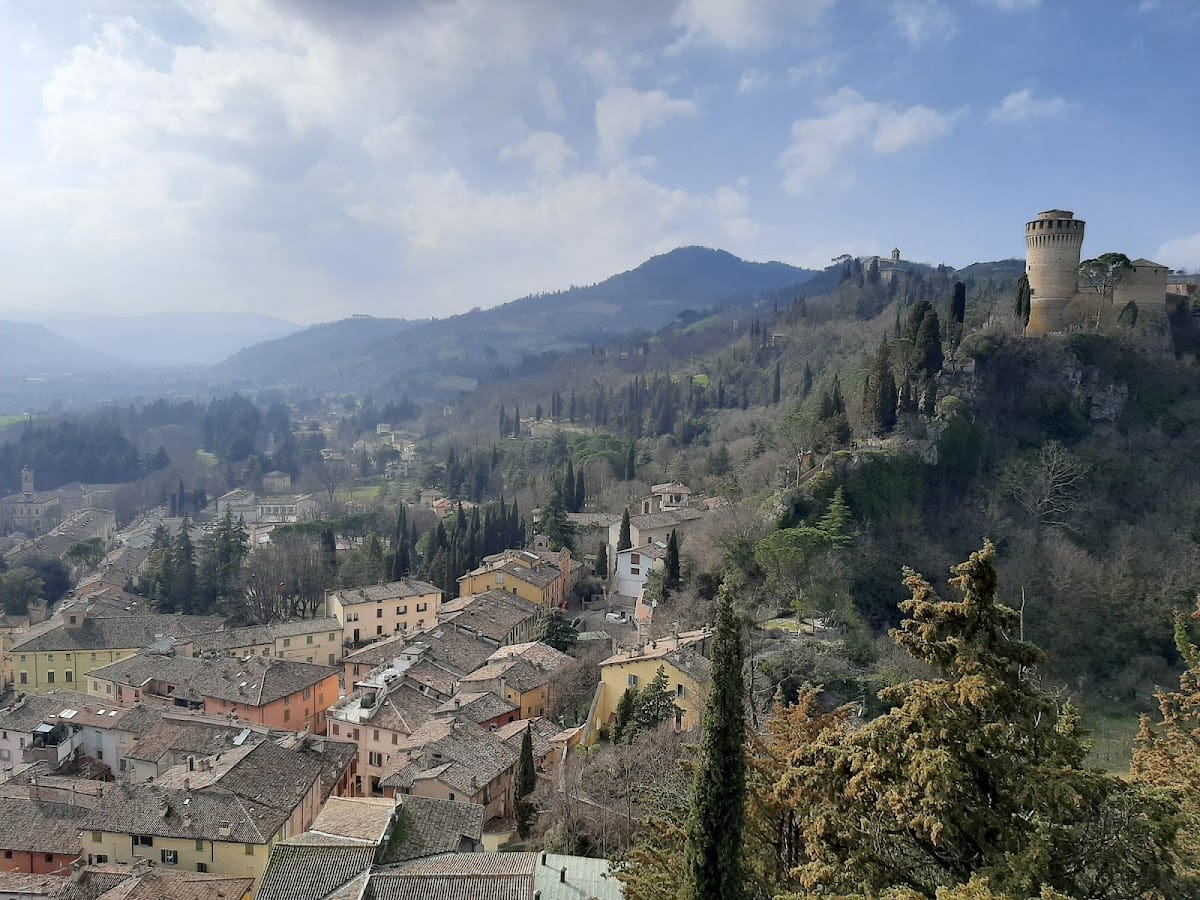
Visitor Information
Google Rating: 4.5
Popularity: Medium
Official Website: www.brisighellamusei.it
Country: Italy
Civilization: Medieval European, Venetian
Site type: Military
Remains: Castle
History
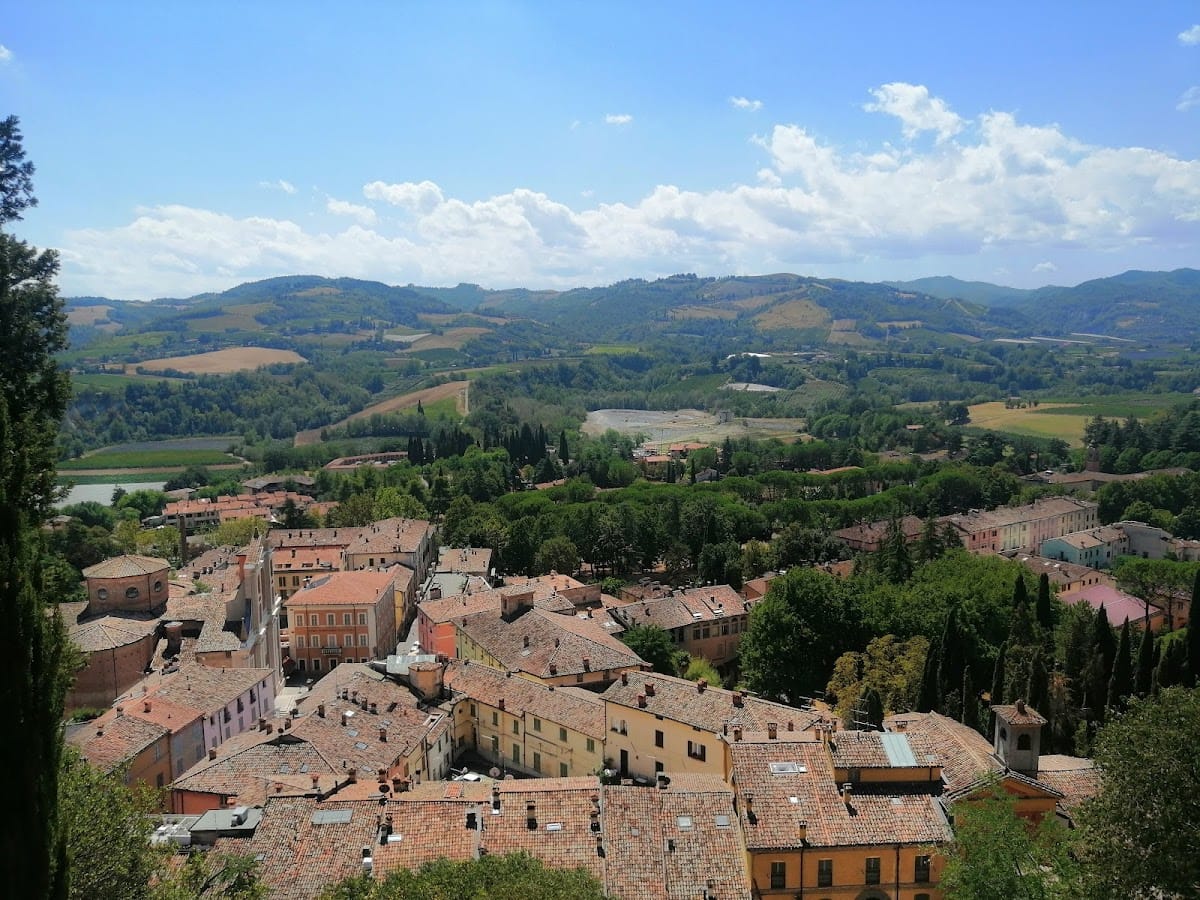
The Rocca Manfrediana is a medieval fortress located in the town of Brisighella, Italy. It was originally constructed by a local ruling family during the early 14th century, marking the foundation of the current fortification as a stronghold overlooking the surrounding landscape.
The initial phase of construction began around 1310 under Francesco Manfredi, the lord of Faenza, who established the fortress on a prominent selenite rock pinnacle that characterizes the local terrain. Throughout the 14th and 15th centuries, the fortress remained predominantly under the control of the Manfredi family. Notable expansions occurred under Gian Galeazzo Manfredi in 1394, and later by Astorgio II with additions made in 1457 and again in 1466. The fortress briefly escaped Manfredi rule between 1368 and 1376 before reverting to the family’s authority.
At the turn of the 16th century, political control shifted when Cesare Borgia ruled the fortress from 1500 to 1503 during his military campaigns in the region. Following this period, the Republic of Venice took possession from 1503 to 1509. The Venetians undertook significant enhancements, including the construction of a large central keep and defensive walls on two sides, reinforcing the fortress’s military capabilities. After Venice’s control ended, the site became part of the Papal States.
By the late 1500s, modifications included roofing the two main towers, adapting the fortress to changing defensive and residential needs. A short period of Napoleonic influence interrupted papal governance, but the fortress returned to Papal control until 1860, when the region of Romagna was incorporated into the newly unified Kingdom of Italy. In more recent history, the fortress has undergone extensive restoration work in the early 21st century to stabilize and artistically highlight its structure.
Additionally, the Rocca Manfrediana holds cultural significance through literary association. It serves as the dramatic setting for the concluding scenes of Ethel Lilian Voynich’s 1897 historical novel “The Gadfly,” a work that gained particular popularity during the Cold War era in communist countries.
Remains
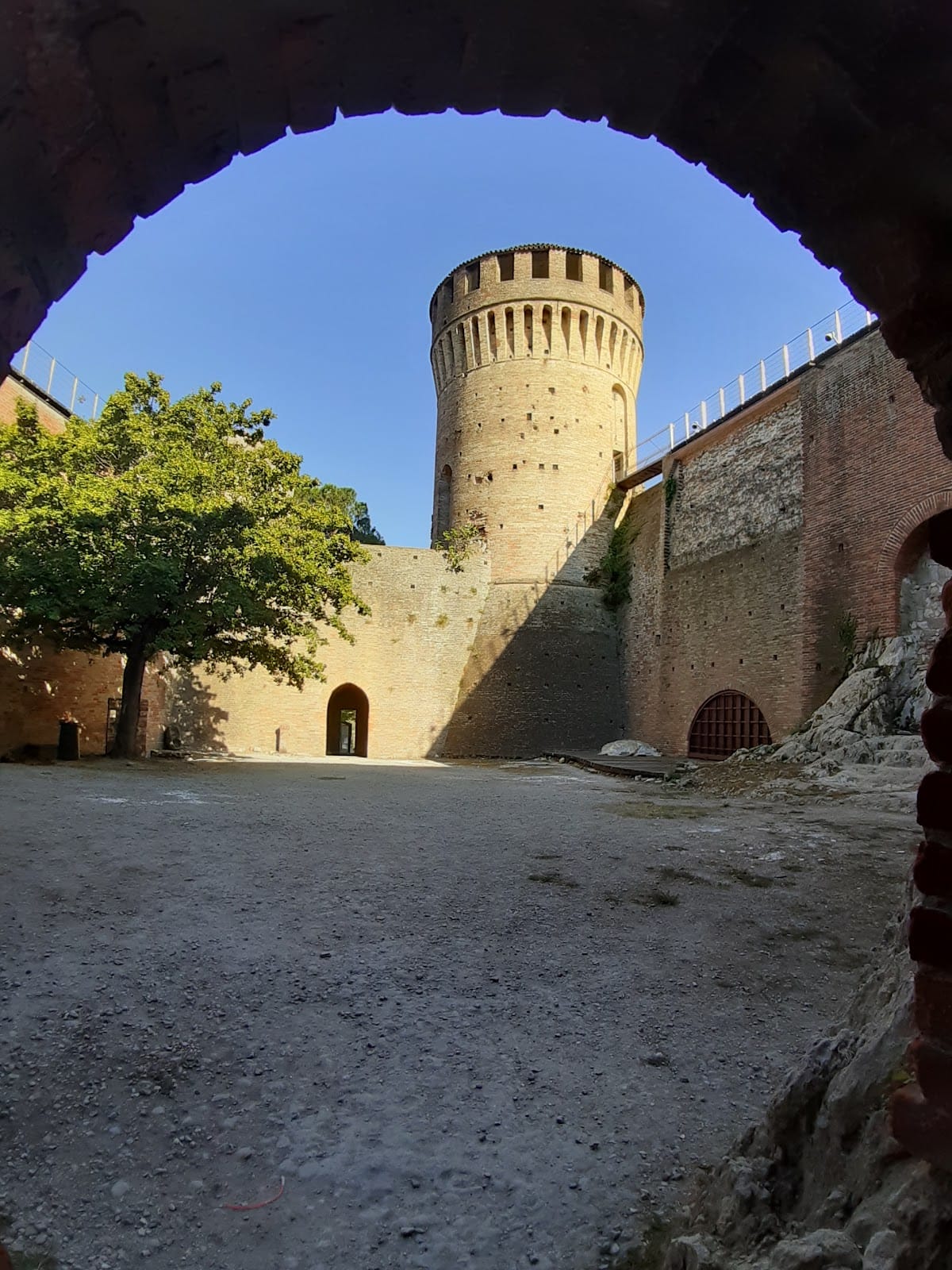
The Rocca Manfrediana is strategically positioned atop the middle of three selenite rock pinnacles, integrating the natural environment into its defensive design. The fortress is arranged around a trapezoidal courtyard, enclosed by curtain walls that include an angled section along the west side. The building materials blend with the local gypsum-rich landscape, reflecting an adaptation to the surrounding geology.
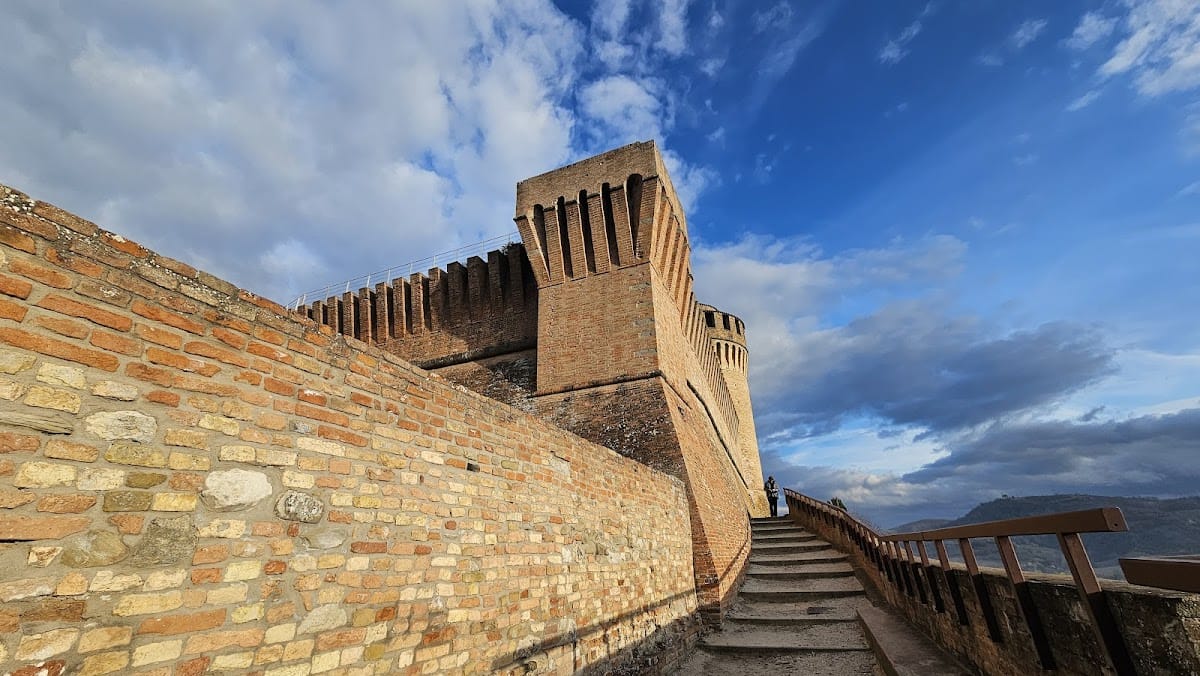
On the eastern side stand two cylindrical towers linked by walls that preserve the original entrance and the structural elements supporting a drawbridge over what was once a protective moat. The older tower to the northeast, known as the Torricino or Torre Manfrediana, acts as a keep, featuring a spiral staircase that ascends through small chambers. These rooms are now used to display panels illustrating various historical periods and archaeological artifacts such as Roman bronze coins (sesterces), fibulae (decorative brooches), and locally made jugs from Faenza.
The larger tower to the southeast, the mastio or Torre Veneziana, reveals traces of an earlier square plan. Inside, reconstructions depict domestic medieval and Renaissance castle life, with rooms furnished as a kitchen, bedroom, and prison cells, offering a glimpse into the social aspects of fortress occupancy.
The defensive system of the Rocca Manfrediana was designed for flexibility and layered protection. In the event of an attack, the defenders could retract their defense to the isolated towers by raising three drawbridges, effectively cutting off access between the courtyard and these strongholds. Surrounding the base of the curtain walls is a sloped embankment known as a glacis, beneath which lies a caponier—a covered passageway equipped with loopholes, or narrow vertical openings for firing weapons. This gallery, running southward, housed two bombards, early forms of artillery, cleverly concealed by a mule track ascending the fortress.
Throughout the internal courtyard and along the caponier, informative panels explain how the fortress’s defense mechanisms functioned historically. Thanks to early 21st-century restoration efforts, the fortress is well-preserved, with structural reinforcements and special lighting installed to enhance the appreciation of its architectural features while maintaining its historical character.
Nearby sites