Pyramid of the Sun: A Classic-Period Monument at Teotihuacan
Site at a Glance
- Popularity
- Very High
- Country
- Mexico
- Primary era
- Classical
- Eras represented
- Classical, Medieval
- Civilizations
- Aztec, Teotihuacan
- Site type
- Religious
- Remains
- Temple
On this page12 sections
History
The Pyramid of the Sun is a pyramid at Teotihuacan, Mexico, whose construction began around AD 200. An initial phase brought it close to its present size, and a second completed the work. It belongs to the Mesoamerican Classic, a broad period in the region’s pre-Columbian history, and is associated with Toltec culture, a cultural and historical label linked to central Mexico. The monument was abandoned around AD 750.
Ritual traditions and later naming
The Aztecs, also known as the Mexica, gave the pyramid its present name when they visited Teotihuacan centuries after the city’s abandonment. The cave beneath the structure was regarded as sacred and associated with ritual activity. The timing of such use, including any rites of passage, remains uncertain. Cave offerings and sacrifices were associated with Etzalcualiztli, a festival honoring Tláloc, the Mesoamerican rain deity. A deity may have been worshipped at the summit, but the temple there was destroyed before archaeological study, preventing identification of a particular one.
Archaeological investigations
In 1959, archaeologist Rene Millon and his team were among the first to investigate the underground passages. Artifacts from different cultural periods complicated efforts to distinguish the phases they represented. Millon’s team considered whether construction had continued across separate periods or whether the pyramid’s foundation and cave system predated the structure. They also argued that the builders’ craftsmanship and motivation made earlier theories of slave construction unlikely.
Archaeologist Ernesto Taboada investigated the underground complex in 1971. Later interpretations proposed that the cave might have been made by people and could have served as a royal tomb, though its origin and function remain uncertain. More recent investigations have used muon detectors, which use subatomic particles to probe dense structures, in searches for additional chambers. Looting has hindered efforts to determine how such chambers were understood or used in Teotihuacan society. The site is under UNESCO protection.
Remains
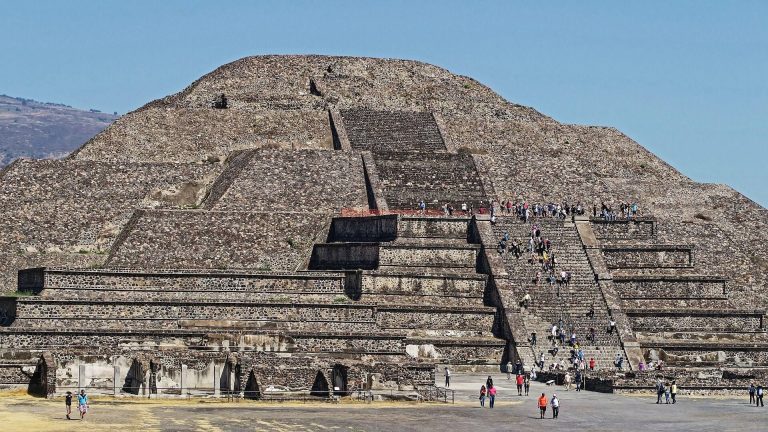
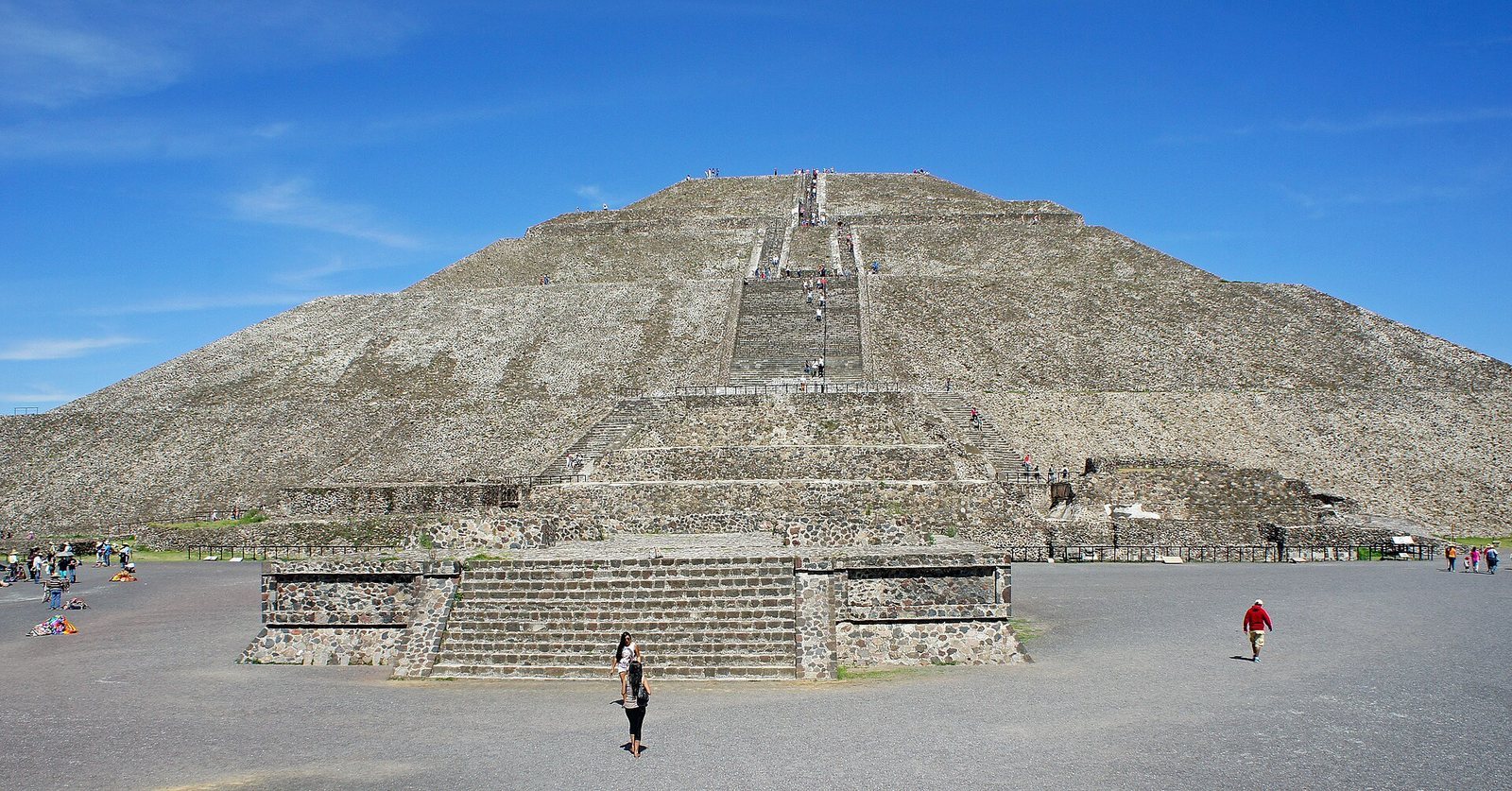
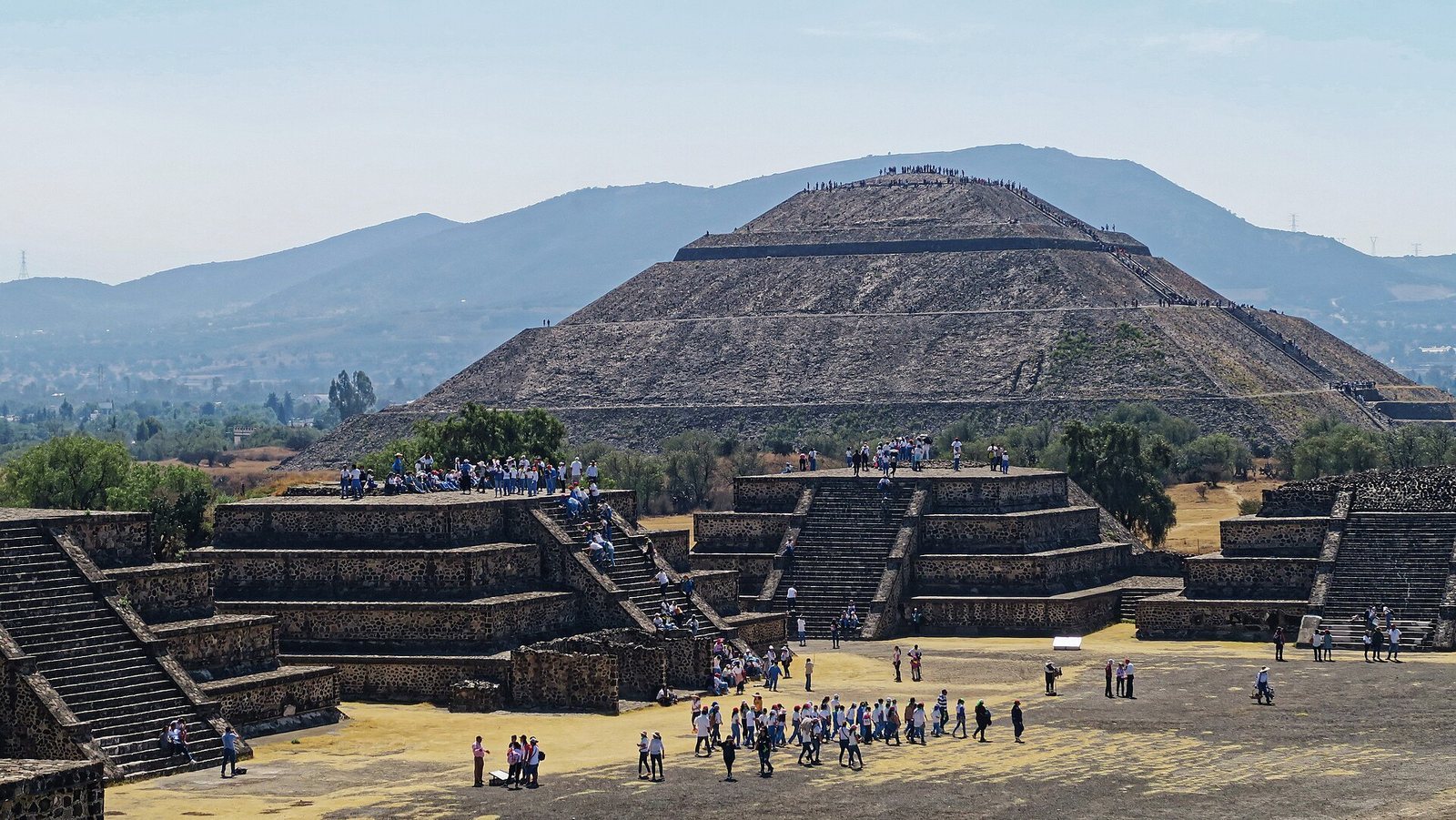
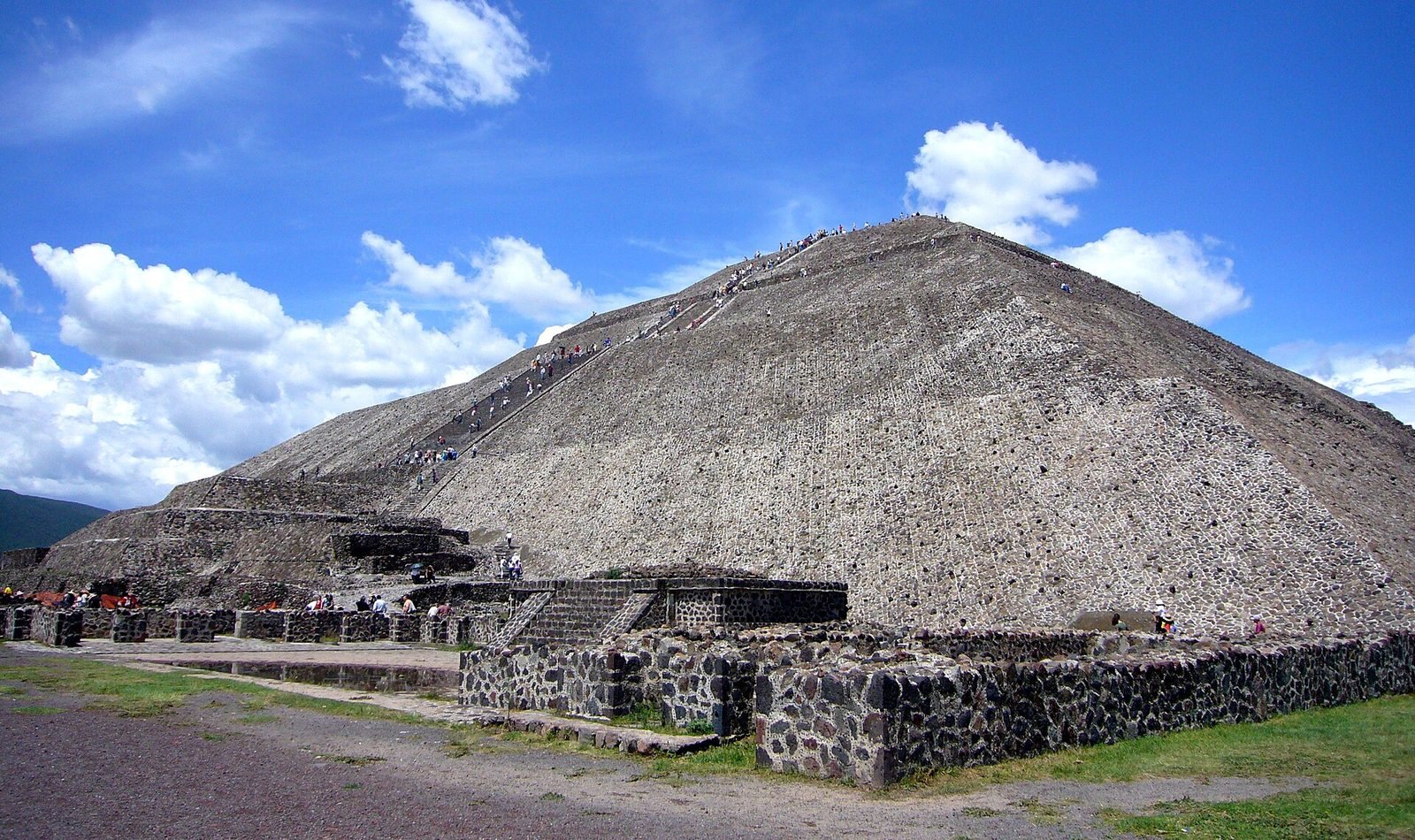
The pyramid stands along the Avenue of the Dead, between the Pyramid of the Moon and the Ciudadela, beneath Cerro Gordo. Its red volcanic stone construction forms part of the city’s central layout. The central urban grid, including the avenue, follows the pyramid’s orientation, while the southern part of the city has a different alignment set by the Ciudadela. The pyramid aligns with Cerro Gordo to the north and, at right angles, with sunrise and sunset positions on particular dates. Its summit has also been interpreted as a marker of the sun’s position on Aztec quarter-days, four dates that divide the year.
Scale and surface
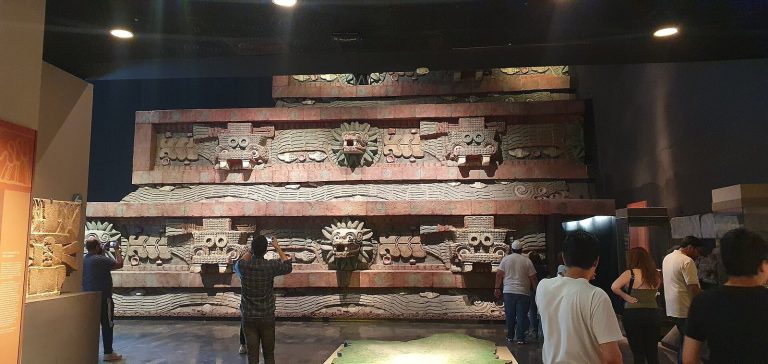
The base is about 225 metres across, the height about 65.5 metres, and the volume approximately 1,184,828 cubic metres. The pyramid was the largest building at Teotihuacan, one of the largest in Mesoamerica, and the third-largest ancient pyramid. Its exterior was finished with imported lime plaster, red paint, and brightly coloured murals. Imagery associated with the monument includes jaguar heads and paws, stars, and rattlesnakes. A summit altar belonged to the second construction phase, while a broad platform at the pyramid was suitable for large public gatherings.
Subterranean features
The cave and pit
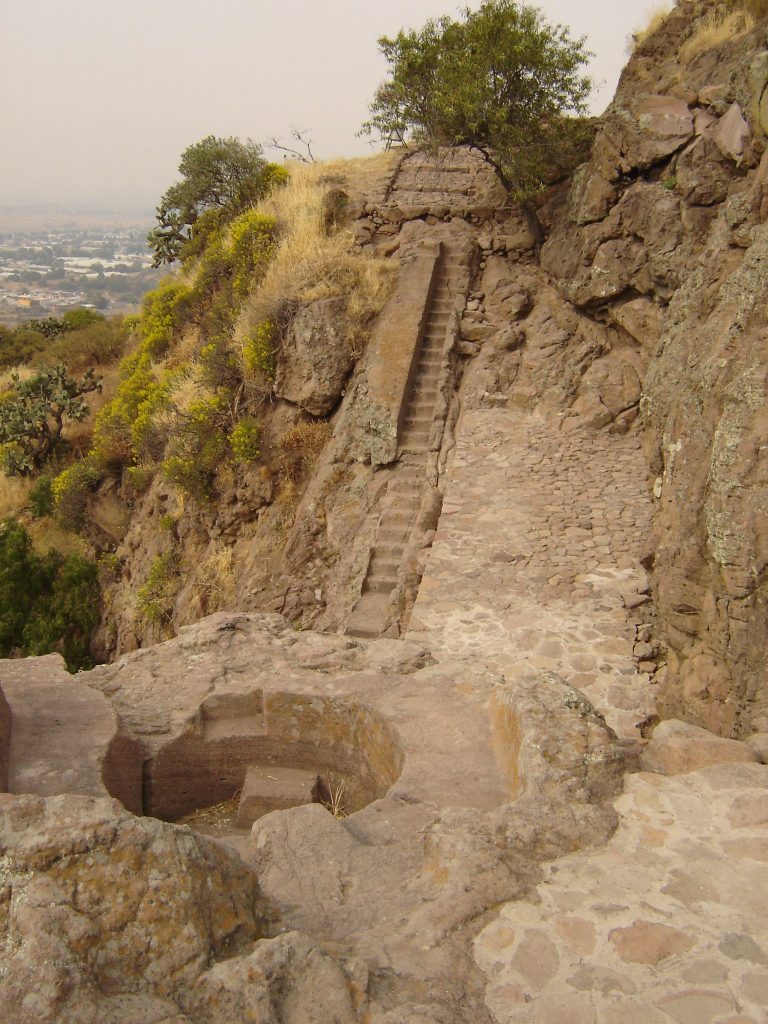
The cave lies six metres beneath the pyramid’s centre. It may have served as an early shrine and helped determine the building’s location. Once interpreted as a natural lava tube, it has also been understood as a human-made space or as a natural passage adapted for ritual use. Another proposal identifies it as a royal tomb, but its origin and purpose remain uncertain. The cave was associated with Chicomoztoc, a legendary place of human origin in Nahua traditions. At the foot of the main staircase, an entrance to a pit seven metres deep was found.
Tunnels
Most of the principal passages beneath the pyramid were sealed, although the reason is uncertain. Some tunnels were made after the fall of Teotihuacan and the Aztec civilization, and eventually connected with older tunnels and caves. Finds within the passages include pottery fragments, hearths, and finely made artifacts.
Objects and burials
Arrowheads and figurines
Obsidian arrowheads and human figurines were found inside the pyramid. Similar objects from the nearby Pyramid of the Moon and the Pyramid of the Feathered Serpent in the Ciudadela may have served as offerings or represented sacrificial victims.
Children’s burials
Excavations at the pyramid’s corners uncovered places where children had been buried. These burials are believed to have formed part of a sacrificial ritual connected with the building’s dedication.
Teotihuacan Ocelot
The Teotihuacan Ocelot was found near the pyramid’s base in the late nineteenth century. It is now in the British Museum’s collection.