Tecoaque: An Acolhua Settlement and Archaeological Site in Mexico
Site at a Glance
- Rating
- 4.6
- Popularity
- Medium
- Country
- Mexico
- Primary era
- Medieval
- Eras represented
- Classical, Medieval, Early Modern
- Civilizations
- Aztec, Teotihuacan
- Site type
- City
On this page15 sections
History
Tecoaque is an ancient Acolhua settlement in western Tlaxcala, Mexico, whose principal Postclassic phase dates from approximately 1300 to 1520. The Acolhua were a major political group within the Aztec Empire, centered at Texcoco, and the site stood near the former frontier between the Aztec and Tlaxcalan spheres at about 2,630 meters above sea level.
Early settlement and Acolhua development
Tecoaque had an earlier Classic-period phase, from approximately AD 300 to 500, when it belonged to the sphere of Teotihuacan, a major ancient city and political center in central Mexico. In the Postclassic period, it developed as an Acolhua city associated with Texcoco.
During its later flourishing, the settlement occupied an important trade route between the central Mexican highlands and the Gulf of Mexico. Its inhabitants supplied services to merchants, cultivated maize and beans, and produced pulque, a fermented drink made from agave sap. The population was approximately 5,000.
The captives of 1520
In 1520, Acolhua warriors from Texcoco attacked a slow-moving group accompanying Hernán Cortés after his defeat of Pánfilo de Narváez, a Spanish commander sent to arrest him. The caravan included Spanish soldiers and civilians, enslaved Africans, Indigenous allies, and other attendants, together with livestock and supplies. The attack was carried out in revenge for the killing of Cacamatzin, the ruler of Texcoco.
Approximately 550 captives were taken to Zultepec and sacrificed over six months. They included Spaniards, Africans, mulattoes, mestizos, Taíno from the Greater Antilles, Totonacs, Tlaxcalans, people from Tabasco, and Maya, as well as women, pregnant women, and children. Archaeological investigation identified the remains of approximately fifty women and ten children.
Priests who had come from Tenochtitlan selected victims before dawn. The captives were held in doorless cells, receiving food through small openings, and some bodies were later consumed in ritual practices. This evidence gives the site an important place in the history of the conquest because it demonstrates the mass capture of Spaniards and their allies by Indigenous forces and provides strong evidence for ritual cannibalism in this setting.
Destruction and changing names
After learning of the killings in 1521, Cortés sent a punitive expedition led by Gonzalo de Sandoval, a Spanish commander serving under him. As the attack approached, inhabitants concealed human remains and objects taken from the caravan in dry cisterns. Cortés reported that many people were killed and others enslaved. The settlement was destroyed, burned, and abandoned. Research published in 2021 indicates that more than twenty women and children were killed during the Spanish conquest, while the absence of male victims has been interpreted as possible evidence that some warriors escaped.
Cortés described the destruction in letters to the Spanish king dated October 30, 1520, and May 15, 1522. Later accounts by Francisco López de Gómara in 1551 and Bernal Díaz del Castillo in 1568 omit women among the victims and are considered unreliable in some details. Archaeological evidence confirms their presence.
The earlier name Zultepec survived in sixteenth- and seventeenth-century documents and in the nearby settlement of San Felipe Sultepec, but the location of the former city was later forgotten. The ruins became known as Tecoaque, a Nahuatl name associated with the eating of people. Excavations initially used Tecoaque as the site name. After identifying the settlement as Zultepec, archaeologist Enrique Martínez Vargas proposed restoring the older name in 2001. The site is now commonly called Zultepec-Tecoaque or Tecoaque-Zultepec.
Excavation and interpretation
Systematic investigation of the central zone began in 1993. Excavations continued through 2010, followed by study of the finds, and resumed in 2015 to reconstruct the captives’ living conditions. After the 2015 campaign, approximately 20 percent of the entire site was expected to have been investigated.
Tecoaque was added to UNESCO’s World Heritage Tentative List in the Cultural category on December 6, 2004. It is protected by Mexico’s National Institute of Anthropology and History as a historical monument. A site museum opened on November 28, 2012, presenting material from the Classic period, the Postclassic Acolhua city, and the massacre and destruction of 1520 to 1521.
Remains
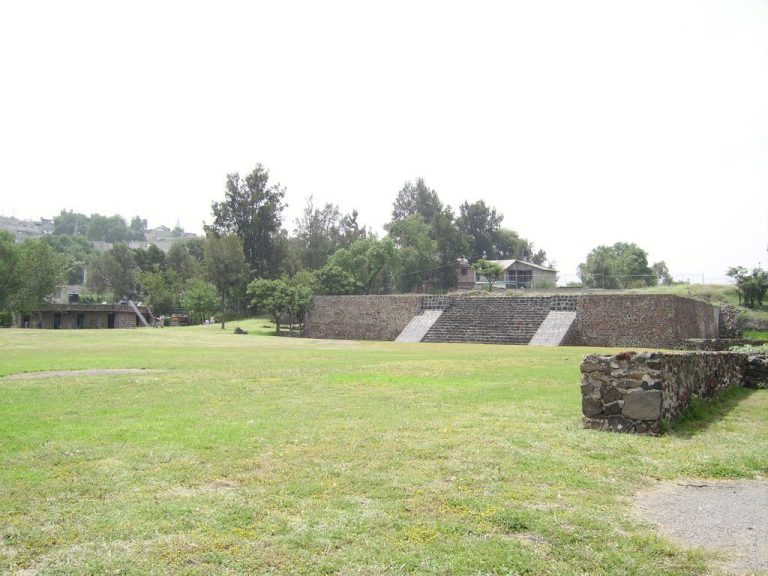
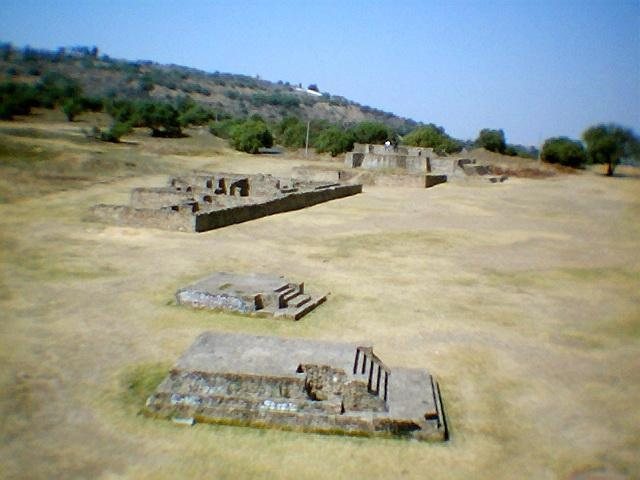
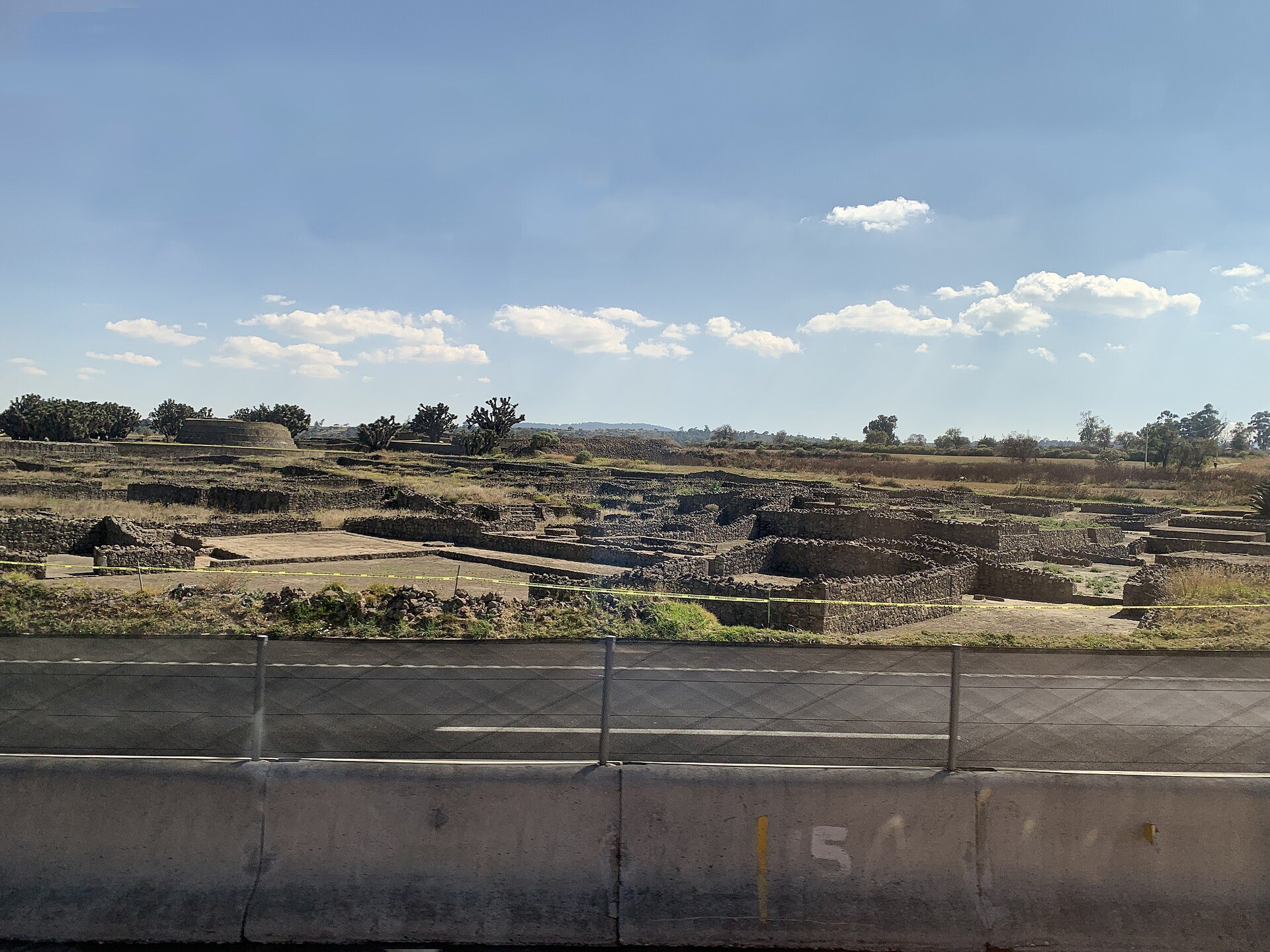
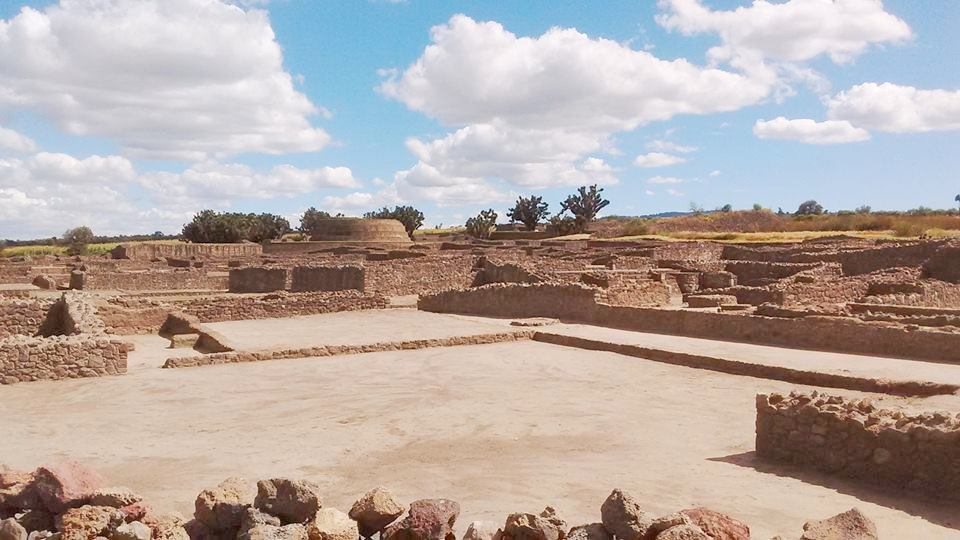
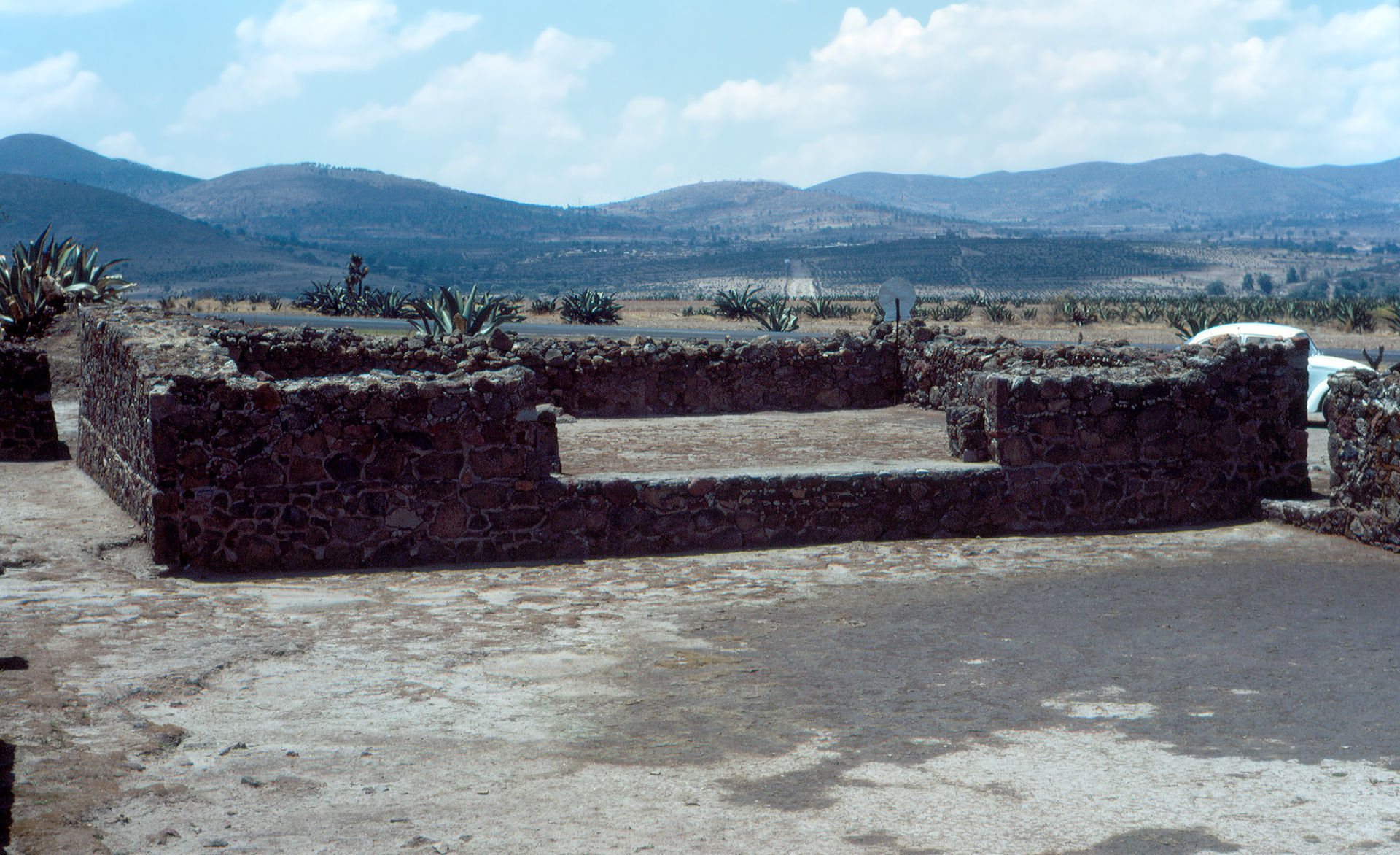
The settlement covered approximately 30 to 32 hectares. Its remains include residential areas, a substantial rectangular plaza, temples, and house foundations whose walls have been raised to make the archaeological structures easier to read. White stucco covered numerous temples, which were burned during the Spanish destruction, while statues were decapitated.
Religious architecture
Circular pyramid
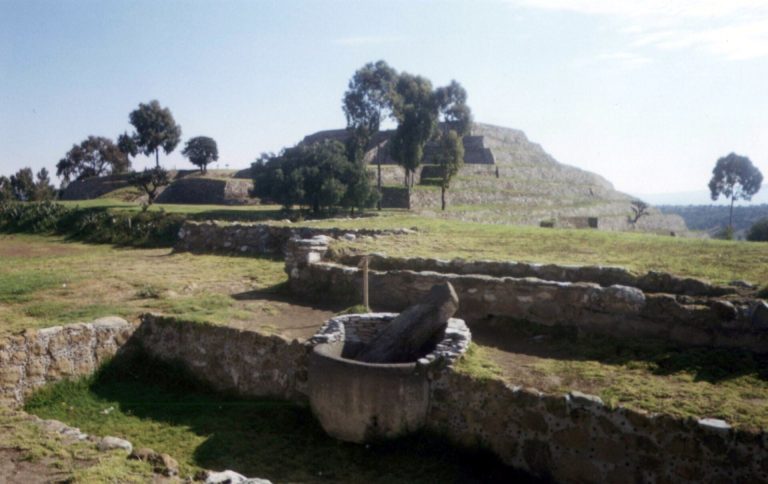
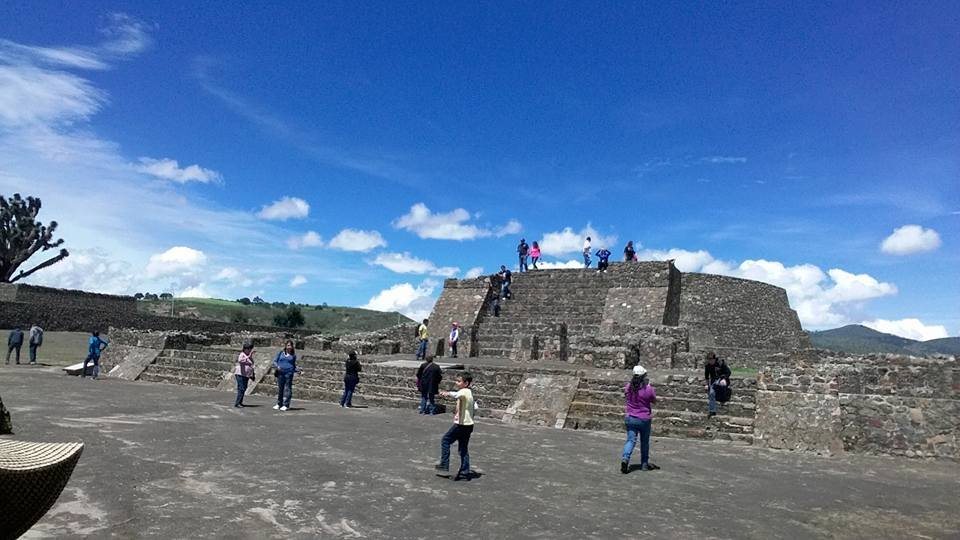
The principal monument is a prominent circular pyramid with three tiers and a stairway facing east. It is associated with Ehecatl, the wind aspect of Quetzalcoatl, and belongs to the circular temple tradition related stylistically to Cuicuilco. Part of the structure was restored in 1992.
Ritual evidence
A flint knife concealed in the stair area of the circular temple was probably used in sacrificial rites. Together with the remains recovered elsewhere at the site, it helps connect the monument with the ritual practices carried out at Tecoaque during its final phase.
Cisterns and burials
Concealed remains
Dry cisterns were used during the Spanish advance to hide human remains and objects taken from the caravan. Their excavation also revealed evidence for the later treatment of the dead, including cut marks on human bones, changes caused by cooking, and tooth marks that indicate the processing and consumption of human remains.
Burial cistern
In November 2015, archaeologists found a burial cistern containing the skeleton of a high-status Acolhua man approximately 25 years old, vertebrae and ribs from at least three children, a throne made of tezontle, and an engraved cylindrical stone probably dedicated to Ometochtli, a deity associated with pulque and its ritual use. Marks on the children’s remains indicated that body parts from one child had been cooked.
Skull display
Fourteen skulls were found in a cavity without their lower jaws. Perforations through both temples show that they had been prepared for display on a tzompantli, a structure or display for presenting human skulls after ritual sacrifice. The skulls belonged to seven women and seven men between approximately 20 and 35 years old. Eight victims came from different parts of Mexico, five from Europe, and one was a mulatto woman.
Objects from the settlement and caravan
Excavations had produced more than 10,000 objects by 2006 and nearly 15,000 by 2010. At least 200 were clearly associated with Europeans, including weapons, harness fittings, nails, jewelry, and other material from the caravan. Remains of European domestic animals, including pigs and goats, were also recovered. The pigs had been killed but showed no evidence of having been eaten.
Site museum
The permanent exhibition occupies approximately 200 square meters, with objects arranged in more than twenty cases and on about forty wall displays. A further 55-square-meter room is used for temporary exhibitions. The museum presents approximately 300 objects, including 66 artifacts and grave finds from the Classic period, 185 artifacts and grave finds from the Postclassic period, and 33 artifacts, finds from four graves, and an animal skeleton associated with the massacre and destruction of 1520 to 1521.