Chimalhuacán: A Pre-Hispanic Settlement and Palace in Mexico
Site at a Glance
- Rating
- 4.3
- Popularity
- Low
- Country
- Mexico
- Primary era
- Medieval
- External website
- Open
- Eras represented
- Medieval
- Civilizations
- Aztec
- Site type
- City
On this page12 sections
History
Chimalhuacán, also known as Los Pochotes, is an archaeological zone in San Pedro, Chimalhuacán, State of Mexico, Mexico. Occupied from the Late Preclassic through the Postclassic periods, it preserves a thirteenth-century palace associated with Chichimec settlers and later became an important tributary of Texcoco within the Aztec Triple Alliance.
Early occupation
Chimalhuacán was inhabited during several major periods of Mesoamerican history. The earliest occupation is tentatively dated to 400–100 BCE. Settlement continued during the Classic period, approximately 200–450 CE, followed by an Early Postclassic phase around 800–1000 and a Late Postclassic phase around 1100–1521.
The name Chimalhuacán comes from the Nahuatl elements chimalli, meaning shield, hua, a possessive particle, and can, meaning place. It therefore means approximately “Place of Those Who Possess Shields.” The settlement was formerly called Chimalhuacantoyac. The related name Atenco means “at the water’s edge.” In the Codex Quinatzin, the Chimalhuacán glyph shows a round shield on a hill. This image has been interpreted as “Hill of Shields” or “Place of Shields,” probably in reference to nearby Chimalhuache hill.
Chichimec and Texcoco connections
The later settlement was founded in 1259 by people associated with the Acolhua and Mexica, who originated from Tula and Colhuacan. Three founding rulers, or tlatoanis, are associated with this foundation: Huauxomatl, Chalchiutlatonac, and Tlatzcantecuhtli. A tlatoani was the ruler of a Nahua city-state. The surviving palace is linked to a Chichimec settlement established around the thirteenth century.
The inhabitants initially spoke Chichimec and Nahuatl. Nahuatl later became dominant as Acolhua and Mexica traditions merged. Chimalhuacán became a tributary of Texcoco and joined the Aztec Triple Alliance from 1431. This was the political and military alliance of Tenochtitlan, Texcoco, and Tlacopan that dominated much of central Mexico before the Spanish conquest.
Conflict and colonial transformation
Chimalhuacán supported Texcoco during its conflicts with the Tepanecs and took part in the defense of Tenochtitlan. When Nezahualcóyotl returned to Texcoco for his coronation, an amnesty was proclaimed at Chimalhuacán for Texcoco-affiliated communities that had fought against him on the Tepanec side.
Moctezuma I, also called Moctezuma Ilhuicamina, visited Chimalhuacán twice. In one episode, the Chalcas captured him and offered him first to Huejotzingo and then to Maxtla, the last independent Tepanec ruler of Azcapotzalco. After Cuateotl freed him, he advised Moctezuma to return to Tenochtitlan by way of Chimalhuacán. Moctezuma later accompanied Nezahualcóyotl after the Tepanecs were defeated.
During the colonial period, Spanish law organized Chimalhuacán as a república de indios, an Indigenous municipality under colonial administration. After Mexican independence, it successively belonged to the political, fiscal, and judicial districts of Chalco and Texcoco. It became a municipality in 1842. Spanish conquerors destroyed the pre-Hispanic buildings and city, and Christian chapels were built over the remains.
Archaeology and interpretation
Investigations during the 1940s and 1990s identified occupation in three major periods. Discoveries made in 1984 included the remains known as the “Chimalhuacán Man,” a pre-ceramic human skeleton approximately 12,000 years old. It was described as the most complete and well-preserved of 38 human skeletons recovered by that time and possibly the oldest discovered in Mexico. Together with Pleistocene animal remains and human-made stone tools, the find contributed to Chimalhuacán’s description as one of the cradles of human settlement in Mesoamerica.
A site museum opened in 2000, closed in 2003, and reopened in an updated form in 2011. Its development reflects the continuing interpretation of Chimalhuacán as both a pre-Hispanic settlement and a place connected with much earlier human activity in the Basin of Mexico.
Remains
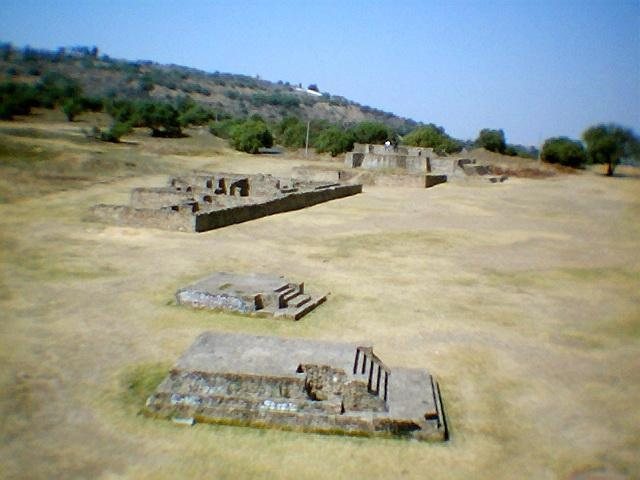
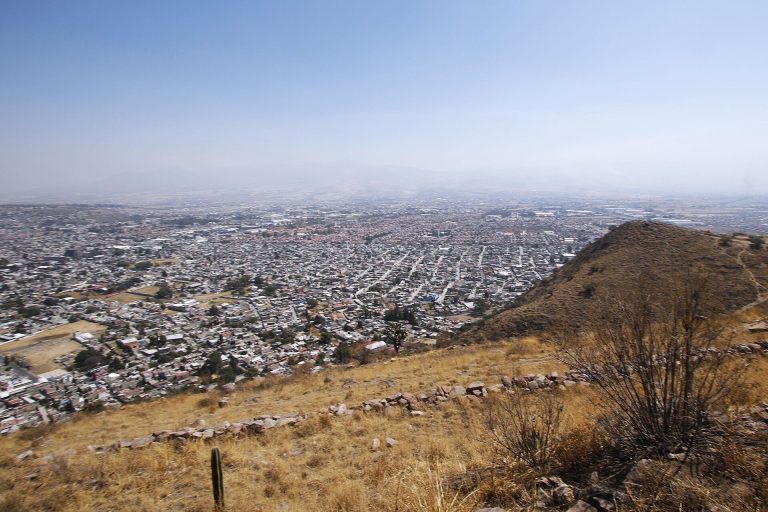
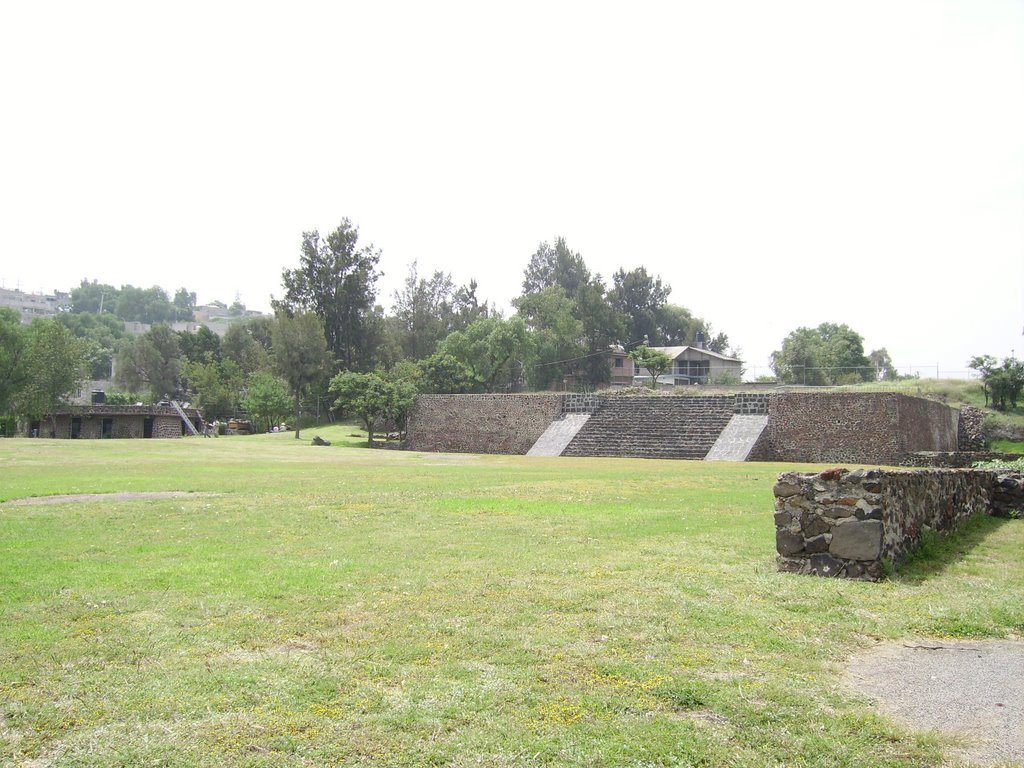
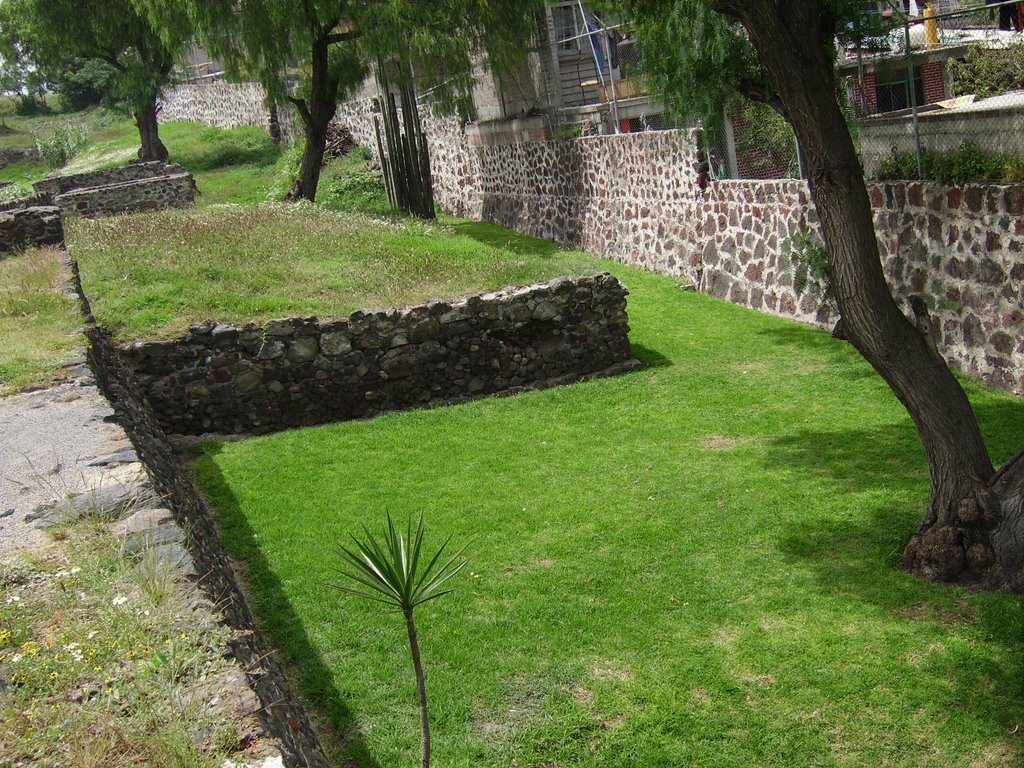
The archaeological zone covers approximately one hectare. Its surviving features include an Aztec Phase III residential area, a palace on a large platform, four platforms described as “Pony,” a ball court, a stone serpent, and remains of a later Christian chapel. The settlement formed part of the lacustrine plain bordering Lake Texcoco, where Pleistocene animals lived along the lake’s shores.
Palace and pre-Hispanic structures
The tecpan
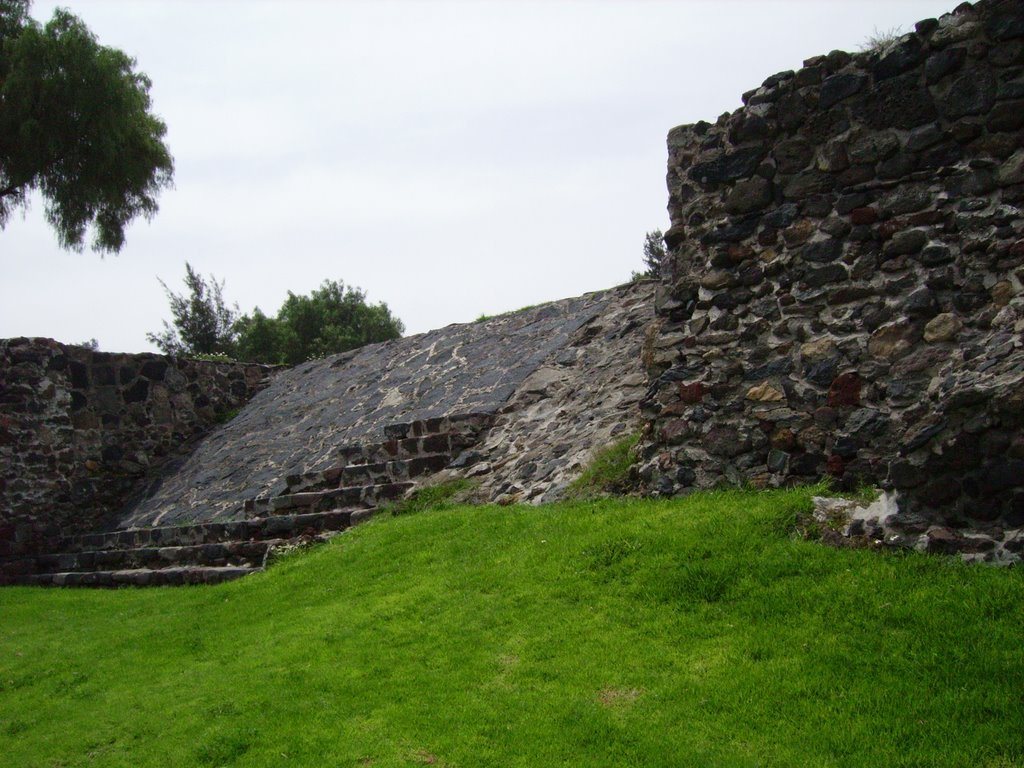
The principal palace, or tecpan, stood on a platform measuring approximately 100 metres square. A tecpan was a palace or elite governmental residence in a Nahua settlement. The surviving remains include several rooms interpreted as residential spaces, kitchens, and storage areas. The building probably served both as the residence of the ruler and the ruler’s family and as an administrative and governmental complex.
Attributed to the Chichimecs and dated to around the thirteenth century, the palace combines Teotihuacan, Toltec, and Acolhua architectural influences. Its form reflects the settlement’s political connections and the merging of traditions that shaped Chimalhuacán during the Postclassic period.
Other structural remains
Other recorded features include a group called “Pony,” consisting of four platforms, as well as a ball court and a stone serpent. The site also contains an Aztec Phase III residential area. Parts of the pre-Hispanic complex were destroyed during the Spanish period, when a Christian church was built over the site. Only remains of the later Chapel of Saint Andrew are visible.
Pleistocene and archaeological finds
Human and animal remains
Chimalhuacán’s setting beside the former lake plain has produced mammoth remains, other Pleistocene animal bones, human-made stone tools, and a pre-ceramic human skeleton. The animal discoveries include a mammoth described as approximately 10,000 years old, while a mammoth tusk has also been found in the area. These finds place the later settlement within a landscape occupied by large animals before the end of the Pleistocene, approximately 12,000 years ago.
Museum collections
The site museum displays Pleistocene fauna and more than 100 archaeological objects, including vessels, trays, stone grinding vessels called molcajetes, bones, and jewelry. Exhibits also present the genealogy of former rulers, pre-Hispanic deities, and local fishing shown in photographs taken by Jeffrey Parsons in the 1960s.
Among the museum’s objects is a 25-centimetre Olmec human figure approximately 2,000 years old. It was discovered at the nearby El Tepalcate archaeological location, linking the museum’s collections to the wider archaeological landscape around Chimalhuacán.