Preuilly Abbey: A Cistercian Monastery in France
Site at a Glance
- Popularity
- Medium
- Country
- France
- Primary era
- Medieval
- Eras represented
- Medieval
- Civilizations
- County of Champagne
- Site type
- Religious
- Remains
- Monastery
On this page15 sections
History
Preuilly Abbey was a Cistercian monastery at Égligny in France’s Seine-et-Marne, founded in 1118 as the fifth daughter house of Cîteaux. The Cistercian Order was a Catholic monastic community rooted in the Benedictine tradition, and a daughter house was a monastery founded by, or placed under the supervision of, another abbey. Preuilly was described as the first daughter house beyond the primary abbeys, which were founded directly by Cîteaux. Dedicated to Our Lady, it became a base for the order’s further expansion.
Foundation and expansion
Stephen Harding, abbot of Cîteaux, sent Artaud and about twelve monks to establish the monastery on land given by Theobald of Blois, Count of Champagne. Artaud became the first abbot. Theobald and his mother supported the new community as it grew.
Preuilly’s monks founded Vauluisant in 1127 and Barbeau in 1148. La Colombe, an older monastery, joined the Cistercian Order in 1146 and accepted Preuilly’s supervision. The earliest known royal charter for Preuilly dates to 1138. In 1158, Pope Adrian IV issued a papal bull confirming the abbey’s possessions and privileges.
Estates and periods of disruption
By 1318, the abbey controlled 17 granges, or monastic farms, and 10 mills. It leased out its estate at the end of the fourteenth century and again in 1491. Its property also included a house in Paris known as the Hôtel de Preuilly.
During the fourteenth and fifteenth centuries, the monastery was repeatedly sacked and devastated, and English troops occupied it. In 1536, the abbey passed to commendatory abbots, who held its title and revenues but did not necessarily live as members of the monastic community. Jacques d’Escoubleau de Sourdis, Bishop of Maillezais, was the first. The monastery was plundered again in 1567 during the Wars of Religion, conflicts between religious factions in France, and in 1652 during the Fronde, a series of rebellions and civil conflicts.
In 1686, the abbey’s possessions were divided into three lots. Its buildings underwent renovation at the beginning of the eighteenth century.
Dissolution and later history
In 1789, the last abbot, Charles-François de La Rochefoucauld, represented the clergy of the Provins district. When the monastic community was dissolved on 25 November 1790, only ten religious remained. The conventual buildings and church became national property and were auctioned in separate lots on 28 April 1791. The church was converted into a workshop producing saltpetre, a potassium nitrate used in gunpowder. Demolition continued as ownership changed.
Dr Henri-Marie Husson bought portions of the dismantled property between 1829 and 1842, bringing the site back under unified ownership. His son acquired the final portion, the abbot’s lodging, in 1866, after which demolition stopped. The property remains in the Husson family. France classified the abbey as a historic monument on 5 March 2004; earlier registrations in 1927, 1943, and 2002 were annulled. An annual pilgrimage to Our Lady of the Oak continues at the abbey.
Remains
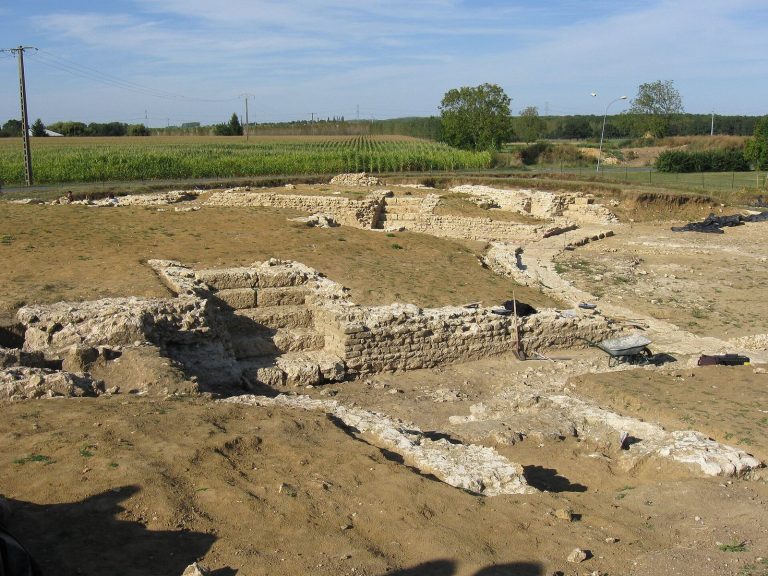
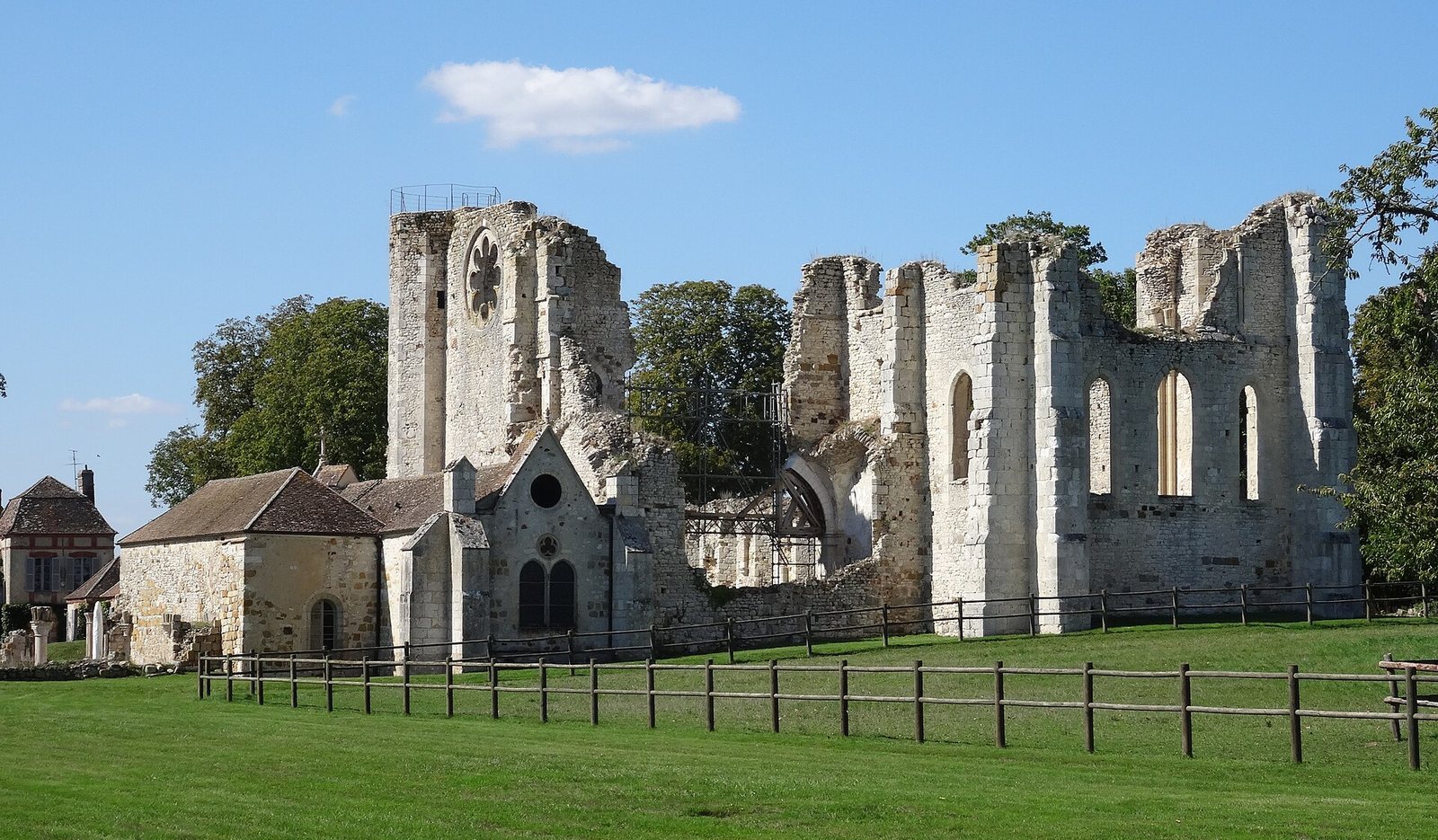
The surviving remains include the ruined church and chapter house, the passage between the cloister and church, and parts of the entrance and residential buildings. Agricultural structures also remain associated with the estate. The church and chapter house survive as fragments, while the thirteenth-century town house at Provins is still standing.
Monastic buildings
Abbey church
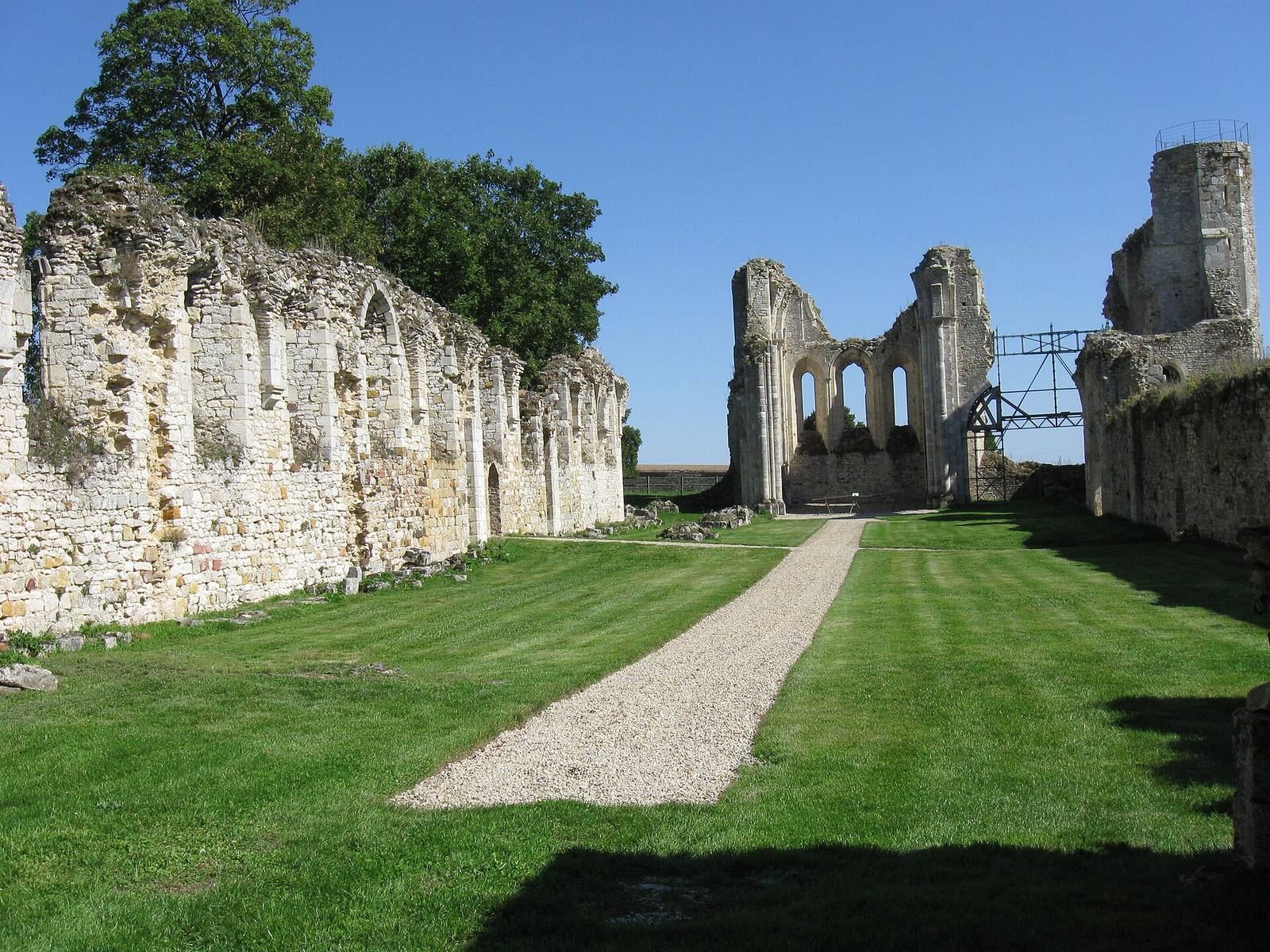
Work on the church began around 1170 and was completed around 1200. Its choir extended for two bays and ended in a flat wall. The choir’s walls survive to the points where the ribbed stone ceiling began. A large circular window once occupied the choir, and another was set in the south front of the transept; both have been lost. The nave’s side walls and the southern arm of the transept also remain.
Chapter house
The chapter house is in ruins, with portions of its walls and its foundations surviving.
Cloister passage and service spaces
The passage from the cloister into the church remains, along with the sacristy and the armarium, a storage place for books or documents. Around 1860, a chapel was fitted out using the abbot’s chapel, the church sacristy, and the armarium.
Entrance portal
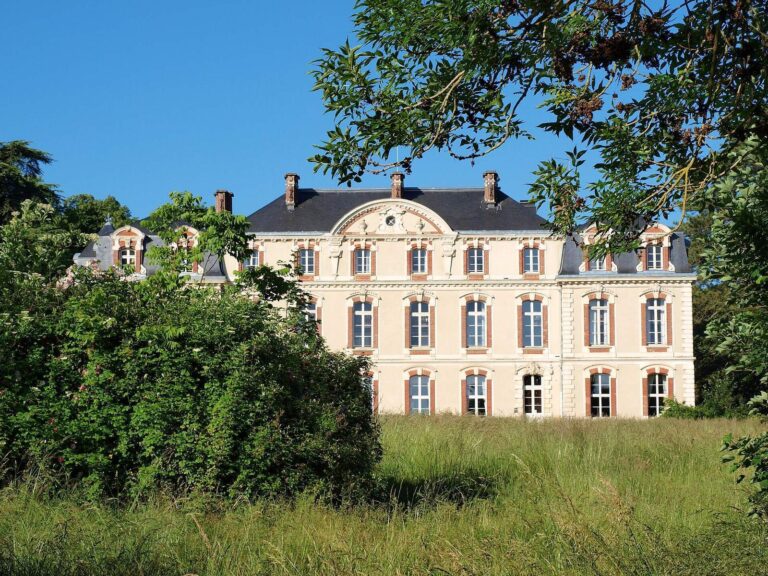
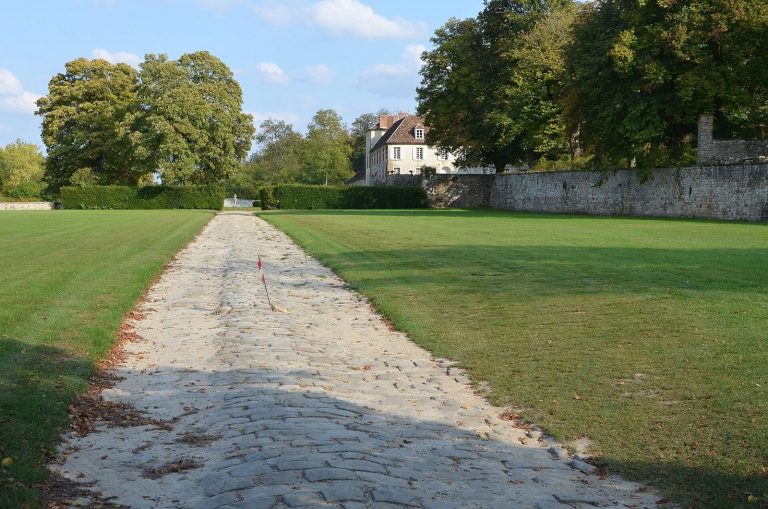
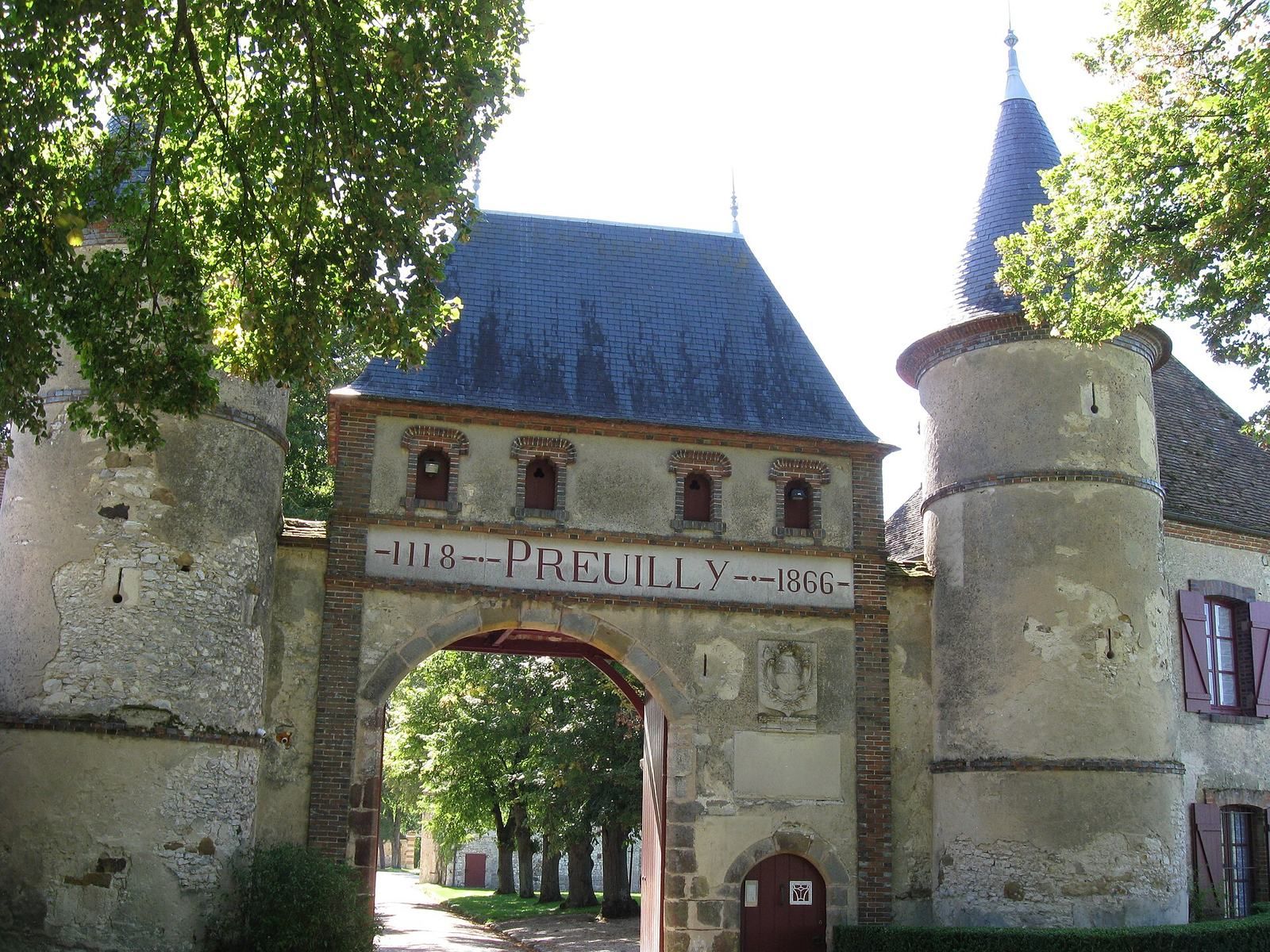
The monastery’s entrance portal is flanked by two round towers.
Abbot’s lodging
Part of the abbot’s lodging survives.
Estate and associated remains
Farm and Beauvais barn
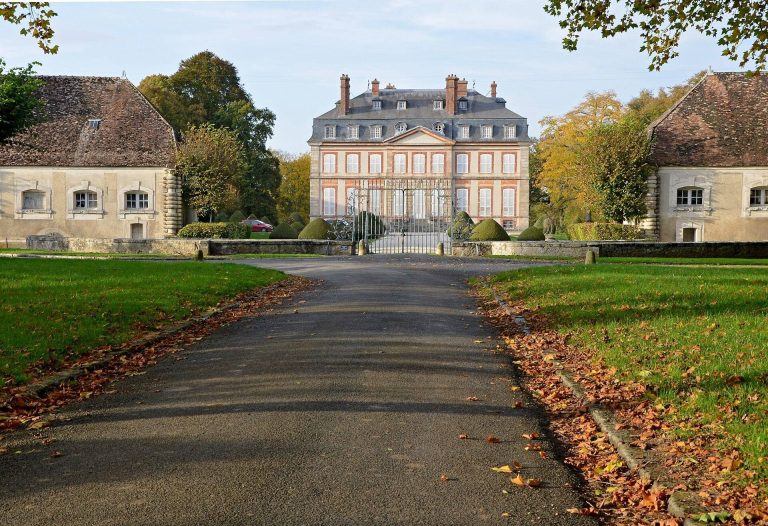
The abbey estate farm and Beauvais barn remain associated with the monastery. Archaeological campaigns at the barn have investigated Cistercian economic activity.
Town house at Provins
The abbey’s thirteenth-century town house in Provins still stands.
Royal charter
A Latin parchment bearing a large monogram of Louis VII is the original of the 1140 royal charter concerning a land donation to Preuilly at Istia and Torelio. Roch de Coligny discovered it in 2011.