University of Orihuela: A Royal and Pontifical University in Spain
Site at a Glance
- Popularity
- Medium
- Country
- Spain
- Primary era
- Early Modern
- Eras represented
- Early Modern
- Civilizations
- Crown of Aragon, Habsburg, Habsburg Spain, Kingdom of Valencia, Spanish
- Site type
- Civic
- Remains
- University
On this page10 sections
History
The University of Orihuela was a Dominican-governed university housed in the Santo Domingo complex in Orihuela, Spain. It began as a college in 1547 and became the second university in the historic Kingdom of Valencia, 40 years after the University of Valencia. Its home was constructed from the sixteenth through the eighteenth centuries.
Foundation and papal privileges
A papal bull issued by Julius II in 1510, together with a privilege from Ferdinand the Catholic, authorized the construction of a university near the Convent of Our Lady of Succour. The institution’s beginnings date to 1547, when Cardinal Fernando de Loazes founded the College of the Patriarch and entrusted its management to the Order of Preachers, also known as the Dominicans. The order governed the college and maintained a convent there. Pope Paul III is credited with raising its status soon after its establishment.
Pope Julius III granted the college university status by papal privilege in 1552. In 1569, Pope Pius IV recognized it as a pontifical university, meaning one associated with papal authority. Pope Pius V later authorized it as a public university of all sciences and arts, admitting clergy and laypeople with the same rights and privileges as students at Salamanca, Alcalá, Valencia, and other universities.
Teaching and royal recognition
The initial curriculum covered the Trivium, grammar, rhetoric, and logic, and the Quadrivium, arithmetic, geometry, music, and astronomy. Teaching later included philosophy, theology, arts, and grammar. Although the college had received university privileges earlier, university studies did not begin until 1610. The college also established Spain’s first national public library in the sixteenth century, identified with the Fernando de Loazes State Public Library.
Jesuits in Orihuela taught rhetoric and grammar at their convent, now the Monastery of the Salesian Sisters, complementing the General Studies offered by the university. In 1646, Philip IV granted the institution the title Royal, making it a Royal, Public, and General University. The University of Valencia had sought the title for itself, but Orihuela received it. Its formal name became the Pontifical and Royal University of Orihuela, a status held by relatively few universities, which combined recognition by both the papacy and the crown.
Growth and political decline
The eighteenth century brought a period of growth alongside population increase and agricultural revitalization in Orihuela. The university had 24 academic chairs, or teaching posts, about 100 faculty doctors, and nearly 300 students. A further 117 seminary students were affiliated with it, as were students from the Seminary of Saint Fulgentius in Murcia. Philip IV had introduced new statutes in the seventeenth century, and later reforms, including those of the Enlightenment, addressed teaching posts in civil and church law, medicine, theology, and philosophy.
During the War of the Spanish Succession (1701–1714), a European conflict over the Spanish crown between Habsburg and Bourbon claimants, Orihuela supported the Habsburg side. Political tensions between the city and the new Bourbon monarchy afterward weakened the university, and the municipality struggled to staff its teaching posts. An education reform in 1807 limited its disciplines to philosophy and theology, causing it to lose nearly all its lay students.
Suppression and later use
A general decree ordering university closures in 1818 threatened Orihuela’s institution. Its closure was delayed first until 1824 and then until 1835, when government minister Francisco Tadeo Calomarde carried out the final suppression. The university was closed on the grounds that it overshadowed the University of Valencia; Valencia had welcomed Bourbon king Fernando VII on his return to Spain. Even after closure had been proposed, Orihuela’s professors were consulted on the 1823 Penal Code project.
The university’s graduates included lawyers and doctors, legal officials who served the courts and chancelleries of Valladolid and Granada, and people who attained viceroyalties in Peru or New Spain. José Moñino, Count of Floridablanca, a Spanish statesman who served as a royal minister, had studied there. Miguel Hernández also studied in the building, as did novelist Gabriel Miró. The Santo Domingo complex inspired Miró’s novels The Leper Bishop and Our Father Saint Daniel.
In 1836, following the expulsion of religious orders and church-property confiscations associated with Spanish statesman Juan Álvarez Mendizábal, the building passed to the Diocese of Orihuela. The diocese maintained a secondary school there from 1871; the present Diocesan School was established in 1956 and occupies the complex. During the reign of Isabella II, the building was declared a Fine Arts monument. It later became a National Monument and is now a Spanish Asset of Cultural Interest. It is described as the largest National Monument in the Valencian Community.
Remains
The Santo Domingo complex
Plan and construction
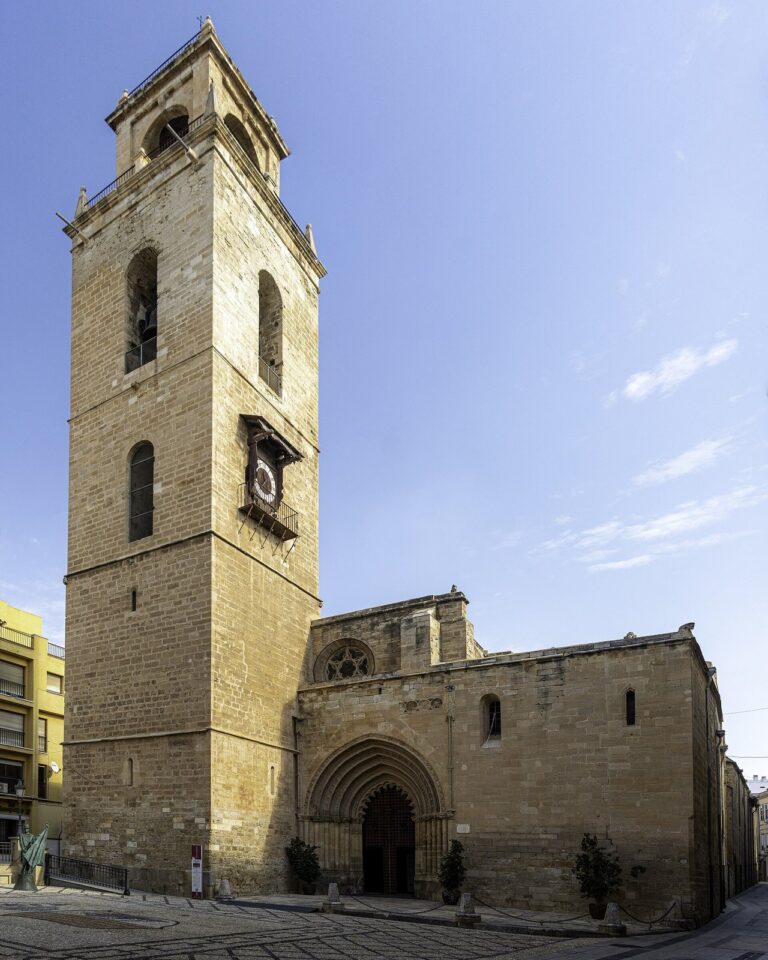
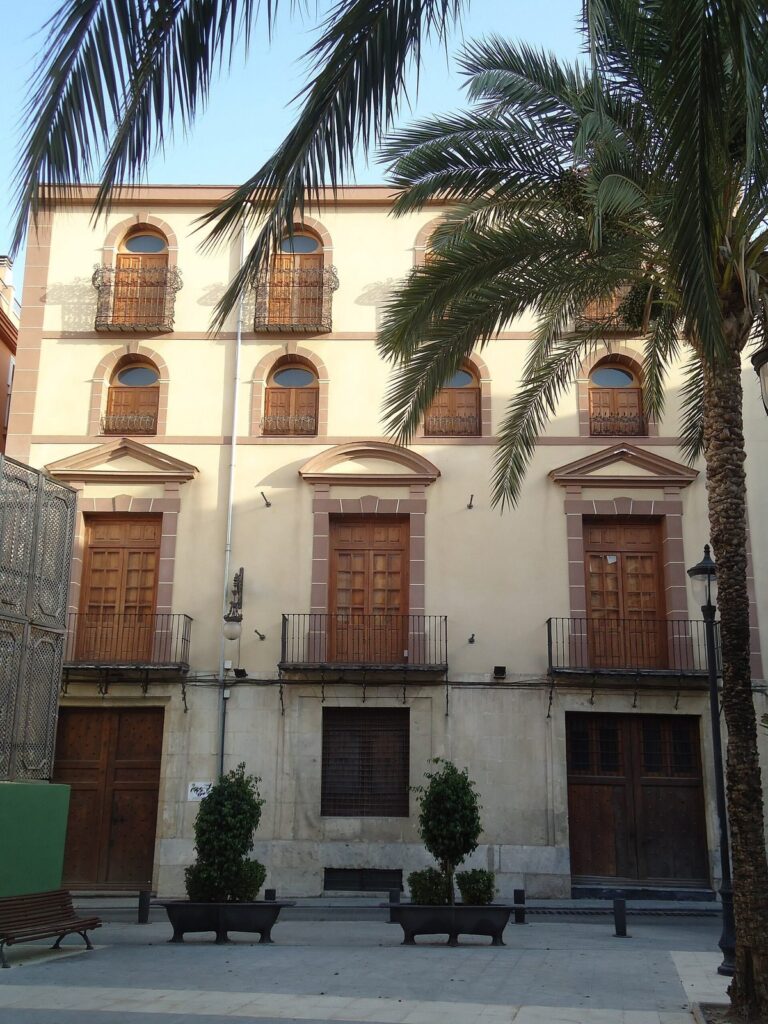
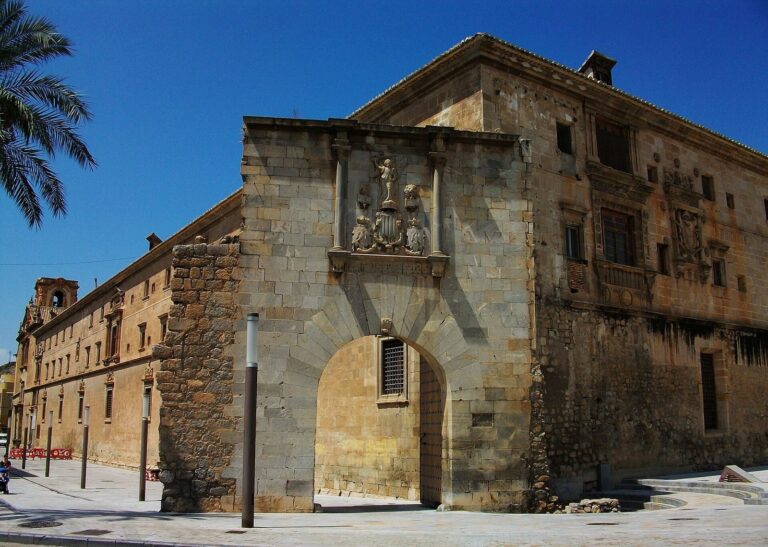
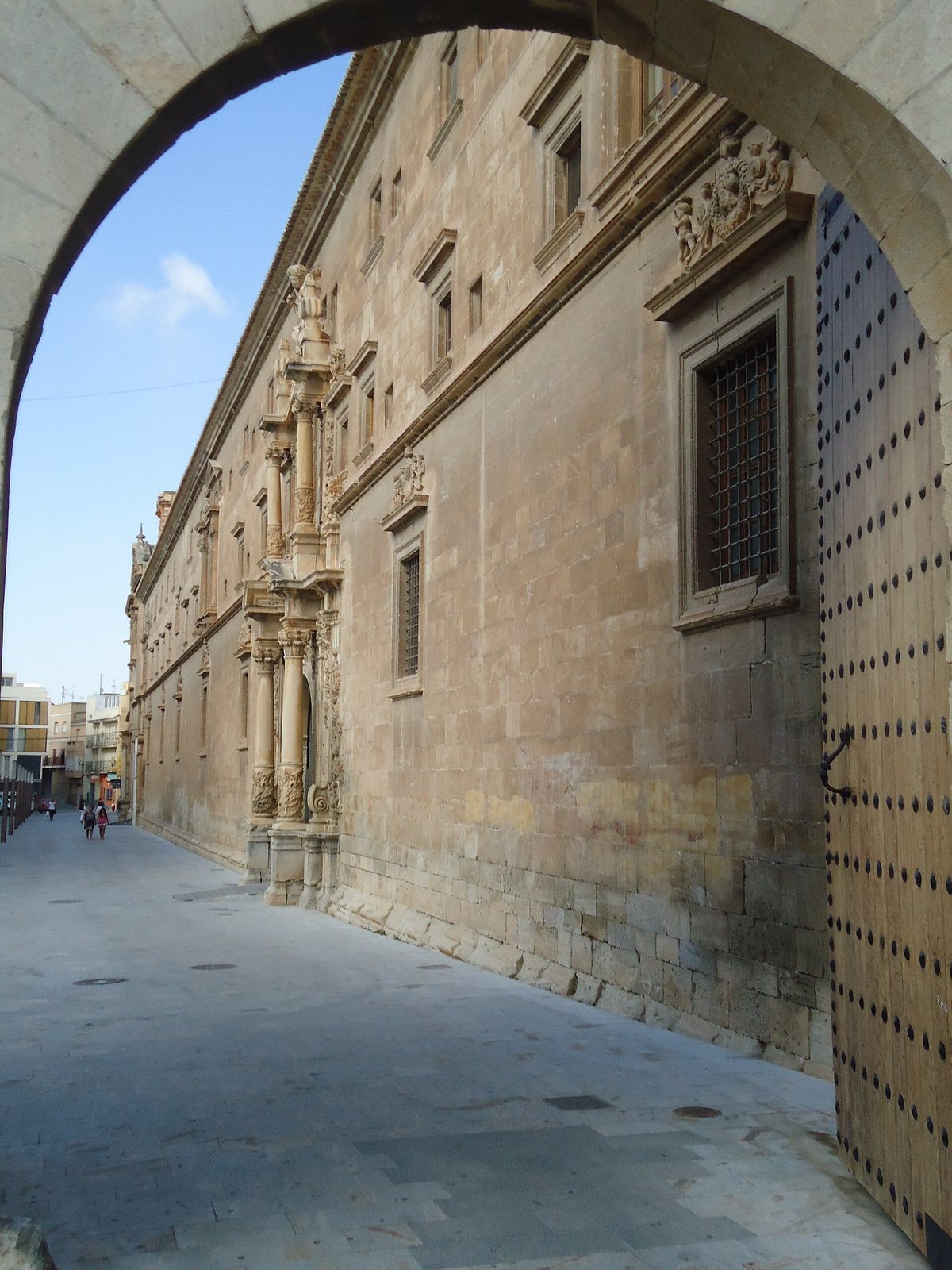
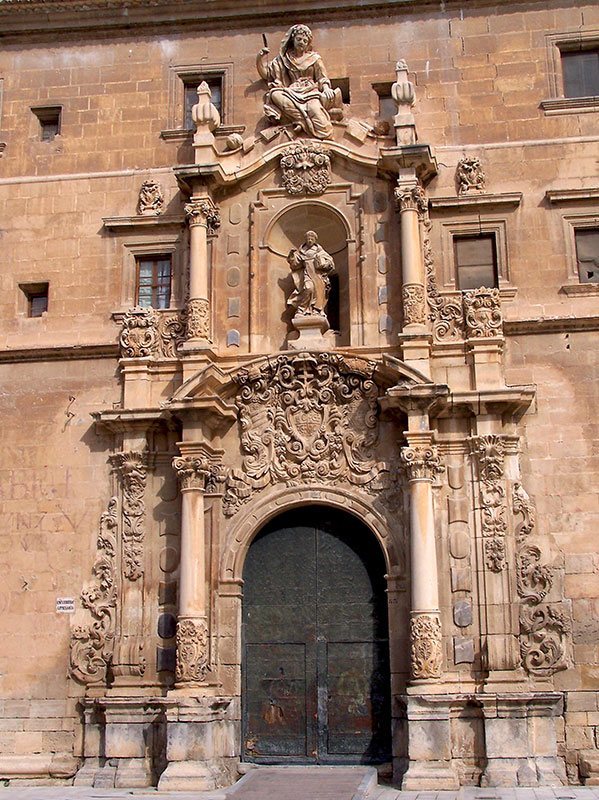
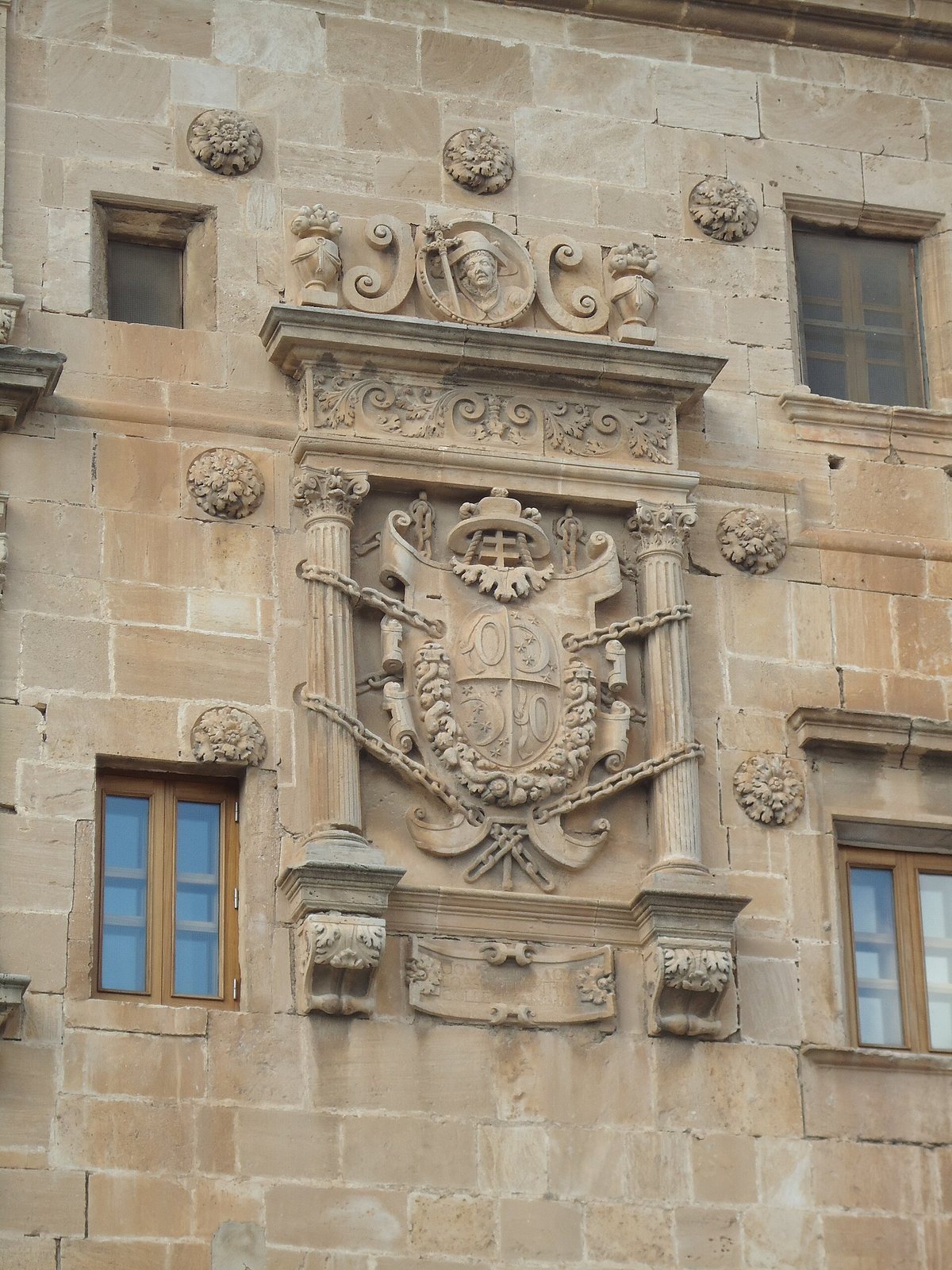
The former university occupies the Santo Domingo complex, also known as the Diocesan College of Santo Domingo and the College of the Patriarch Loazes. The complex covers more than 15,000 square metres and combines Gothic, Renaissance, Baroque, and Rococo forms. Its components include two cloisters, covered walkways around enclosed courtyards; three courtyards; a refectory, or communal dining hall; three monumental facades; and a church.
Earlier convent site
The Convent of Our Lady of Succour once stood on ground now occupied by a church.
Artistic works
The complex preserves works by the Spanish artists Antonio de Villanueva, Camacho Felizes, Bartolomé Albert, and Nicolás Borrás.