Gallo-Roman Theatre of Châteaubleau: A Roman-Period Performance Building in France


Site at a Glance
- Rating
- 4.6
- Popularity
- Very Low
- Country
- France
- Primary era
- Classical
- External website
- Open
- Eras represented
- Classical
- Civilizations
- Roman
- Site type
- Entertainment
- Remains
- Theatre
On this page6 sections
History
The Gallo-Roman Theatre of Châteaubleau is an ancient performance building in France, at Châteaubleau, constructed in the second half of the 2nd century within the Roman-period culture of Gaul. It formed part of a prosperous settlement in the territory of the Senones, a Gallic community whose lands included the area, and was probably built in several stages as the neighbouring sanctuary developed.
A settlement and sanctuary complex
The theatre belonged to a larger secondary settlement that included residences and several sanctuaries. Its immediate surroundings included a sanctuary complex with a sacred spring and several temples enclosed together. The settlement expanded considerably during a period of economic prosperity, while the theatre stood near routes leading toward Sens, Troyes, Chailly-en-Bière, and Montereau-Fault-Yonne.
Châteaubleau is often identified with Riobé, a station named on the Peutinger Table, a medieval copy of an ancient Roman road map. This identification remains uncertain, but it reflects the site’s position within the network of settlements and routes of Roman-period Gaul.
Use, abandonment, and rediscovery
The theatre remained in operation throughout the 3rd century. At the end of that century it was abandoned, partly destroyed, and backfilled. Craft installations then occupied the site for approximately another century. The theatre’s masonry was later dismantled and reused.
The archaeological site was recognized in 1849 in a former quarry, although systematic investigation began only in 1951. Larger excavations continued from 1967 through the 1980s, followed by further investigations in 1989, 1997, and 2001 and excavation campaigns from 2010 to 2012. The theatre and other Gallo-Roman remains at Châteaubleau received historic-monument protection in 1983 under an order dated 28 January of that year.
Remains
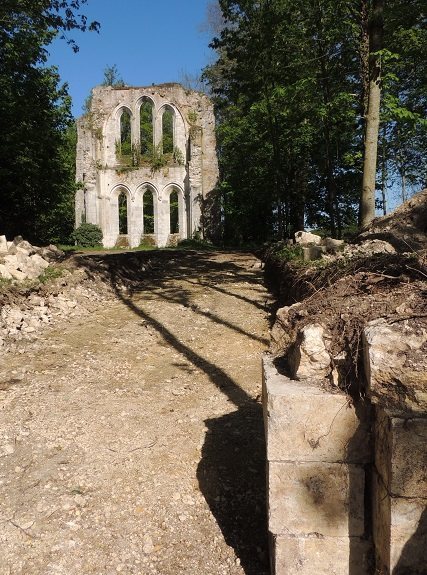
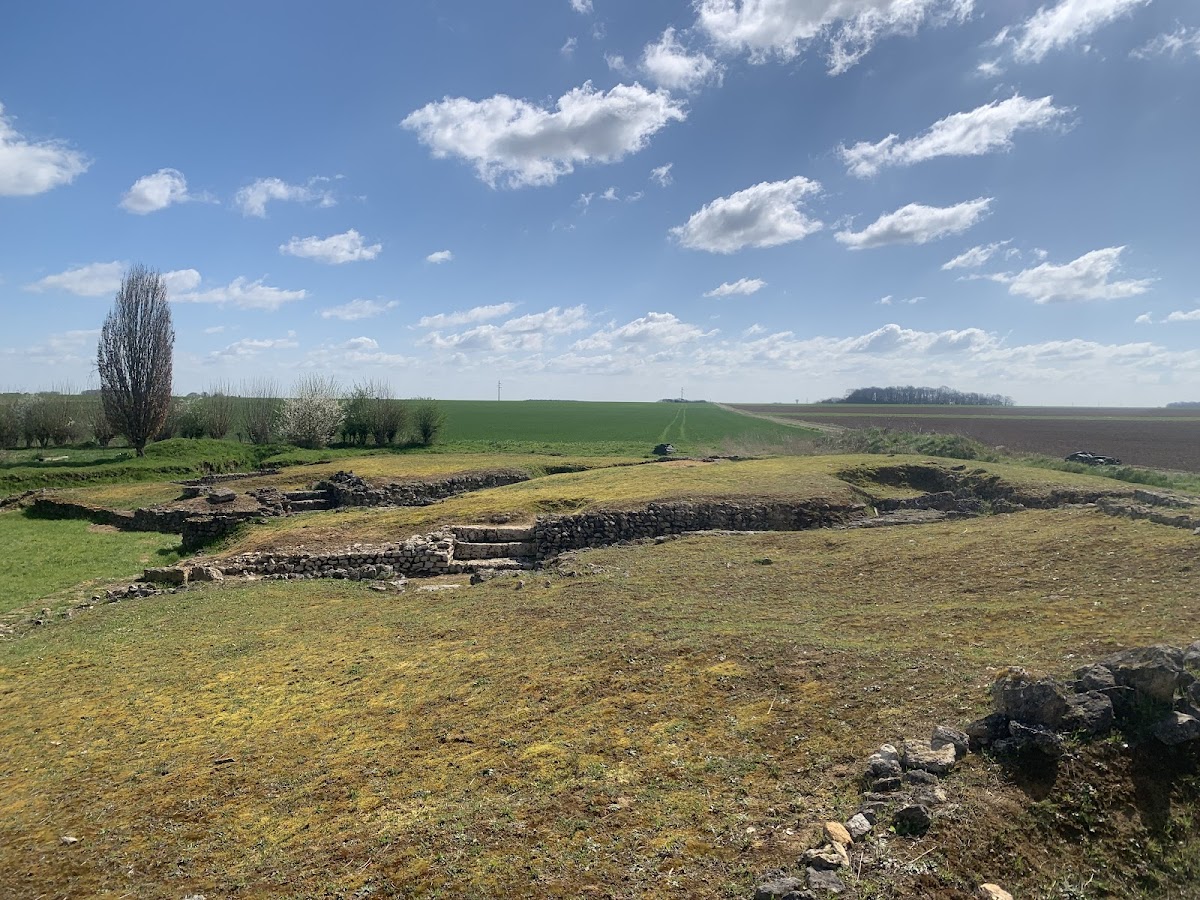
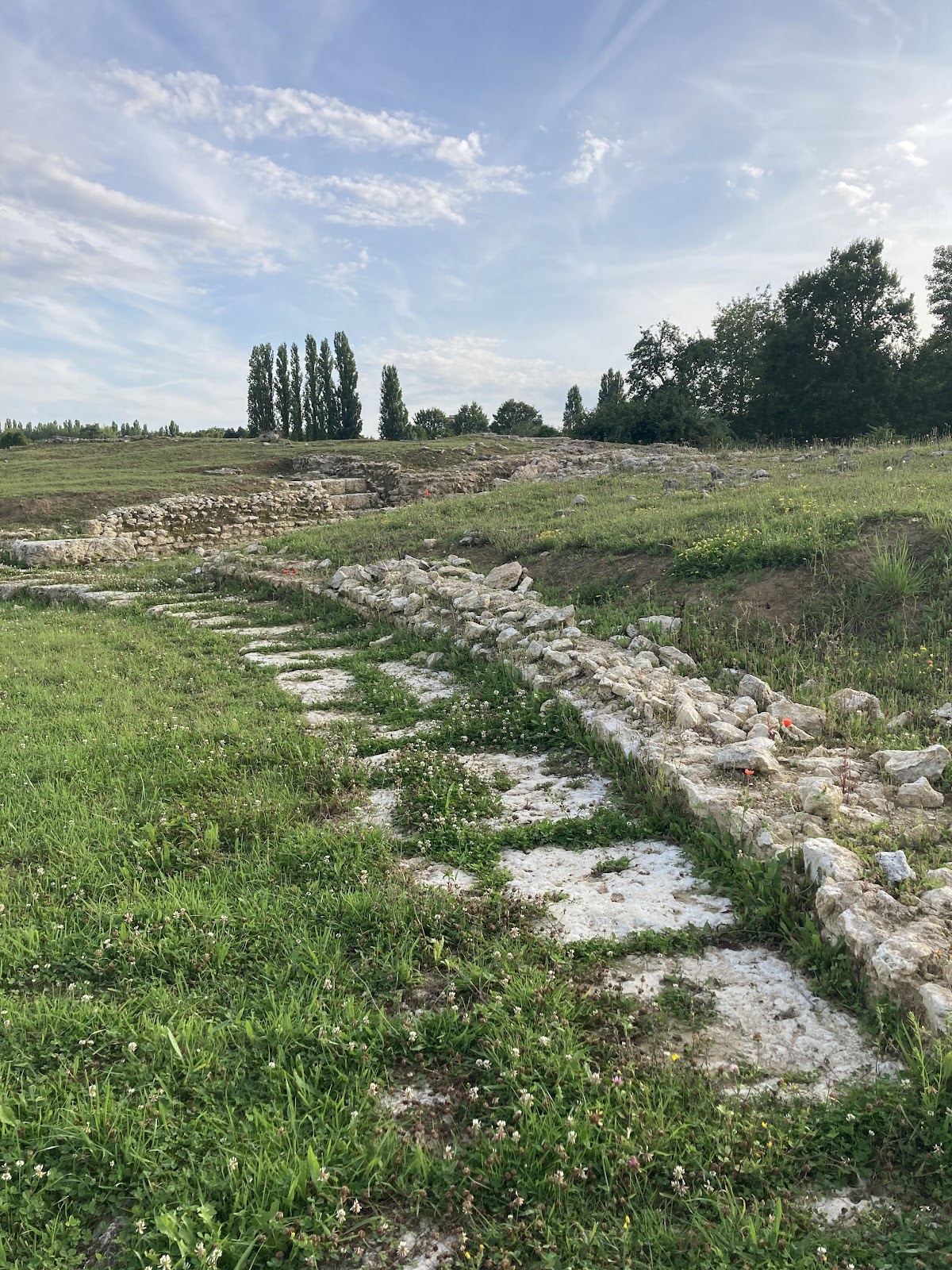
The surviving theatre lies at the eastern edge of present-day Châteaubleau, in the Bois de la Vigne locality beside the sanctuary complex. It forms an approximately 80-metre-wide, more-than-semicircular structure facing east-northeast. The builders set it against an artificial earthen embankment, using masonry made from rubble stone and bricks bonded with mortar.
Auditorium and access
The cavea, or auditorium and seating bank, was formed by masonry compartments filled with earth. These supported seating that was probably wooden. Five radial aisles organized access through the seating area. Each aisle led to four stairways measuring 1.75 metres in width, while the central axial aisle was 4.50 metres wide. Small buttresses divided the outer face of the surrounding wall, strengthening and articulating its perimeter.
Stage and orchestra
On the central axis of the auditorium, the stage measured 8 by 12 metres and extended into the orchestra, the space between the seating and the stage. The stage probably had a wooden floor. The orchestra itself was horseshoe-shaped and measured approximately 20 metres across. Limestone blocks carved with sculptures decorated the entrances to the aisles and the stage area.