Porta Maggiore: Rome’s Roman Aqueduct Monument and City Gate
Site at a Glance
- Popularity
- High
- Country
- Italy
- Primary era
- Classical
- Eras represented
- Classical
- Civilizations
- Roman
- Site type
- Military
- Remains
- Gate
On this page18 sections
History
Porta Maggiore is a Roman aqueduct crossing and later city gate in Rome, Italy, built under Emperor Claudius in AD 52. It carried the Aqua Claudia and Anio Novus, two systems for conveying water, across the Via Labicana and Via Praenestina. Its monumental form may also have served as a triumphal arch celebrating human mastery over nature.
Imperial Construction and Repairs
Claudius’s structure supported both aqueducts where they crossed the roads. The waterworks were repaired under Vespasian in AD 71 and again under Titus around AD 81–82. Vespasian restored supplies after nine years of intermittent use and disrepair. Titus ordered further work, including new structures, after age had damaged the aqueduct to its foundations.
Conversion into a City Gate
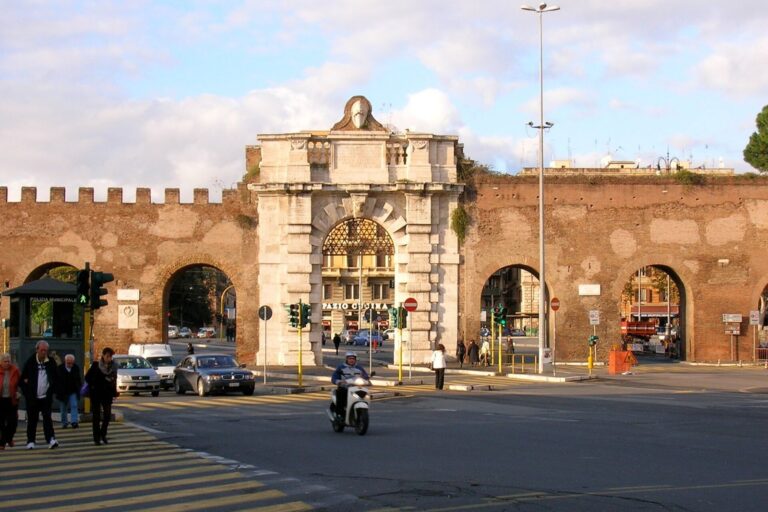
In AD 271, Emperor Aurelian incorporated the existing structure into the Aurelian Walls, Rome’s defensive circuit. It became a city gate known as the Porta Praenestina or Porta Labicana.
In the early fifth century, Emperor Honorius strengthened and altered the gate. He shifted its openings outward and added a defensive structure in front, separating them into Praenestina and Labicana gates. The Labicana opening was closed soon afterward. An inscription dates Honorius’s work to AD 402.
During the Gothic siege of Rome in 537–538, defenders closed the gate to reduce the number of entrances they had to protect. The Labicana opening was probably walled up in the sixth century. It was recorded as closed again in 966 and appears to have remained shut for much of the time, perhaps since Honorius’s alterations.
Medieval Use and Changing Names
From the fifth century through at least the fifteenth, Rome’s gates could be leased or sold to private toll collectors. An auction notice from 1467 set out procedures for one-year contracts. In 1474, the Porta Maggiore contract cost 96 florins, 13 soldi, and 4 denarii per six-month installment, the highest price in the listed schedule. The fee suggests substantial traffic, while notices and threats indicate that toll collection could be abused.
The district was called ad Spem Veterem, or “at Old Hope,” after an ancient temple to Spes, the Roman personification of hope, dedicated in 477 BC. This was separate from a later temple to the same goddess, inaugurated around 260 BC in the Forum Holitorium. The present name, Porta Maggiore, means “Larger Gate,” but its origin is uncertain. It may refer to the gate’s size, the two major roads that diverged there, or its relative closeness to the Basilica of Santa Maria Maggiore.
Restoration and Archaeological Work
In 1838, Pope Gregory XVI ordered the gate restored and Honorius’s forward defensive structure demolished, apparently to recover what was thought to be its earlier Aurelian arrangement. During the nineteenth century, some brick infill was also removed to make passage through the gate easier. Work on the square in 1915 removed the remaining structure built under Gregory XVI. In 1956, further work restored the gate’s earlier arrangement and the square’s former level, uncovering road paving and remains of the outer gate.
Remains
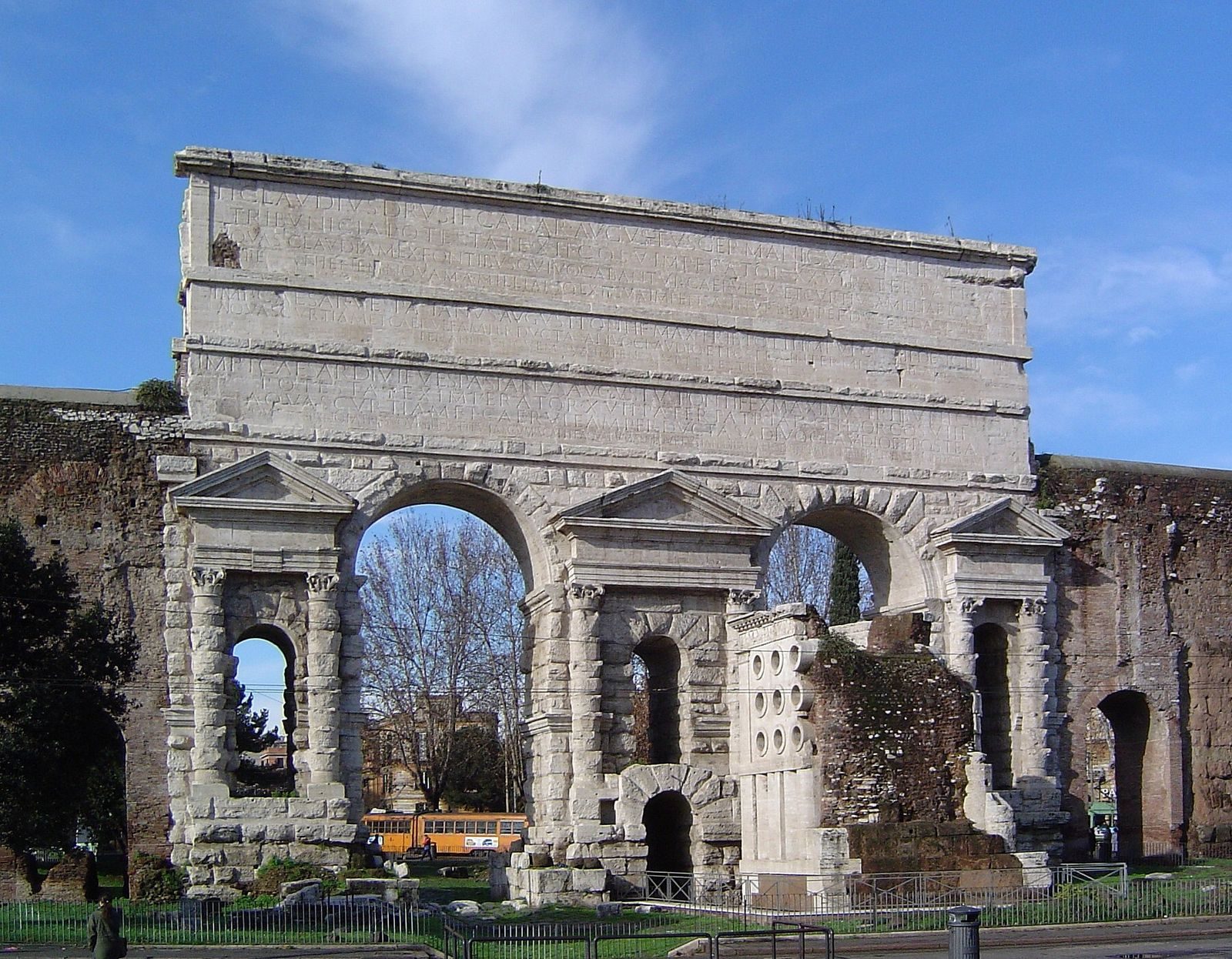
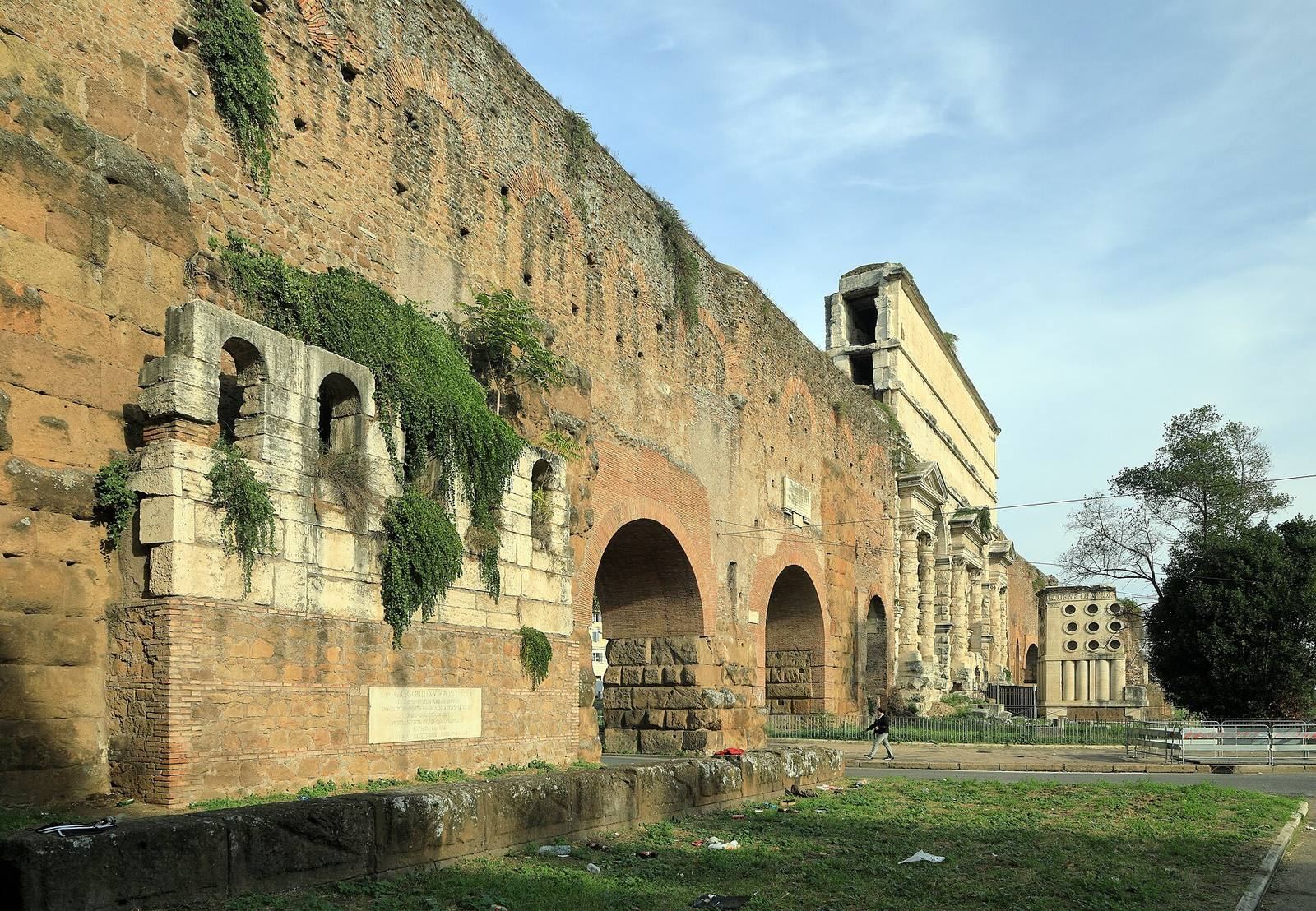
Porta Maggiore is a double-arched structure of white travertine, built from squared blocks laid in regular courses with rough, unfinished outer faces. It stands in the eastern section of the third-century Aurelian Walls. The surrounding junction was where eight of Rome’s eleven aqueducts converged, although the Aqua Claudia and Anio Novus are the two that crossed the roads on the gate.
The Gate and Aqueducts
Arches and Water Channels
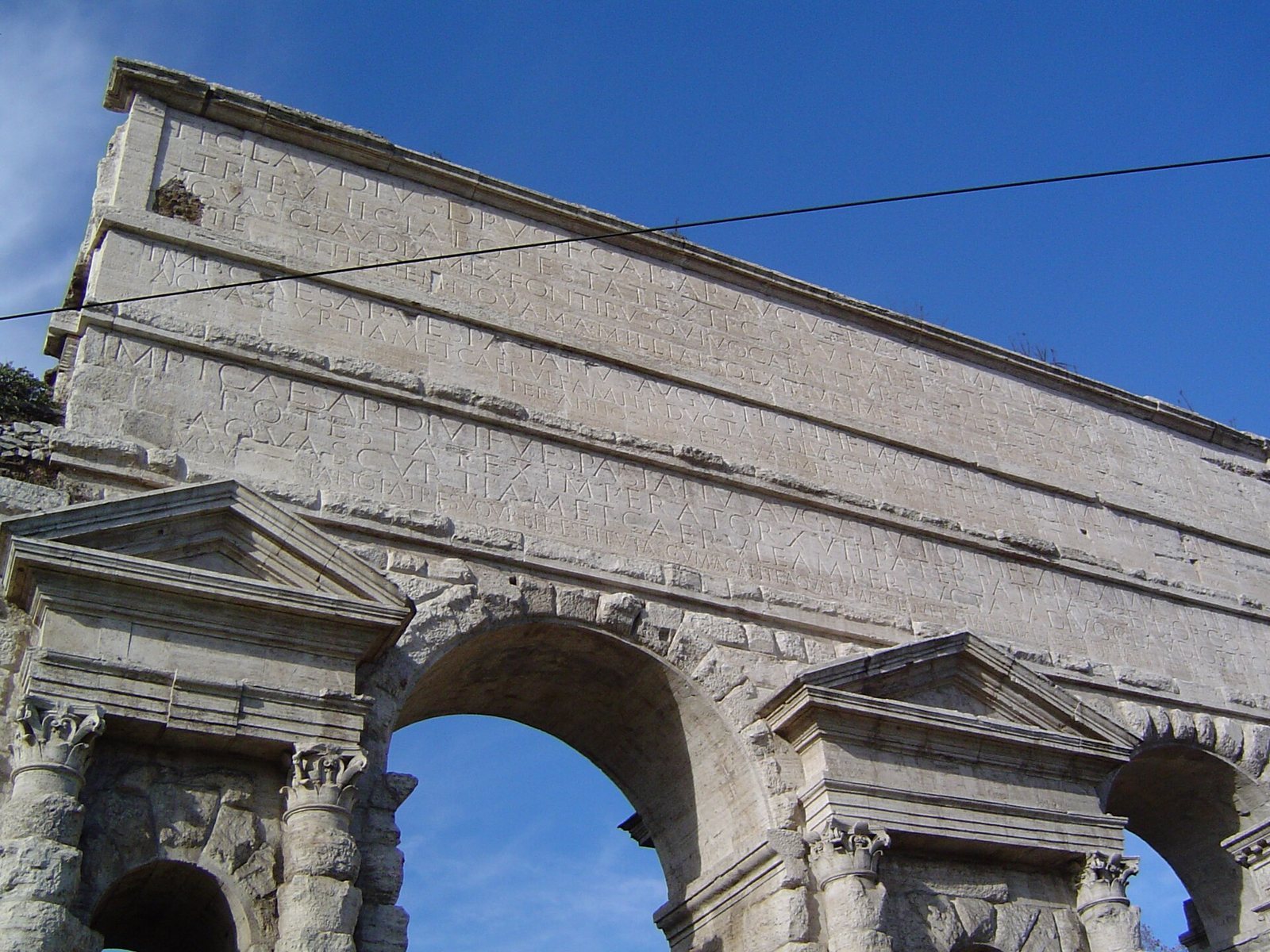
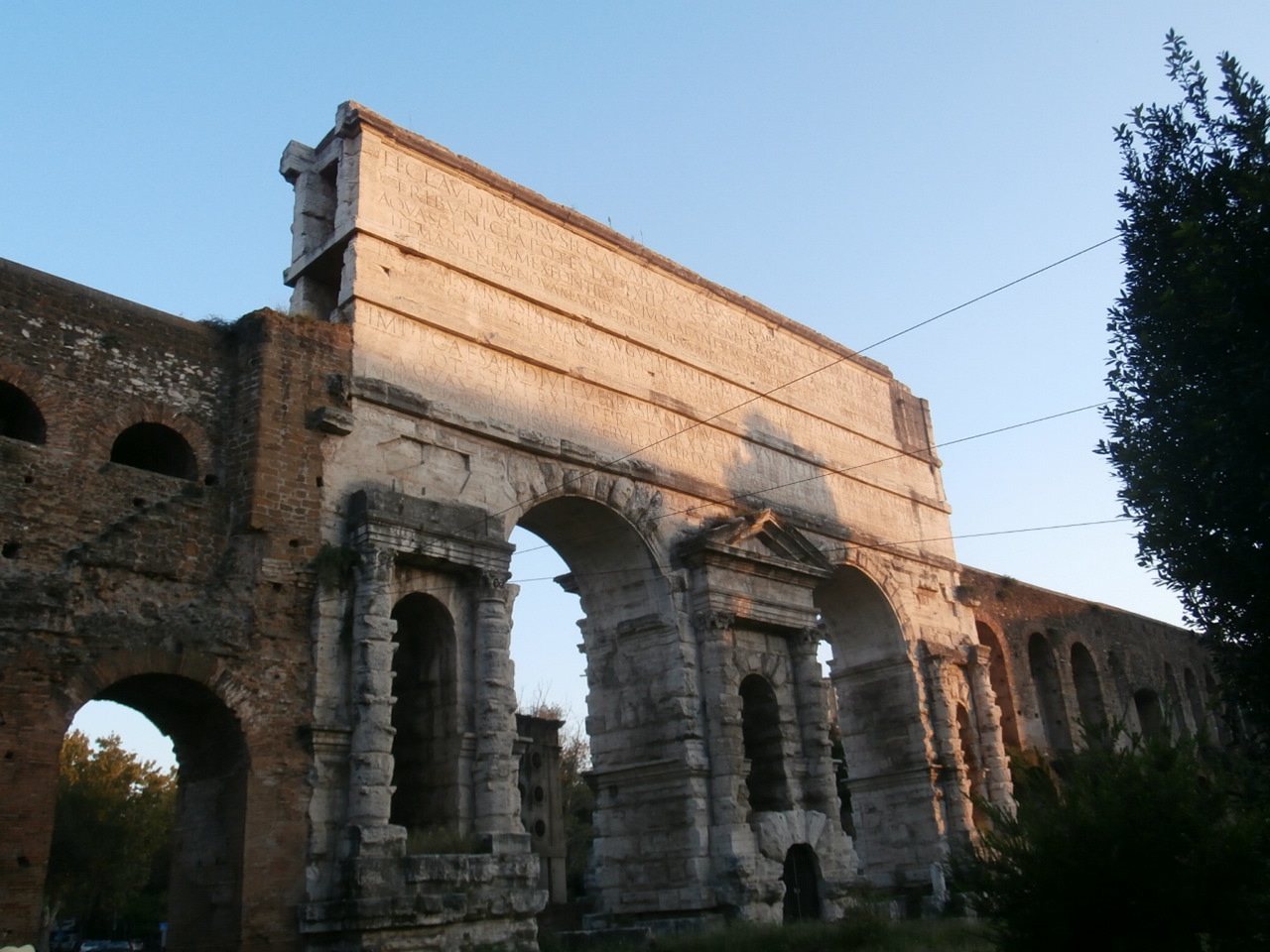
The left arch carried the Via Labicana, now the Via Casilina, which runs southeast from the city. The right arch carried the Via Praenestina, the road east toward ancient Praeneste, now Palestrina. Windows pierce the supports between the arches. Each window is set in a small columned frame topped by a pediment, with Corinthian half-columns. The upper section, or attic, is divided into three horizontal bands. Its two upper bands contain the aqueduct channels, with Anio Novus above Aqua Claudia; both channels can be seen in a cross-section through the structure.
Inscriptions
Three inscriptions occupy the attic and are repeated on both faces of the gate. Claudius’s text, above the Anio Novus channel, says that he brought the Aqua Claudia from the Caeruleus and Curtius springs at the 45th milestone, and the Anio Novus from the 62nd milestone, at his own expense. Vespasian’s inscription, above the Aqua Claudia channel, recalls the restoration after nine years of intermittent use and disrepair. The lower inscription, issued by Titus, records repairs with new structures beginning at the source after age had ruined the aqueduct to its foundations.
Defenses and Later Alterations
Honorius’s Defensive Structure
Honorius’s addition had square towers at either side and a cylindrical central bastion, built over part of the Tomb of Eurysaces. Four small arched windows stood above the Praenestina opening and five above the Labicana opening. Since the Labicana road ran lower, the towers, windows, and associated control chambers were unevenly aligned. Foundations of a guardhouse added under Honorius remain visible, and the upper part of his gatework was moved to the left side of the gate.
Inscription of the Honorian Works
An inscription at the far left of the square records Honorius’s work and names Flavius Macrobius Longinianus, the prefect of Rome responsible for it. It also preserves the name of the Roman general Stilicho, who was executed in AD 408 after accusations of treason. His name was erased from a corresponding inscription at Porta Tiburtina.
Gregory XVI’s Screens
Gregory XVI’s restoration narrowed the openings, each about 6 metres wide and 14 metres high, and added crenellated side screens because the large arches were difficult to defend. The screens resembled Honorius’s demolished structure and were removed during the work of 1915.
Road Paving
The 1956 work exposed paving from both roads and remains of the outer gate. Basalt slabs beneath the arches still bear deep grooves made by passing carts. A Latin inscription added in 1923 by the Società Acqua Pia Antica Marcia is also present at the gate.
Burial Monuments and Basilica
Tomb of the Baker
Immediately outside the wall stands the Tomb of the Baker, built around 30 BC by Marcus Virgilius Eurysaces for himself and his wife, Atistia. Eurysaces was a baker and may have been a freedman who acquired wealth. In 1838, the tomb was found embedded in the cylindrical bastion between the arches; it is now visible outside the gate.
Other Burial Remains
The area around the gate contains small funerary monuments, burial structures with niches for cremated remains, and underground burial chambers.
Porta Maggiore Basilica
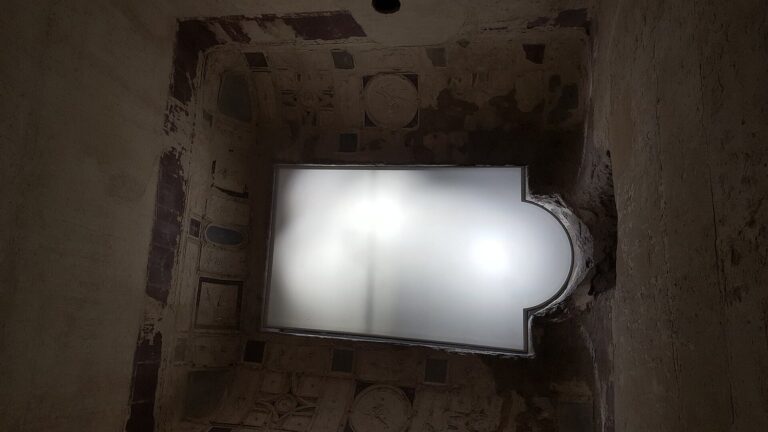
Near the gate on the Via Praenestina is a subterranean basilica discovered in 1917 and dating to the first century AD. Its plan has three long interior spaces and a rounded apse, or recess. White stucco decorates the vaulted ceilings. The building is associated with Neopythagoreanism, a religious and philosophical movement that revived and developed teachings linked to Pythagoras, but the precise meaning of its decoration remains disputed.