Dürnkrut Castle: A Renaissance Castle in Austria
Site at a Glance
- Rating
- 4.4
- Popularity
- Medium
- Country
- Austria
- Primary era
- Early Modern
- Eras represented
- Early Modern, Modern
- Civilizations
- Austrian Empire, Habsburg, Habsburg Austria, Holy Roman Empire
- Site type
- Military
- Remains
- Castle
On this page9 sections
History
Dürnkrut Castle is a four-wing Renaissance castle in Dürnkrut, Austria. Its Renaissance design belongs to a European cultural and artistic period that preceded the richly ornamented Baroque style. The estate’s history reaches back to the fourteenth century, when Dürnkrut belonged to the lordship of Orth, a landed estate controlled by the territorial ruler.
Landau and Teuffenbach ownership
After changing hands several times, the lordship passed to the Lords of Landau, who built a fortified castle. In 1622, Habsburg nobleman and military commander Rudolf von Teuffenbach acquired the castle and estate. He had the early Baroque chapel fitted out.
Hamilton and Koháry ownership
In 1696, Scottish-born nobleman and Habsburg military commander Jakob von Hamilton bought the castle and had it remodeled in the Baroque style. After the Hamilton line died out, Hungarian magnate Franz Joseph Koháry acquired it in 1778.
The castle later passed to the House of Saxe-Coburg-Koháry through the marriage of Koháry’s daughter Maria Antonia to Ferdinand Georg of Saxe-Coburg. The union brought the Koháry and Saxe-Coburg lineages together.
Municipal ownership
In 1985, the municipality of Dürnkrut acquired the castle and established municipal offices in part of the building.
Remains
Castle precinct and associated buildings
Castle
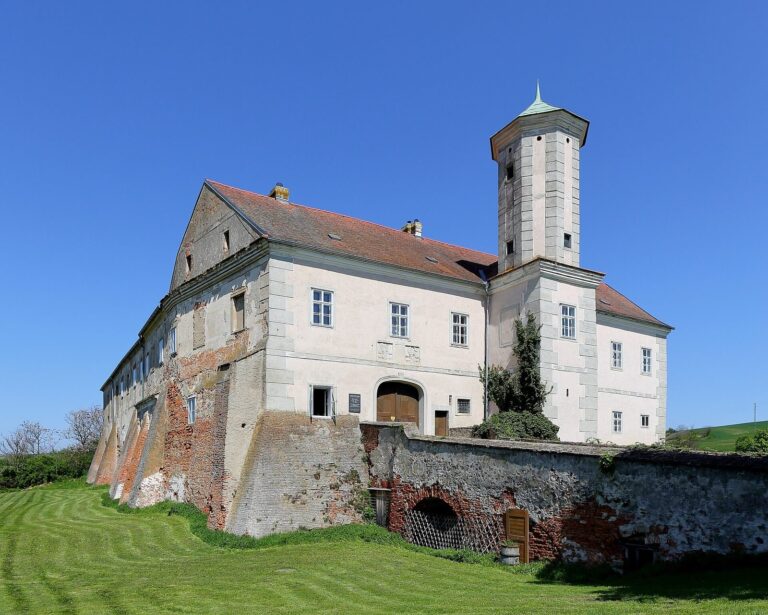
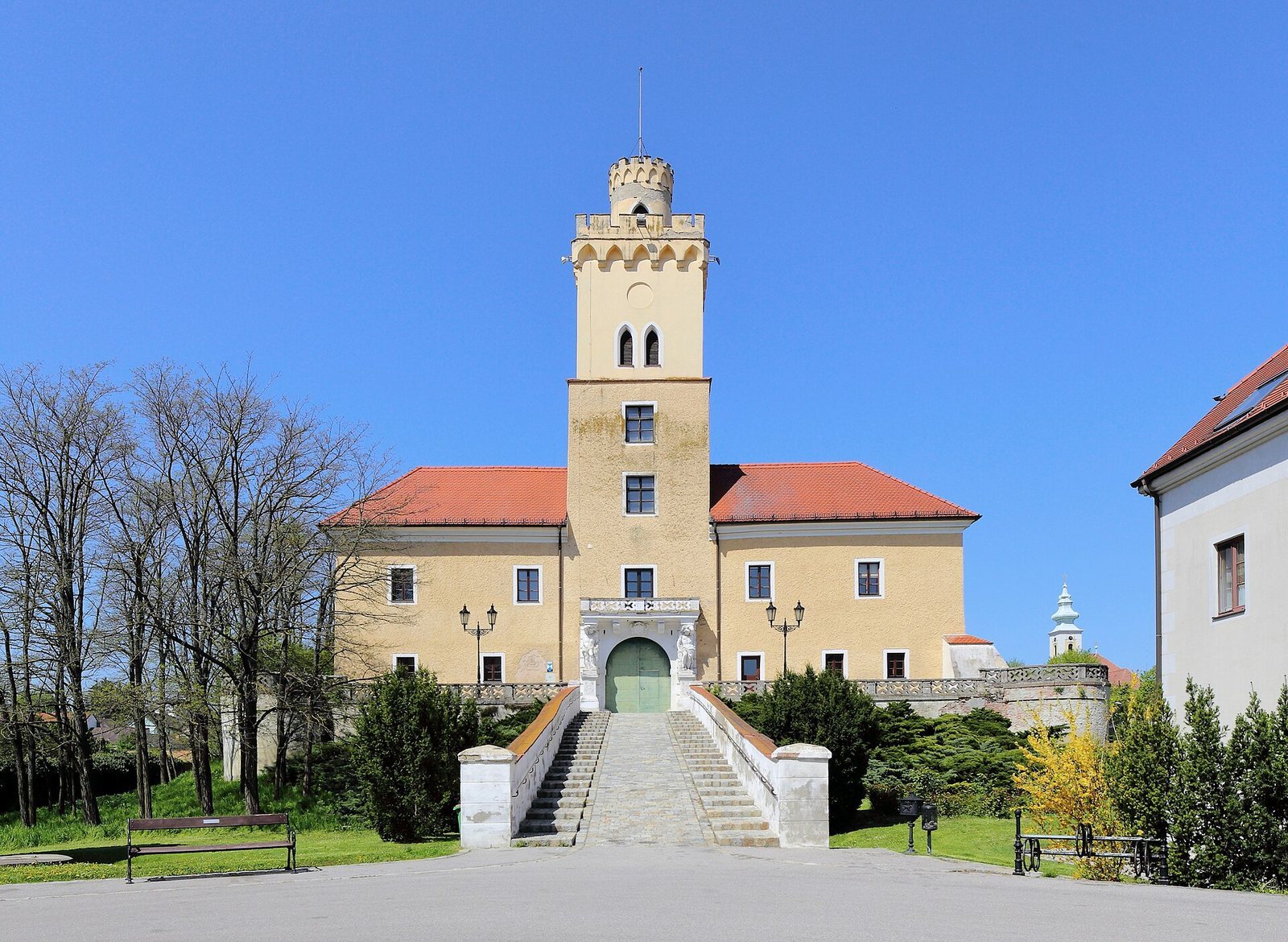
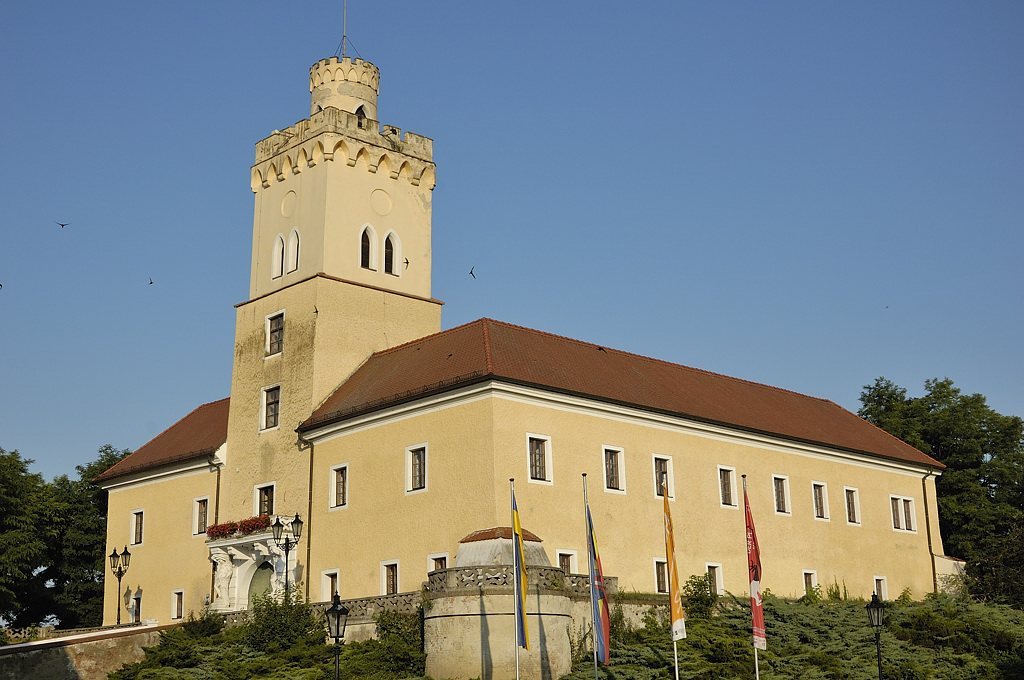
The castle stands on a rise in the town center. Its two-storey Renaissance structure forms four wings around a square courtyard, with a gate tower as its dominant feature. Bastions, including rounded ones, enclose the building. A ramp leads to a moat that survives in part.
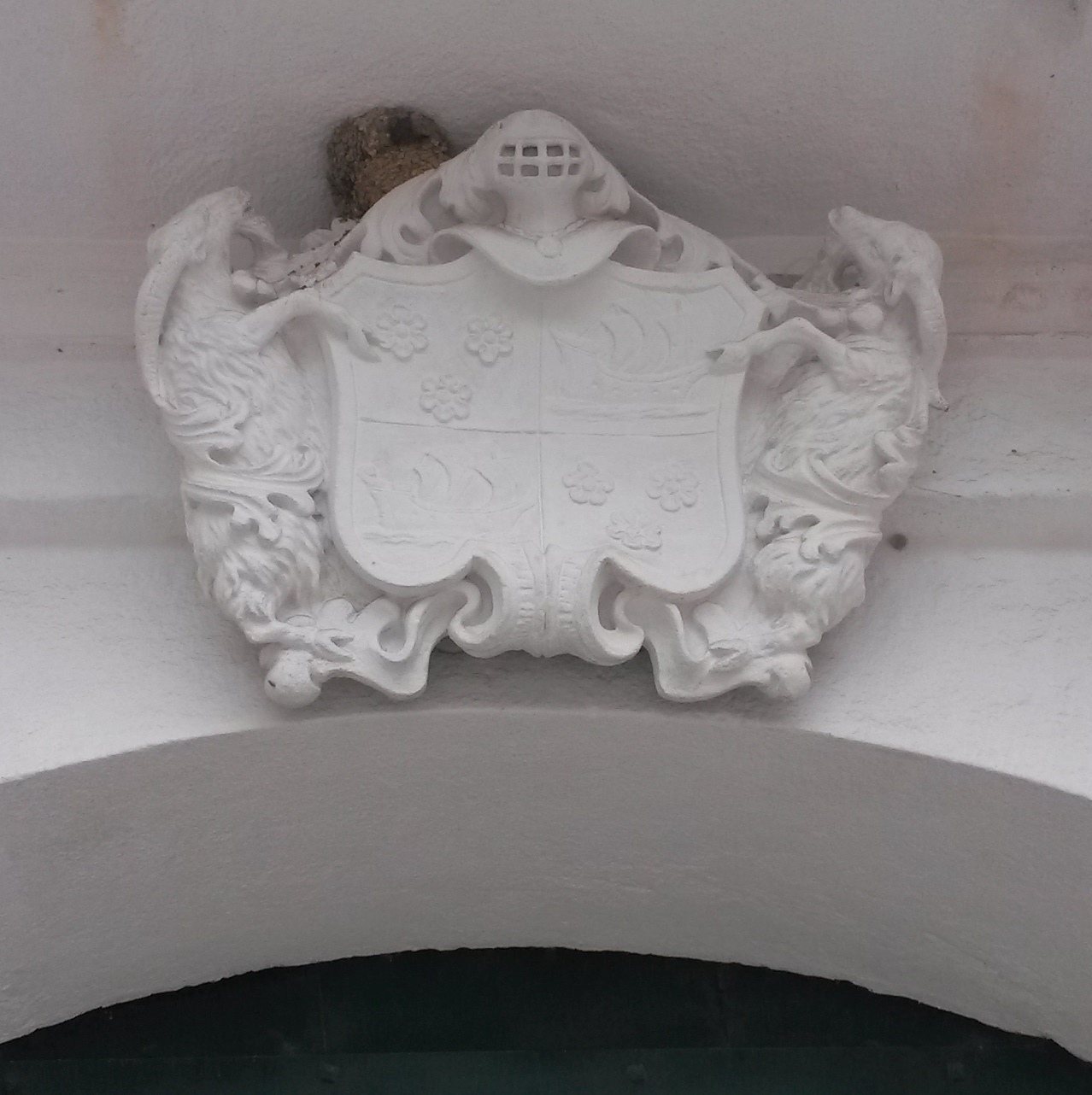
A balcony supported by two sculpted male figures marks the entrance. The Hamilton family’s coat of arms sits above the gate, while the Saxe-Coburg arms appear on the balcony balustrade. The tower was remodeled in a Romantic historicist style, which revived and reinterpreted earlier architectural forms.
Below the tower, the entrance hall contains a stucco relief of Hercules killing the Nemean lion, the first of his twelve mythical labors. Elaborate stucco work frames the relief; both date to around 1700, during the Hamilton period.
Castle chapel
The chapel dates to the early seventeenth century and has richly ornamented stucco decoration. It also contains five paintings made by attaching painted canvas to a wall or other surface.
Manor-farm complex
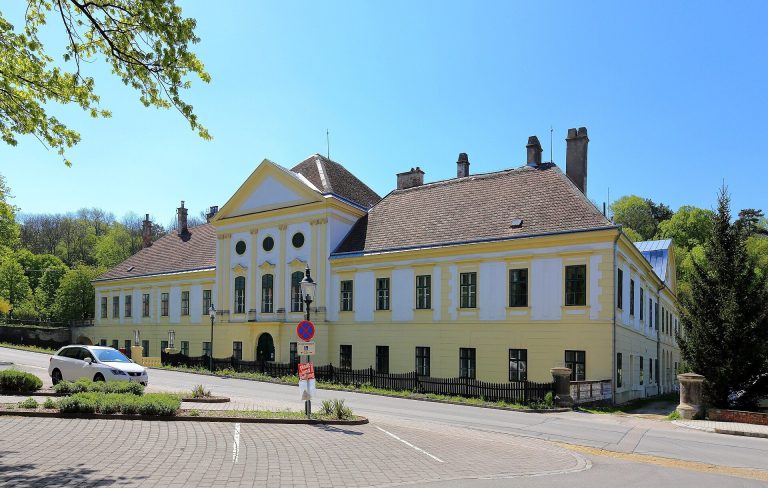
Southeast of the castle stands a symmetrically planned manor-farm complex dating to the seventeenth century. Its two-storey south wing survives, while the wing facing the street was reconstructed.