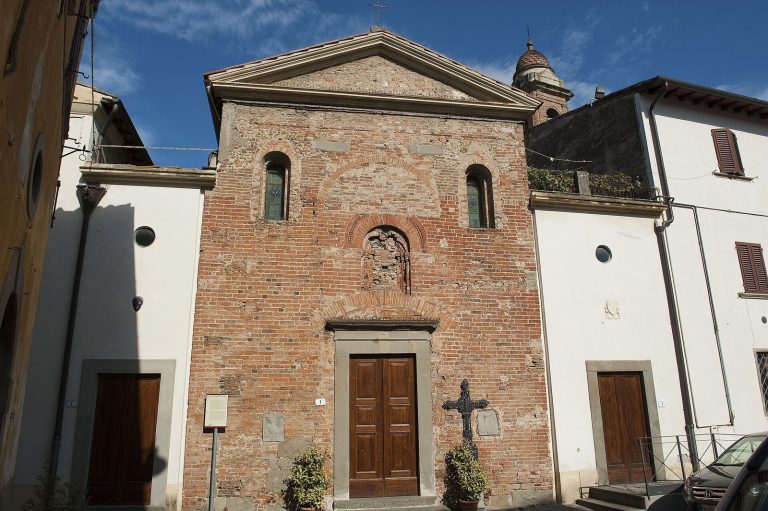
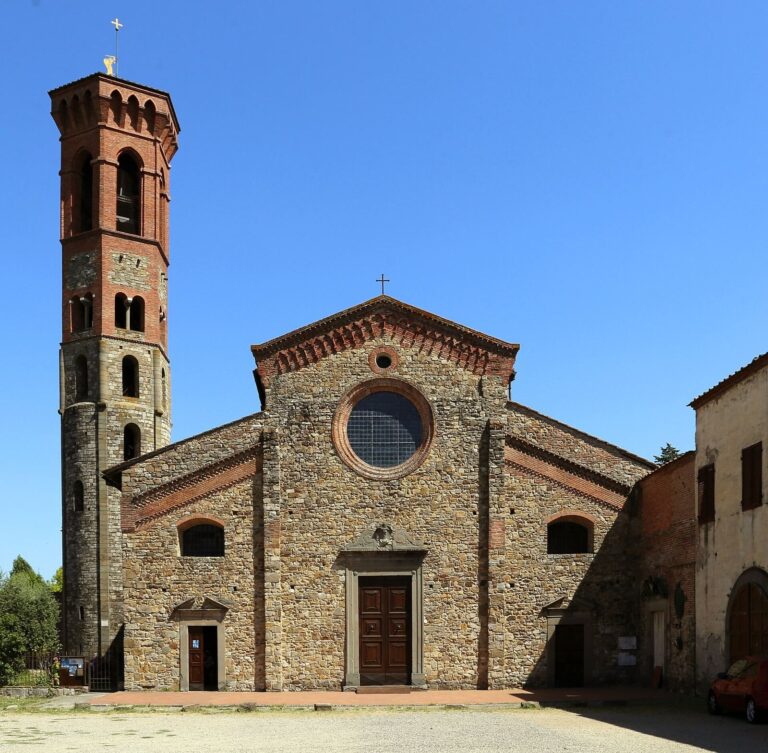
Pieve di San Leonardo: A Romanesque Parish Church in Artimino
Site at a Glance
- Popularity
- Low
- Country
- Italy
- Primary era
- Medieval
- Eras represented
- Medieval, Early Modern
- Civilizations
- Grand Duchy of Tuscany, Holy Roman Empire, Republic of Florence
- Site type
- Religious
- Remains
- Church
On this page12 sections
History
Pieve di San Leonardo is an 11th-century Romanesque parish church in Artimino, Italy. Romanesque is a medieval style marked by rounded arches and substantial masonry. Its early Romanesque architecture is among the most intact examples of the style in Tuscany. As a pieve, or rural parish church serving surrounding communities, it was named in a diploma issued in 998 by Otto III, Holy Roman Emperor. The document lists the bishop of Pistoia’s privileges and a parish at Artimino.
Early parish and settlement
The parish may have existed before Artimino developed into a settled community. Artimino’s walled settlement was described as a castle from the 11th century, while the church stood outside its walls. At a time when people lived in a dispersed pattern, the castle and the parish church served as separate centers of authority.
Patronage and changing role
Popular tradition associates the church’s foundation with Matilda of Tuscany, a powerful countess with extensive lands in northern and central Italy. Separately, the church was enlarged in the 12th century under the patronage of Countess Matilda of Canossa. The Rinaldeschi family of Prato supported it for an extended period, followed by the Florentine Frescobaldi family. First dedicated to the Virgin Mary, it gained its joint dedication to Saint Leonard in the 16th century.
As a parish church, it had several subordinate churches. In the 19th century these included Santo Stefano alle Busche at Poggio alla Malva, San Michele at Comeana, and San Martino in Campo. Pieve di San Leonardo is a Roman Catholic church in the Diocese of Pistoia, the area administered by a bishop, and follows the Roman rite, the principal liturgical tradition of the Roman Catholic Church.
Alterations and restoration
In the 14th century, vaults replaced the church’s original timber roof, and decorative stonework associated with Gothic architecture was added inside. A rectory and a building connected with a religious confraternity were also added later. The bell tower was altered in the 16th and 17th centuries.
Restoration work in the 1960s sought to recover the church’s Romanesque character. A major campaign in 1971 removed later additions considered of little value, along with furnishings and interior decoration from the 17th and 18th centuries.
Remains
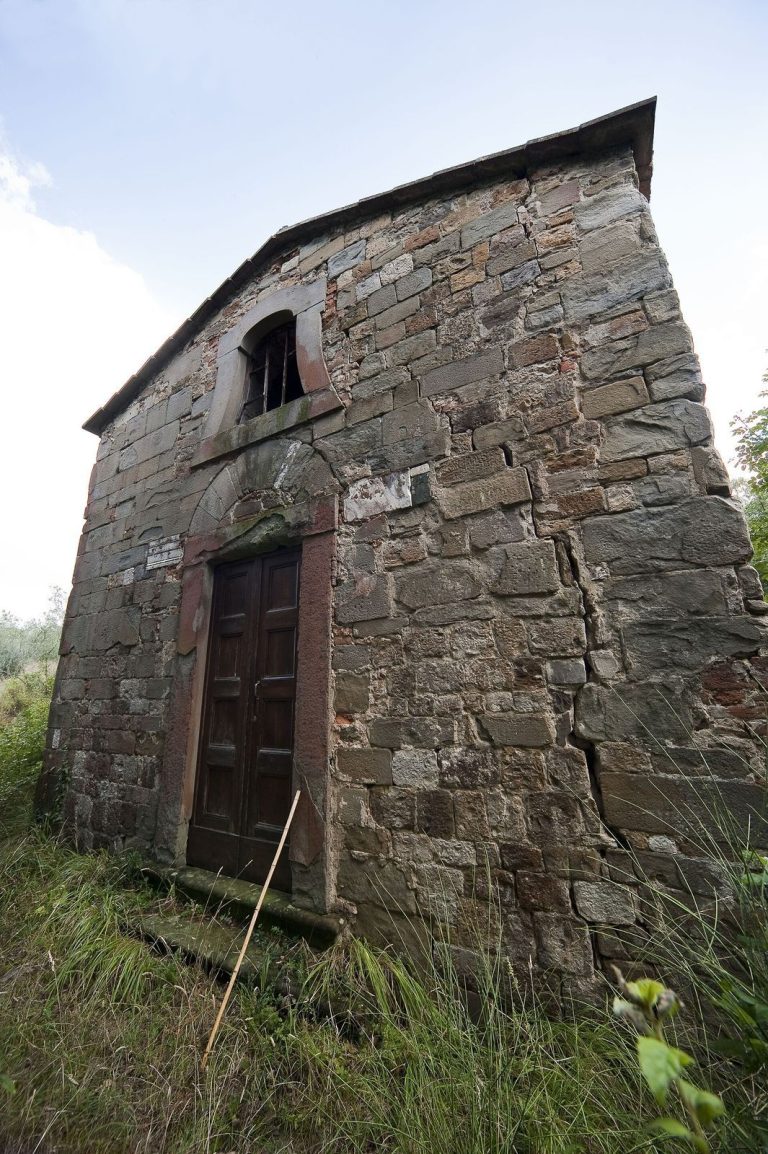
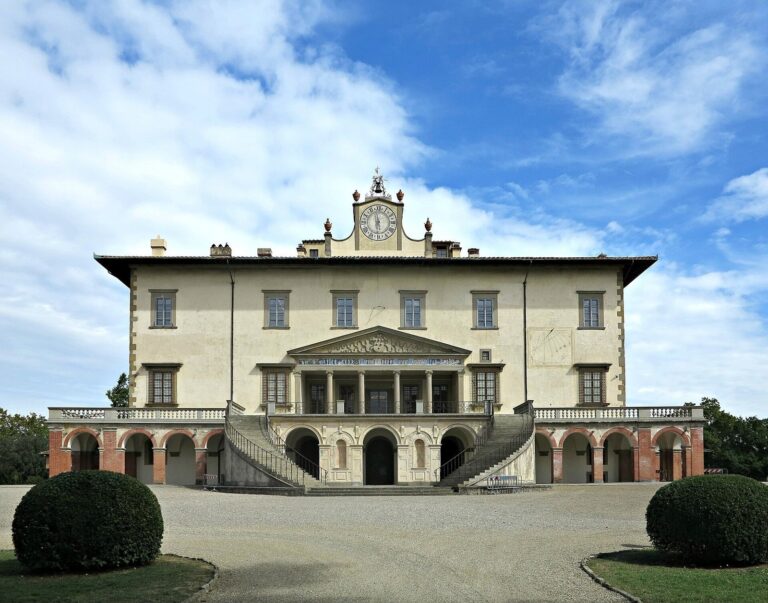
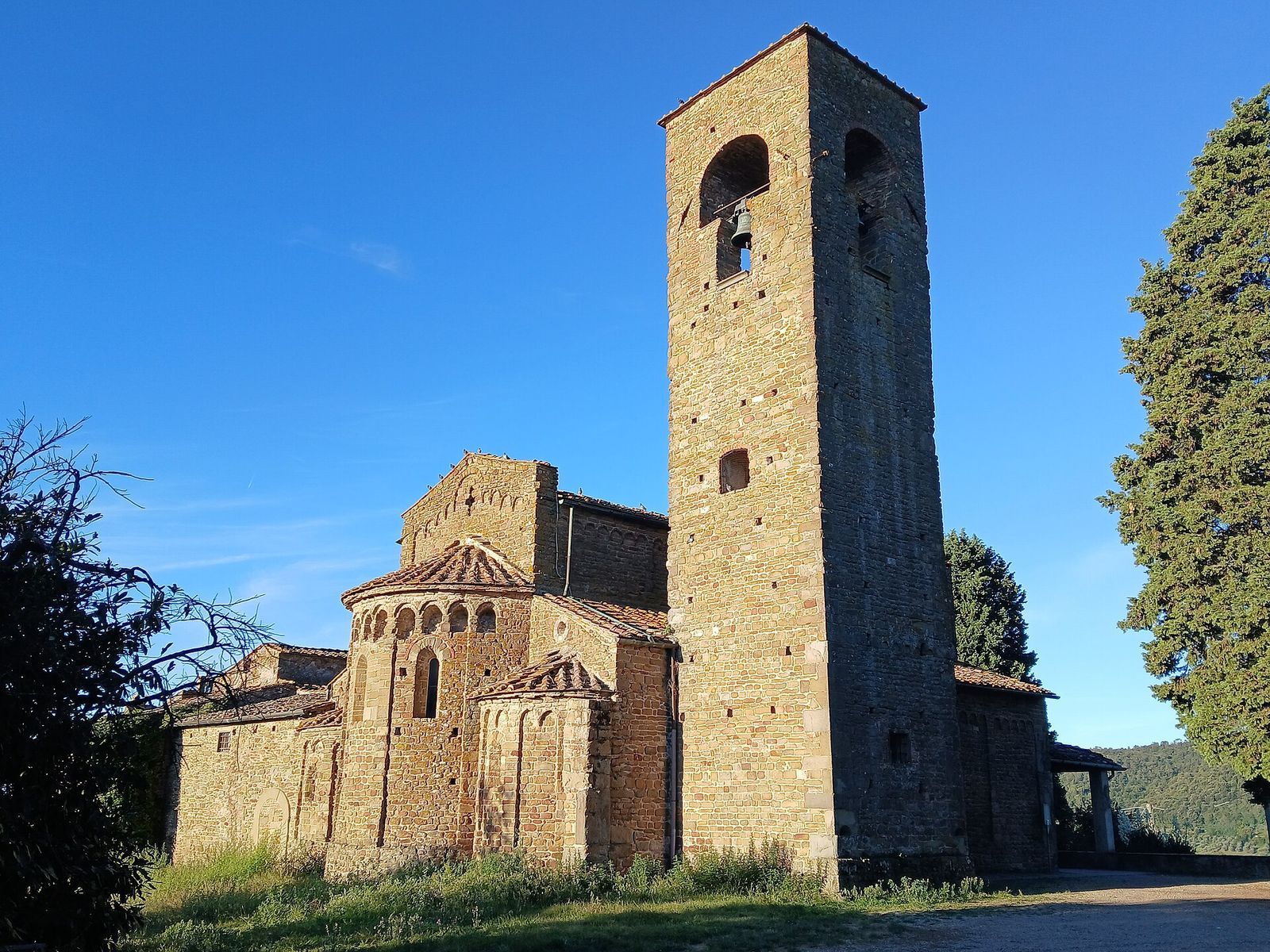
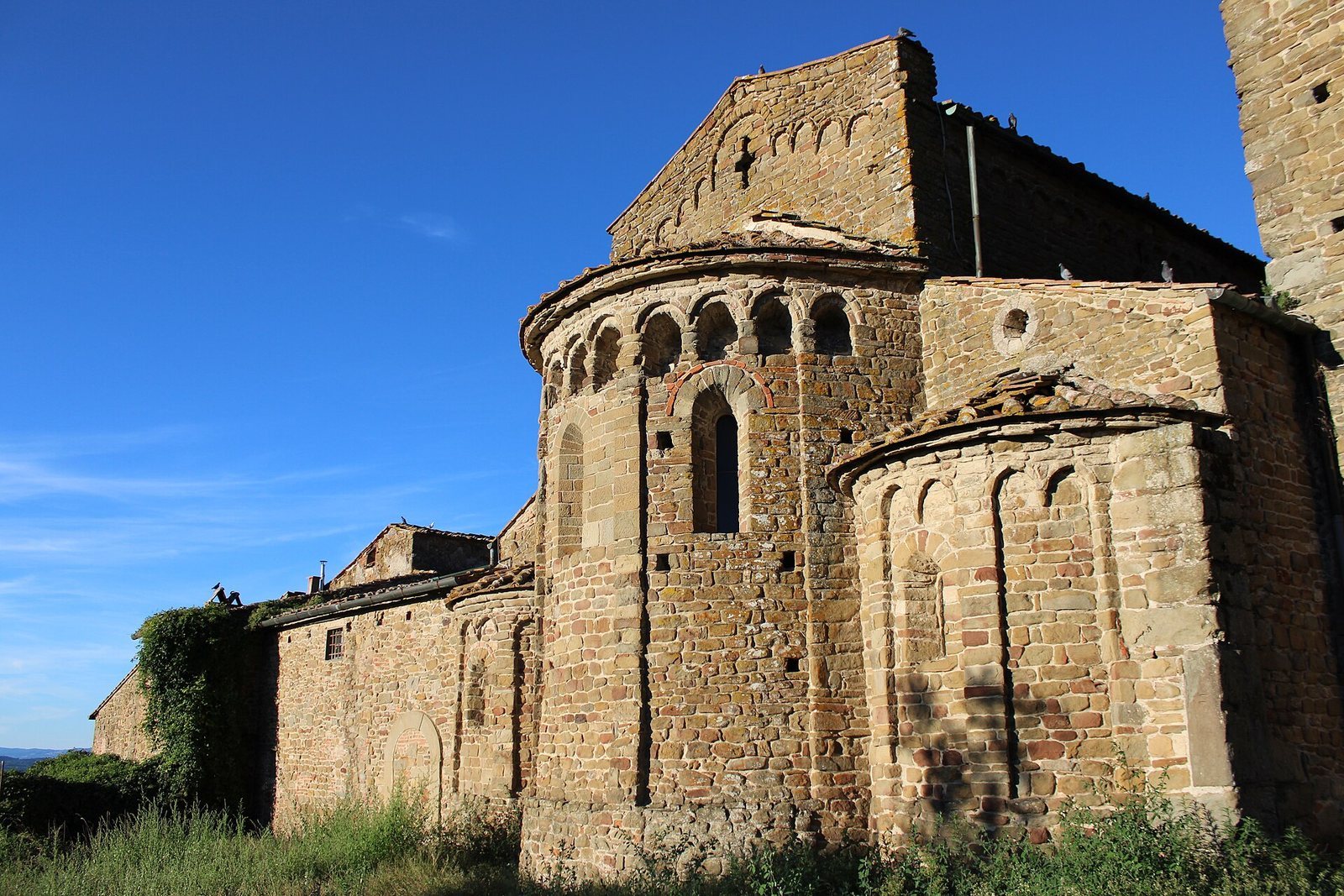
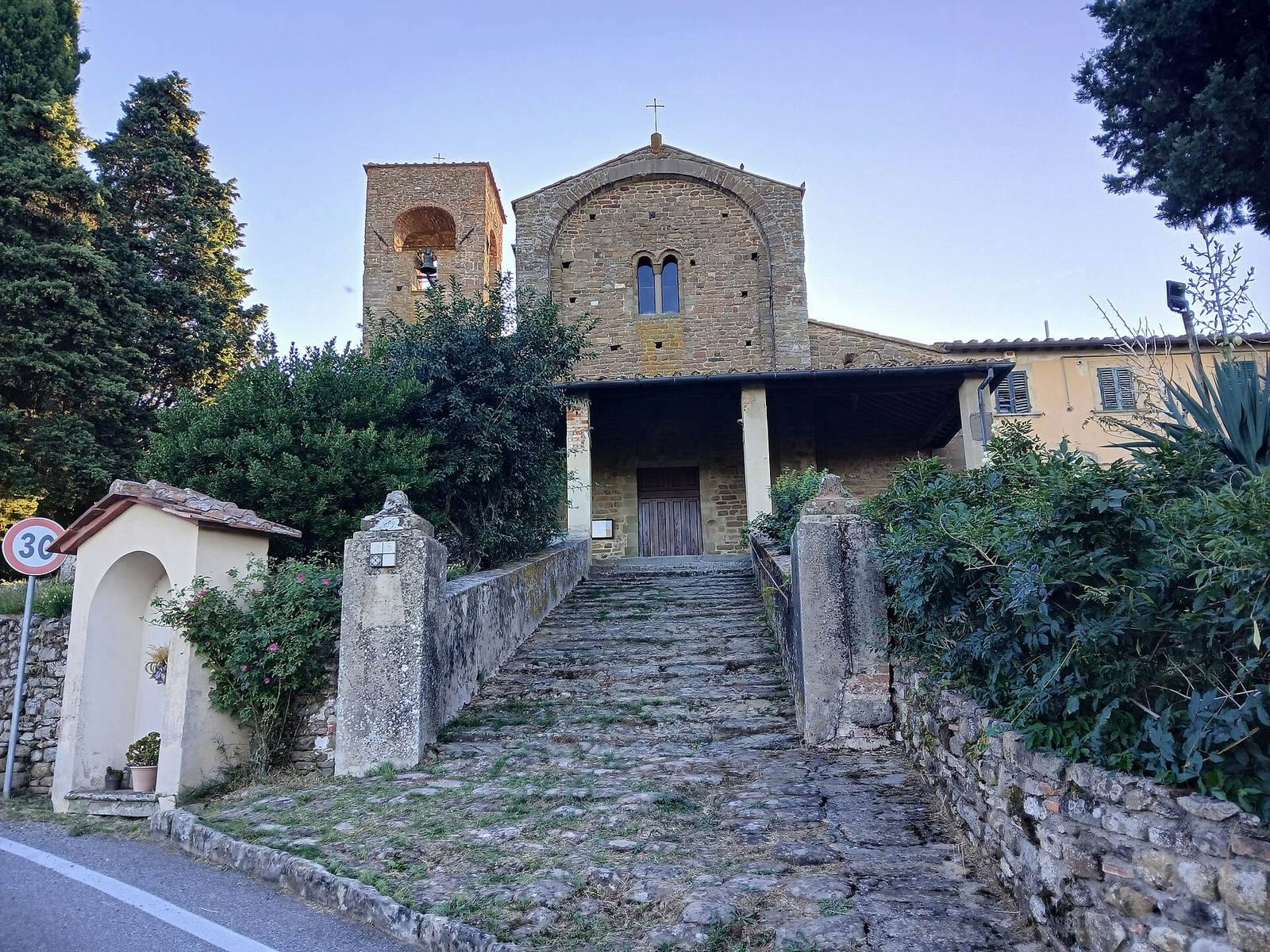
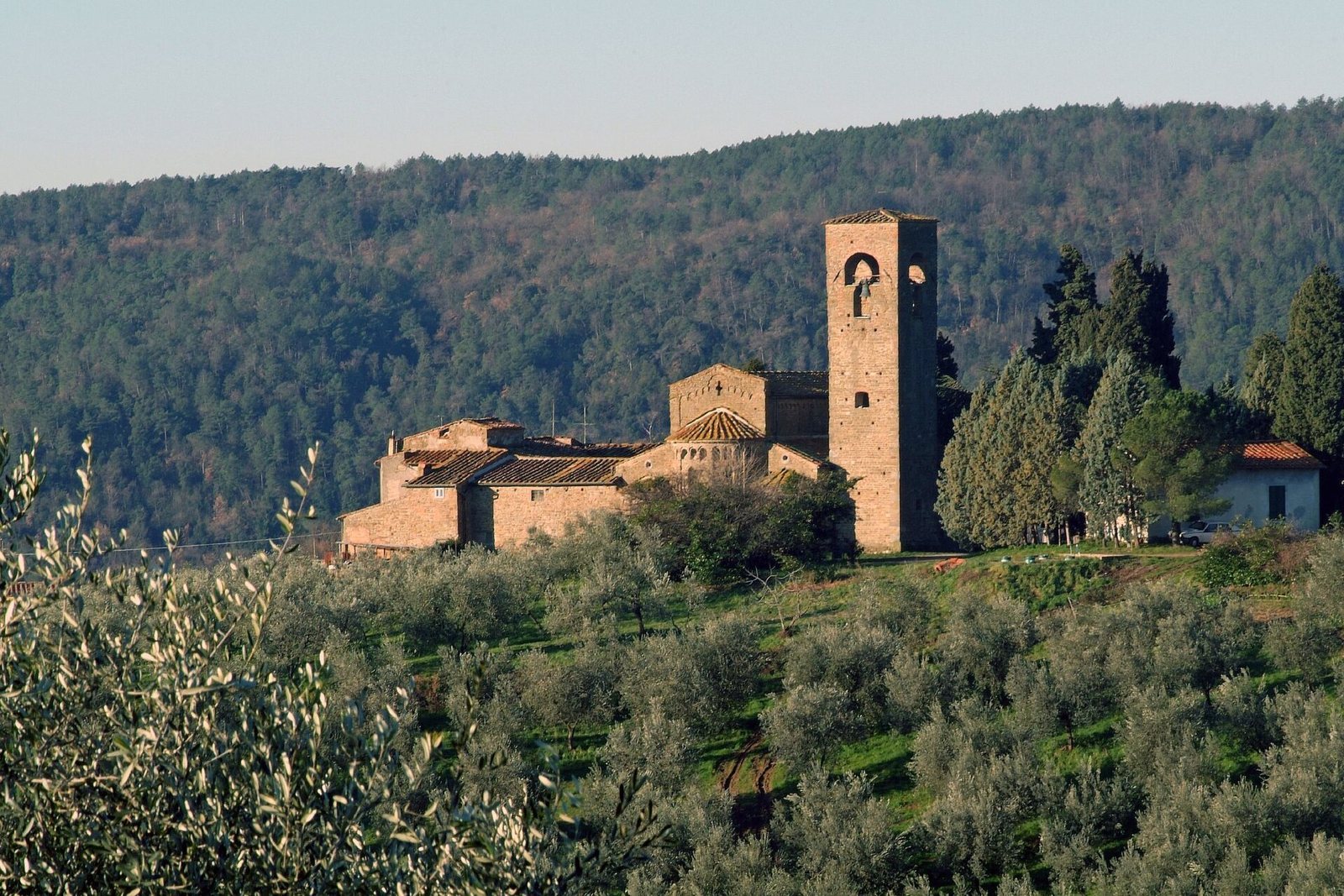
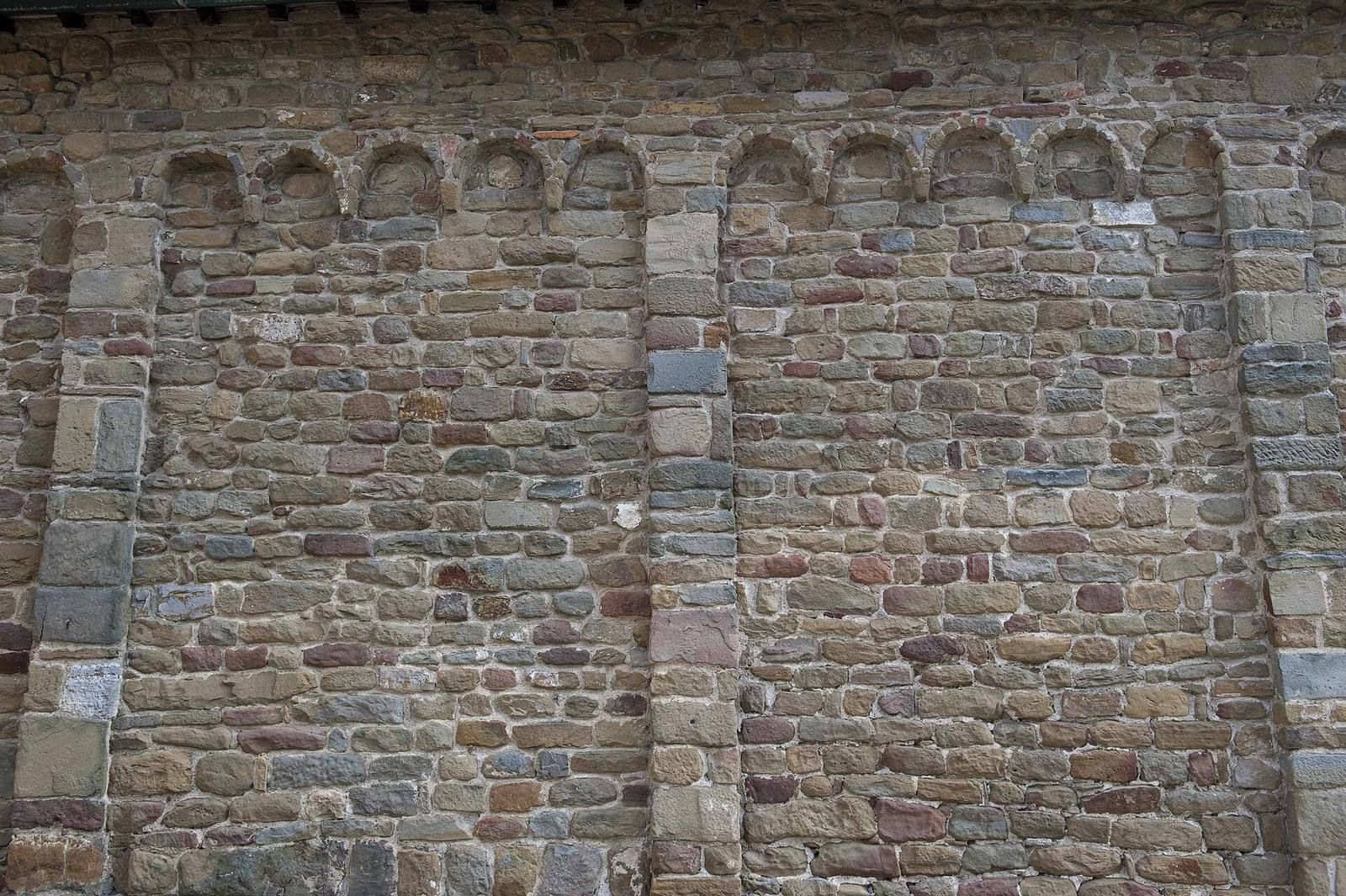
The church stands outside Artimino’s former castle walls, near Villa Medicea La Ferdinanda. Its three aisles, projecting apses, and stone exterior give the building its principal form. Roughly dressed local ochre sandstone, exposed irregular masonry, and thick mortar joints characterize the exterior.
Exterior and tower
Façade and apses
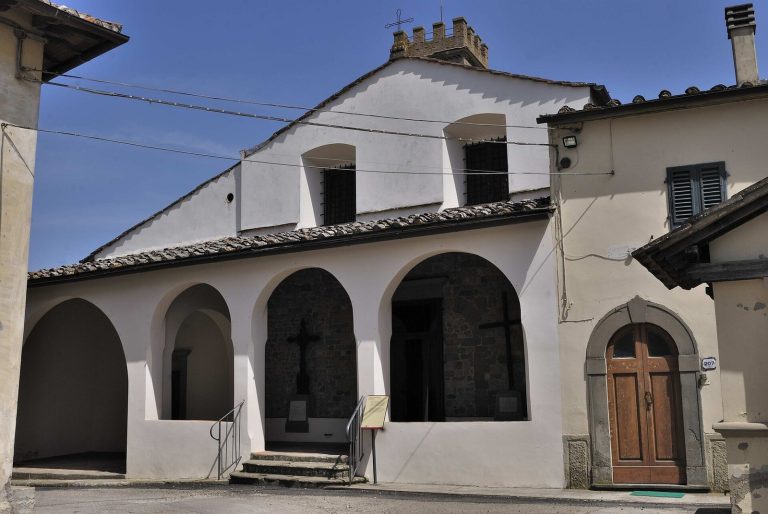
A flight of steps rises to the façade, where a large round blind arch corresponds to the central aisle. A modest 16th-century portico partly screens the front. Three apses project from the exterior; the central apse has deep arched niches, associated either with Lombard influence or with craftsmen from the Po Valley.
Bell tower and reused urn fragments
The bell tower may have begun as one of the castle’s watchtowers. Fragments of figured Etruscan funerary urns were built into masonry below the portico and in the tower. Copies now occupy places in the church fabric, while some original pieces were moved to the local archaeological museum. The reuse of the urn fragments has been taken to suggest worship at the site in the distant past.
Interior and artworks
Aisles and vaults
Pillars divide the interior into three aisles. The present cross vaults, formed by intersecting barrel vaults, date to the 14th century and replaced the original timber roof.
Sculpture and devotional works
A polychrome terracotta group of the Visitation dates to about 1515 and is attributed to the circle of Giovanni and Matteo della Robbia. The church also holds a wooden statue of Saint Anthony Abbot, from the first quarter of the 16th century and attributed to Agnolo di Polo, and a wooden statue of Saint Leonard, from the early 15th century and attributed to the Sienese sculptor Domenico di Niccolò dei Cori. Other works include a wooden polychrome crucifix dated 1560 and a Madonna of the Well, a copy of a painting by Franciabigio.
Frescoes
Restoration in the left apse revealed traces of frescoes from different periods. These include a figure of Christ blessing, attributed to the Florentine school of the early 15th century.