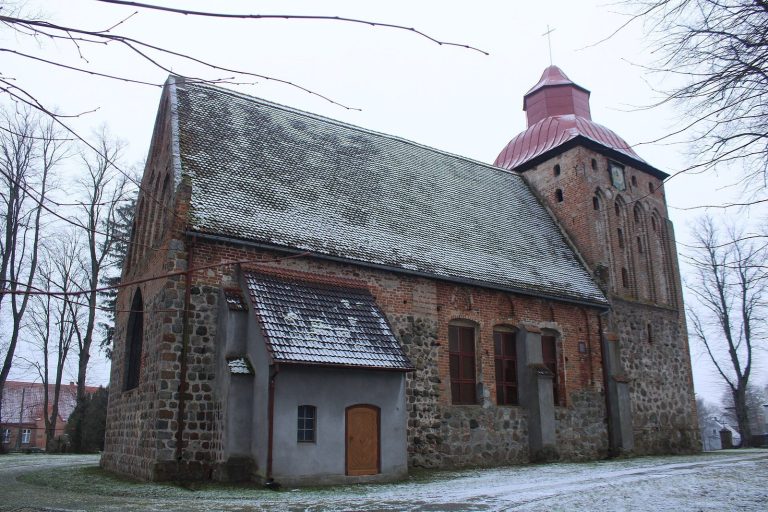
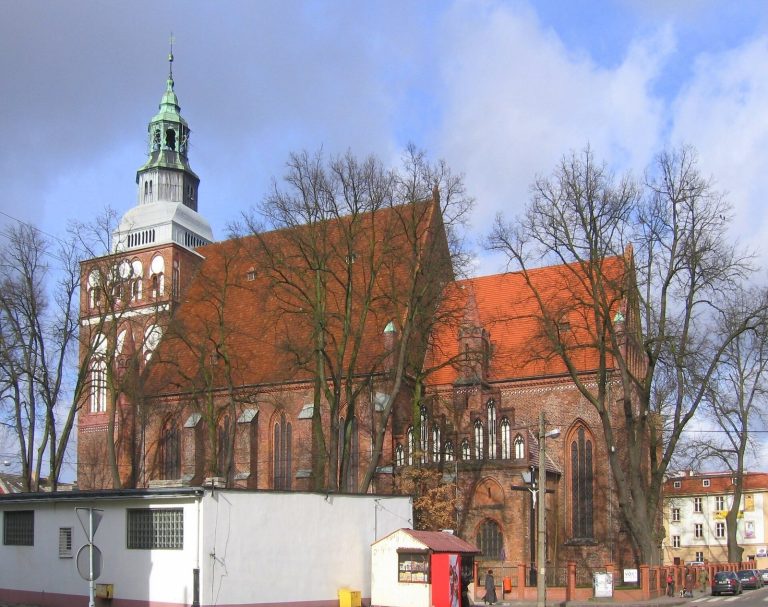
Church of Our Lady, Queen of the World in Kłodkowo: A Catholic Filial Church
Site at a Glance
- Popularity
- Very Low
- Country
- Poland
- Primary era
- Medieval
- Eras represented
- Medieval, Early Modern, Modern
- Civilizations
- Duchy of Pomerania, Holy Roman Empire, Kingdom of Prussia
- Site type
- Religious
- Remains
- Church
On this page6 sections
History
The Church of Our Lady, Queen of the World in Kłodkowo is a Roman Catholic filial church in Poland, attached to the Parish of the Immaculate Conception of the Blessed Virgin Mary in Górzyca. A filial church belongs to a parish but is not its principal church. The parish’s dedication refers to the Catholic belief that Mary was preserved from original sin from conception; Kłodkowo’s church is dedicated to Mary under the title Our Lady, Queen of the World. Construction was completed in 1492.
Construction and later alterations
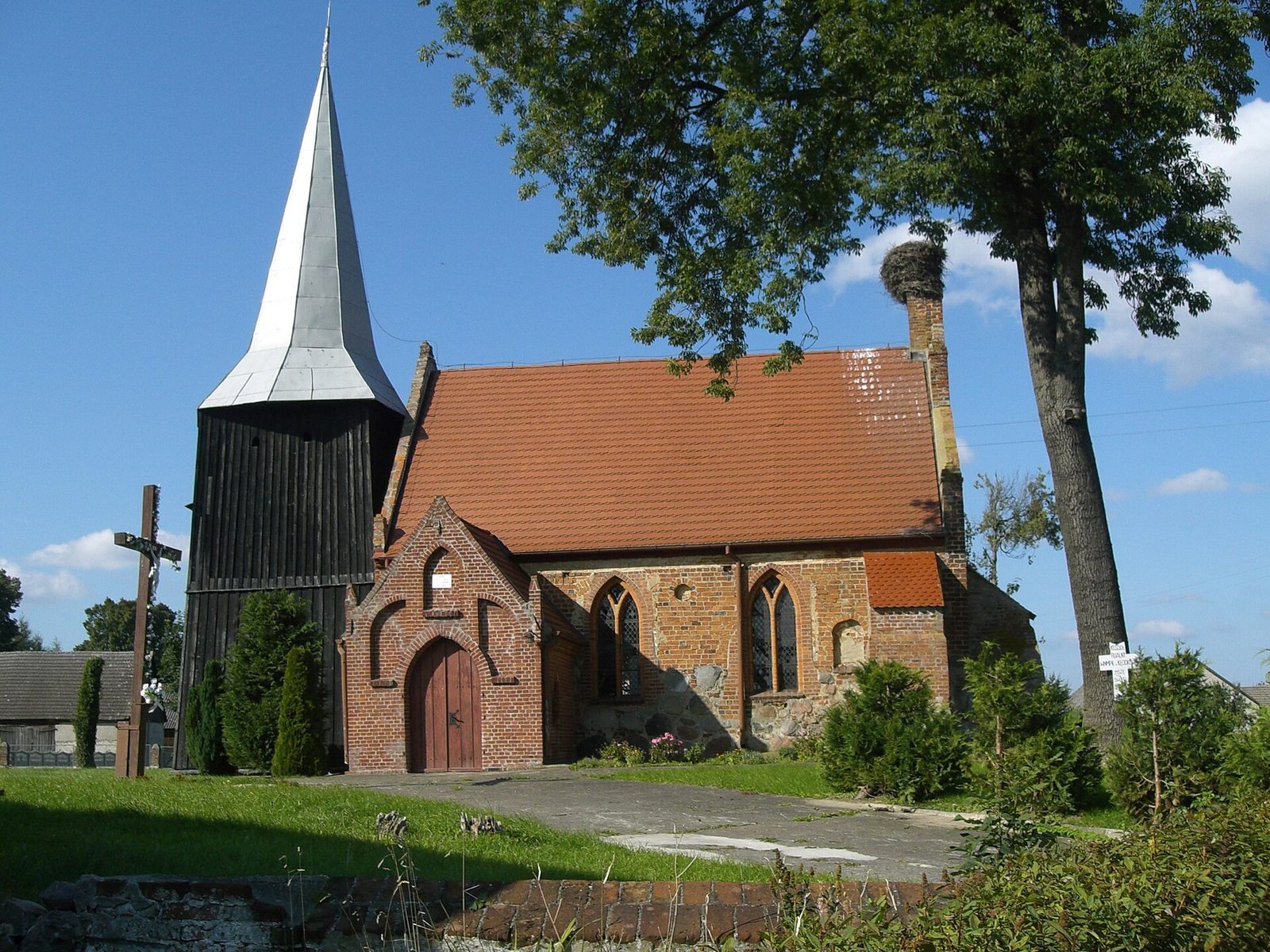
A detached wooden tower was added to the west of the church in the seventeenth century. In the nineteenth century, an extension on the southwest side was built to serve as a sacristy, a room for preparing services and keeping liturgical items. The church was also altered in the second half of the nineteenth century and again in 1903.
Catholic use after the Second World War
After the Second World War, the church was blessed for Catholic use on 29 June 1950.
Remains
Exterior form and additions
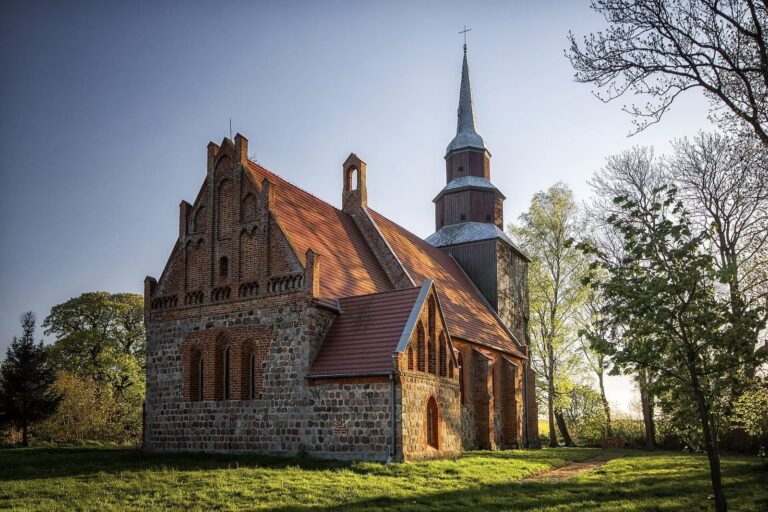
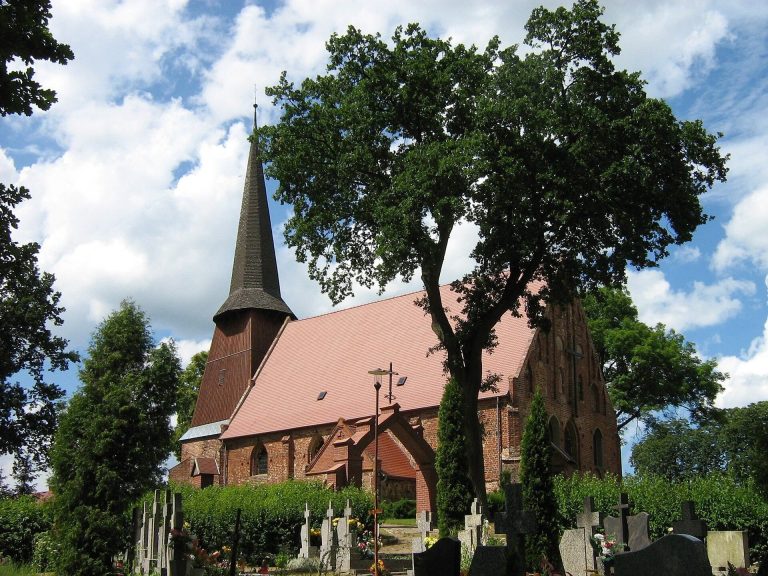
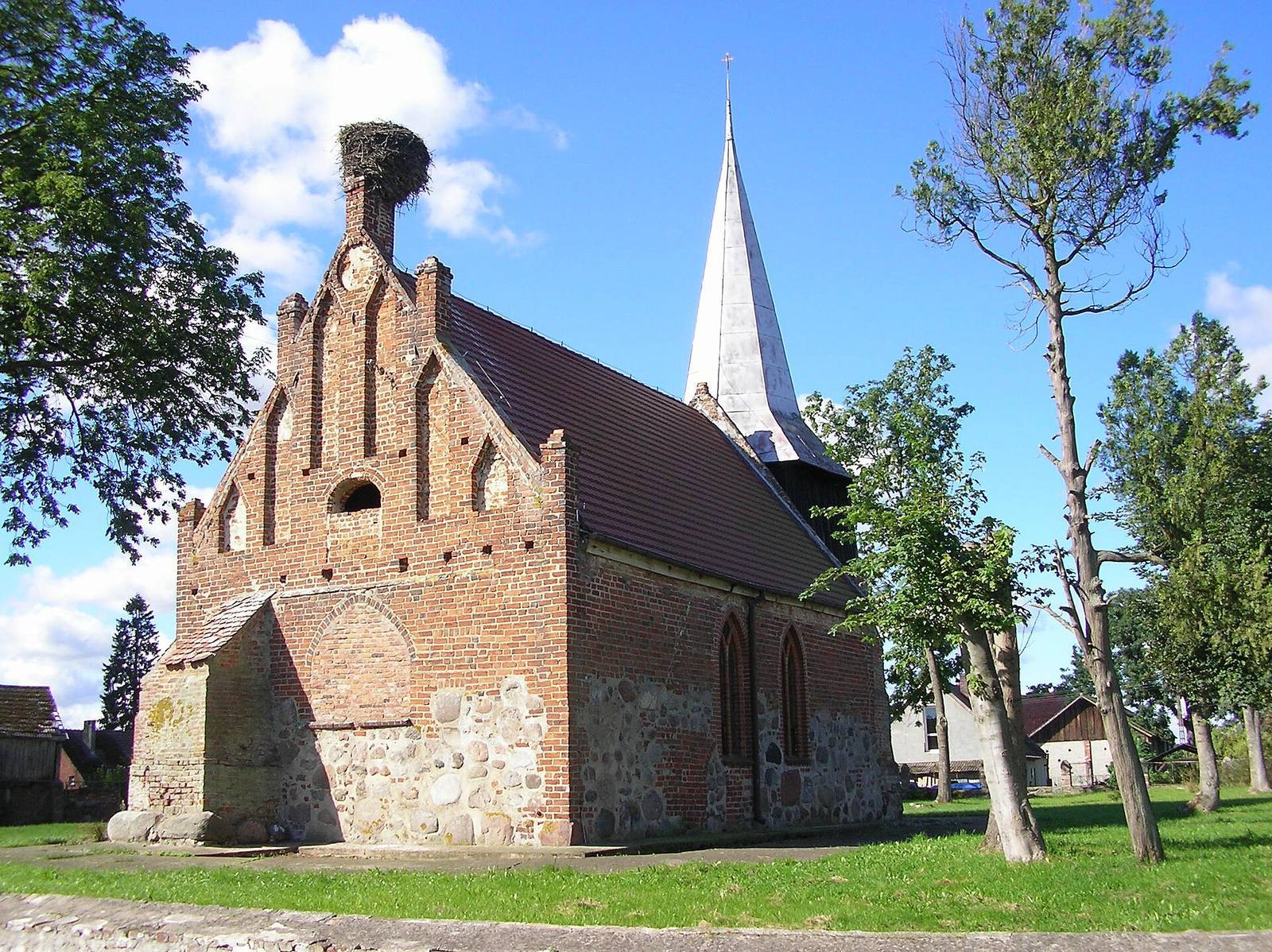
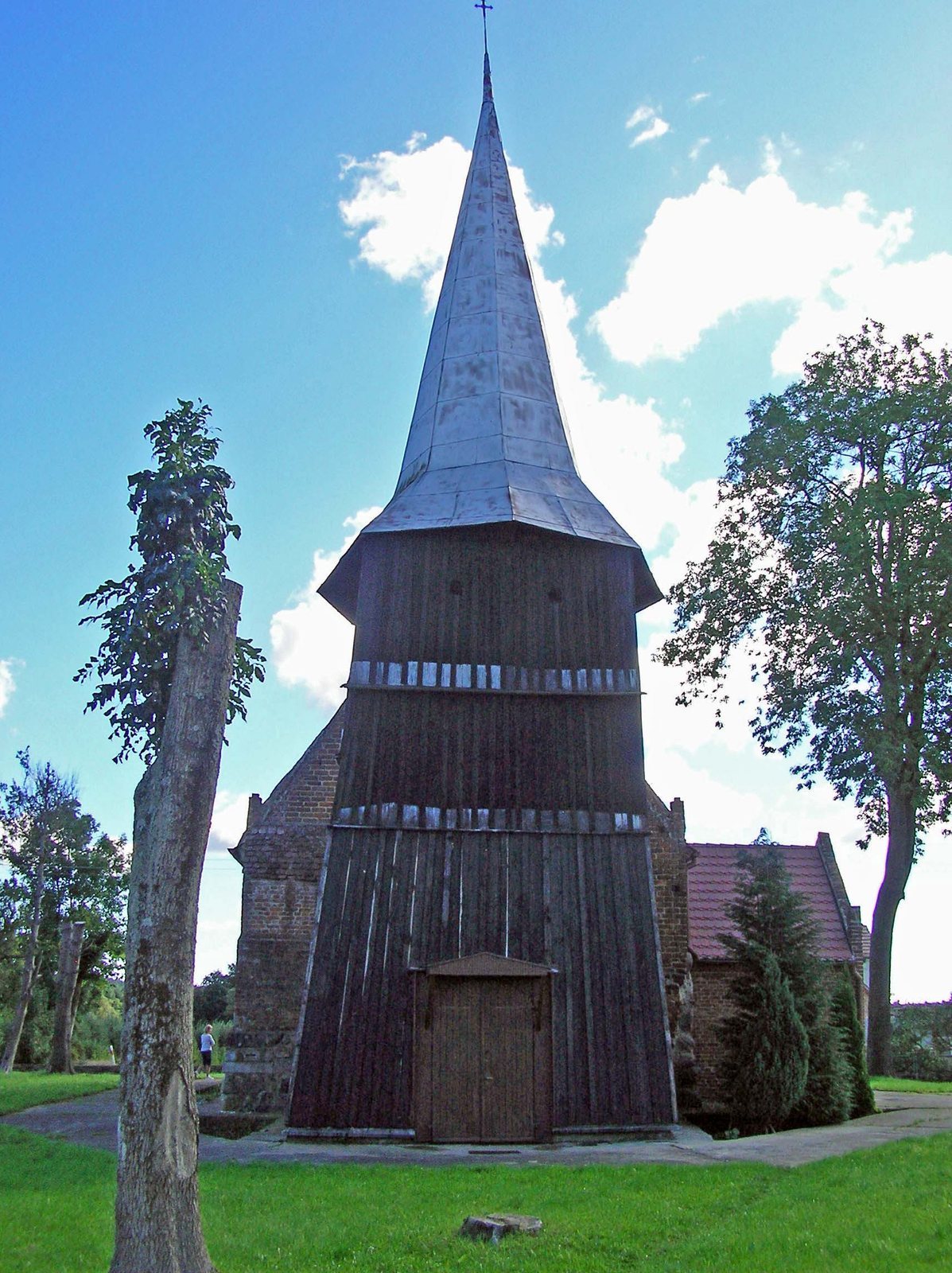
The church is built of stone and brick on a rectangular plan, with its long axis running east to west. Its interior forms one hall rather than separate nave and aisles. The east and west ends rise into gables decorated with recessed panels that do not open through the walls and with small upright ornaments. Ceramic tiles cover the roof. A detached, square-plan wooden tower stands west of the church; its sides are boarded, and its octagonal roof is covered with sheet metal. The southwest extension houses the sacristy.
Interior and fittings
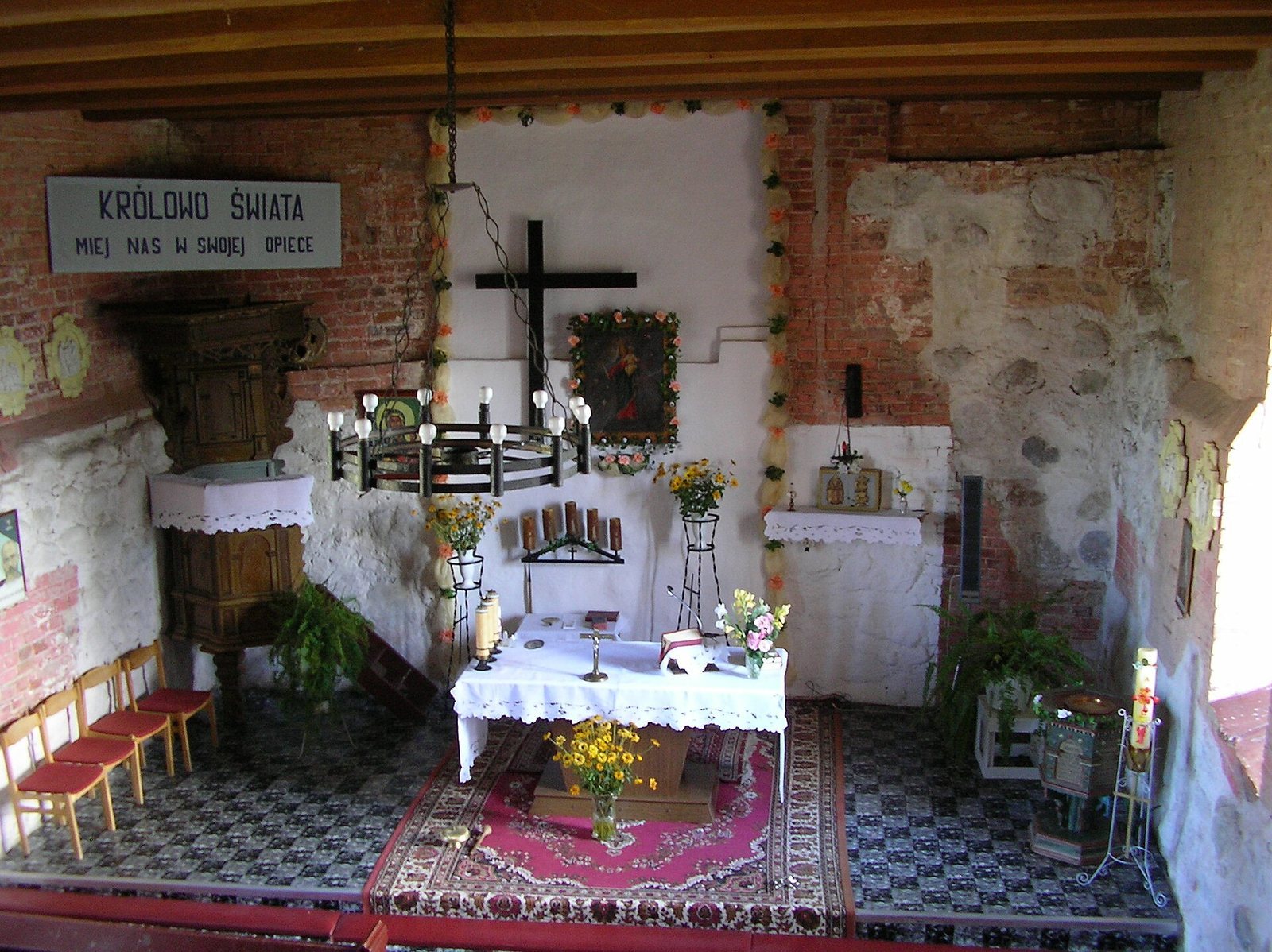
A timber-beam ceiling spans the interior. On a post at the left side of the chancel, the area around the altar, stands a sixteenth-century wooden pulpit, a raised stand for preaching, with a canopy and backboard. A wooden choir gallery, an elevated platform for a choir, dates to the nineteenth century and sits above the entrance. The inner doors carry fourteenth-century iron fittings, the oldest surviving example of blacksmithing in Western Pomerania.