Palazzo Pannocchieschi: A Historic Palace in Florence
Site at a Glance
- Popularity
- Medium
- Country
- Italy
- Primary era
- Early Modern
- Eras represented
- Early Modern, Modern
- Civilizations
- Grand Duchy of Tuscany
- Site type
- Domestic
- Remains
- Elite Residence
On this page8 sections
History
Formation and Corbinelli ownership
Palazzo Pannocchieschi is a palace in Florence, Italy, formed in the second half of the sixteenth century when the Corbinelli family combined several properties. The site had previously held modest buildings and a larger Corbinelli house.
In 1576, Bianca Cappello may have leased the palace as an annex to her own residence, which she had built on other houses bought from the Corbinelli. A Venetian noblewoman, Cappello became Grand Duchess of Tuscany through her marriage to Francesco I de’ Medici.
Pannocchieschi ownership
In the later seventeenth century, the Florentine architect Gherardo Silvani restored the palace. Count Filippo Pannocchieschi d’Elci leased it in 1672 and purchased it in 1699. He then commissioned major enlargement and decoration, along with changes to the ground and first floors, including a new entrance and courtyard.
The Pannocchieschi family kept the property until the mid-nineteenth century. During their ownership, Angelo Maria d’Elci built up a collection of rare books at the palace; it was later donated to the Biblioteca Medicea Laurenziana, a historic library in Florence associated with the Medici collections.
Nineteenth and twentieth centuries
In 1859, the family of Scottish novelist and historical writer Margaret Oliphant occupied the palace’s second floor. The building later passed to the Peruzzi de’ Medici, a Florentine family, who carried out a comprehensive restoration in the early twentieth century. In 1901, the palace appeared in a list of monumental buildings recognized as part of Italy’s national artistic heritage.
Marquis Rodolfo Peruzzi assembled a notable collection of wrought iron at the palace, but it was dispersed after the First World War. After the war, the property passed to the Gagnosi and was subsequently purchased by the Schippisi.
Remains
Façade
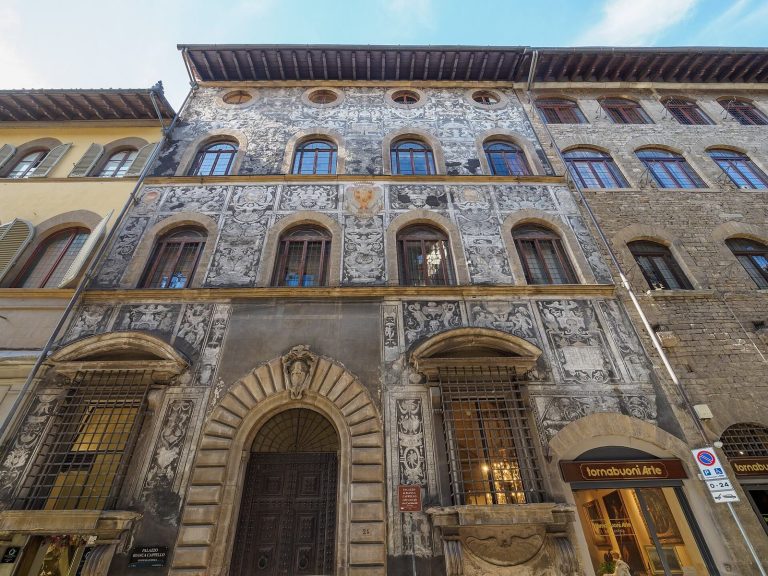
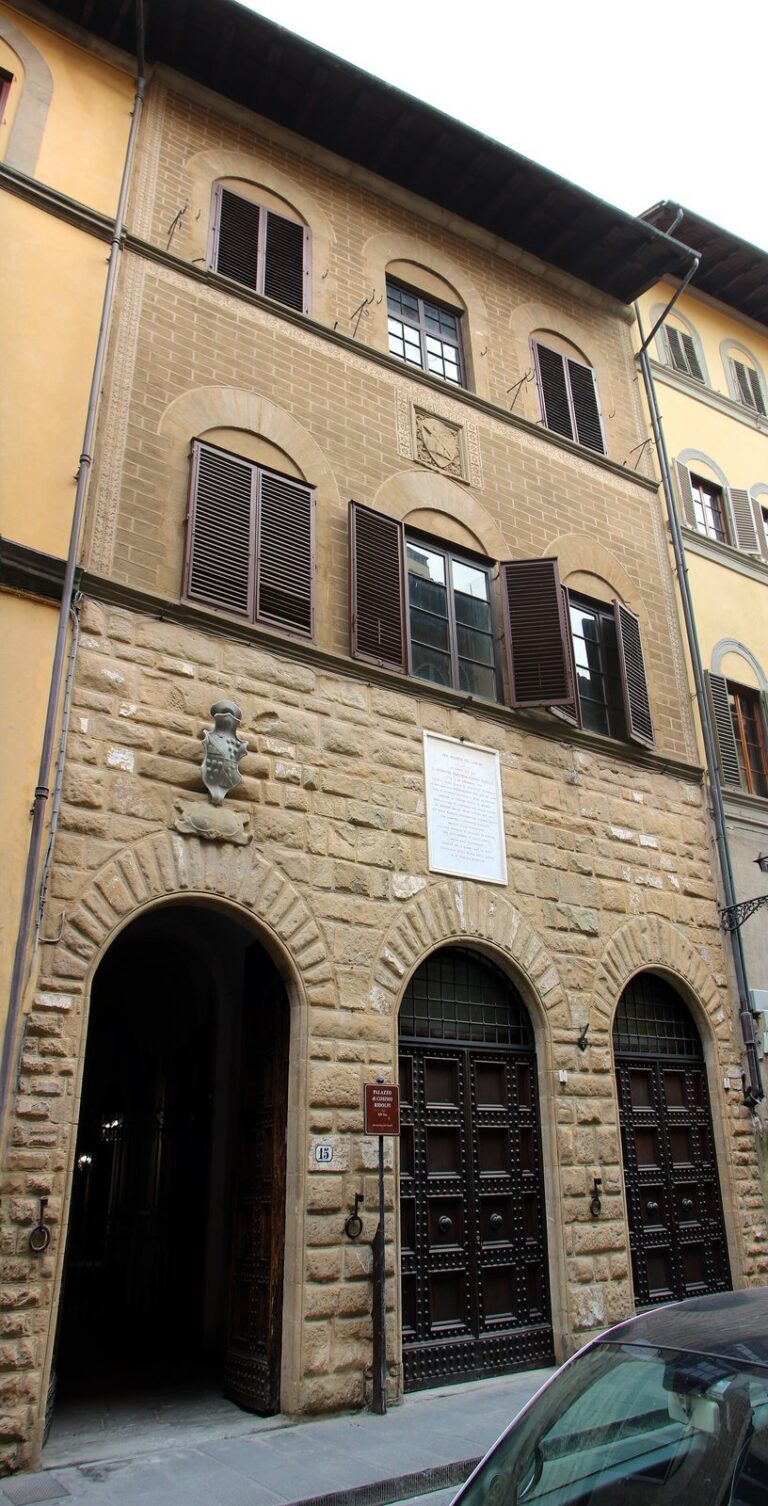
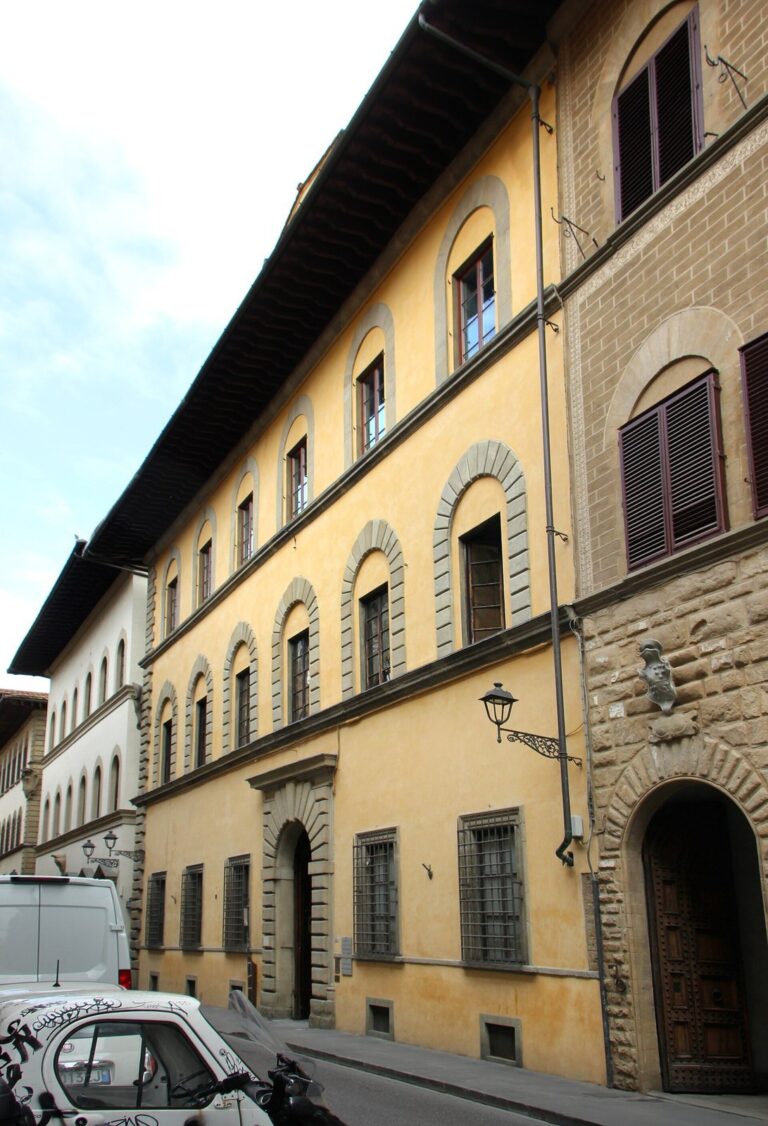
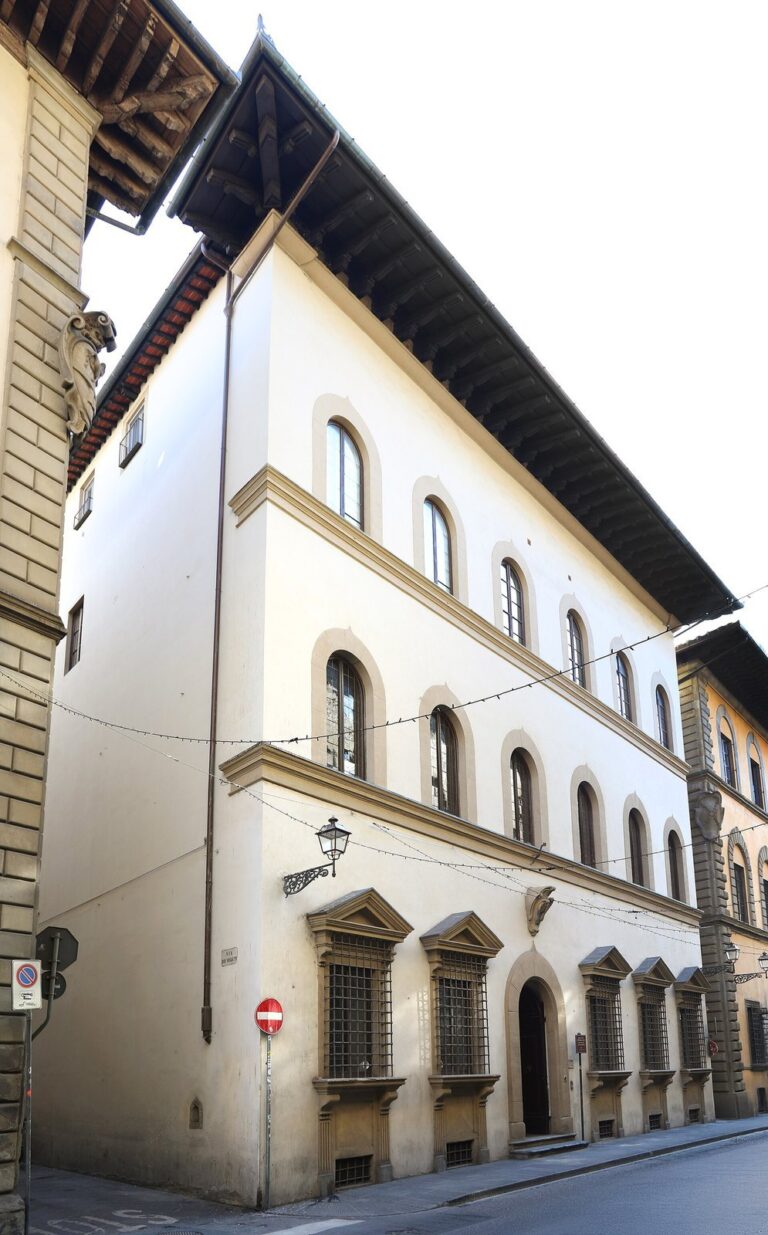
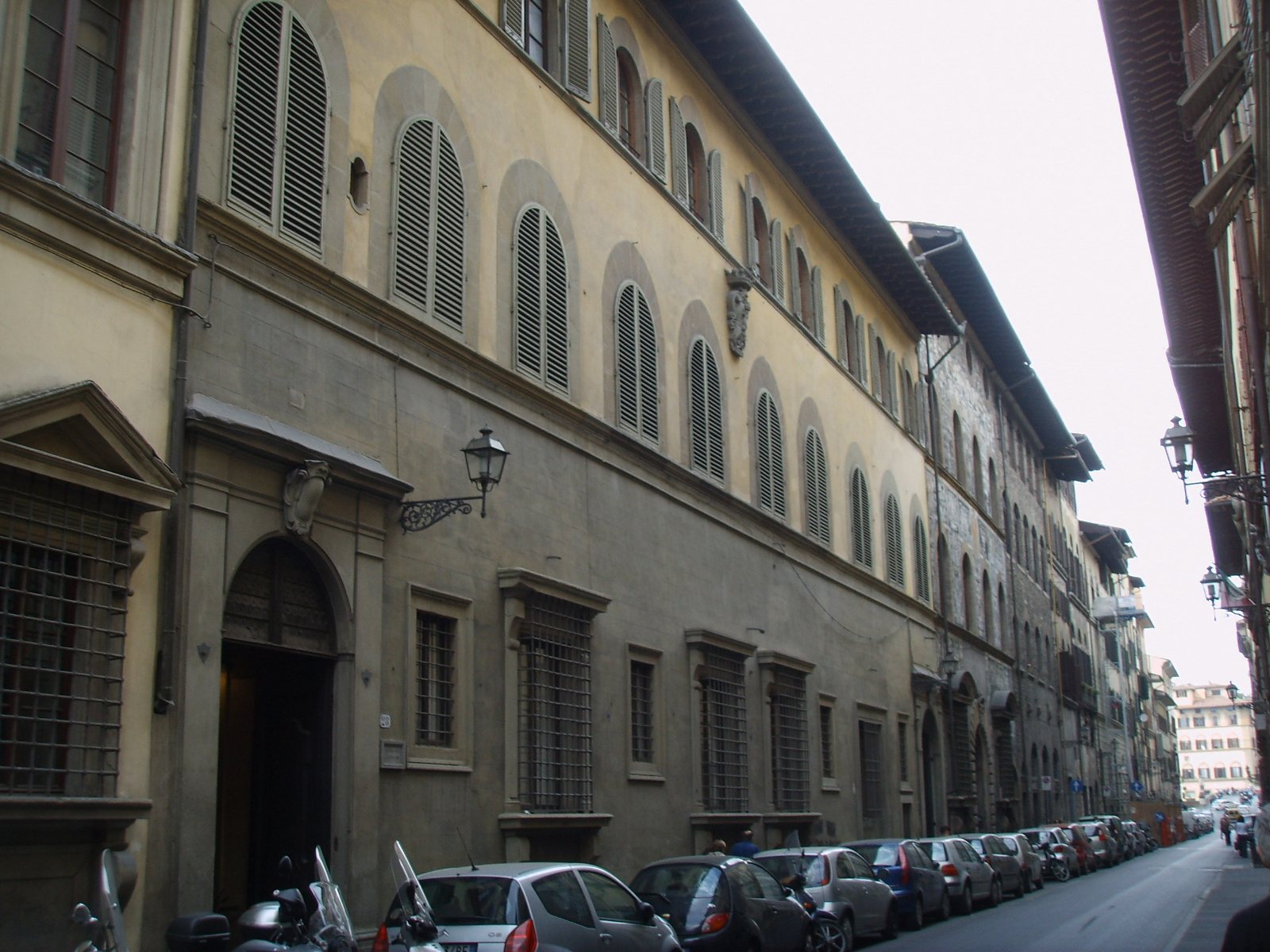
The palace stands at Via Maggio 28 in Florence’s Oltrarno district, on the south side of the Arno River, and has a rear frontage at Via del Presto di San Martino 11–13. Its broad façade has three storeys arranged in ten bays. At street level, matching portals stand at opposite ends. The surface has a faux-stone sgraffito finish, a decoration made by cutting through an upper layer to reveal one beneath. Three large kneeling windows, with projecting sills supported by brackets, sit among smaller framed windows. The main reception floor has ten evenly spaced arched windows with plain stone surrounds, linked by a horizontal stone band against pale plaster. A central shield displays the Pannocchieschi d’Elci arms without color, described as a red field bearing a gold crowned double-headed eagle above two pairs of drooping gold ears of corn. Original ground-floor windows were reopened in 1905–06, replacing projecting shopfronts.
Entrance hall and courtyard
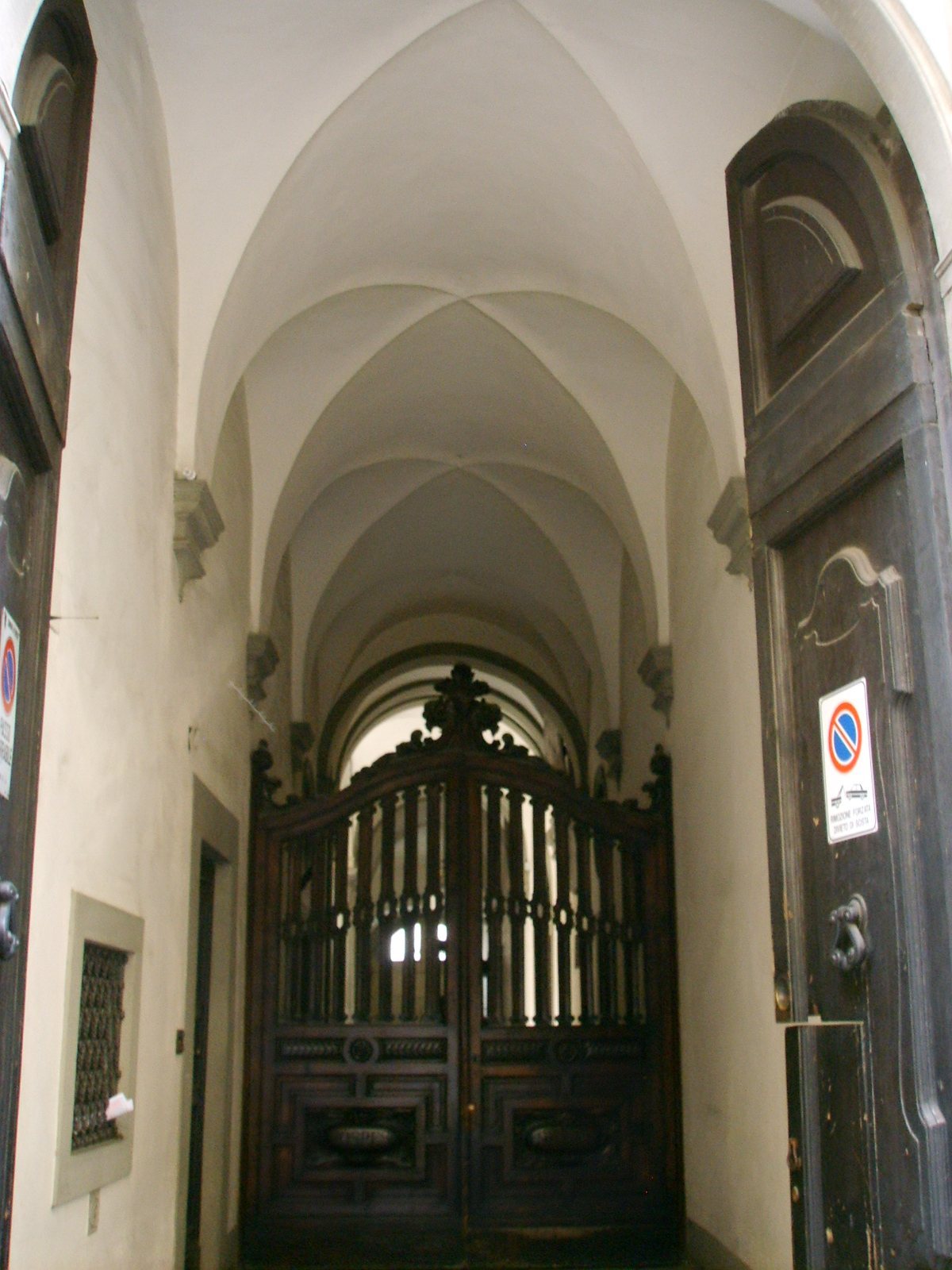
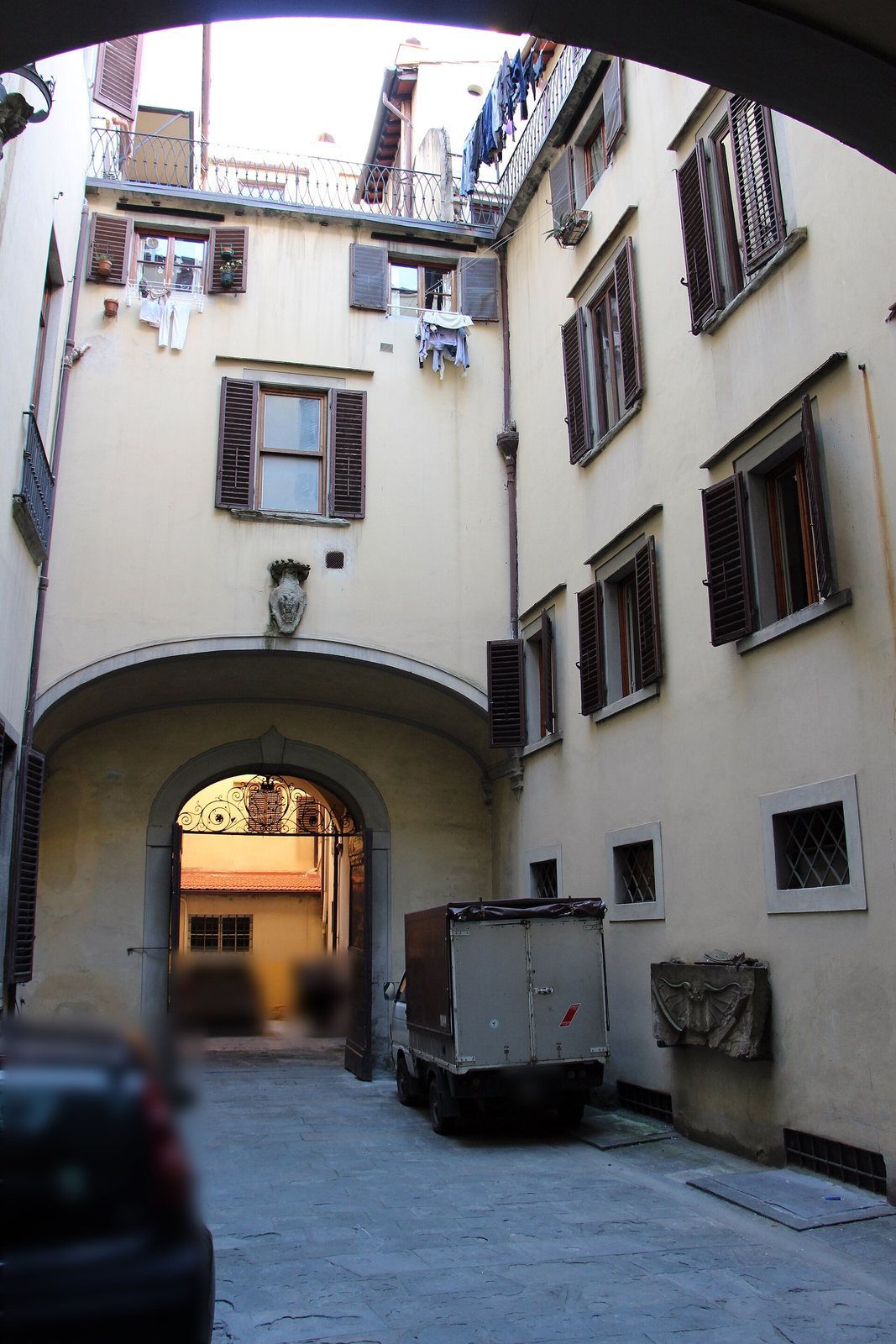
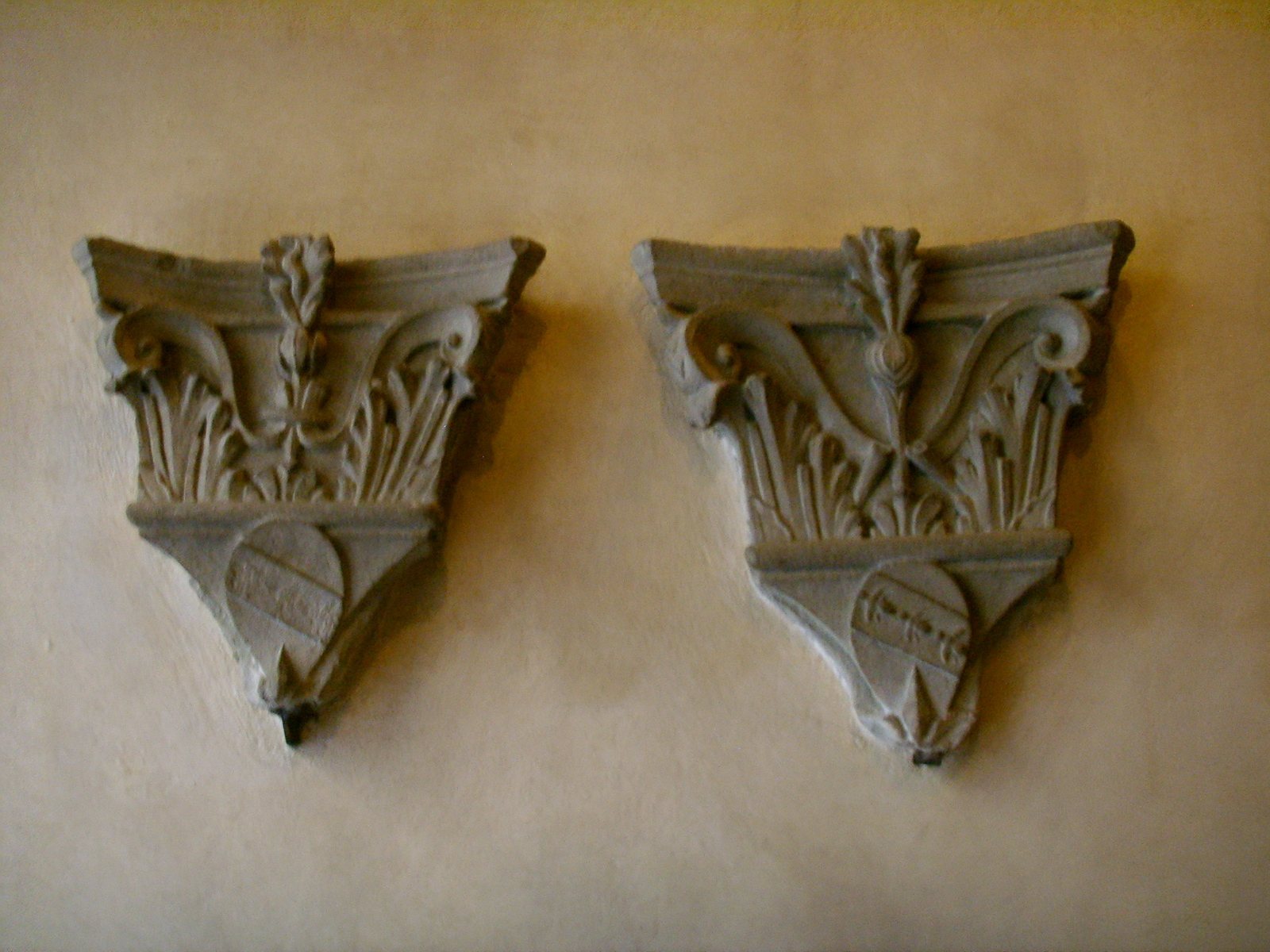
The entrance hall and courtyard date to the seventeenth or eighteenth century and connect to another entrance on Via del Presto di San Martino. The vaulted hall is partly screened by a nineteenth-century wooden gate made in forms recalling the sixteenth century. Stone pieces from elsewhere are set into the walls, including a badly deteriorated carved panel that once decorated one of the two ground-floor windows of Bianca Cappello’s neighboring palace. That window has since been converted into a shop display.
Interior decoration
Interior wall paintings reflect the palace’s successive periods of ownership and are mostly eighteenth-century in date.