Palazzo Giorgio Centurione: A Rolli Palace in Genoa
Site at a Glance
- Country
- Italy
- Primary era
- Early Modern
- Eras represented
- Early Modern, Modern
- Civilizations
- Genoese
- Site type
- Civic
- Remains
- Palace
On this page7 sections
History
Construction and the Rolli
Palazzo Giorgio Centurione is a Mannerist palace in Genoa, Italy, built for Giorgio Centurione and completed in 1594. Its design is attributed, probably, to Gaspare Corte. Centurione was recorded as its owner in 1599 and later served as Genoa’s doge, or chief magistrate, from 1621 to 1622.
The palace was included in the Palazzi dei Rolli, Genoa’s official registers of palaces chosen to host high-ranking visitors on state occasions. It appeared in the registers of 1599 and 1614, moving from the second class to the first.
Virginia Centurione’s charitable work
Giorgio’s daughter Virginia (1587–1651) began caring for poor girls at the palace and continued this work at the convent of Monte Calvario. She founded the Sisters of Our Lady of Refuge in Monte Calvario. With the protection of Genoese philanthropist Emanuele Brignole, the congregation later became known as the Brignoline. Virginia was beatified in 1985 and canonized by Pope John Paul II in 2003.
Later history and heritage status
The Doria family acquired the palace in the eighteenth century. A partial rebuilding in the nineteenth century altered the entrance hall and stairwell. The palace is one of 42 Rolli palaces within the UNESCO World Heritage property Genoa: Le Strade Nuove and the system of the Palazzi dei Rolli, inscribed on 13 July 2006.
Remains
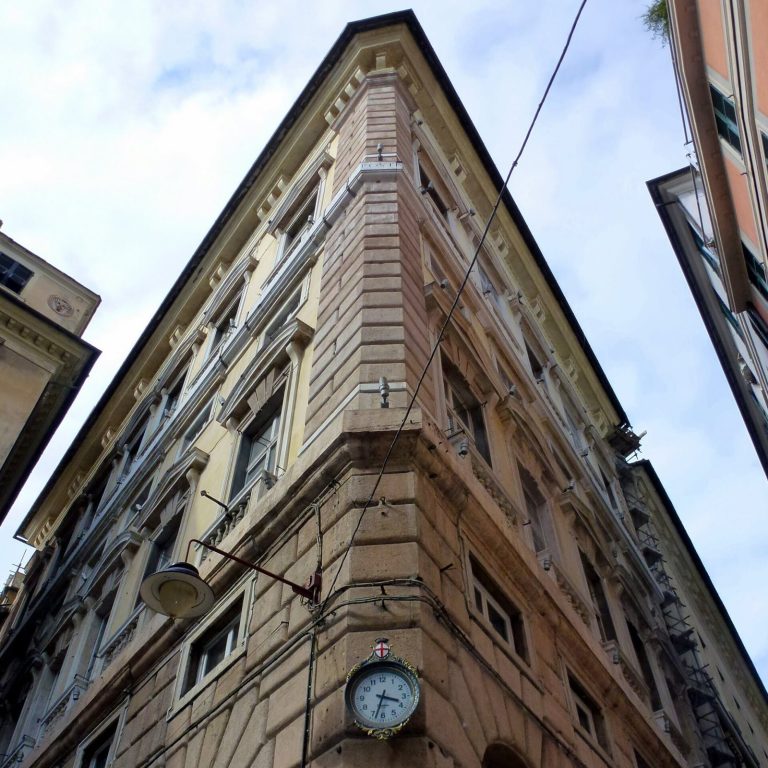
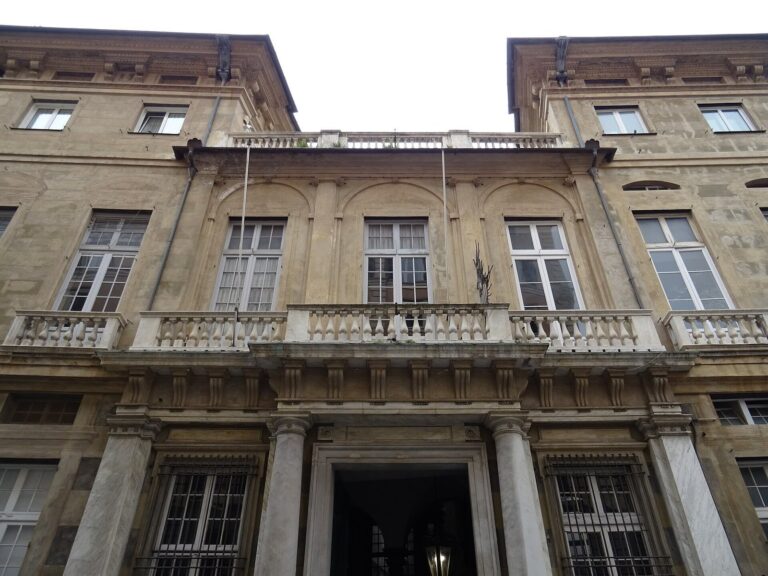
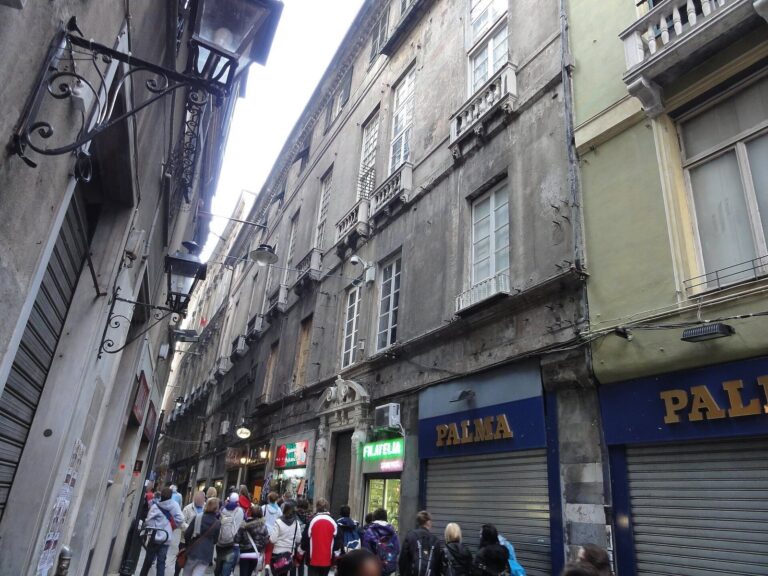
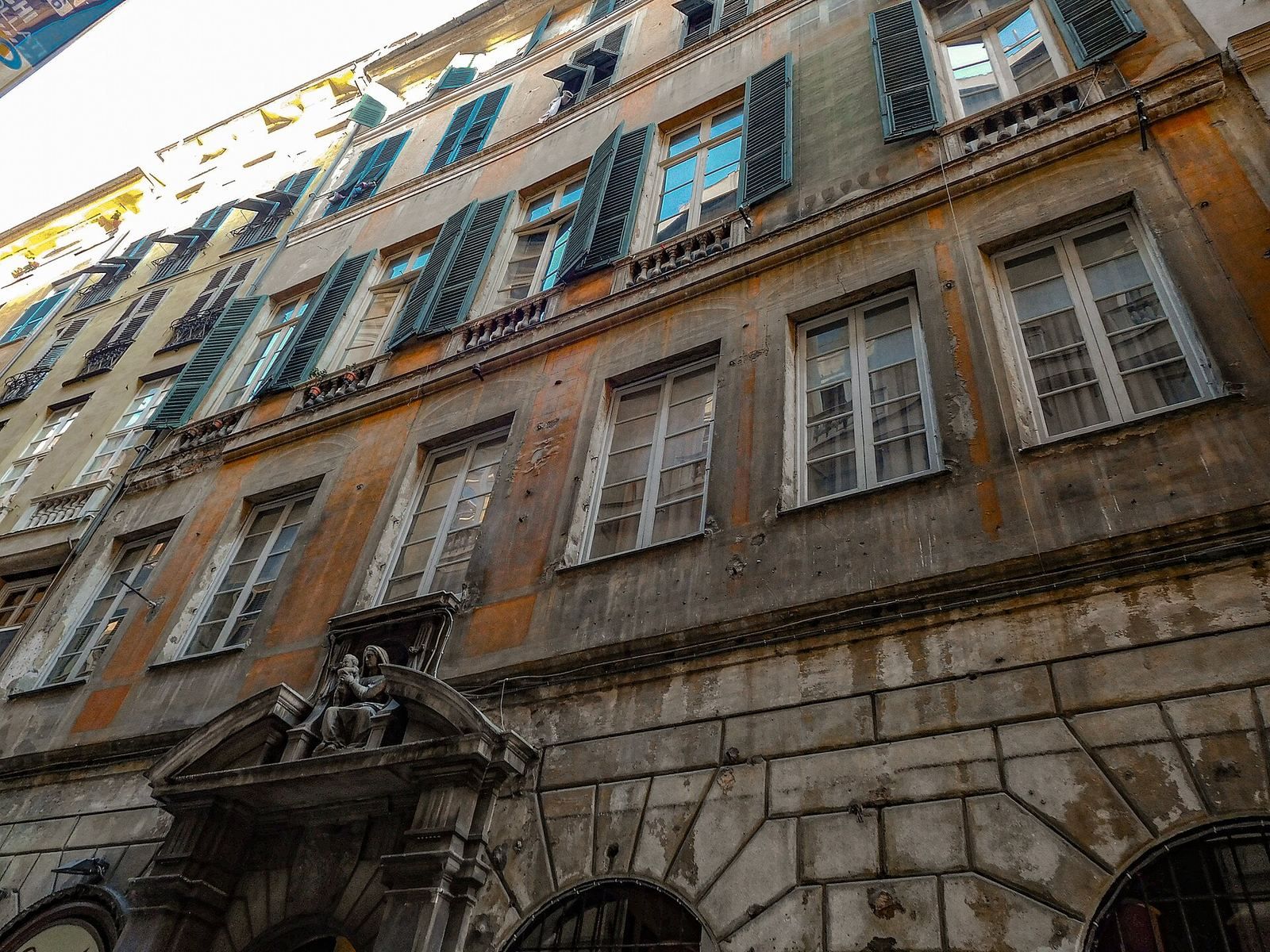
The palace stands in Genoa’s historic centre on Via Lomellini. Its exterior combines a painted façade and sculpted marble entrance, while a bridge at the rear connects it with two other buildings across a narrow street.
Facade and portal
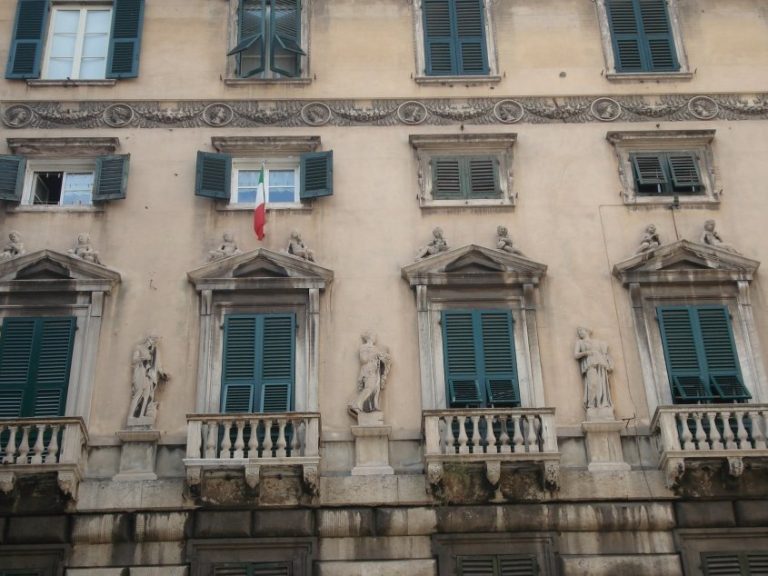
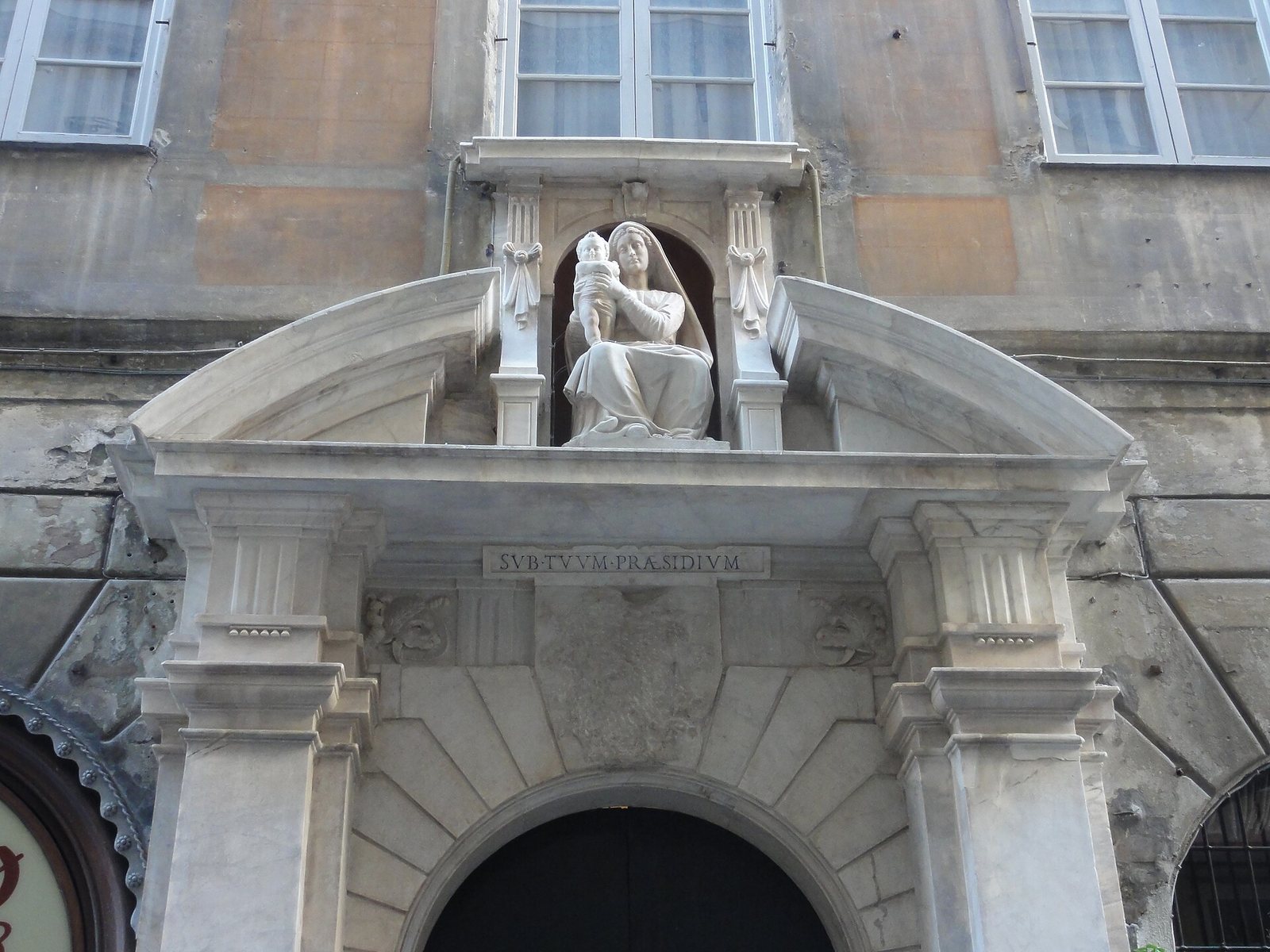
The façade’s painted decoration includes cornices framing the windows, semicircular ornamental gables, and lintel-like frames with a painted suggestion of an intermediate floor. Panels appear below the windows. The marble doorway follows the Doric style and is bordered by flat attached columns. Its broken semicircular ornamental top contains a sculpture by Tomaso Orsolino of the enthroned Madonna and Child, known as the Queen of the City. Traces of an erased noble coat of arms remain in the central stone at the arch’s crown.
Rear bridge
At the rear, a bridge crosses Vico Chiuso del Leone and joins the palace to two other buildings. It also provides an outlook toward Vico dell’Oro.