Palazzo Giacomo Lomellini: A Genoese Rolli Palace in Italy


Site at a Glance
- Rating
- 4.4
- Popularity
- Very Low
- Country
- Italy
- Primary era
- Early Modern
- External website
- Open
- Eras represented
- Early Modern, Modern
- Civilizations
- Genoese, Italian
- Site type
- Domestic
- Remains
- Palace
On this page8 sections
History
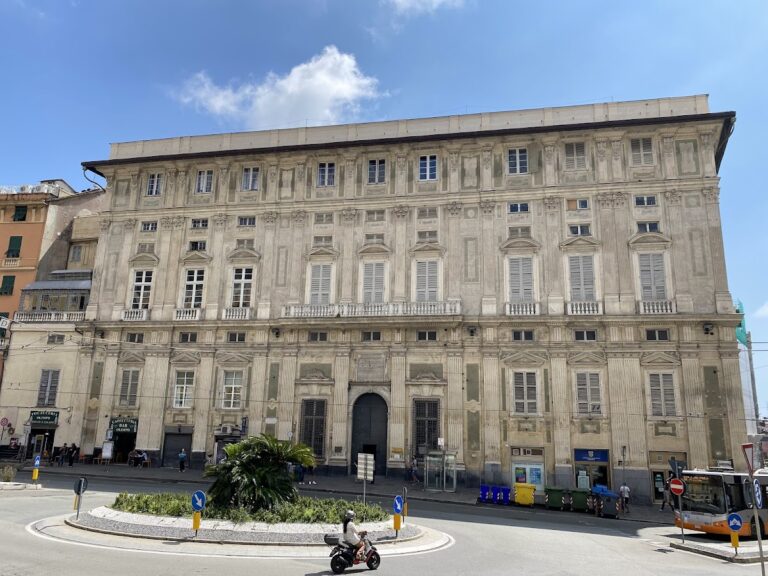
Palazzo Giacomo Lomellini, also known as Palazzo Patrone, is a Mannerist urban residence in Genoa, Italy, fundamentally rebuilt between 1619 and 1623 for Giacomo Lomellini. It joined two earlier houses belonging to the Lomellini family, at least one of them associated with Giacomo’s father by 1566. The palace later became closely connected with Genoa’s political life and with the formal system of aristocratic residences used to host distinguished state guests.
Family Residence and the Rolli System
The rebuilding united two parts of the Lomellini property and linked the palace with the adjoining Palazzo De Marini-Spinola, associated with the priory of Sant’Agnese. An earlier form of the residence appeared in Genoa’s Rolli registers from 1588 to 1664. These registers classified aristocratic palaces selected to accommodate high-ranking guests on behalf of the Republic of Genoa. The building was initially placed in the third class, moved to the first class from 1614, and assigned to the second class in 1664. Peter Paul Rubens also included the palace in his 1622 study of Genoese palaces.
Giacomo Lomellini’s Dogeship
Giacomo Lomellini became doge of Genoa from 1625 to 1627. A doge was the elected chief magistrate of the republic. The palace’s decorative programme drew on events associated with his leadership, including the De Marini conspiracy, the conspiracy of Giulio Cesare Vachero, and the siege led by Carlo Emanuele I, Duke of Savoy. The Savoyard attack was repelled despite the disparity in forces.
Municipal and Military Uses
Around 1855, the Lomellini family sold the palace to the Patrone family. Fausto Patrone transferred it to the Municipality of Genoa in 1897, after which the southern corner was cut away to widen and straighten the road between Largo della Zecca and Piazza della Nunziata. In 1921, the building was joined to the palace at Via St Agnes 1. Antonio Orazio Quinzio, director of the municipal museums, directed alterations to the courtyard in 1923, including its enclosure and vaulting, and added grotesque decoration to the ceremonial staircase.
The palace first housed municipal offices. From 1928 to 1943 it served as the local headquarters of the Fascist organization. Since 1945, it has housed the Military Command of the Italian Army in Liguria together with the adjoining Palazzo De Marini-Spinola. On 13 July 2006, it became one of the 42 Genoese Palazzi dei Rolli included in the UNESCO World Heritage property “Genoa: Le Strade Nuove and the system of the Palazzi dei Rolli.”
Remains
Plan and Façade
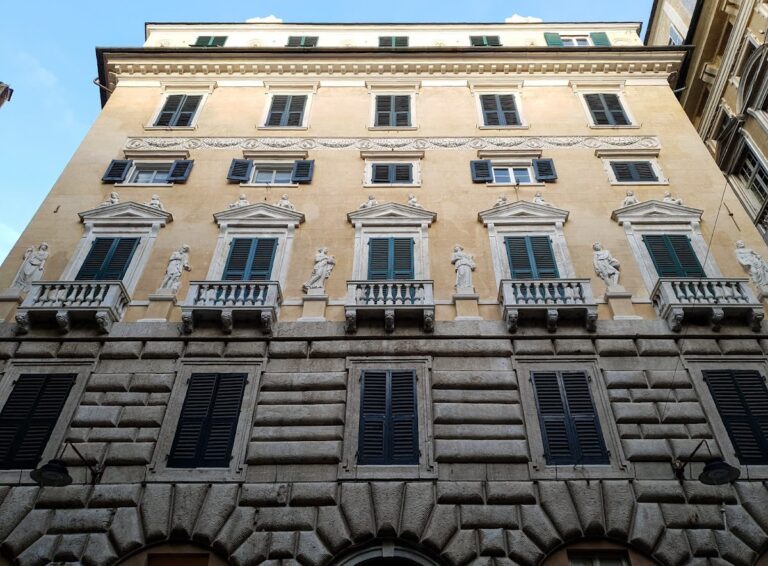
The palace occupies a narrow urban site, with another building restricting its depth. Its plan is consequently relatively simple and contains a limited number of rooms. The design originally pursued strong symmetry in both plan and elevation, while the southern corner altered in 1897 gives the façade its present asymmetrical appearance. The courtyard was arranged with arcades along three sides, and its rear wall was shared with the neighboring building.
Courtyard and Ceremonial Approach
The courtyard was conceived as a theatrical courtly entrance, shaped like a triforium, or an arrangement of three arched levels or openings. Rubens’s 1622 study shows a small nymphaeum on the rear wall, an ornamental feature associated with a fountain or water installation. In 1923, the courtyard loggia was enclosed, two columns resembling the existing ones were inserted, and new vaults were constructed. The same campaign added frescoes with grotesque decoration, while the ceremonial staircase received related ornament.
Esther Fresco Cycle
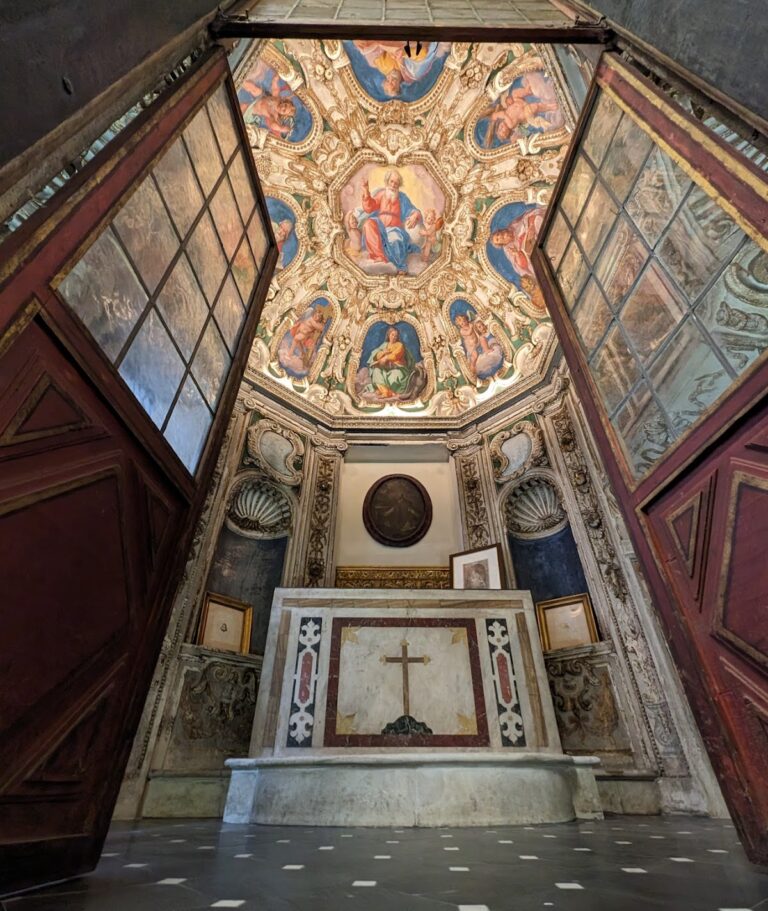
Domenico Fiasella painted an interior cycle based on stories of Esther shortly after 1623. Giovanni Carlone and his younger brother Giovanni Battista Carlone later continued the decoration. The sequence begins in the atrium vault with “The Fall of Jerusalem,” proceeds to “The Banquet of Ahasuerus” in the vault of the first piano nobile, the principal residential floor, and ends on the second piano nobile with “The Choice of Esther by Ahasuerus.”
The cycle was inspired by La Reina Esther, a contemporary literary work by Ansaldo Cebà. Esther’s decision to risk her life to save her people was presented as a political parallel to Giacomo Lomellini’s leadership during his dogeship, including Genoa’s resistance to conspiracies and the Savoyard siege.